Now Reading: Nigeria and the Niger River: A Comprehensive Report on the Nation’s Lifeline
-
01
Nigeria and the Niger River: A Comprehensive Report on the Nation’s Lifeline
Nigeria and the Niger River: A Comprehensive Report on the Nation’s Lifeline

1. Introduction: A Lifeline to a Nation
1.1. The Niger River in Context: Physiography and Importance to Nigeria
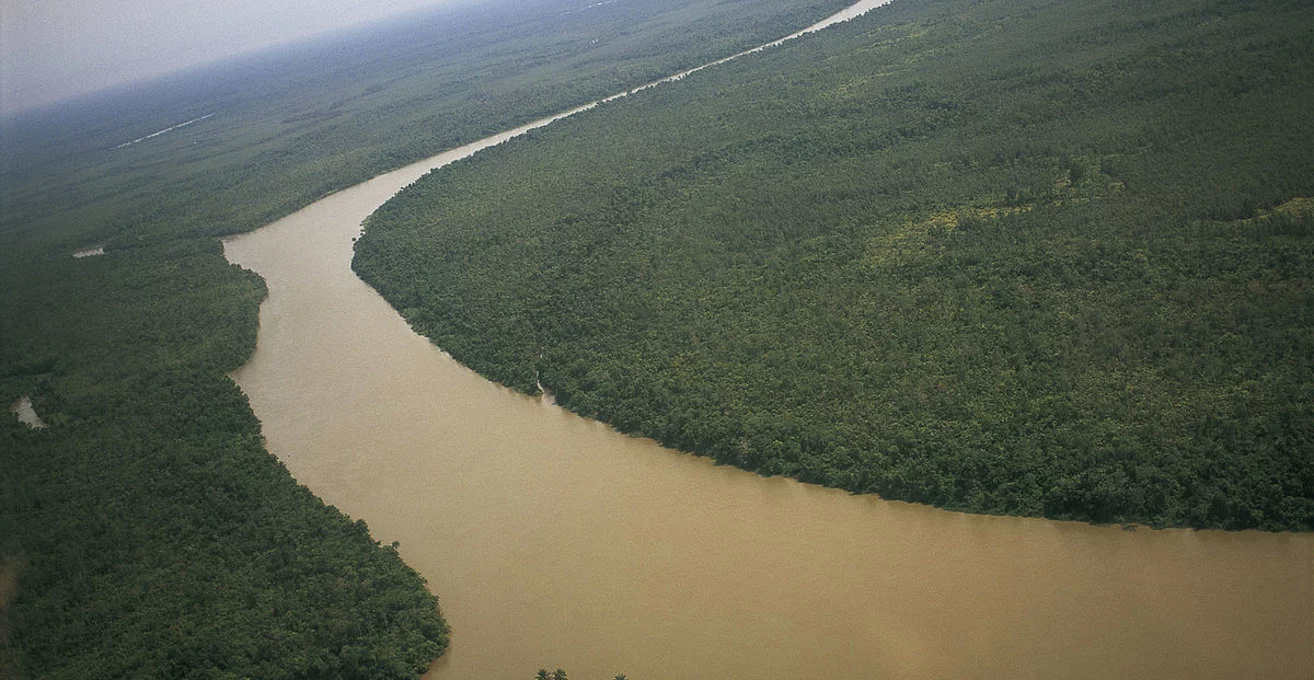
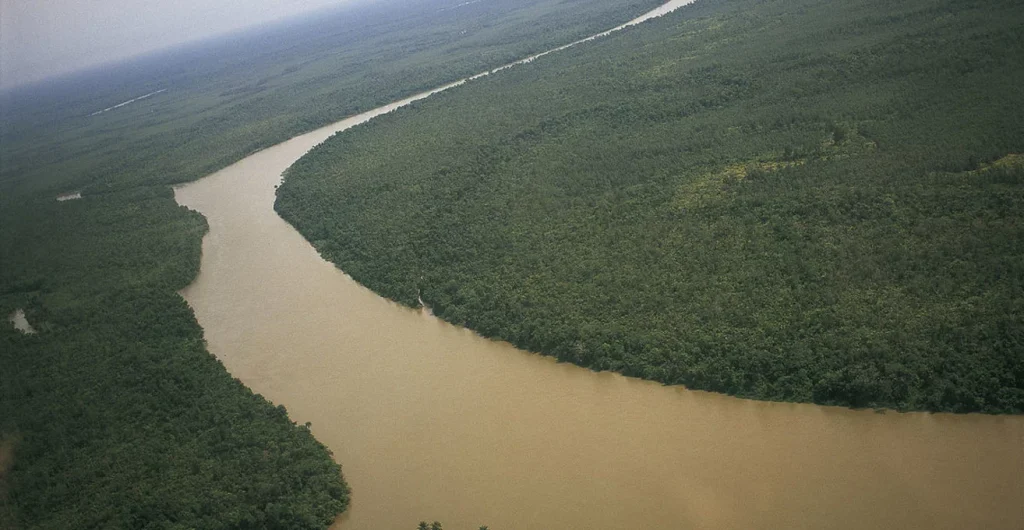
The Niger River, the principal river of West Africa, is a geomorphological and hydrological marvel that plays a foundational role in the physical and political geography of Nigeria. Its immense basin spans approximately 2.1 million square kilometers. The river’s journey begins in the Guinea Highlands at an elevation of 2,800 feet, flowing initially northeastward from a deep ravine only 150 miles inland from the Atlantic Ocean. This unusual course continues through Mali, where it forms an “internal delta,” a vast region of lakes, creeks, and backwaters.
The river’s entrance into Nigeria marks the beginning of its lower course, where it flows east-southeast through a broad, shallow valley. A critical hydrological event occurs approximately 70 miles downstream from Jebba when the Niger is joined by the Kaduna River, a significant tributary that contributes about one-fourth of its annual discharge. The Niger’s volume nearly doubles at Lokoja, where it receives its greatest tributary, the Benue River, which originates in northern Cameroon. This confluence creates a vast, two-mile-wide, lakelike expanse of water dotted with islands and sandbanks. From Lokoja, the river flows southward, eventually fanning out into Africa’s largest delta before reaching the Gulf of Guinea. The Niger Delta is an expansive, low-lying region covering 14,000 square miles and stretching for nearly 150 miles from north to south along the coast. It is characterized by an intricate network of channels that separate the Bight of Benin from the Bight of Bonny within the larger Gulf of Guinea.
The river’s unique physiography is not merely a geographic detail; it is the source of its immense economic and ecological value. The confluence of the Niger and Benue rivers at Lokoja, for instance, transforms the waterway into a powerful, high-volume artery as it flows toward the Atlantic, a point of immense strategic importance for Nigeria’s development and commerce. The delta, in particular, is a unique ecological zone that provides the context for discussions on biodiversity, resource extraction, and pollution that are central to the nation’s identity and future. The river’s path dictates its utility for navigation, irrigation, and power generation, tying the nation’s progress directly to the health and management of this singular waterway.
1.2. The Naming of a Nation: The Etymological Link to the Niger River
The name of the country itself, “Nigeria,” is a direct etymological link to the Niger River. The name was coined on January 8, 1897, by British journalist Flora Shaw, who would later marry British colonial administrator Baron Frederick Lugard. The adjacent Republic of Niger also draws its name from the same source. While the river’s original name is uncertain, it is thought to be a European alteration of the Tuareg phrase
egerew n-igerewen, which translates to “river of rivers,” a name used by local inhabitants around Timbuktu prior to 19th-century European colonialism. This etymological connection is more than a simple historical fact; it signifies a profound and lasting symbolic relationship.
The act of naming a nation after its dominant natural feature embeds that feature in the country’s identity from its very inception. The name “Nigeria” is a declaration of the river’s central, foundational, and symbolic role. It establishes an inseparable link between the destiny of the river and the fate of the nation. This symbolic bond means that any challenges facing the river—be they environmental degradation, water scarcity, or geopolitical conflicts—are not merely localized problems but an assault on the nation’s very identity. This fundamental relationship sets the framework for understanding the complex and often paradoxical issues discussed throughout this report.
2. Historical and Sociocultural Significance
2.1. The River as a Cradle of Empires: A Study of Pre-colonial Trade and Civilizations
Long before the arrival of European colonial powers, the Niger River served as a vital “throughway” for transportation and exchange, acting as a geopolitical hub that facilitated the rise of powerful states and empires. In West Africa, the river was a central component of the trans-Saharan trade routes, connecting rich gold-producing regions in the south with North Africa and the Mediterranean. This network enabled empires such as Ghana, Mali, and Songhai to flourish by controlling and taxing the exchange of valuable commodities like gold, salt, ivory, and slaves. Cities situated along the river’s banks, including Timbuktu, Gao, and Djenne, became renowned centers of commerce, culture, and Islamic scholarship.
The river’s unique physiography created a fertile “Inland Niger Delta” in Mali, a vast floodplain covering more than 20,000 square kilometers. This region supported a thriving pre-colonial urbanism of over sixty interdependent communities and provided the agricultural surplus necessary to sustain large populations and trade networks. The strategic location of communities between the West African gold fields and the Sahara Desert, with the Niger River as a logistical backbone, enabled them to become important intermediaries in the gold trade. This historical pattern demonstrates a clear cause-and-effect relationship between control of the river and the acquisition of political and economic power.
The river’s influence extended to present-day Nigeria, where it shaped the development of kingdoms such as Oyo and Benin. The delta’s geography, in particular, influenced trade routes and interactions that contributed to the rise and expansion of the Benin Empire. The Hausa states to the northeast and northwest of the river, as well as the numerous decentralized societies, also demonstrate the river’s role in shaping the political and social landscape of the region. This historical context is fundamental to understanding modern governance challenges. The river has always been a point of contention and a source of power, suggesting that contemporary disputes over water management, resource extraction, and infrastructure are not new, but rather a continuation of a long-standing geopolitical and economic struggle for control of this vital resource.
2.2. A Cultural Artery: Ethnic Diversity and Traditions along the River’s Course
The Niger River is more than an economic and historical artery; it is a source of profound cultural identity and tradition for the communities along its banks. The Niger Delta alone is home to over 40 different ethnic groups, including the Ijaw, Ibibio, and Urhobo, each with unique cultures, languages, and traditions. The river’s influence is evident in the vibrant festivals and customs that have evolved to reflect the close relationship between the people and the waterway.
A prominent example is the Yauri Rigata Festival, celebrated annually in March in Kebbi State, Nigeria. The festival’s name, “Rigata,” is a Gunganci word meaning “Marine War”. Its origins trace back approximately 200 years to a time when Gungu warriors would attack dangerous hippopotamuses that were destroying farmlands. This historical practice served as a naval training exercise for the Gungu people, honing their skills in canoe paddling and naval warfare. Following the 19th-century ban on hippopotamus hunting, the festival evolved from a practical, combative activity into a prestigious cultural extravaganza. Today, it features thrilling water sports competitions and a traditional wedding ceremony that includes a prestigious water display of the bridal entourage in a beautifully decorated
Jirgin Amarya, or “Bride’s Boat”.
The evolution of the Rigata festival from a functional military and training exercise to a cultural celebration of community and life illustrates a shift in the human-river relationship—from one of conflict to one of symbiosis and reverence. The river is not merely a backdrop for these events; its waterways are the stage and substance of the celebration. The “Bride’s Boat” ceremony, in particular, is a powerful symbol of the river’s role in the most important life events, passing traditions from one generation to the next. This cultural resilience offers a counter-narrative to the more negative stories of conflict and environmental degradation. The river, in this context, is a wellspring of identity, community, and tradition that continues to shape the lives of millions.
3. Economic Pillars: From Pre-colonial Trade to Modern Industry
3.1. Water as a Resource: Agriculture, Irrigation, and Fisheries
The Niger River is a crucial economic asset, supporting traditional and modern livelihoods through agriculture, irrigation, and fisheries. Agriculture remains the cornerstone of Nigeria’s economy, employing about 35% of the population. The river and its tributaries provide a lush, tropical environment that is highly productive for crops. Staple crops like rice, millet, sorghum, and cassava thrive in this environment, as do commercial crops such as onions, garlic, and peppers.
Despite this potential, less than 1% of Nigeria’s agricultural land is currently irrigated. This is a significant challenge, especially as countries like Niger demonstrate that irrigated land, though a small percentage of the total, can produce a third of the nation’s agricultural GDP. Initiatives are being implemented to address this gap, such as the Lower Niger River Basin Development Authority’s (LNRBDA) move to provide solar-powered irrigation pumps to farmers in Kwara and Kogi states, aiming to reduce reliance on expensive petroleum products and boost dry-season farming.
The river is also a crucial source of inland fisheries, a sector that contributes significantly to food security and employment. An estimated 1.5 million people are engaged in fishing in Nigeria. The country produces around 1.2 million metric tons of fish annually, 90% of which is consumed domestically. The income of inland fishers is highly seasonal, ranging from about $1-$2 per day during the lean season to $4-$10 per day during the peak season. The average catch per fisherman is estimated at 1.5 metric tonnes per year.
The following table synthesizes key data points to illustrate the economic scale of these sectors.
| Sector | Key Products | Production & Employment Statistics | Economic Significance |
| Agriculture | Rice, Millet, Sorghum, Cassava, Onions | Employs 35% of Nigerian population ; only 1% of cropped land is irrigated , but irrigated land produces 33% of agricultural GDP in neighboring Niger | Foundation of the Nigerian economy ; potential for significant growth through improved irrigation |
| Fisheries | Fish (Catfish, Nile perch, Carp) | 1.2 million metric tons of fish produced annually ; 1.5 million fishers ; average catch is 1.5 metric tonnes/fisher/annum | A key source of protein and food security; supports the livelihoods of millions |
3.2. Powering a Nation: An Analysis of Hydroelectric Infrastructure
The Niger River and its tributaries are vital for Nigeria’s energy sector, serving as sites for major hydroelectric dams that power the nation. The Niger Dams Project is a series of three large-scale dams: the Kainji Dam (completed 1969), the Jebba Dam (completed 1984), and the Shiroro Dam (completed 1990). A fourth, the Zungeru Hydroelectric Power Station, was completed in 2023. These dams were designed for multiple purposes, including hydroelectricity, irrigation, and flood control.
The dams are a cornerstone of Nigeria’s energy strategy. The Kainji, Jebba, and Shiroro dams have a combined power capacity of 1,920 MW. The new Zungeru station, with its 700 MW capacity, is the second-largest hydroelectric power plant in the country, behind Kainji Dam’s 760 MW. It is expected to add 2,640 GWh to the national grid annually, representing approximately 10% of Nigeria’s installed generation capacity as of early 2022. These projects are emblematic of the nation’s top-down approach to development, prioritizing large-scale infrastructure to meet growing energy demands.
The following table provides a comprehensive overview of Nigeria’s major hydroelectric infrastructure on the Niger and Kaduna rivers.
| Dam Name | Location (River & State) | Year Completed | Power Capacity (MW) | Primary Functions |
| Kainji Dam | Niger River, Niger State | 1969 | 760 | Hydroelectricity, irrigation, flood control, fishing, tourism |
| Jebba Dam | Niger River, Niger State | 1984 | N/A (Part of the Niger Dams Project) | Hydroelectricity, flood control |
| Shiroro Dam | Kaduna River, Niger State | 1990 | 600 | Hydroelectricity, irrigation, flood control |
| Zungeru Dam | Kaduna River, Niger State | 2023 | 700 | Hydroelectricity, flood control, irrigation |
3.3. The Paradox of the Delta: The Oil and Gas Industry
The Niger Delta, historically known as the “Oil Rivers” for its significant palm oil production, has become the epicenter of Nigeria’s modern economic identity. It is a petroleum-rich region where the hydrocarbon extraction industry generates approximately 75% of the nation’s total income and 95% of its foreign exchange earnings. This concentration of wealth has made the delta a region of international concern.
The transition from palm oil to petroleum extraction represents a profound shift in the relationship between the people and their land. The former was a renewable agricultural product that supported local trade and livelihoods. The latter, while a source of immense national wealth, is inextricably linked to catastrophic environmental degradation and social instability. This is the core paradox of the delta: a region of immense wealth that paradoxically does not provide economic benefits for the local communities, leading to conflict and profound environmental damage. The river, which once served as a source of sustainable livelihood, has become the site of a resource curse, where national prosperity coexists with widespread environmental harm.
4. Navigating the Challenges: Environmental, Social, and Governance Issues
4.1. Environmental Degradation: The Multidimensional Impact of Pollution
The Niger River, particularly its delta, faces severe environmental threats, most notably from extensive pollution. Over a 50-year period, an estimated 13 million barrels of crude oil have been spilled from more than 7,000 oil spill incidents. The primary causes are attributed to “unknown causes” (31.85%) and “third-party activity” (20.74%). These spills have contaminated surface water, groundwater, air, and soil with hydrocarbons, trace metals, and carcinogens such as polycyclic aromatic hydrocarbons.
The ecological and human health consequences are catastrophic. The consumption of dissolved oxygen by bacteria feeding on hydrocarbons contributes to the death of fish. Mangrove forests, which are critical for protecting shorelines and supporting biodiversity, are destroyed by the toxic properties of crude oil, which can acidify soils and starve roots of oxygen. The loss of these native forests has allowed invasive species like the non-native Nypa palm to colonize affected areas, further destabilizing riverbanks and reducing biodiversity.
For local communities, the impact is a direct threat to survival. Oil spills can destroy a year’s supply of food instantaneously and are linked to a 60% reduction in household food security. Beyond food, the spills have profound health implications, including a 45% increase in normal background radiation levels and a higher prevalence of certain cancers, as well as breathing problems and skin lesions. The river’s pollution is a multidimensional crisis that is eroding the health, livelihoods, and fundamental human rights of millions of people in the delta.
The following table summarizes the primary sources and impacts of pollution in the Niger Delta.
| Pollutant Source | Specific Pollutants | Primary Victims | Documented Impacts |
| Oil Spills | Hydrocarbons, trace metals, carcinogens (e.g., benzopyrene, PAHs), naturally occurring radioactive materials (NORM) | Local communities, ecosystems, agriculture, aquaculture, wildlife, vegetation | Contamination of water, soil, and air; destruction of crops and aquaculture ; reduction in household food security ; increased prevalence of cancers, breathing problems, and skin lesions in humans |
| Invasive Species | Water hyacinth, Nypa palm | Native vegetation, fish, aquatic ecosystems, local communities | Clog waterways; compete with native plants; reduce oxygen for fish; destabilize riverbanks; impede navigation |
| Industrial Waste/Sedimentation | Industrial wastes, silt, and sediment loads | Water quality, aquatic ecosystems, dams | Decreased water quality and turbidity; siltation reduces reservoir capacity and hydropower generation potential |
4.2. The Scars of Development: Socio-economic and Environmental Consequences of Dams
The construction of large-scale dams on the Niger and Kaduna rivers, while providing vital power and irrigation, has come at a steep social and environmental cost. The Kainji Dam, for instance, resulted in the forced displacement of over 50,000 people from their homes and livelihoods. Displaced communities face a litany of “major risks,” including landlessness, joblessness, homelessness, and food insecurity. Communities near the new Zungeru Dam have expressed trauma over anticipated losses and suffer from noise and vibration pollution during construction. This situation represents a fundamental ethical dilemma where the nation’s quest for energy independence and economic growth is prioritized over the established well-being and livelihoods of local populations.
From an environmental standpoint, dams disrupt the natural flow of rivers and alter ecosystems both upstream and downstream. One of the most significant long-term problems is reservoir siltation, where sediment accumulation reduces the dams’ storage capacity and their ability to generate hydropower. This highlights a crucial flaw in the long-term sustainability of these projects. The dams’ flood control function can also fail catastrophically; in 1999, heavy flooding forced operators of the Kainji, Jebba, and Shiroro dams to release massive quantities of water to protect the structures, which in turn exacerbated disastrous downstream flooding and submerged neighboring villages and croplands. The data indicates a clear need to shift from an “economics of compensation” to an “economics of resettlement with development,” which would focus on providing sustainable, new livelihoods for affected communities.
4.3. The Spectre of Climate Change: Hydrological Shifts and Their Ramifications
Climate change poses an existential threat to the Niger River basin and the millions of people who depend on it. Projections indicate a warmer climate, with a drier rainy season and a wetter dry season, and a significant increase in evaporation. The downward trends in runoff and water levels have been observed for years, directly affecting water availability for hydropower generation and other uses at facilities like the Kainji Dam. The research suggests that for every 1°C rise in temperature, runoff could decrease by a significant amount.
This climate data exposes a critical vulnerability in Nigeria’s national strategy. The government has invested billions in dams for energy and irrigation, but the very resource these projects depend on—water flow—is in decline due to climate-driven changes in the hydrological cycle. This creates a dangerous feedback loop where a global problem exacerbates local challenges like water scarcity, which can, in turn, trigger new conflicts and forced migrations. The fact that parts of the Niger River completely dried up in Benin and Niger in 1985 serves as a stark warning of a potential future for Nigeria’s downstream regions. The sustainability of the nation’s river-dependent economy is thus contingent on proactive climate adaptation and robust international cooperation.
4.4. A Shared Resource: Inter-riparian Cooperation and Conflict
The Niger River is a shared resource, traversing nine countries. This necessitates international cooperation to ensure its sustainable management. The Niger Basin Authority (NBA), an intergovernmental organization established in 1980, is tasked with harmonizing and coordinating national development policies and promoting projects of common interest among member states.
Despite these cooperative frameworks, the potential for conflict remains. Nigeria, as the lowest downstream riparian state, is particularly vulnerable to the unilateral decisions of upstream nations. A large-scale dam project in an upstream country, while serving its own national development goals, can have significant adverse effects on water flow and availability for Nigeria’s downstream population. This transforms Nigeria’s water problems from a purely domestic issue into a complex geopolitical challenge. The nation’s ability to provide water for its population, energy for its economy, and prevent flooding is a function of its foreign policy and its ability to foster effective, binding international agreements with its neighbors. The principles of equitable use and mutual notification laid out in the Niger Basin Water Charter provide a legal basis for this cooperation, but constant diplomatic engagement is required to manage this shared resource effectively and prevent potential disputes.
5. Recommendations and Future Outlook
5.1. Towards Sustainable Management: Policy and Infrastructure Strategies
Moving forward, Nigeria’s relationship with the Niger River must evolve from one of resource exploitation to one of integrated stewardship. The evidence presented in this report indicates a need for a multi-faceted approach to water and energy management. Instead of focusing solely on large-scale, high-impact projects, a balanced strategy would involve rehabilitating existing dam infrastructure to ensure long-term efficiency. At the same time, the government should promote and incentivize cost-effective, decentralized solutions. For instance, the expansion of small and medium-scale irrigation systems, such as the solar-powered pumps being tested by the LNRBDA, can significantly boost agricultural productivity and reduce costs without the massive environmental and social footprint of large dams.
Furthermore, for future dam projects, a fundamental shift from the “economics of compensation” to an “economics of resettlement with development” is essential. This approach would prioritize the creation of new, sustainable livelihoods for displaced communities, ensuring they are not only relocated but also re-established with dignity and economic viability. By adopting sustainable agricultural practices like no-till farming and crop rotation, communities can also conserve soil and water resources, making their livelihoods more resilient to climate variability.
5.2. Mitigating Conflicts: Fostering Inter-regional and International Collaboration
The geopolitical complexities of the Niger River basin necessitate robust and proactive diplomatic engagement. Nigeria must continue to strengthen its role within the Niger Basin Authority (NBA) and other regional bodies to ensure equitable water management. The NBA’s work in assessing and mitigating the downstream impacts of new dam projects in upstream countries is critical for Nigeria’s water security. Collaborative efforts, grounded in the principles of mutual benefit and notification, are the only viable long-term strategy for preventing future conflicts over this vital resource.
5.3. A Holistic Vision: Integrating Economic Development with Environmental Stewardship
The future of the Niger River, and by extension, Nigeria, depends on a holistic vision that integrates economic development with environmental stewardship. This means addressing the root causes of pollution, particularly from oil spills, and restoring the damaged ecosystems of the delta. Efforts to re-establish mangrove forests and control invasive species are crucial for preserving the delta’s biodiversity and the livelihoods of its inhabitants. By fostering economic activities that are both productive and environmentally sustainable, the nation can begin to heal the scars of resource exploitation and forge a new, more balanced relationship with its most important natural resource.
6. Conclusion
The Niger River is an indispensable force in the life of Nigeria. It is the nation’s namesake, the cradle of ancient empires, and the artery of modern commerce and power generation. Yet, it is also the site of the nation’s most pressing challenges, from the catastrophic environmental damage of the oil industry to the social and ecological trade-offs of large-scale dam projects. The effects of climate change and the complexities of inter-riparian relations add further layers of vulnerability to this critical lifeline. The analysis concludes that the river’s future as a source of prosperity and life is not guaranteed. It hinges on a fundamental shift in national policy and a commitment to integrated, sustainable, and collaborative management. Only by protecting this sacred and shared resource can the nation of Nigeria fulfill the promise embedded in its very name.










Related Posts

Stay Informed With the Latest & Most Important News
Advertisement