Nigeria : Presentation
Nigeria Giant of Africa
West Africa · Federation · Diaspora
Geography, population, institutions, economy, culture, historical milestones and today’s key issues of Africa’s most populous country.
A federation at the
heart of West Africa
Nigeria is a West African country bordered by Benin to the west, Niger to the north, Chad to the northeast, and Cameroon to the east, with a southern coastline on the Gulf of Guinea. The federal capital is Abuja, while Lagos remains the largest city and a major economic hub.
As a demographic and economic powerhouse, Nigeria plays a central role in regional dynamics, energy (oil and gas), finance, innovation (tech & fintech) and cultural industries (Nollywood, music). This page provides an encyclopedic overview and links to deeper dossiers: geography, history, institutions, economy, states & cities, culture, diaspora and practical guides.
Nigeria234.com aims to build a trusted reference library—clear, rigorous and useful for readers, diaspora communities, students, researchers, travelers and partners.
- Encyclopedia pages (country, states, cities, institutions)
- Useful guides (how to, where to, practical essentials)
- Business & diaspora (investment, sectors, opportunities)
- Culture (Nollywood, music, literature, heritage)
Key facts
Indicative values — please source (NBS Nigeria · World Bank · IMF · UNDP)
Explore Nigeria
Guides · Encyclopedic articles · Topic hubs
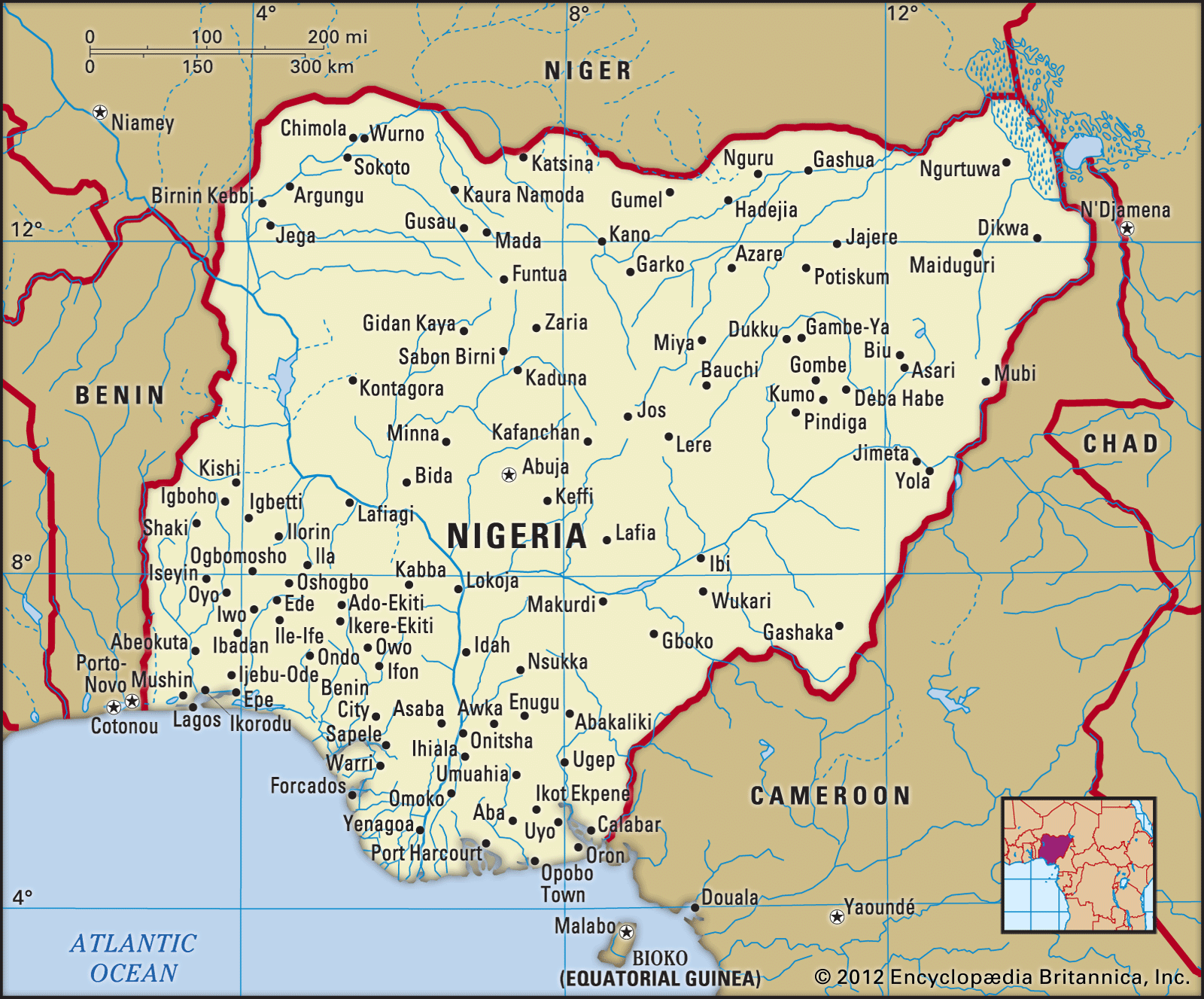
Map of Nigeria
| Official name | Federal Republic of Nigeria |
|---|---|
| Capital | Abuja |
| Largest city | Lagos |
| Area | 923,768 km² |
| Population | ~223 million (est.) |
| Currency | Naira (NGN) |
| Time zone | UTC+1 |
| Official language | English |
| Major languages | Hausa · Yoruba · Igbo |
| Administrative divisions | 36 states + FCT |
| Key exports | Oil, gas (primary) |
| GDP (nominal) | To confirm (World Bank / IMF) |
| HDI | To confirm (UNDP) |
Encyclopedic summaries
Short snapshots — with links to deeper articles
Nigeria stretches from the Gulf of Guinea coastline to Sahel-adjacent zones in the north. Major landscapes include the Niger Delta, plains, plateaus and uplands. Climate ranges from humid tropical in the south to semi-arid in the far north.
Nigeria’s history blends major precolonial societies and kingdoms, British colonial rule, independence (1960), the Biafran War, and a long-term evolution toward a consolidated federal republic. Today it plays a pivotal role across West Africa.
Nigeria’s economy combines hydrocarbons, a vast domestic market, agriculture and a fast-growing technology ecosystem (notably fintech). Infrastructure, demographics and regional integration shape both constraints and opportunities.
Nigeria’s cultural influence is global through Nollywood, afrobeats, literature and vibrant arts. Regional identities, languages and traditions shape one of the most influential cultural landscapes on the continent.
Statistical tables
Replace placeholders with verified figures · NBS Nigeria / World Bank / IMF / UNDP
| Indicator | Value | Source |
|---|---|---|
| Population | ~223 M | NBS / UN |
| Population growth | To confirm | World Bank |
| Urbanization rate | To confirm | World Bank |
| Life expectancy | To confirm | WHO / World Bank |
| Indicator | Value | Source |
|---|---|---|
| GDP (nominal) | To confirm | World Bank / IMF |
| GDP per capita | To confirm | World Bank |
| HDI | To confirm | UNDP |
| Key exports | Oil, gas | NBS / Central Bank |