Now Reading: Akitoye (Oba of Lagos): The King Who Brought Lagos Back from the Slave Trade
-
01
Akitoye (Oba of Lagos): The King Who Brought Lagos Back from the Slave Trade
Akitoye (Oba of Lagos): The King Who Brought Lagos Back from the Slave Trade


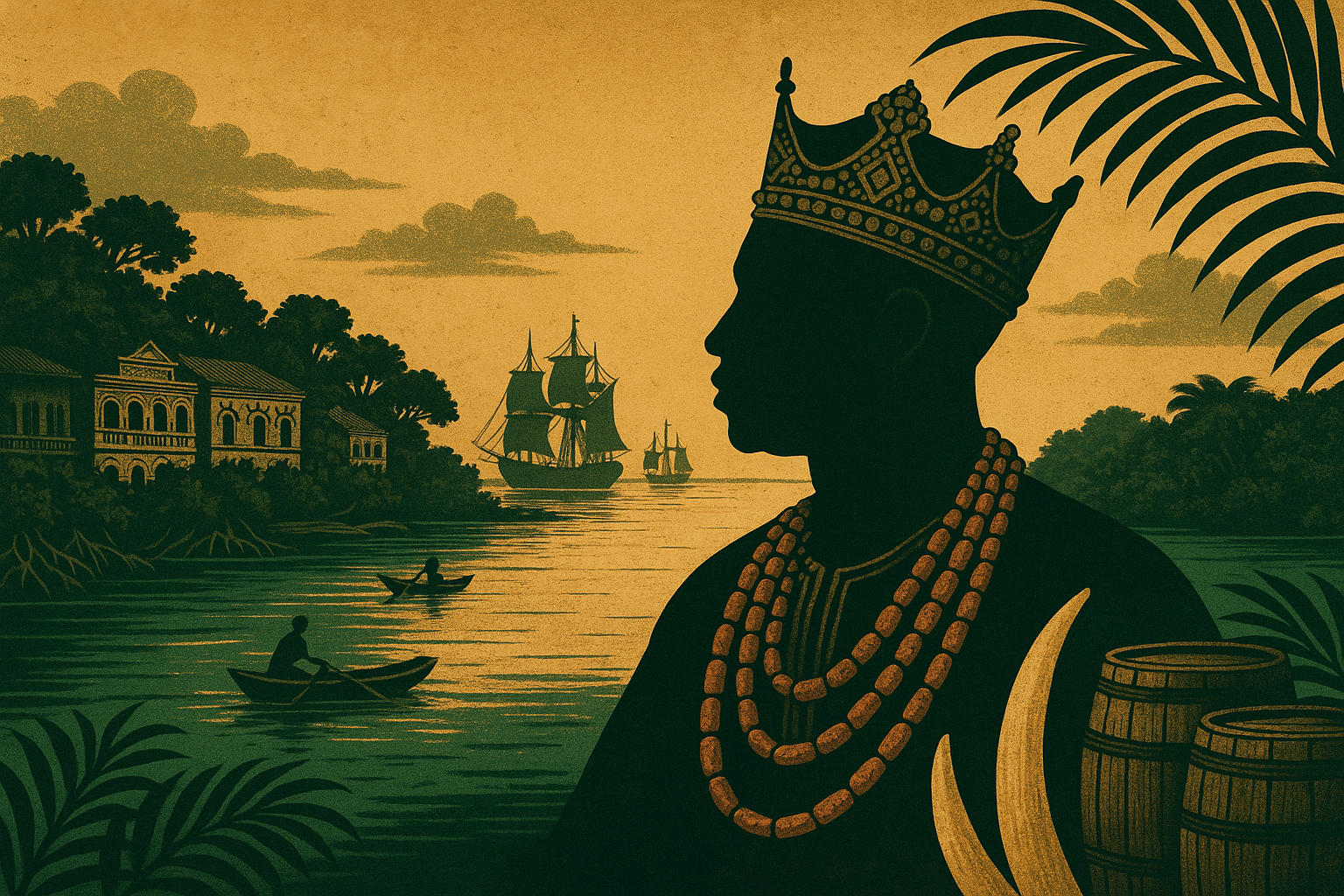
Akitoye (d. 1853) was the Oba of Lagos in two non-consecutive reigns—1841–1845 and 1851–1853. Deposed by his powerful nephew Kosoko, Akitoye returned to the throne with British naval support after the Bombardment (“Reduction”) of Lagos in late 1851. His brief second reign marked a turning point: treaties against the Atlantic slave trade, a pivot toward “legitimate” commerce (especially palm oil), and the re-opening of Lagos to global trade under new rules.
Origins and first reign (1841–1845)
Akitoye belonged to the Ologun Kutere royal line and emerged from court factions to succeed Oba Oluwole around 1841. The politics of Lagos in this era were shaped by three forces:
- Atlantic demand for captives (the slave economy and its credit networks),
- Coastal merchant houses and inland brokers battling for routes and profits, and
- The rise of returnee communities (Saro from Sierra Leone and Aguda from Brazil) bringing new commercial and religious influences.
Court rivalries intensified between Akitoye and his ambitious nephew Kosoko, who had deep alliances with influential war-leaders and merchants.
The Kosoko crisis and exile (1845)
In 1845, Kosoko’s supporters mounted a successful insurrection—remembered in Lagos traditions as the Ogun Olomiro (“Salt-Water War”). Akitoye was driven into exile, finding protection first among allies in the lagoons and later at Badagry. From exile he cultivated ties with anti-slavery missionaries, coastal intermediaries, and British consular officials, arguing that restoring him would help suppress the Atlantic slave trade from Lagos.
The Bombardment of Lagos (Dec. 1851) and restoration
By the early 1850s, Britain had outlawed its own slave trading and deployed a naval squadron to suppress the trade along the coast. After failed diplomacy with Kosoko’s court, a British naval force bombarded Lagos in late December 1851. Kosoko withdrew; Akitoye was restored shortly afterward (formally recognized in early 1852).
Akitoye then signed treaties that pledged Lagos to end the export of slaves and to admit lawful commerce. These agreements did not end all forms of slavery within the region overnight, but they criminalized the trans-Atlantic export trade and changed the rules of coastal business.
Governing a port in transition (1852–1853)
Back on the throne, Akitoye faced three urgent tasks:
- Security and reconciliation: Stabilize the city after years of factional warfare, while dealing with Kosoko’s remaining influence among the creeks and islands.
- Commercial pivot: Encourage palm oil and produce exports to replace slave cargoes; manage customs, pilotage, and contracts with foreign merchants.
- New social landscape: Balance the interests of returnee Brazilians (Aguda), Saro, long-standing Lagos families, and inland trading partners.
His reign was short. Akitoye died in 1853. He was succeeded by his son Dosunmu (Docemo), under whom Lagos’s anti-slave-trade stance was consolidated and, later, the cession of Lagos (1861) formalized British control.
Why Akitoye matters
- Turning point against the Atlantic export trade: His restoration was the political hinge that aligned Lagos with British anti-slavery policy on the coast.
- Birth of a new commercial era: The shift to “legitimate commerce” (palm oil, textiles, manufactured goods) reconfigured wealth and power in Lagos.
- Prelude to colonial rule: The arrangements made under Akitoye and Dosunmu created the diplomatic and legal pathways that culminated in the annexation of Lagos and later colonial expansion inland.
Key figures around Akitoye
- Kosoko — Nephew and rival; formidable political-military base in the creeks; later reconciled in shifting roles.
- Dosunmu (Docemo) — Akitoye’s son and successor; stewarded Lagos through deeper treaty relations with Britain.
- Efik, Ijaw, and Benin networks / inland brokers — Commercial partners and rivals who shaped prices, credit, and supply lines.
- Saro & Aguda communities — Returnee Africans who influenced architecture, trade, religion, and education in mid-19th-century Lagos.
Timeline (concise)
- c. 1841 — Akitoye becomes Oba of Lagos.
- 1845 — Ogun Olomiro; Akitoye is deposed by Kosoko and goes into exile.
- Dec. 1851 — Bombardment/Reduction of Lagos by a British naval squadron.
- Early 1852 — Akitoye restored; treaties signed to end the export slave trade and reopen lawful commerce.
- 1853 — Akitoye dies; Dosunmu becomes Oba.
- 1861 — (Context) Lagos annexed by Britain under Dosunmu, solidifying the new order.
Quick facts
- Title: Oba of Lagos
- Reigns: 1841–1845; 1851–1853
- Rivals: Kosoko
- Signature policies: Anti–slave-trade treaties; promotion of “legitimate” commerce
- Successor: Dosunmu (Docemo)
- Legacy: Pivotal figure in Lagos’s transition from slave port to palm-oil entrepôt and, ultimately, colonial capital










Related Posts


Stay Informed With the Latest & Most Important News
Previous Post
Next Post


Advertisement