Nigerian Diaspora
The Nigerian Diaspora
Global Reach · Remittances · Culture · Brain Gain
An estimated 15 million Nigerians live abroad, forming a powerful global community that profoundly influences the domestic economy, drives cultural exports, and shapes international perceptions of Africa’s giant.
A nation beyond
its borders
The Nigerian Diaspora is one of the largest and most influential expatriate communities in the world. Driven historically by the search for higher education, economic opportunities, and fleeing political instability, millions of Nigerians have settled across North America, Europe, the Middle East, and other parts of Africa.
This global community is a formidable economic force. Sending home upwards of $20 billion annually, diaspora remittances often exceed Nigeria’s foreign direct investment (FDI) and serve as a crucial lifeline for families, real estate, and local businesses.
In recent years, the colloquial term “Japa” (Yoruba for “to flee” or “escape”) has come to define the modern wave of emigration, particularly among young professionals, tech workers, and healthcare providers. While this causes a domestic “brain drain,” it simultaneously strengthens Nigeria’s soft power, establishing “brain circulation” as the diaspora invests back into the domestic tech and entertainment sectors.
- Economic Lifeline: Remittances constitute a major % of national GDP.
- Soft Power & Culture: Amplifying Afrobeats, Nollywood, and fashion globally.
- Professional Excellence: High achievements in global medicine, tech, and academia.
- Diaspora Investment: Funding local startups and infrastructure projects.
Impact & Numbers
The scale of Nigeria’s expatriate influence
Diaspora Destinations
Where Nigerians live, work, and thrive around the world
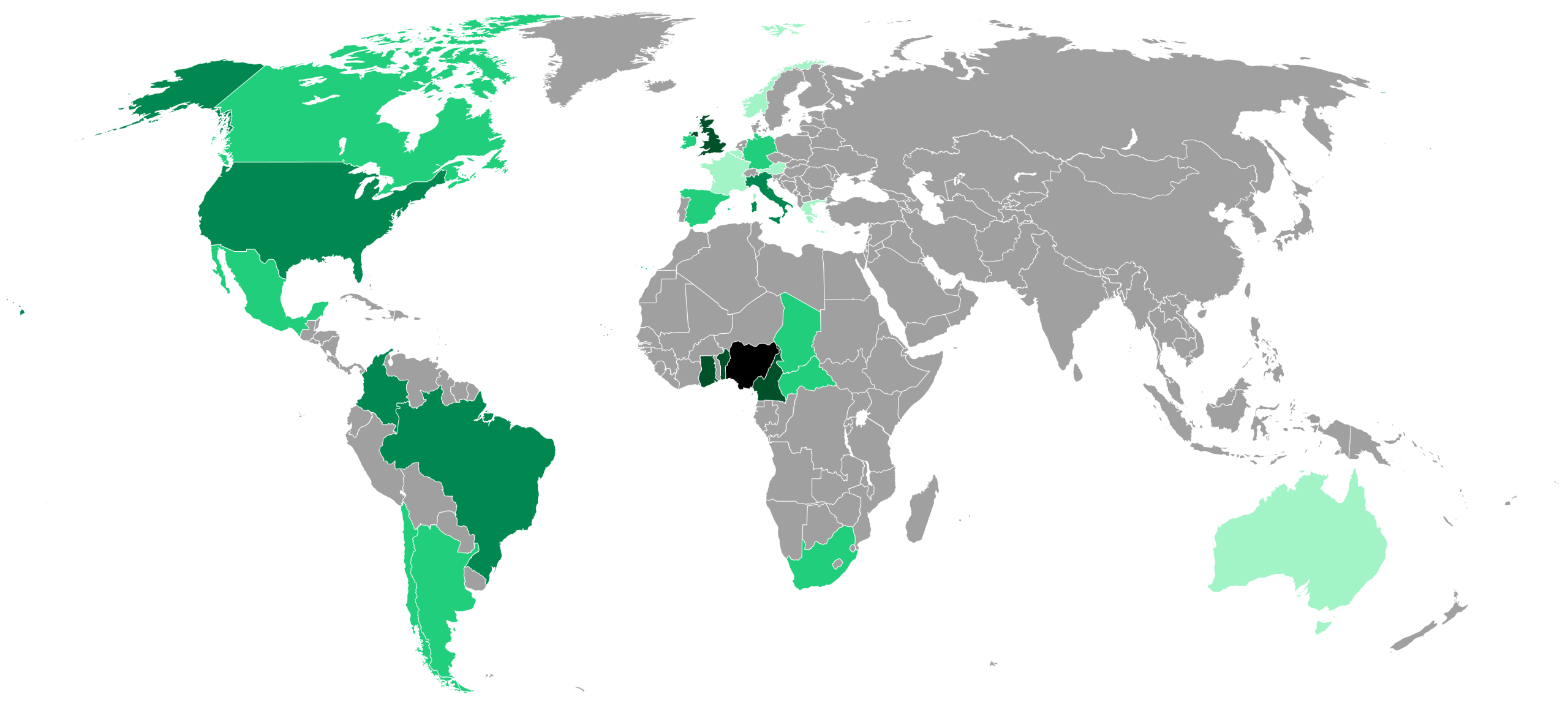
A global visualization of major Nigerian expatriate communities and remittance flows.
| United States | Major hubs in Texas (Houston), New York, Maryland, and Atlanta. Highly educated demographic. |
|---|---|
| United Kingdom | Historic ties. Deep-rooted communities in London (Peckham, Thamesmead). |
| Canada | Rapidly growing destination for skilled workers via Express Entry programs. |
| South Africa | Largest community on the continent outside West Africa; strong business presence. |
| UAE (Dubai) | Significant hub for trade, logistics, and increasingly tech/services. |
| Malaysia/China | Notable presence in Asia driven by higher education and trade. |
Diaspora Impact
How Nigerians abroad shape the nation at home
Diaspora remittances are a pillar of the Nigerian economy, often acting as a buffer during economic downturns. Beyond supporting family consumption, the diaspora actively invests in real estate, local businesses, and increasingly, provides the angel and seed funding driving Nigeria’s booming tech startup ecosystem.
Nigerians abroad are the primary amplifiers of the nation’s “soft power.” The global explosion of Afrobeats and the massive international audience for Nollywood are heavily driven by diaspora consumption and promotion. First and second-generation authors (like Chimamanda Ngozi Adichie) dominate modern African literature.
Recognizing their importance, the government established the Nigerians in Diaspora Commission (NIDCOM), headed by Abike Dabiri-Erewa, to engage expatriates. Key ongoing policy debates include the push for Diaspora Voting rights and the creation of Diaspora Bonds for infrastructure development.
The mass emigration of doctors, nurses, IT specialists, and academics leaves a critical skills gap in Nigeria’s domestic sectors. However, policymakers are increasingly looking at ways to turn this “brain drain” into “brain gain” by encouraging knowledge transfer, remote work, and diaspora-led training initiatives.
Remittances & Flows
Estimates of economic contributions
| Year | Est. Volume (USD) | Note |
|---|---|---|
| 2018 | ~$24.3 Billion | Pre-pandemic peak |
| 2019 | ~$23.8 Billion | Consistent high flow |
| 2020 | ~$17.2 Billion | Pandemic-induced drop |
| 2022 | ~$20.1 Billion | Recovery period |
| Current | To be updated | Check CBN/World Bank |
| Metric (US Census Est.) | Percentage | Comparison |
|---|---|---|
| Bachelor’s Degree or Higher | ~61% | Higher than US average (33%) |
| Master’s/Professional Degree | ~29% | Higher than US average (12%) |
| Management/Professional Roles | ~54% | Highly skilled workforce |
| Labor Force Participation | ~73% | High economic engagement |