Now Reading: Ogbono Soup: Nigeria’s Draw Soup Delight
-
01
Ogbono Soup: Nigeria’s Draw Soup Delight


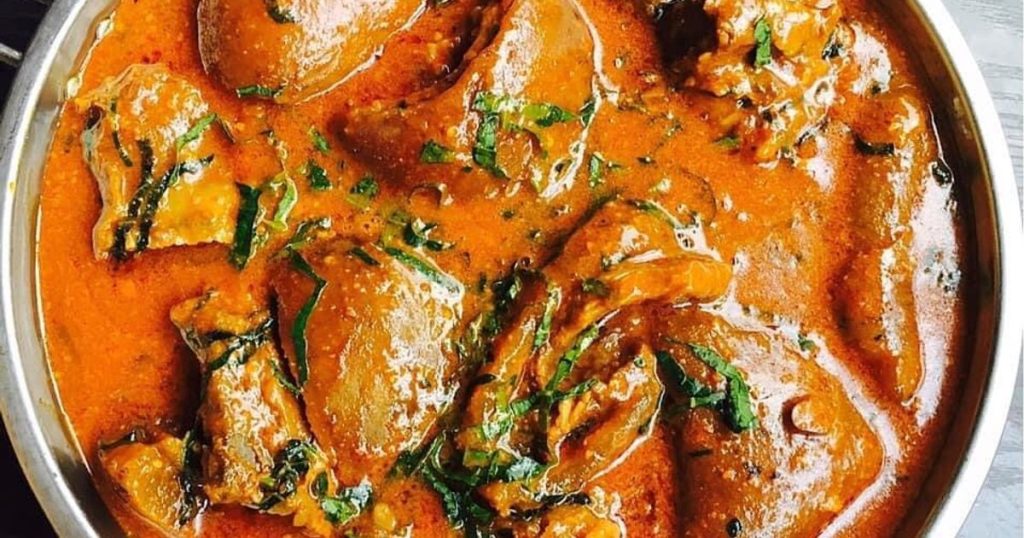
Ogbono Soup, often nicknamed “draw soup” because of its slippery, viscous texture, is one of Nigeria’s most unique delicacies. Made from ground ogbono seeds (wild African bush mango), it’s a hearty dish that pairs perfectly with swallows like eba, amala, or pounded yam. Its rich flavor and smooth consistency make it a favorite across Nigeria.
🌍 Origin & Cultural Significance
Ogbono Soup is deeply rooted in the Igbo culinary tradition, but it’s also loved among the Yoruba, Edo, and Efik peoples.
- Among the Igbo, it’s a staple weekday meal, often cooked quickly after work.
- In Yoruba land, it’s called “apon” and can be served plain or with leafy greens.
- It’s sometimes prepared as a lighter soup in the south-south region, combined with okra for extra draw.
Ogbono represents comfort food—quick to make, filling, and always satisfying.
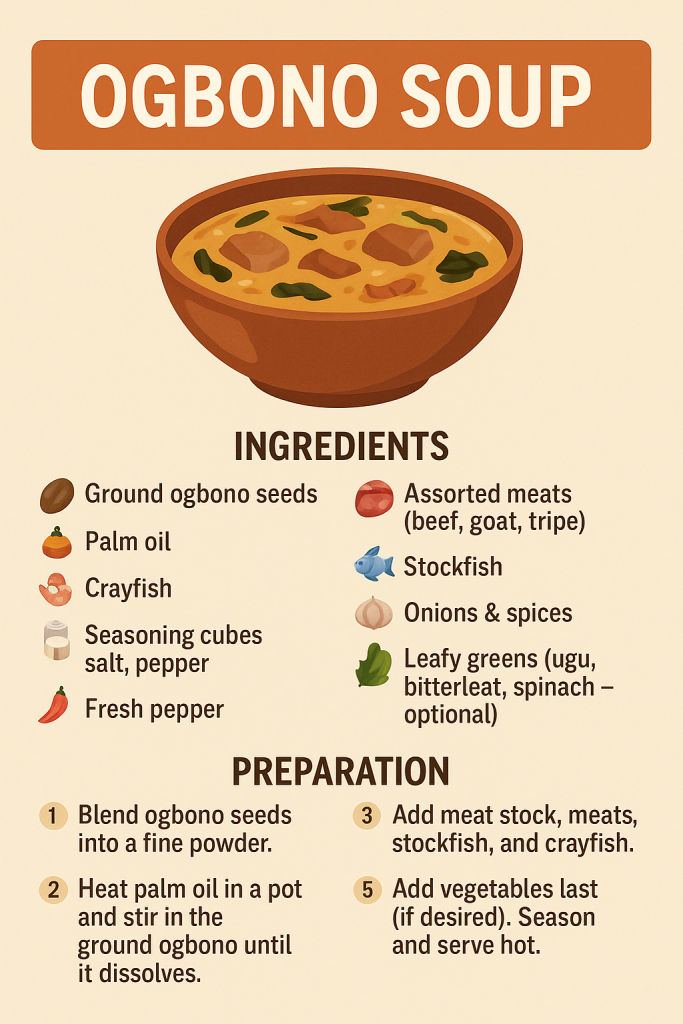
🛒 Ingredients (Basic Version)
- 🌰 Ground ogbono seeds
- 🌴 Palm oil
- 🥩 Assorted meats (beef, goat, tripe)
- 🐟 Stockfish or dried fish
- 🦐 Crayfish
- 🧄 Onions & spices
- 🧂 Seasoning cubes, salt, pepper
- 🥬 Leafy greens (ugu, bitterleaf, spinach – optional)
- 🌶️ Fresh pepper (for heat)
👩🏾🍳 How It’s Prepared
- Blend ogbono seeds into a fine powder.
- Heat palm oil in a pot and stir in the ground ogbono until it dissolves.
- Add meat stock, meats, stockfish, and crayfish.
- Simmer until the soup thickens into its classic stretchy texture.
- Add vegetables last (if desired).
- Season and serve hot.
🍴 How It’s Eaten
Ogbono Soup shines when paired with swallows:
- Eba (garri)
- Pounded yam
- Amala
- Fufu
- Semovita
The slippery texture makes it especially enjoyable with soft, stretchy swallows.
🔄 Variations
- Ogbono with Okra – for an even more “drawy” texture.
- Plain Ogbono – without vegetables, for a smoother consistency.
- Mixed Meat Ogbono – with goat, beef, cow skin (kpomo), and tripe.
🎉 Why Ogbono Soup is Special
Ogbono Soup is a true taste of home—nutritious, quick to prepare, and adaptable to any Nigerian household. Its earthy flavor and unique texture make it a dish that both locals and diaspora Nigerians crave.
📌 Fun Fact: Ogbono seeds come from the African bush mango (Irvingia gabonensis), a fruit also valued for its medicinal properties and dietary fiber.










Related Posts
Stay Informed With the Latest & Most Important News
Previous Post
Next Post


Advertisement