Now Reading: Egusi Soup: Nigeria’s Melon Seed Delight
-
01
Egusi Soup: Nigeria’s Melon Seed Delight
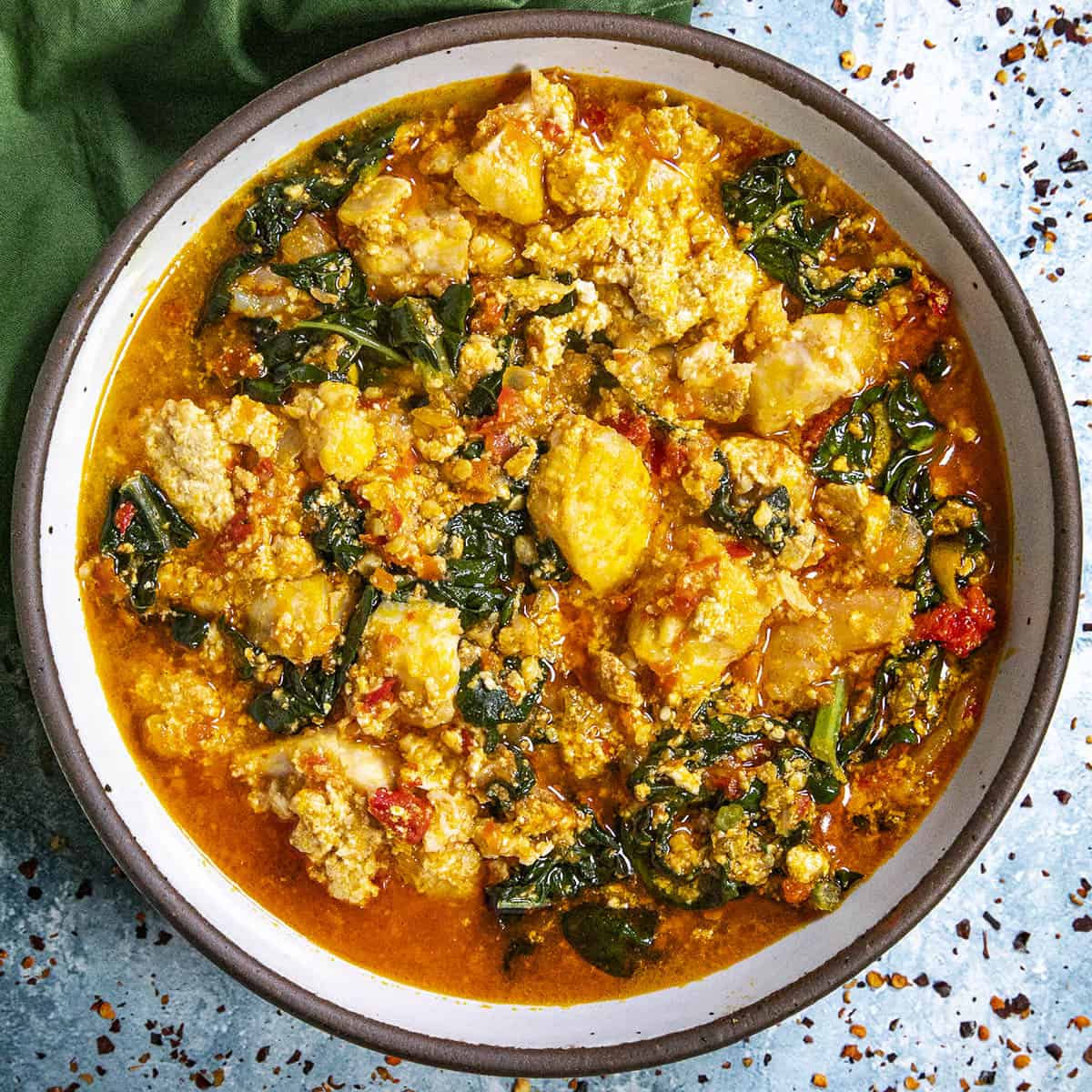

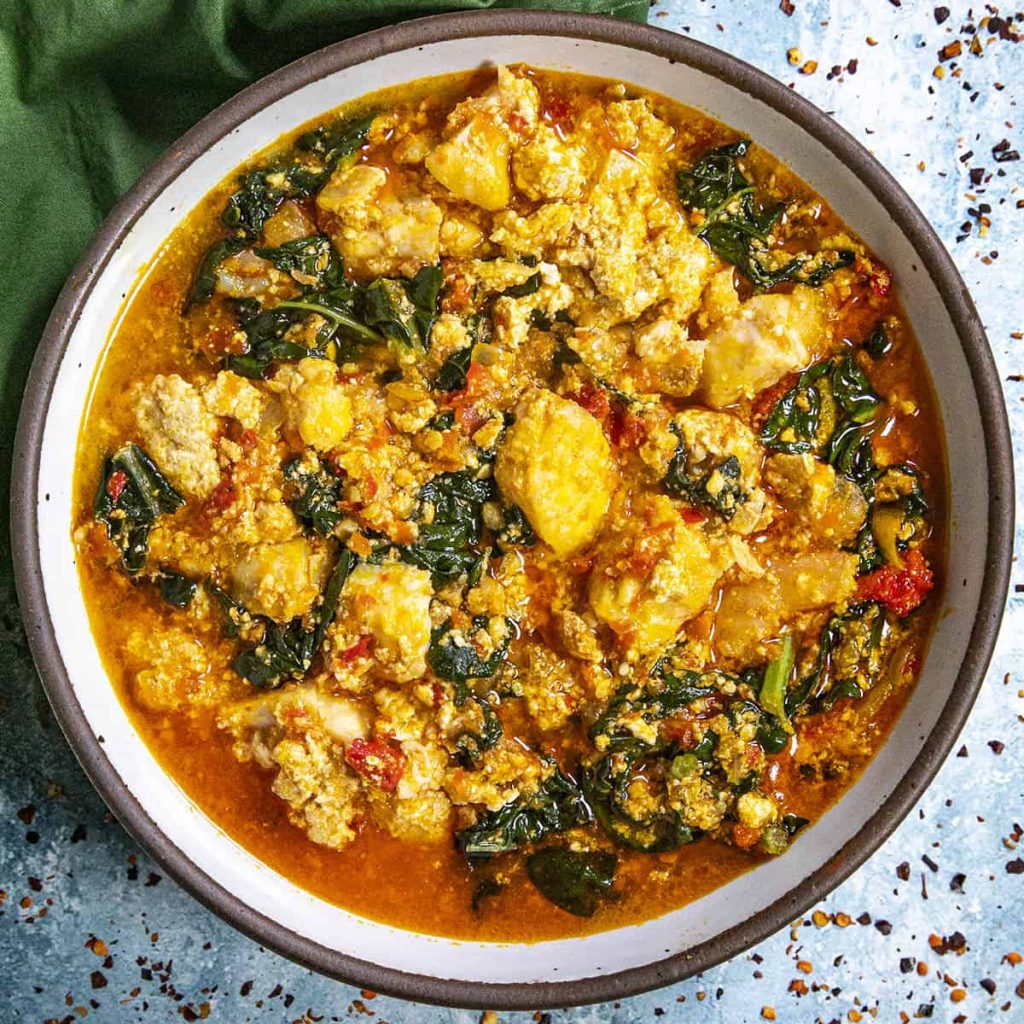
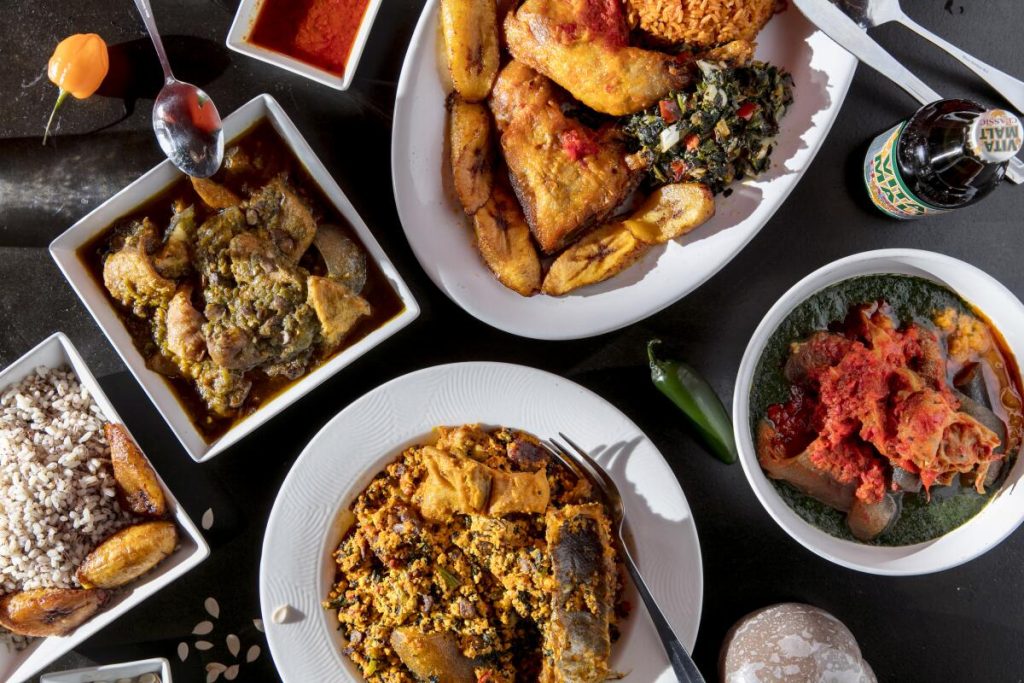
Egusi Soup is one of the most beloved dishes in Nigeria. Rich, hearty, and deeply flavorful, it represents the soul of Nigerian cuisine. Made from ground melon seeds, palm oil, vegetables, and assorted meats, Egusi is a dish that unites families across tables and is enjoyed in almost every corner of the country.
🌍 Origin & Cultural Significance
Egusi Soup is eaten by many ethnic groups in Nigeria, but it holds special importance among the Yoruba, Igbo, and Edo people.
- For the Yoruba, Egusi is often cooked thick and eaten with pounded yam.
- Among the Igbo, it’s commonly enriched with bitterleaf or ugu (pumpkin leaves).
- In Edo culture, Egusi is sometimes prepared as a watery stew for rice or starch.
It is a symbol of celebration food, often served at weddings, naming ceremonies, and festive gatherings.
🛒 Ingredients (Basic Version)
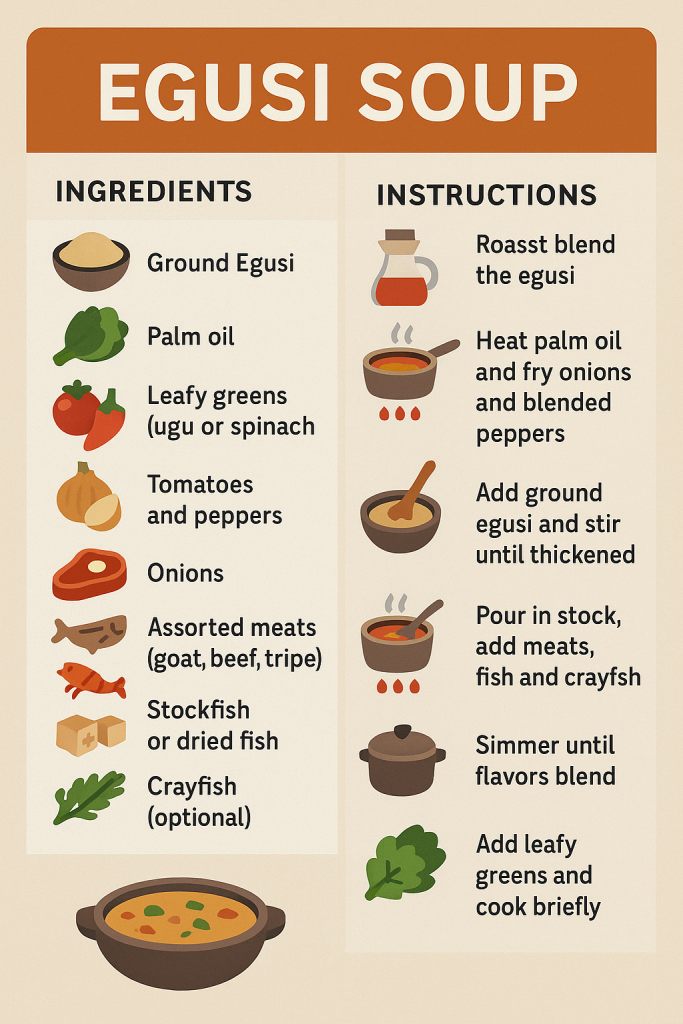
- 🌰 Ground Egusi (melon seeds)
- 🌴 Palm oil
- 🥬 Leafy greens (ugu, bitterleaf, spinach, or kale)
- 🍅 Tomatoes & peppers
- 🧄 Onions
- 🥩 Assorted meats (goat, beef, cow tripe)
- 🐟 Stockfish or dried fish
- 🦐 Crayfish (optional, for extra flavor)
- 🧂 Seasoning cubes, salt, spices
👩🏾🍳 How It’s Prepared
- Roast & blend the egusi into a fine powder.
- Heat palm oil, fry onions and blended peppers.
- Add ground egusi and stir until it thickens.
- Pour in stock and add meats, fish, and crayfish.
- Simmer until the flavors blend.
- Add leafy greens last for freshness.
🍴 How It’s Eaten
Egusi Soup is rarely eaten alone—it comes alive with swallows:
- Pounded Yam (most popular)
- Eba (garri)
- Amala
- Fufu
- Semovita
Some also enjoy it with white rice or plantains, but the classic way is with swallow.
🔄 Variations
- Egusi Ijebu (Yoruba style): lighter, without vegetables, and soupy.
- Lumpy Egusi: where the ground melon seeds are molded into balls.
- Fried Egusi: seeds are fried directly in palm oil before adding water and stock.
🎉 Why Egusi Soup is Iconic
Egusi Soup is more than food—it is a cultural bridge across Nigerian ethnic groups. Its adaptability, nutritional value, and bold taste make it a dish every Nigerian, at home or abroad, proudly calls their own.
📌 Fun Fact: The melon seeds used for Egusi are different from watermelon seeds—they come from a special type of bitter melon native to West Africa.










Related Posts
Stay Informed With the Latest & Most Important News
Previous Post
Next Post
Previous Post

Next Post

Advertisement