Now Reading: Prehistory of Nigeria: From First Settlers to the Iron Age 🌍
-
01
Prehistory of Nigeria: From First Settlers to the Iron Age 🌍


Nigeria’s deep past stretches from Late-Pleistocene hunter-gatherers to inventive farmers, artists, navigators, and early iron smelters. Long before written records, people here were shaping landscapes, painting rock shelters, carving monoliths, and smelting metal—foundations for later historic states.
1) Earliest people (Late Pleistocene → Early Holocene)
At Iwo Eleru (Ondo State), a Late Stone Age burial dated to roughly 11,000 years ago shows a mosaic of features and anchors one of West Africa’s most important early human finds.
2) Rock art & soundscapes of the savanna
Around Birnin Kudu (Jigawa State), rock shelters preserve striking paintings—cattle, hunters, and geometric motifs—testimony to pastoral lifeways and ritual imagination in the mid- to late-Holocene. Nearby rock gongs (ringing stones) hint at prehistoric sound-making traditions.
3) The Dufuna canoe
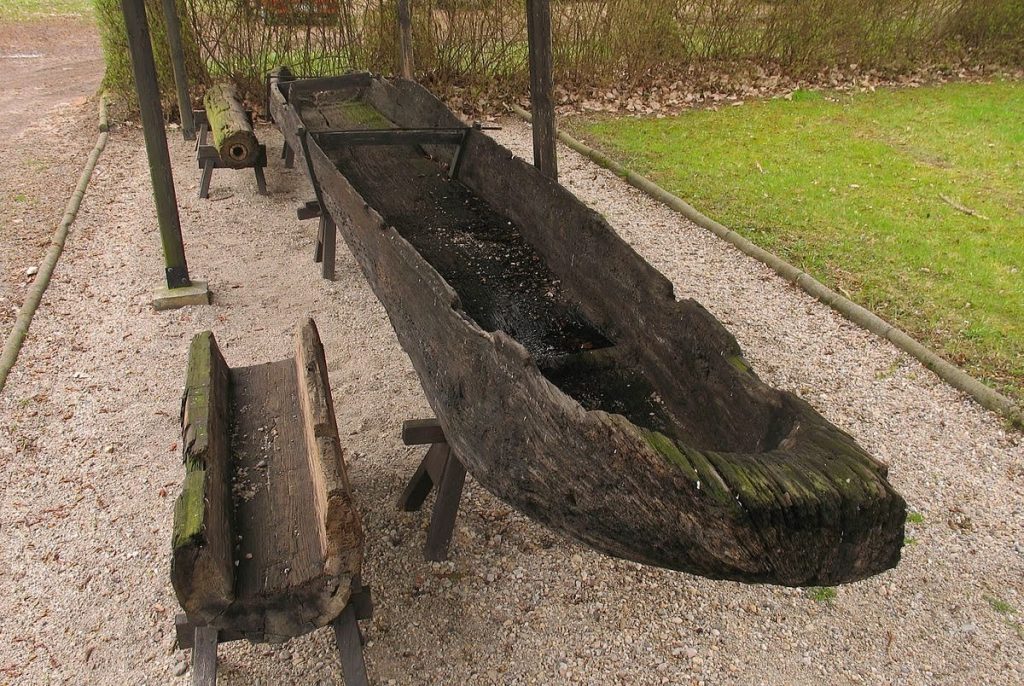
Near Dufuna (Yobe State), an 8.4-metre dugout canoe discovered in 1987 is about 8,000 years old—one of the oldest boats known anywhere. It shows early mastery of large watercraft along the Komadugu-Gana/Lake-Chad system.
4) Early farmers on the Lake Chad frontier
By the early 2nd millennium BCE, the Gajiganna culture (northeast Nigeria) appears with agro-pastoral lifeways. Over time, villages and storage evidence point to the growing importance of pearl millet and other crops as people adapted to Sahara–Sahel climate shifts.
5) Nok terracotta and the rise of iron
On the central plateau, the Nok culture is famed for expressive terracotta sculpture and early iron working. Secure dates cluster roughly 500 BCE–200 CE (with earlier roots at some sites). Nok shows sustained craft specialization, long-distance material movement, and social complexity well before written chronicles.
6) Early iron in the southeast
Large slag mounds and furnaces at Opi and Lejja (Enugu area) place iron smelting firmly in the first millennium BCE. Exact start dates are debated, but the scale of remains marks southeastern Nigeria as a major early iron-working zone.
7) Stone ancestors of the Cross River
In the rainforest east, the Ikom (Akwanshi) stone monoliths—carved pillars arrayed in circles—represent a striking late-prehistoric/early-historic tradition of ancestor veneration and territorial marking, broadly dated to about 200–1000 CE.
A concise timeline
- c. 11,000 years ago — Iwo Eleru burial (Late Stone Age), Ondo State
- c. 8,000 years ago — Dufuna canoe, Yobe State
- ≥ 5th–2nd millennium BCE — Rock art traditions flourish (e.g., Birnin Kudu)
- c. 1800–800 BCE — Gajiganna agro-pastoral communities; millet established by the late 2nd–early 1st millennium BCE
- c. 500 BCE–200 CE (earlier roots possible) — Nok terracotta and iron working
- 1st millennium BCE — Opi/Lejja: large-scale iron smelting in SE Nigeria
- c. 200–1000 CE — Ikom (Akwanshi) stone monolith complexes
Why Nigeria’s prehistory matters
- Independent creativity: From dugout boats to ringing stones, terracotta, and furnaces, Nigeria’s deep past showcases home-grown solutions to changing climates and new social worlds.
- Ecological bridges: Communities linked forest, savanna, and Sahel, knitting river, lake, and plateau ecologies.
- Foundations for later states: Craft specialization, metallurgy, and exchange networks set the stage for historic polities.










Related Posts


Stay Informed With the Latest & Most Important News
Previous Post
Next Post

Advertisement