Now Reading: The Enduring Wisdom of Nigerian Proverbs: A Comprehensive Report
-
01
The Enduring Wisdom of Nigerian Proverbs: A Comprehensive Report

I. Introduction: The Living Archive of a Nation
1.1 Defining the Proverb as a Cultural Artifact
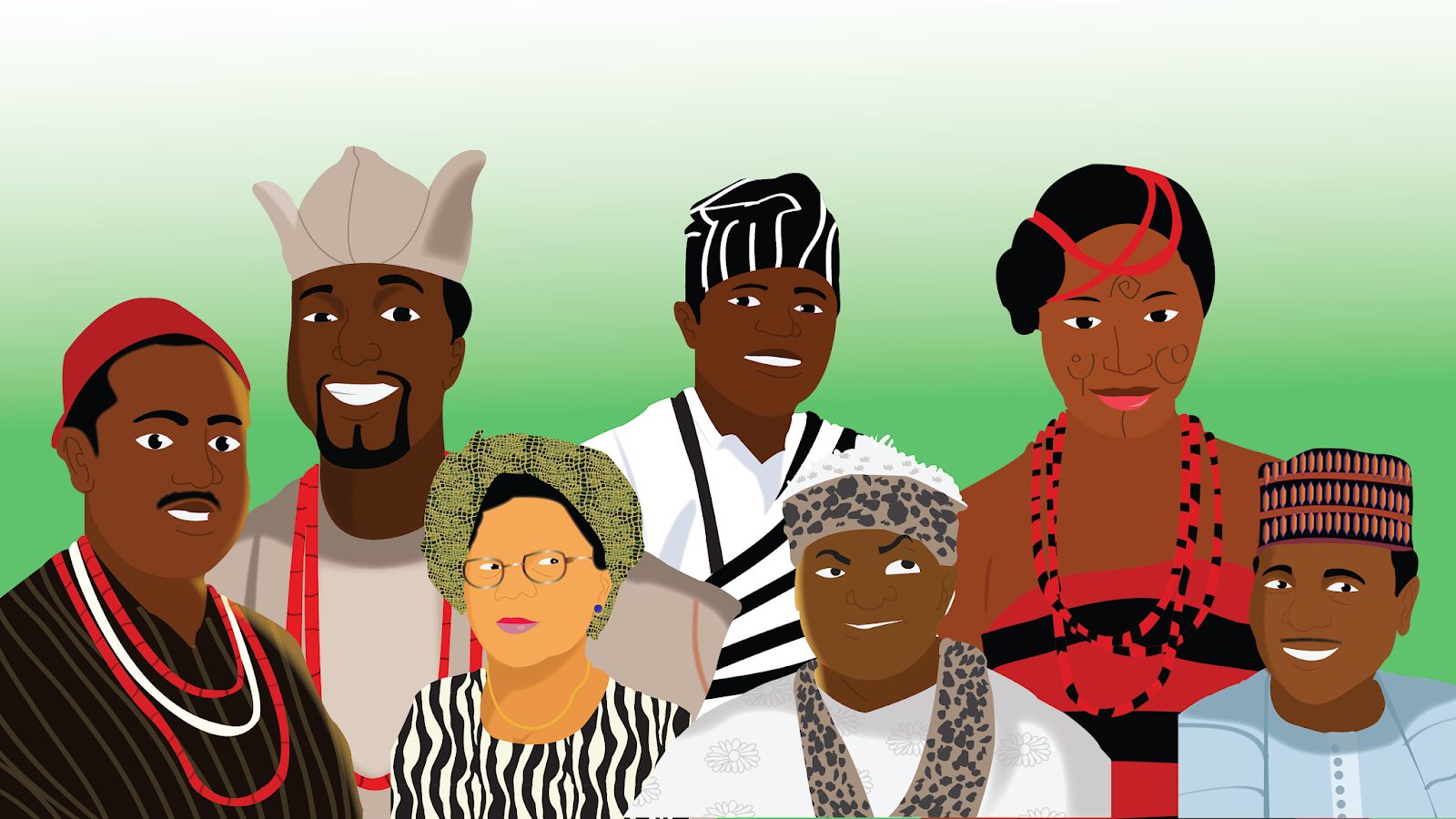
Nigerian proverbs are more than simple sayings; they are concise, artful expressions that serve as foundational repositories of a people’s collective identity and moral philosophy. They are widely recognized as “short, witty, popular expressions that contain morals, truth, socio-cultural precepts and heritage” of a specific group. These expressions function as powerful communicative tools, capable of addressing the very core of a conversation with objectivity and sincerity. Across Nigeria’s diverse ethnic landscape, every community has its own set of maxims and popular sayings, meticulously crafted and refined over countless generations. These proverbs act as “carriers of culture,” providing the essential “building blocks for wise living and good moral life”. Through their transmission from one generation to the next, they ensure the perpetual relevance of cultural nuances, thereby anchoring individuals and societies in their historical and ethical context.
The significance of proverbs extends beyond mere communication; they are enduring cultural relics that have survived the deconstructions of time due to their brevity, profound meaning, and expressive power. As a powerful meta-proverb from Chinua Achebe’s literary canon states, “Proverbs are the palm-oil with which words are eaten”. This analogy highlights their indispensable role in making discourse palatable, profound, and persuasive. The judicious use of proverbs is not a trivial act but a sign of intellect and wit, elevating ordinary speech to a higher, more impactful level of discourse. They are, in essence, the verbal tapestry upon which the truths of Nigerian society are woven.
1.2 The Oral Tradition and Intergenerational Transfer
The enduring legacy of Nigerian proverbs is inextricably linked to the strength of the nation’s oral traditions. These expressions are not static, written rules but living, dynamic forms of communication transmitted orally across generations, ensuring the continued relevance of cultural nuances and values. This process is a cornerstone of “traditional education,” serving as a primary means for the transfer of cultural knowledge, norms, and ethics to younger members of society. Unlike a fixed written text, a proverb’s meaning is continually re-interpreted, negotiated, and validated within the context of spoken dialogue.
This reliance on oral transmission necessitates a shared, communal understanding of context and history. The full meaning of a proverb is not inherent in its words alone; it is derived from the collective memory and shared assumptions of the speakers. This communal validation explains why the context of an utterance is so crucial to the complete understanding of a proverb. For the members of a Nigerian linguistic community, the proverb is more than just a tool for speech; it is a fundamental part of their identity. The deep connection between language and the human experience, as explored by scholars like Peirce and Wittgenstein, underscores that one’s language is a summary of one’s reality and self. For Nigerians, this suggests that their proverbial wisdom is not a separate body of knowledge but an intimate part of who they are, a reflection of their very being and their world.
II. The Philosophical and Cultural Foundations of Nigerian Proverbs
2.1 Proverbial Lore as Collective Thought
Proverbs serve as a unique vehicle for collective thought, carrying the weight of a people’s beliefs, customs, and traditions. They are considered “iconic and indexical” of the cultures that give birth to them, encapsulating a society’s worldview and attitudes in a compact form. Proverbs are a form of
doxa, or common opinion, that portray fundamental facts, universal truths, and deeply held cultural values. They are signs from a particular culture’s “semiosphere,” a realm of signs and meanings that defines a community. The philosophical connection between language and the world, articulated by thinkers who suggest that the boundaries of one’s language define the boundaries of one’s world, is particularly salient here. For a Nigerian, the language of proverbs is not merely an external tool; it is the sum total of their identity and a replication of their cultural reality.
2.2 Core Ethical and Spiritual Concepts
Nigerian proverbs are deeply embedded in the ethical and spiritual concepts that guide daily life. In Yoruba culture, proverbs are a vital component of the “ways of speaking” and a key instrument for communicating and practicing the concept of omoluabi. This concept, which translates to “good character,” is a universal thread that runs through many world cultures and is considered fundamental to the overall flourishing and wholeness of Yoruba society. Proverbs are not just a description of
omoluabi; they are the very foundation upon which moral positions can be established and communicated, serving as a rhetorical force to expose societal ills and reclaim virtues.
In Igbo culture, the relationship between personal will and spiritual destiny is captured in the proverb, “Onye kwe, chi ya ekwe,” which translates to “If a person agrees, their personal god agrees”. This statement reveals a sophisticated philosophical synthesis of fate and free will. The proverb does not suggest that a person’s
chi (personal god) determines their destiny in a passive, fatalistic manner. Instead, it posits a causal relationship: a person’s determination, courage, and resolve precede and activate divine support. This turns a potentially resigned belief in destiny into an active and empowering philosophy of resilience and self-determination. It provides a moral and spiritual framework for hard work, implying that one’s own efforts are the key to unlocking divine assistance.
A comparative analysis of proverbs across different Nigerian ethnic groups reveals a shared tapestry of wisdom, despite linguistic and cultural variations. For instance, the Yoruba proverb, “The child of an elephant will not be a dwarf” , and the Igbo proverb, “A lion will not give birth to a goat” , both convey the identical message about inherited traits and the principle of begetting one’s own kind. This cross-cultural consistency demonstrates that while the literal expressions may differ, the underlying truths and values are often universal across the diverse communities of Nigeria.
III. The Art of Interpretation: Deconstructing Proverbial Meaning
3.1 The Three Levels of Interpretation
The true power and depth of Nigerian proverbs lie in their multilayered nature, requiring interpretation on at least three levels: the literal, the figurative, and the contextual. The literal meaning is the most direct and apparent, but it is often a source of “conversational incongruity” when the proverb is used in a non-literal setting. The figurative or metaphorical meaning is the “second-order” understanding that is productive and often provides the intended wisdom. Finally, the contextual meaning is the ultimate and most complete interpretation, as it is shaped by the specific social situation and the shared worldview of the participants. The full significance of a proverb is only unlocked when a person can fluidly navigate these three layers of meaning, moving from the surface-level words to the deeper, situation-specific wisdom.
3.2 Linguistic Mechanisms of Interpretation
Linguistic and cognitive processes are essential for deciphering the figurative meaning of proverbs. One key mechanism is “reference mapping,” where a hearer maps the non-literal terms of a proverb to real-life referents based on the conversation’s context. For example, in the Yoruba proverb, “Bí gbogbo igi bá ń wó pa’ni, kì í ṣe bí ti igi ata,” which translates to “If a person were to be killed by a tree, it wouldn’t be by the pepper shrub,” the listener instinctively recognizes the incongruity. The literal meaning is an assertion about the physical properties of trees, but the figurative use is a comment on social hierarchy. The listener maps
igi (tree) to a metaphor for “authority” (e.g., a department head) and igi ata (pepper shrub) to a metaphor for “counterfeit authority” (e.g., a typist). This process reveals that the interpretation of proverbs is not a passive reception of information but an active cognitive act of translating natural phenomena into a social critique. The proverb becomes a tool for subtly challenging or mocking an unworthy superior.
Some proverbs also rely on wordplay, necessitating the “decomposition of pun” to resolve conceptual incongruity and uncover the intended meaning. This intricate process underscores that proverbs are not merely static expressions but dynamic intellectual puzzles that engage the mind, requiring listeners to actively participate in the creation of meaning.
The following table provides a clear, analytical breakdown of how this process works in practice, using examples from different Nigerian cultures.
Table 2: Proverbial Interpretation Breakdown
| Proverb (Original Language) | Literal Translation | Figurative Meaning/Interpretation | Example Context of Use |
| Igbo: “Onye ji onye n’ani ji onwe ya” | A person who holds another down in the mud must stay in the mud to keep them down. | The act of harming another person for one’s own benefit is a form of self-inflicted harm. One’s own well-being is intrinsically linked to the well-being of the community. | Used to advise against vindictive or destructive behavior that creates a situation of mutual loss for all parties involved. |
| Yoruba: “Agoro ti o gbon sasa ebiti pa a ambotori malaju” | The Ago is caught in a trap: how much more the Malaju? | If an exceptionally cunning and wise person falls prey to a certain trap or problem, it is even more likely that a less cunning person will be caught in the same predicament. | Used as a warning to those who may be overconfident, especially when a wise or powerful person has already faced defeat in a similar situation. |
| Hausa: “Komai nisan jifa kasa zai fado” | No matter how far upward a thing is thrown it will come down. | The proverb asserts that all things, whether material possessions, power, or even a person’s fortunes, are temporary and will eventually decline or reach their end. | Used to caution a person who is overly boastful or arrogant about their success, reminding them of the impermanence of fortune. |
IV. A Thematic Compendium of Nigerian Proverbs and Their Wisdom
Nigerian proverbs encapsulate a wide range of human experiences and observations, offering guidance on wisdom, social relations, morality, and resilience. They reflect a philosophical worldview that normalizes hardship and frames it as a necessary, character-defining part of life’s journey.
4.1 Wisdom and Prudence
A core theme across Nigerian cultures is the veneration of wisdom and the importance of prudence. The Yoruba proverb, “What an old man sees while lying down, a young man can never see even when he climbs up in a tree,” powerfully illustrates the value of inherited wisdom and life experience over youthful vigor and superficial vantage points. Similarly, the Hausa saying, “Not to know is bad; not to wish to know is worse,” highlights that a lack of knowledge is a lesser fault than an absence of curiosity and a refusal to learn. This theme is echoed in Igbo culture by the proverb, “A person who asks questions does not lose their way” , which encourages humility and the seeking of guidance as a pathway to avoiding mistakes and achieving success. The collective message is that true wisdom is not about physical prowess or intellectual arrogance but about respect for the experience of others and a perpetual openness to learning.
4.2 Community and Social Relations
Proverbs also function as a social operating system, prescribing norms for communal living and social harmony. The Igbo proverb, “Onye ji onye n’ani ji onwe ya,” or “A person who holds another down in the mud must stay in the mud to keep them down,” is a profound metaphor for mutual destruction and the interconnectedness of human well-being. This proverb teaches that one’s fate is inextricably linked to the fate of the community, and that actions intended to harm others ultimately harm oneself. Another powerful Igbo maxim, “Egbe bere, ugo bere, nke sị ibe ya ebela, nku kwa ya,” which means “Let the kite perch, let the eagle perch; if one says the other should not, let its wings break,” serves as a foundational principle of coexistence and inclusivity. This proverb advocates for a “live and let live” philosophy, promoting the sharing of space and opportunities in a diverse and complex society.
4.3 Morality and Consequences
Proverbs frequently serve as moral compasses, offering advice on integrity and the inevitability of consequences. The Yoruba saying, “He who sleeps with an itchy anus will wake up with their hands smelling,” is a humorous but pointed reminder that private misdeeds will eventually be exposed to public scrutiny. In Igbo tradition, the principle of accountability is expressed succinctly in “Ihe onye metara o buru,” which translates to “Whatsoever one’s actions are, they must be prepared to face the consequences”. This emphasizes personal responsibility and the direct link between cause and effect. The Hausa proverb, “The grass which you disregard will injure your eye,” serves as a warning against underestimating seemingly insignificant people or matters, asserting that even the smallest perceived threat can cause harm if ignored.
4.4 Resilience and Self-Reliance
A recurring and potent theme in Nigerian proverbs is the philosophy of struggle, resilience, and self-reliance. The Hausa proverb, “Ba a shan zuma sai an shah harbi,” or “Success comes after tears,” normalizes the idea that nothing worthwhile is achieved without effort and hardship. This is complemented by the Igbo proverb, “Mberede nyiri dike mana mberede ka eji ama dike,” which asserts that while difficulties may constrain a warrior, it is the act of overcoming them that truly makes one a warrior. The Yoruba saying, “Only the thing for which you have struggled will last,” reinforces the value of perseverance, suggesting that enduring success is a direct result of personal effort and struggle. These proverbs collectively present a worldview where hardship is not a curse but a necessary and even character-defining part of the journey to success.
The following table provides a comprehensive overview of these thematic proverbs across the major Nigerian ethnic groups.
Table 1: Thematic Proverbs by Ethnic Group
| Theme | Yoruba Proverbs | Igbo Proverbs | Hausa Proverbs |
| Wisdom | “What an old man sees while lying down, a young man can never see even when he climbs up in a tree.” | “A person who asks questions does not lose their way.” | “Not to know is bad; not to wish to know is worse.” |
| Community | “A man who has one finger pointing at another has three pointing towards himself.” | “Let the kite perch, let the eagle perch; if one says the other should not, let its wings break.” | “Quantity makes the cotton draw a stone.” |
| Morality | “He who sleeps with an itchy anus will wake up with their hands smelling.” | “Whatsoever one’s actions are, they must be prepared to face the consequences.” | “The grass which you disregard will injure your eye.” |
| Resilience | “Only the thing for which you have struggled will last.” | “Difficulties constrain a warrior, but overcoming those difficulties is what makes them a warrior.” | “Success comes after tears.” |
V. Proverbs in Public Discourse and Modern Narratives
5.1 The Strategic Use of Proverbs in Public Discourse
In traditional Nigerian society, proverbs are not merely decorative elements of speech but strategic rhetorical tools used in formal and informal discourse. They are employed to “illustrate ideas, reinforce argument, clarify issues and deliver messages of inspiration, consolation, celebration and advice”. By using a proverb, a speaker can convey “precise moral lessons, warnings and advice” with a “greater impact on the mind than ordinary discourse,” as the proverb carries the weight of collective wisdom. In public oratory, legal proceedings, and counseling, proverbs are used to “unify different perspectives” and resolve complex situations. Their use is considered a mark of wit and intellectual prowess.
5.2 The Literary Canon: Chinua Achebe and Wole Soyinka
Nigerian writers have masterfully integrated proverbs into their literary works, elevating them from simple folk sayings to complex literary devices. Chinua Achebe, in particular, saturates his novel Things Fall Apart with proverbs to establish the cultural norms and values of the Igbo people and to authenticate the narrative. Proverbial wisdom, such as “A man who pays respect to the great paves the way for his own greatness,” is used to build characters and to comment on their actions within the cultural context of the story. The proverbs serve as a powerful tool for readers to understand the characters’ motivations and the societal pressures that drive the plot forward.
Wole Soyinka, a Nobel laureate, offers a more intellectual and modern use of the proverb form. His famous quote, “A tiger does not proclaim his tigritude, he pounces,” represents a profound philosophical statement on authenticity and identity. This marks a significant evolution in the use of proverbs. While traditional proverbs are often rooted in anonymous, collective wisdom, Soyinka’s statement is a self-aware, intellectual declaration by a singular voice. It demonstrates how the form can be adopted and adapted by a modern intellectual to make a contemporary philosophical point, bridging the gap between ancient oral tradition and modern thought. The statement critiques the superficiality of merely professing an identity, instead asserting that true character is revealed through action.
5.3 The Digital Age: Proverbs in Nollywood and Pop Culture
The cultural significance of proverbs has not diminished in the modern era; rather, it has evolved and adapted to new mediums. The proverbs of legendary Nollywood actor Pete Edochie, for example, have become a new, urban form of wisdom disseminated through film and social media. These expressions are often humorous, direct, and sometimes irreverent, reflecting the changing social landscape. For example, “The buttocks are like a married couple though there is constant friction between them, they will still love and live together” offers a comical but insightful commentary on the nature of long-term relationships.
This shift from agrarian and nature-based metaphors (e.g., cows, hens, bushes) to modern, urban ones (e.g., ATM machines, razors, car carcasses) is a testament to the enduring relevance and creative adaptability of the proverb form. The wisdom remains timeless, but the packaging and delivery adapt to reflect a new societal reality. The attribution of these sayings to a specific, well-known individual like Edochie also signals a cultural move away from anonymous, collective authorship towards a more individualistic, celebrity-driven culture. This evolution shows that the proverb is a living, breathing art form that continues to serve as a vital guide for navigating the complexities of contemporary Nigerian life.
VI. Conclusion: The Enduring Wisdom of a People
Nigerian proverbs stand as a testament to the nation’s rich and profound cultural heritage. They are not static relics of the past but a dynamic, living archive of a people’s history, values, and philosophical outlook. As this report has demonstrated, proverbs serve multiple functions: they are carriers of culture, tools for moral instruction, social operating systems that guide community interactions, and a creative art form that continues to evolve.
The analysis has revealed that the power of a proverb lies in its ability to operate on multiple levels of meaning, from the literal to the deeply contextual. The cognitive processes required for their interpretation, such as reference mapping, highlight a sophisticated mode of thought that translates universal truths into situation-specific guidance. The consistent thematic wisdom across different ethnic groups, from the veneration of experience to the philosophy of resilience, demonstrates a shared foundation of Nigerian identity.
The role of proverbs in modern narratives—from the literary genius of Achebe and Soyinka to the contemporary humor of Nollywood—shows their enduring relevance and adaptability. They are a powerful link between generations, ensuring that ancient wisdom remains a guiding force in a rapidly globalizing world. The proverb, “A man who falls into a well will seize even the edge of a sword,” reminds us that in times of crisis, individuals instinctively cling to the enduring wisdom that has guided their ancestors for generations. In a world of increasing uncertainty, Nigerian proverbs are not just a record of a bygone era; they are a living, breathing guide to navigating the future. The preservation of this oral tradition is not merely an academic exercise but a cultural imperative to ensure that this profound source of identity and timeless wisdom continues to endure.










Related Posts



Stay Informed With the Latest & Most Important News
Previous Post
Next Post


Advertisement