Now Reading: Indigenous Nigerian Belief Systems: Cosmology, Social Structures, and Contemporary Relevance of Yoruba, Igbo, and Hausa Traditions
-
01
Indigenous Nigerian Belief Systems: Cosmology, Social Structures, and Contemporary Relevance of Yoruba, Igbo, and Hausa Traditions
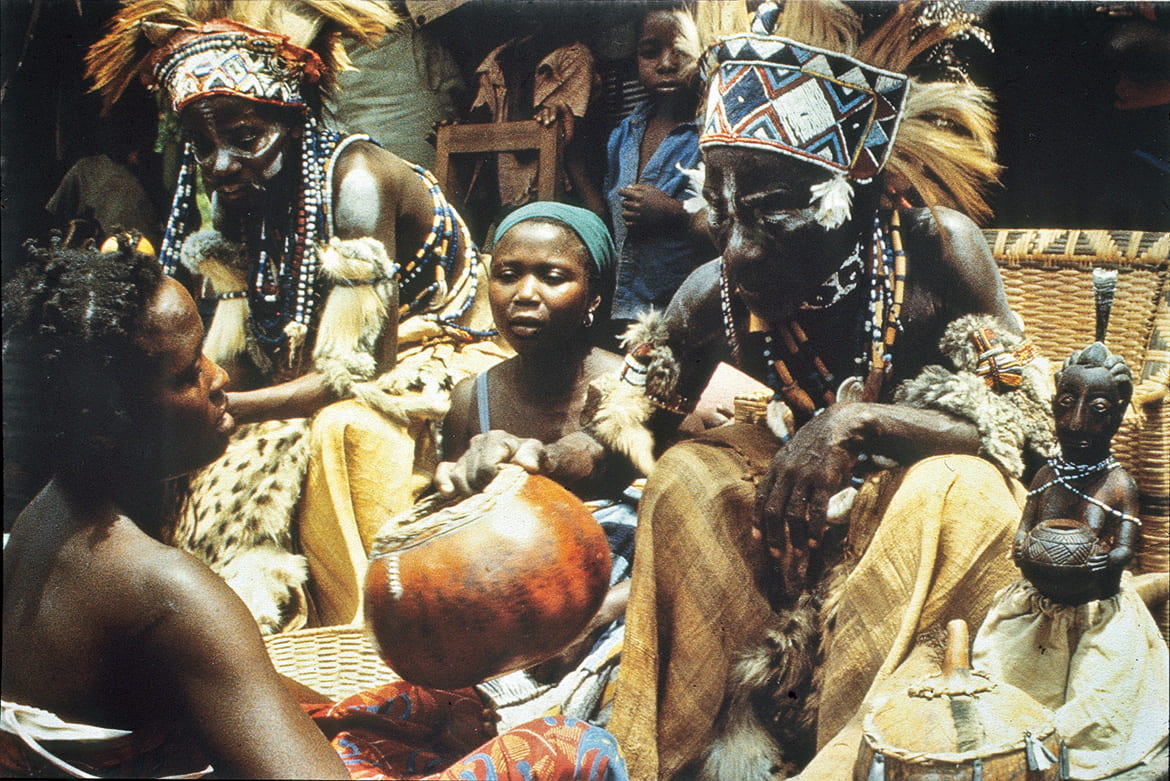
Indigenous Nigerian Belief Systems: Cosmology, Social Structures, and Contemporary Relevance of Yoruba, Igbo, and Hausa Traditions

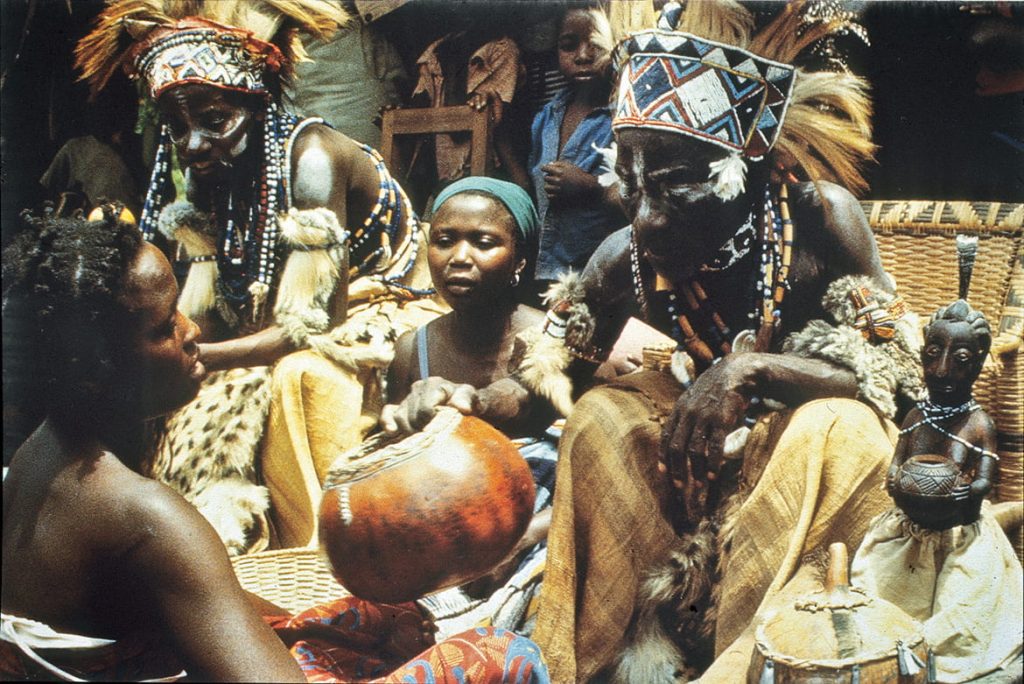
I. Introduction: Framing the Nigerian Religious Landscape
1.1. Overview of Nigeria’s Religious and Ethnic Diversity
Nigeria is a country of immense religious and ethnic pluralism, characterized by a complex tapestry of indigenous practices, Muslim trade routes, and Christian missionary activities that have shaped its spiritual and cultural identity for centuries. While contemporary demographics reflect a near-even split between Islam, predominantly in the northern regions, and Christianity, prevalent in the south, this binary view belies the rich and resilient tradition of indigenous faiths. These traditional belief systems, practiced by millions of Nigerians, are not merely relics of the past; they remain a cornerstone of social, cultural, and political life, influencing festivals, governance, and communal identity. This report will conduct a detailed, expert-level analysis of the indigenous belief systems of Nigeria’s three largest ethnic groups—the Yoruba, Igbo, and Hausa—to reveal the complexity and interconnectedness of spirituality in the region.
1.2. Historical Context and Defining Concepts
Traditional Nigerian belief systems are living, dynamic traditions that have demonstrated remarkable resilience by adapting and, in many cases, coexisting with imported religions. This process of merging different belief systems, known as syncretism, is a defining characteristic of Nigerian spirituality. The historical record shows that this blending has been a feature of Hausa society for centuries and that attempts to suppress indigenous practices, such as the Bori cult, instead led to their institutionalization and adaptation. This analysis will explore foundational concepts such as cosmology, which is the understanding of the universe and its origins; the role of various intermediaries between humanity and a supreme creator; and the deep, intrinsic connection between the spiritual and physical realms that permeates all aspects of life.
1.3. Structure of the Report
This report is structured as a comprehensive analysis, moving from a general overview to specific, detailed case studies of the Yoruba, Igbo, and Hausa traditions. It will then provide a comparative analysis to highlight shared themes and unique characteristics before concluding with an examination of the contemporary challenges and the enduring legacy of these belief systems in modern Nigeria. The objective is to provide an exhaustive and nuanced perspective that goes beyond a superficial description, demonstrating the profound philosophical and social depth of these traditions.
II. The Yoruba Tradition: A Pantheon of Deities and the Path of Ifa
2.1. Cosmology and Hierarchy
The Yoruba cosmos is meticulously structured in a clear hierarchy that reflects a sophisticated understanding of divine power and its distribution. At its apex is
Olodumare, also referred to as Olorun, the self-existent, supreme Creator of all things. Olodumare is not directly worshipped with altars or rituals but is universally recognized as the ultimate source of existence. The supreme deity’s presence is made manifest and is active in the world through a fundamental life force known as
aṣẹ (Ashe).
The concept of aṣẹ is a profound philosophical underpinning of Yoruba cosmology, serving as a dynamic power or authority that sustains and transforms the universe. It is not merely a “life force” but the very power to make things happen, an enabling energy given by Olodumare to all things, including the gods, ancestors, humans, and even inanimate elements like rain, thunder, and rocks. This widespread distribution of
aṣẹ throughout the natural world links the divine directly to the physical realm, allowing for spiritual forces to be perceived in tangible phenomena.
Below Olodumare are the numerous divinities known as Orishas (orishas). The Orishas are not independent, polytheistic gods in the Western sense but are considered emanations, avatars, or functionaries of the Creator, each having a specific sphere of influence. They were sent to Earth to assist in the spiritual and physical evolution of humankind. Therefore, the power of the Orishas and the efficacy of rituals are not inherent to the entities themselves but are manifestations of the supreme
aṣẹ delegated by Olodumare. This structural arrangement reveals that the Yoruba belief system, despite its diverse pantheon, is rooted in a core monotheistic principle where all power and existence ultimately trace back to a single, ultimate source.
2.2. The Pantheon of Orishas and Their Influence
The Yoruba pantheon is extensive, with tradition holding there are over 400 + 1 Orishas, representing an infinite range of divine possibilities. These deities are not worshipped as physical objects, such as stones or rivers, but as the life force, energy, and consciousness residing within them. They act as crucial intermediaries between the human and divine realms.
- Obatala, known as the “Lord of the White Cloth,” is the deity of creation. According to one version of the creation myth, Obatala was delegated control of the world by Olorun and then created the first man and woman from clay. This role as the primordial artist makes him the patron deity of artistry and creation, a function that is deeply revered in Yoruba culture.
- Shango is a powerful and revered deity of thunder and lightning, who is considered the most powerful Orisha after Obatala. He is also known as Jakuta, which translates to “Hurler of Stones”.
- Oshun is the goddess of fertility, love, and beauty. She is associated with the Osun River and plays a central role in the annual Osun-Osogbo festival, a UNESCO World Heritage site that draws thousands of participants annually to renew the pact between the community and the divine.
- Orunmila holds a central and unique position as the prophet and deity of wisdom. He is regarded as God’s second-in-command, present at creation and embodying a messianic status. Orunmila developed and expounded the esoteric divination system known as Ifa, which is the primary method for seekers to understand themselves and their destiny.
The creation story itself is not a fixed, singular narrative but has multiple versions that reflect the fluidity of Yoruba belief. One version recounts Obatala separating the land from the waters, while another attributes the creation of the Yoruba people to the Orisha Oduduwa. This flexibility suggests that the tradition prioritizes the underlying principles and philosophical functions of the deities over a rigid, historical account, a characteristic vital for a tradition preserved and adapted through oral means.
2.3. The Oracle of Ifa and the Quest for Destiny
The Ifa system is an ancient and highly complex divination practice that represents the core of Yoruba spiritual inquiry. It is based on the teachings of Orunmila, whose wisdom is embodied in the
Odu Ifa, a corpus of 256 verses, stories, and moral teachings that serve as a sacred scripture.
The practice of Ifa is a sacred act of communing with cosmic intelligence. The diviner, known as a
Babalawo (“father of secrets”) or an Iyanifa (female priestess), uses a divining chain (opele) or sacred palm nuts (ikin) on a wooden tray (opon Ifa) to select a specific Odu. The process is not a random fortune-telling exercise but a structured, mathematical system where the patterns created correspond to specific verses within the Odu Ifa. The diviner then recites the relevant verses, and the client, without needing to state their problem directly, selects the one that resonates with their situation.
The purpose of Ifa is not to reveal a fixed destiny (ayanmo) but to provide the means for humans to achieve titete, the alignment of their earthly consciousness (ori) with their heavenly consciousness (iponri). The concept of
ori is central to this practice; it is one’s spiritual intuition and destiny, often personified as an Orisha in its own right. The Yoruba believe that as one’s consciousness elevates toward the divine, their behavior reflects that divinity, leading to the development of
iwa-pele, or a balanced character and attitude. This reciprocal relationship between consciousness and character makes personal responsibility paramount. The divination process with a Babalawo provides the tools, such as sacrifices (
ebo) or herbal remedies (akose), to actively shape one’s fate and overcome obstacles, demonstrating that the individual is not a passive recipient of destiny but an active participant in achieving their highest potential.
2.4. Social and Communal Dimensions
Yoruba society is fundamentally hierarchical, with age and position commanding deep respect and reverence. The family, particularly the extended family, is the bedrock of the social system, regulating behavior and providing social security.
- Traditional Justice: The judicial system is intricately woven into this social hierarchy. Minor civil disputes are settled by the
Olori Ebi(family head). More complex cases can be appealed to theOlori Adugbo(quarter chief) and, ultimately, to the King (Oba) and his council of town chiefs (Igbimo). This tiered system is not arbitrary; it is a divinely sanctioned structure where laws, when promulgated by the king and his council, are implicitly understood as being approved by the deities (Imale) and ancestors (Osi). - Festivals and Rites: Festivals serve as crucial occasions for community building, social expression, and spiritual celebration. The annual Egungun festival is a powerful rite of ancestor worship, where masked figures embody the spirits of the dead. The elaborate, multi-layered cloth costumes are not simply disguises but are the medium through which the spirit’s
aṣẹis made manifest and visible to the community, generating a “breeze of blessing”. The festival is a transformative event where a human becomes an “empty vessel” for the ancestral spirit, re-establishing a vital link between the living and the spiritual worlds. This collective ritual is a prime example of how the belief system fosters social cohesion and reinforces shared identity.
2.5. Art and Symbolism
Yoruba art is not merely decorative; it is functional and inseparable from religious and social life. The tradition is rooted in the cosmology itself, with the creation of humanity being an artistic act commissioned by Olodumare and executed by the deity Obatala. This foundational narrative elevates the artist’s role in society to a spiritual one, where the creation of a physical object is seen as a re-enactment of the primordial act of creation, imbued with
aṣẹ.
- Key Forms: Art is used for divination, shrine beautification, and honoring ancestors. Examples include the
agere Ifabowls for holding palm nuts and the beadedAde(royal crown). - Iconography: The emphasis on the head (
ori) in much of Yoruba sculpture reflects its status as “the seat of the soul”. TheAdeis a particularly powerful symbol; the beaded veil is believed to shield the king’s own face while transforming him into a living embodiment of the divine and the collective ancestors. The custom of creating twin sculptures (Ibeji) to honor deceased twins, who are believed to bring good fortune, also highlights the deep integration of spiritual beliefs into everyday life and the personal quest for well-being.
III. The Igbo Tradition: A Republican Spirit and the Power of the Individual
3.1. Cosmology and Duality
Igbo cosmology is centered on a supreme being, Chukwu (also Chineke, a contraction of Chi na-eke, “God the Creator”), who is the creator of the universe and everything good within it. Chukwu is an omnipotent, omniscient, and undefinable deity who is considered transcendent and far removed from direct human interaction. Below Chukwu is a hierarchy of lesser deities and spirits (
alusi or agbara) who act as intermediaries, representing natural forces and elements. These spirits, in turn, are mediated by priests (
Dibia) who do not directly contact the high god.
3.2. The Concept of Chi
A core philosophical concept is the individual’s Chi, a personalized divine spark assigned by Chukwu at birth. It functions as a guardian spirit or “invisible self,” personifying an individual’s fate and being credited with their successes and failures. The belief in
Chi provides a powerful framework for understanding personal responsibility. The Igbo believe that a person’s Chi can be weak or strong and that their actions and moral character influence it. This dynamic relationship between one’s actions and their spiritual guardian establishes a direct link between spiritual well-being and moral conduct. It also explains the drive to improve one’s social status, which is highly valued among the Igbo, even across multiple lifetimes.
3.3. The World of Deities and Spirits
The Igbo pantheon is rich with powerful deities who are more accessible and intimately connected to human affairs than the distant Chukwu. This “this-worldly” spirituality is a defining characteristic of the tradition.
- Ala: The Earth goddess is arguably the most paramount deity in daily life. She is the proprietor of morality and the source of all law. Offenses against her, such as murder or homicide, are considered abominable. She is also the goddess of fertility and holds the souls of the dead in her sacred womb. The omnipresence of Ala is felt in every minute of an Igbo person’s existence, from farming to burying the dead.
- Amadioha: The god of thunder and lightning, who is also a god of justice. He is known for carrying out vengeance for the weak and is invoked to strike down enemies.
- Anyanwu: The sun deity, whose name translates to “the eye of the light,” is seen as the male counterpart to Ala in the reproductive cycles of crops and is regarded as the “eyes of Chukwu on earth”.
- Ikenga: A personal god personifying a man’s strength, fortune, and fortitude. Each man has a personal shrine to his Ikenga, which is buried with him upon his death. This personal spiritual connection highlights the individualized nature of Igbo spirituality and the emphasis on personal accomplishment.
3.4. Community, Identity, and Rites of Passage
Igbo traditional society is famously decentralized and egalitarian, operating under the maxim, “Igbo enweEze” (Igbos have no king). This is not an accident of history but a direct consequence of their cosmology. The absence of a single, divine monarch reflects the fragmented nature of spiritual authority, which is distributed among the personalized
Chi and the localized alusi.
- Republican Governance: Leadership is not hereditary but based on a consensus-driven system known as “ohacracy”. Power is distributed among a council of elders (
Ndichie), age-grades (Otu-Ọgbọ), titled men (Ozo), and other social institutions. This system ensures that the collective voice and the interests of the less privileged are protected. The age-grades, in particular, play vital roles as a police force, military, and public works body, ensuring law, order, and community development. - Rites of Passage: Igbo culture is rich in ceremonies that mark life’s significant transitions. The Iwa-Akwa ceremony is a key rite of passage for male adolescents, a triennial event that initiates them into manhood. This ceremony is a form of education and social integration, preparing initiates for their new roles as community leaders and protectors. The New Yam Festival (
IriJi), which honors the god of agriculture, Ahiajoku, is a major cultural and religious celebration that marks the harvest and reinforces communal identity.
The difference in governance—centralized Yoruba versus decentralized Igbo—is a direct reflection of their contrasting cosmologies. The Yoruba King (Oba) is a semi-divine figure who embodies the collective ancestors, which justifies a centralized, hierarchical power structure. In contrast, the absence of a divine monarch and the primacy of the individual
Chi in Igbo cosmology necessitates a decentralized, republican system. The law comes from the consensus of the people (oha), not the decree of a king, because the divine authority is too fragmented and personal to be vested in one ruler. This divergence in political structure is a logical consequence of their foundational belief systems.
3.5. Healing and Reincarnation
Healing (Ogwugwo) in the Igbo tradition is a holistic process aimed at restoring harmony between the physical body (ahu) and the spiritual essence (mmuo). The
Dibia (healer/diviner) acts as an intermediary, diagnosing the spiritual cause of ailments and prescribing remedies that may involve herbs, incantations, and sacrifices to the gods. The Igbo also hold a strong belief in reincarnation (
atunwa), which is thought to occur particularly within the family lineage. Deceased souls are said to inhabit a “joyless limbo” and are eager to be reborn to improve their social status. The ability to identify a reincarnated ancestor through birthmarks or behavioral resemblances provides a physical link to the spiritual world, reinforcing the cycle of life and death.
IV. The Hausa Tradition: The Bori Cult and Spirit Possession
4.1. Pre-Islamic Beliefs and the Bori Cult
Before the widespread adoption of Islam, the Hausa people practiced an animistic religion known as Maguzanci or Bori. At the top of their cosmology was a supreme creator,
Ubangiji, who was approached through intermediaries. This role was filled by the spirits, known as
iskoki or aljan, who are believed to be like the people they live among, with unique names and characteristics. The Bori cult, centered on spirit possession and healing, was even a state religion in some precolonial Hausa kingdoms, led by ruling-class priestesses.
4.2. The Practice of Bori
The term “Bori” refers to both the spirits themselves and the rituals performed in their honor. The central ritual is spirit possession, where a Bori spirit “rides” a human, who is called their “horse” or “mare”. This possession is prompted by songs and dances and allows the spirits to communicate with humans to address communal issues like illness or crop failure. The priestess, known as the
Inna (“Mother of us all”), traditionally led these rituals. Bori provided a unique power structure for women in a patriarchal society, as the spirits “prefer to possess women over men”. This created a parallel sphere of influence for women within the spiritual realm that was not available to them in the social or political structure. The practice provided women with a powerful corporate identity and a source of authority, as reflected in the saying, “Bori is one thing—marriage is another”.
4.3. Syncretism and Endurance
Bori has a long and complex history of syncretism, blending pre-Islamic beliefs with Islam. The arrival of the Sokoto Caliphate in the 19th century, which condemned and banned Bori, was a pivotal moment in its evolution. Rather than disappearing, Bori was institutionalized as an autonomous religion in pockets of resistance and survived by integrating aspects of Islam. The syncretism is evident in the inclusion of new spirits, including Muslim or foreign ones, and the fact that Bori coexists with Islam today. Despite this, Bori remains stigmatized by orthodox Christians and Muslims , a consequence of religious intolerance that has challenged the historical pluralism of Hausa society.
V. Comparative Analysis: Unifying Themes and Divergent Paths
The indigenous traditions of Nigeria’s three major ethnic groups, while distinct in their specifics, share a number of core philosophical and structural similarities. These parallels highlight a sophisticated and consistent spiritual worldview that underpins the diverse cultures.
5.1. Cosmological Hierarchy
A fundamental similarity across all three traditions is the presence of a remote supreme creator who is not directly worshipped, along with a pantheon of intermediaries and a belief in the spiritual power of ancestors and nature. This structure suggests a shared intellectual sophistication in which a single, ultimate source is acknowledged, but daily spiritual life is mediated through more accessible forces. The following table illustrates this comparative hierarchy.
| Tradition | Supreme Creator | Primary Intermediaries | Key Deities/Spirits | Core Life Force/Concept |
| Yoruba | Olodumare (Olorun) | Orishas | Orunmila, Obatala, Oshun | Aṣẹ (divine power) |
| Igbo | Chukwu (Chineke) | Alusi (Agbara) | Ala, Amadioha, Ikenga | Chi (personal fate/spirit) |
| Hausa | Ubangiji | Iskoki (Aljan) | Bori spirits | Bori/Jinn |
5.2. Personal Destiny and Moral Order
A consistent theme across the three traditions is the fusion of spiritual guidance with personal accountability. The concept of a personalized spiritual guide or force is central to each. For the Yoruba, it is ori, the spiritual head and destiny, which must be aligned with one’s character (iwa-pele) to achieve destiny. For the Igbo, it is
Chi, a personal spiritual guardian that personifies fate but is influenced by one’s actions. In the Hausa Bori cult, a Bori spirit acts as a personal intermediary and guide. This challenges the Western view of “fate” as a fixed, unalterable path. For the Yoruba and Igbo, while destiny is chosen or assigned, it is a dynamic process that requires active participation, moral conduct, and ritual appeasement to achieve. The belief that an evildoer’s low status in the afterlife can influence their rebirth provides a powerful supernatural deterrent to immoral behavior.
5.3. Rites, Rituals, and Social Cohesion
Rites of passage, divination, and festivals are universal across the traditions, serving both spiritual and social functions. They are deeply ingrained in the communal fabric of society and serve as channels for dispute resolution, mutual support, and the upholding of moral standards. The divination systems—Yoruba
Ifa , Igbo
Afa , and Hausa
Bori —all serve as methods for communing with the divine to gain knowledge, interpret events, and find solutions. Festivals, such as the Yoruba Egungun and Igbo New Yam Festival, reinforce social hierarchies, promote community unity, and commemorate the spiritual pacts between people and deities.
| Tradition | Ceremony/Ritual | Purpose | Key Participants |
| Yoruba | Ifa Divination | Understand destiny and align with divine nature | Babalawo/Iyanifa |
| Yoruba | Egungun Festival | Honor ancestors and receive blessings | Egungun masquerades |
| Yoruba | Osun-Osogbo Festival | Honor the goddess Oshun and renew communal pacts | Arugba (votive maiden) |
| Igbo | Iwa-Akwa Ceremony | Rite of passage into manhood and community leadership | Initiates (male adolescents) |
| Igbo | New Yam Festival (IriJi) | Honor the god of agriculture, Ahiajoku | Entire community |
| Hausa | Bori Possession | Communing with spirits for healing and guidance | Inna (priestess) and practitioners |
5.4. Traditional Justice and Governance
The traditional justice systems are a powerful example of the deep integration of belief and governance, and they differ significantly between the groups as a direct reflection of their foundational cosmologies.
| Tradition | Form of Governance | Judicial Structure | Source of Law & Moral Order |
| Yoruba | Centralized kingdom | Hierarchical system with family heads (Olori Ebi), quarter chiefs (Olori Adugbo), and the king (Oba) | Divinely sanctioned by deities and ancestors |
| Igbo | Decentralized “village republics” | Power distributed among councils of elders (Ndichie), age-grades, and other social units | Consensus (ohacracy) and the Earth goddess, Ala |
The centralized Yoruba monarchy is supported by a cosmology in which the Oba (king) is a semi-divine figure who embodies the collective ancestors and serves as a living link to the primordial creator Oduduwa. This justifies a hierarchical political structure where the king and his council hold final legal authority, with laws seen as divinely sanctioned. In stark contrast, the Igbo system’s decentralized, republican nature is a logical consequence of its cosmology. The absence of a single divine monarch and the primacy of the individual
Chi and the earth goddess Ala necessitates a system where authority is distributed among various societal units. The law comes from the consensus of the people (
oha), not the decree of a king, because the divine authority is too fragmented and personal to be vested in a single ruler. This divergence in political structure is not an accident of history but a direct implication of their underlying belief systems.
VI. The Modern Nigerian Context: Syncretism, Challenges, and Revival
6.1. The Inevitability of Syncretism
The blending of traditional beliefs with Christianity and Islam is a process that has been occurring for centuries and continues today. Many Nigerians today practice a blend of these faiths, often finding no incompatibility between their indigenous spiritual heritage and their adopted religion.
However, this syncretism has not been without its negative consequences. Colonial-era missionaries and interpreters often re-labeled indigenous deities in a manner that was both alienating and pejorative. For example, the Yoruba deity
Esu and the Igbo deity Ekwensu, both of whom had complex roles as messengers and testing forces, were equated with the Christian concept of “Satan”. These misrepresentations caused followers to turn against their own traditions and contributed to the persistent stigmatization of indigenous beliefs in modern society.
6.2. Challenges and Stigmatization
Traditional beliefs face daunting challenges from urbanization, modernization, and religious intolerance. Practices are often viewed as “evil” or “devil-worship” by adherents of Abrahamic religions, leading to widespread disrespect and marginalization. This has resulted in the endangerment of many intangible cultural practices and the theft and trafficking of tangible artifacts, which are often viewed as mere curiosities by the global art market. Despite these challenges, indigenous traditions have continued to contribute to society by reinforcing communal values and fostering social cohesion.
6.3. Cultural Revival and Global Diaspora
In recent decades, indigenous beliefs have experienced a resurgence, driven by cultural pride and the recognition of their role in preserving heritage and communal identity. This revival is not confined to Nigeria; the global Nigerian diaspora, particularly in the Americas and the Caribbean, has been instrumental in the preservation and spread of traditions like Ifa and Orisha worship. This phenomenon demonstrates the adaptability and universal appeal of these traditions, which have flourished in new cultural environments while retaining their core philosophical essence. The UNESCO recognition of the Ifa divination system as a “Masterpiece of the Oral and Intangible Heritage of Humanity” is a testament to its cultural significance and the global effort to preserve these practices.
VII. Conclusion: A Legacy of Spirituality and Resilience
The analysis of indigenous Nigerian belief systems reveals a complex and sophisticated spiritual landscape that defies simplistic classification. The traditions of the Yoruba, Igbo, and Hausa, while distinct in their social and political structures, share core principles of a remote supreme creator, an intricate pantheon of intermediaries, and an intimate connection between the spiritual and physical worlds. The report has demonstrated that their divergent models of governance—the centralized monarchy of the Yoruba and the decentralized republicanism of the Igbo—are not mere accidents of history but are logical consequences of their underlying cosmologies.
These belief systems remain a vital source of cultural identity, communal values, and a framework for understanding personal responsibility and morality. Their remarkable resilience and ability to adapt through syncretism and oral preservation ensure their enduring legacy. The study of these traditions provides crucial insight not just into Nigerian history, but into the universal human quest to understand destiny, morality, and our place in the cosmos.Sources used in the report










Related Posts


Stay Informed With the Latest & Most Important News
Previous Post
Next Post

Advertisement