Now Reading: Ancient Empires of Nigeria: A Legacy of Power, Culture, and Innovation
-
01
Ancient Empires of Nigeria: A Legacy of Power, Culture, and Innovation
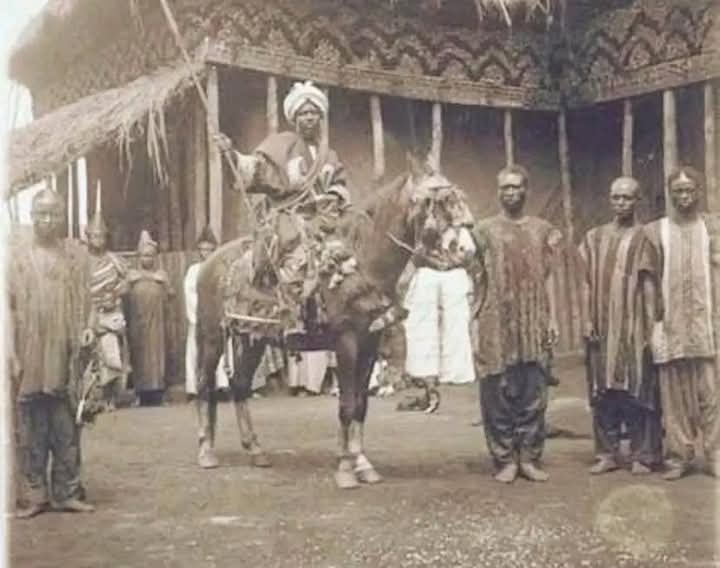

Long before the colonial era, the region now known as Nigeria was home to some of Africa’s most powerful and sophisticated civilizations. These ancient empires and kingdoms developed rich political systems, vibrant trade networks, spiritual traditions, and cultural legacies that continue to shape Nigeria today. Among the most notable are the Oyo Empire, the Kanem-Borno Empire, and the Nri Kingdom.
👑 The Oyo Empire (15th–19th Century)
The Oyo Empire, founded by the Yoruba people, was one of the largest and most influential states in West Africa.
- Political Structure: The empire was ruled by the Alaafin of Oyo, supported by a council of chiefs known as the Oyo Mesi, who balanced royal authority with checks on power.
- Military Power: Oyo’s well-organized cavalry made it dominant in regional warfare, enabling expansion across modern-day Nigeria, Benin, and Togo.
- Trade and Economy: Oyo thrived on trade in kola nuts, ivory, textiles, and later slaves, linking it to both trans-Saharan and Atlantic trade routes.
- Cultural Legacy: Yoruba religion, art, and oral traditions flourished under Oyo, many of which influence Yoruba identity worldwide today.
The empire eventually declined in the 19th century due to internal conflicts, external invasions, and the pressures of the Atlantic slave trade.
🏰 The Kanem-Borno Empire (9th–19th Century)
Centered in the Lake Chad region, the Kanem-Borno Empire was one of Africa’s longest-lasting political entities.
- Origins: Founded around the 9th century by the Sayfawa dynasty, Kanem expanded through military conquests and alliances.
- Islamic Influence: By the 11th century, Islam had become the dominant religion, making Kanem-Borno a hub of Islamic scholarship and culture.
- Trade Networks: The empire controlled trans-Saharan trade routes, exporting slaves, ivory, and ostrich feathers in exchange for salt, horses, and luxury goods.
- Resilience: Despite invasions and crises, Kanem-Borno adapted and endured for centuries, with its capital eventually shifting to Borno (in present-day northeast Nigeria).
At its peak, Kanem-Borno commanded respect across North and West Africa, symbolizing resilience and statecraft.
🕊️ The Nri Kingdom (10th–18th Century)
The Kingdom of Nri, established by the Igbo people in southeastern Nigeria, offers a unique contrast to the militaristic empires of Oyo and Kanem-Borno.
- Spiritual Authority: The Eze Nri (priest-king) ruled through religious and moral authority rather than military might.
- Culture of Peace: Nri expanded influence by sending priests to other communities, promoting peace, taboos against violence, and ritual purification.
- Art and Symbolism: Nri is closely associated with the extraordinary Igbo-Ukwu bronzes, which date back to the 9th century and showcase advanced metalworking skills.
- Decentralized Governance: The kingdom functioned more as a spiritual confederation than a centralized empire, emphasizing kinship, trade, and diplomacy.
Though less expansive than Oyo or Kanem-Borno, Nri left a profound cultural and religious legacy that still resonates in Igbo traditions today.










Related Posts

Stay Informed With the Latest & Most Important News
Previous Post
Next Post


Advertisement