Now Reading: Kainji Dam: Nigeria’s First Great Hydropower Project 🇳🇬⚡
-
01
Kainji Dam: Nigeria’s First Great Hydropower Project 🇳🇬⚡
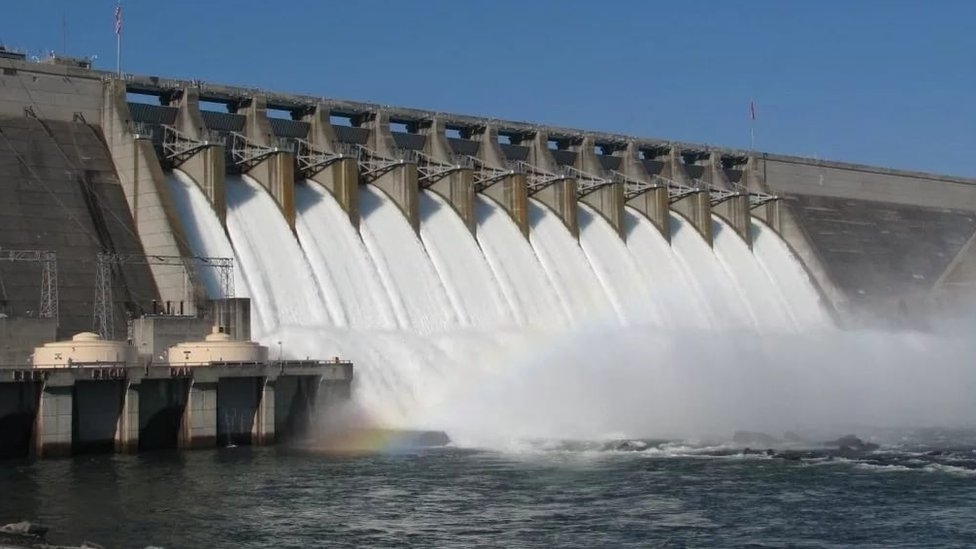

Kainji Dam is the pioneering large hydroelectric scheme on the Niger River, near New Bussa in today’s Niger State. Built in the 1960s, it created Lake Kainji and still anchors a hydropower corridor with Jebba and Shiroro—supplying electricity, aiding navigation, and shaping river-based livelihoods.
From blueprint to powerhouse (1964–1968)
Construction began in 1964 and the dam was commissioned in 1968 by a consortium led by Italy’s Impregilo. The river-crossing section is about 550 m long and ≈65 m high; including the earth saddle dam that closes low ground, the overall barrier extends for several kilometres. The project cost was put at about US $209 million, with roughly a quarter set aside for resettlement of communities affected by the reservoir.
Lake Kainji: a new inland sea
When impoundment started in 1968, Lake Kainji formed upstream—roughly 135 km long at full supply, with a surface area commonly cited around 1,270–1,300 km² depending on season/water level. FAO measurements note a maximum depth ~50 m at the dam face and large seasonal drawdowns that change the lake’s area and volume.
The power station
The scheme was designed for 12 units (≈960 MW), but only eight turbines were installed, giving an installed capacity of ~760 MW. Over time, drought cycles and ageing equipment reduced available output below nameplate, prompting multiyear refurbishments.
Recent upgrades
Since 2013, concessionaire Mainstream Energy Solutions Ltd (MESL) has operated Kainji and Jebba under a federal concession. In March–April 2025, MESL completed the rehabilitation and synchronization of Unit 1G9 (80 MW), lifting Kainji’s available capacity to around 600 MW and targeting further recoveries with additional units.
Navigation lock & river management
Kainji includes a single-chamber navigation lock with a lift of about 49 m, allowing barge traffic to bypass the dam. Operators must balance hydropower with flood control and downstream safety; emergency releases during exceptional inflows (e.g., the late-1990s episodes) highlighted the stakes for riverine communities.
Social & environmental footprint
Creating Lake Kainji displaced thousands of people from low-lying river settlements (part of the dedicated resettlement budget). The new lake, however, enabled fisheries, transport, and tourism, and it underpins ecosystems within and around Kainji Lake National Park. Seasonal operations—drawdown and releases—shape fisheries productivity and downstream hydrology year to year.
Part of a hydropower corridor
Kainji was the first stage of the Niger Dams Project. Jebba (≈100 km downstream) followed in the 1980s, and Shiroro on the Kaduna River in 1990. Together, these hydropower stations complement Nigeria’s gas-fired fleet and newer projects such as Zungeru, providing critical flexibility and low-carbon energy.
Quick facts
- River / State: Niger River, Niger State.
- Built / Commissioned: 1964–1968.
- Dam geometry: ~550 m (main river section); ~65 m high; composite earth/concrete structure.
- Reservoir: Lake Kainji—~135 km long; ~1,270–1,300 km² surface (seasonal).
- Installed capacity: ~760 MW (8 units; 12 planned for 960 MW). Available ~600 MW after 2025 rehab of 1G9.
- Navigation lock: ~49 m lift.
- Cost: ≈ US $209 million (1960s).
- Operator (concession): MESL since 2013.
Why Kainji still matters
- Grid stability: firm hydropower that complements thermal plants.
- Low-carbon energy: renewable base generation on the Niger.
- River economy: navigation, fisheries, and lakeshore livelihoods tied to an engineered water body that Nigerians have relied on for more than half a century.










Related Posts



Stay Informed With the Latest & Most Important News
Previous Post
Next Post
Previous Post

Next Post

Advertisement