Now Reading: A Comprehensive Overview of Nigeria’s States: Structure, Evolution, Demographics, and Economic Landscape
-
01
A Comprehensive Overview of Nigeria’s States: Structure, Evolution, Demographics, and Economic Landscape
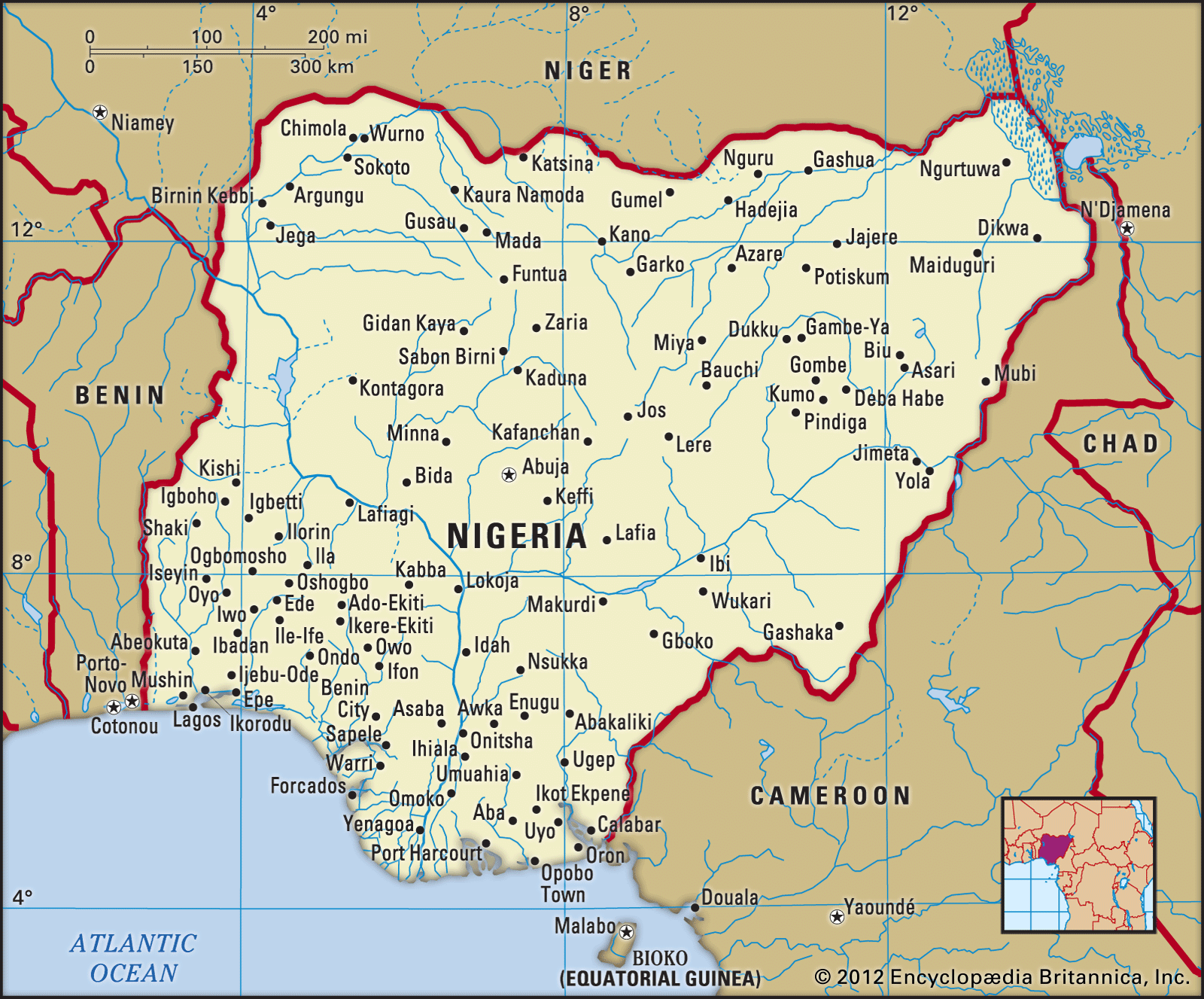
A Comprehensive Overview of Nigeria’s States: Structure, Evolution, Demographics, and Economic Landscape


Nigeria, a prominent federal republic in West Africa, is characterized by its intricate administrative framework, a product of decades of political and socio-economic evolution. The nation currently comprises 36 states and the Federal Capital Territory (FCT), a structure that reflects a complex interplay of historical forces, including efforts to address minority interests and manage ethnic tensions. These administrative divisions are further grouped into six geopolitical zones, which, though not constitutionally formalized, play a significant role in resource allocation and political balancing.
The administrative restructuring of Nigeria, while often presented as a means to bring governance closer to the populace, has frequently been driven by political interests, the pursuit of elite domination, and the desire to control access to national wealth. This dynamic has resulted in a system where many states exhibit considerable financial dependency on the federal government, potentially fostering bureaucratic inefficiencies rather than robust self-sufficiency. This arrangement points to a fundamental tension within Nigeria’s federal system: administrative decentralization, rather than consistently fostering sub-national autonomy, has often intensified competition for federal resources and patronage. This has profoundly shaped the economic viability and governance capacity of many states, indicating that political expediency has at times overshadowed genuine developmental objectives.
Demographically, Nigeria is Africa’s most populous country, experiencing rapid growth and possessing a predominantly youthful population. This demographic profile presents both immense potential and considerable challenges, particularly concerning the provision of social amenities, infrastructure, and employment opportunities. Economically, the nation operates as a mixed, emerging market with expanding sectors beyond oil, yet it grapples with significant regional disparities. The government’s disproportionate reliance on oil revenues for state funding, despite the non-oil sector being the primary driver of overall economic growth, highlights a critical structural imbalance. Understanding these multifaceted dimensions—from historical state creation to current socio-economic realities—is essential for comprehending Nigeria’s developmental trajectory and its ongoing efforts to achieve equitable and sustainable progress.
1. Introduction: Nigeria’s Federal Structure
Nigeria stands as a pivotal federal republic in West Africa, distinguished by its vast population, rich cultural tapestry, and diverse geographical landscape. The nation’s administrative composition is currently structured as a federation of 36 states and the Federal Capital Territory (FCT), Abuja. This elaborate arrangement is not static but rather the culmination of a dynamic historical process, marked by successive administrative reorganizations since its independence.
The federal framework in Nigeria is designed to manage its profound internal diversity, encompassing approximately 400 ethnic groups and over 500 languages. The establishment of geopolitical zones, for instance, was not based purely on geographical considerations but strategically grouped states with similar ethnic backgrounds or common political histories. This approach to administrative division has served as a strategic response to historical tensions and a means to address perceived anomalies or prevent secessionist movements. However, a closer examination reveals that these divisions have also functioned as powerful mechanisms for political control, facilitating the distribution of national resources and managing the inherent competition for power among various groups. This complex and sometimes contradictory nature of Nigeria’s federalism underscores its role as a carefully engineered system. It aims to maintain national unity amidst profound diversity, but inherently involves ongoing negotiation and competition over power and resources among its constituent units.
This report aims to provide a comprehensive, data-driven analysis of Nigeria’s administrative divisions. It will delve into their historical development, explore their geographical and socio-cultural groupings through geopolitical zones, detail key demographic characteristics, and analyze their varied economic landscapes and significant urban centers. By synthesizing these elements, the report seeks to offer a holistic understanding of the intricate relationship between Nigeria’s administrative structure, its population dynamics, and its economic development.
2. The Evolution of State Creation in Nigeria
Nigeria’s journey from a colonial entity to its current 36-state federation is a complex narrative shaped by political, economic, and social factors. The demand for state creation has often been driven by ethnic, regional, and administrative considerations, though deeper analyses reveal more intricate motivations.
Pre-Independence Regional Structure (Before 1963)
Before Nigeria achieved independence in 1960, the country was divided into three largely autonomous regions: the Northern, Western, and Eastern Regions. This federal system, inherited from colonial rule, granted these regions significant control over their resources and governance. However, ethnic and political tensions were already simmering, leading to early demands for more administrative divisions. Minority groups, fearing marginalization within the dominant regional structures, actively agitated for new regions to ensure their socio-economic potential was realized.
The First State Creation (1963)
The initial administrative restructuring occurred on August 9, 1963, when the Mid-Western Region was carved out of the Western Region. This act expanded Nigeria to a four-region country and marked the sole state creation during Nigeria’s First Republic (1960–1966). This move was partly motivated by a desire to diminish the Northern Region’s substantial dominance in the House of Representatives and to curb the influence of the Action Group, a major political party.
Transformations Under Military Regimes
The most significant phases of state creation occurred under military rule, fundamentally reshaping Nigeria’s administrative map.
The 12-State Structure (1967)
Following a period of military coups in 1966 and escalating ethnic tensions, General Yakubu Gowon abolished the regional system. On May 27, 1967, he introduced a 12-state structure. Officially, this radical restructuring was attributed to the need to “redress some of the anomalies” within the Nigerian federation. However, it was also a critical political maneuver designed to prevent the Igbo people from seceding and to weaken the Eastern Region, which subsequently declared independence as Biafra, leading directly to the Nigerian Civil War. This period clearly illustrates how periods of political instability, ethnic tensions, and elite competition for national resources directly triggered the fragmentation of existing regions. These divisions were designed to consolidate power, manage dissent, and distribute patronage, thereby ensuring the continuity of the ruling elite’s influence.
The 19-State Structure (1976)
Six years after the civil war, the Murtala Muhammed regime further reorganized the states on February 3, 1976, increasing the total to 19. The stated objective was to further decentralize power, grant identity to minorities, and foster national unity. Yet, critical analyses suggest that the actual motivation was to divide the populace along artificial geographical enclaves to facilitate undemocratic rule and manage political interests.
The 21-State (1987) and 30-State (1991) Structures
General Ibrahim Babangida’s regime undertook two consecutive state creation exercises. In 1987, Akwa Ibom and Katsina states were created. Then, in 1991, an additional nine states were formed—Abia, Adamawa, Delta, Enugu, Edo, Jigawa, Kebbi, Kogi, Osun, Taraba, and Yobe—bringing the total to 30. These moves were partly in response to demands for greater minority representation, but they were also characterized as a “bankrupt policy of dividing the country as a way of curtailing internal strife amongst the political class”.
The Current 36-State Structure (1996)
The final state creation exercise occurred under General Sani Abacha on October 1, 1996, with the addition of six more states: Bayelsa, Ebonyi, Ekiti, Gombe, Nasarawa, and Zamfara. This established the current 36-state structure that remains in place today. These creations, similar to those under Babangida, were criticized for serving the self-interests of “highly corrupt military regimes” rather than the democratic will of the populace.
Underlying Reasons and Criticisms
While official narratives frequently cited administrative convenience, bringing governance closer to the people, and addressing minority interests, a deeper examination reveals that state creation was often a tool for political interests, ensuring continuous domination by ruling elites, and providing access to national wealth through patronage networks. This exposes a significant contradiction between the stated goals and the practical outcomes of state creation. The fragmentation, while intended to improve governance and representation, has ironically led to increased financial fragility at the state level. This makes states heavily dependent on the central government’s oil revenues, undermining true autonomy and administrative efficiency. The focus shifts from internal revenue generation and local development to competition for federal allocations. This process has created a bloated bureaucracy and new “patronage fiefdoms” , suggesting that the proliferation of states, rather than solving problems, has often compounded them by creating more avenues for resource siphoning and political maneuvering. Critics argue that this process has led to economic unviability for many states, increasing their dependency on federal allocations, fostering bureaucratic corruption, and paradoxically, contributing to more divisions and crises rather than unity.
Table 2: Evolution of State Creation in Nigeria (Key Milestones)
| Year of Creation | Number of States After Creation | Key Regime/Leader | Major States Created/Divided | Primary Stated Reason for Creation | Underlying Political/Economic Motivation |
| Before 1963 | 3 Regions | Colonial Rule | Northern, Western, Eastern | Administrative convenience | Colonial legacy, regional autonomy |
| 1963 | 4 Regions | First Republic | Mid-Western (from Western) | Address minority interests | Curb Action Group influence, break Northern dominance |
| May 1967 | 12 States | Gen. Yakubu Gowon | North-Western, East-Central, etc. | Redress anomalies, foster national unity | Prevent Igbo secession, weaken Eastern Region, manage ethnic tensions |
| Feb 1976 | 19 States | Murtala Muhammed | Anambra, Benue, Borno, etc. | Decentralize power, promote unity, give minorities identity | Divide populace for undemocratic rule, manage political interests |
| 1987 | 21 States | Gen. Ibrahim Babangida | Akwa Ibom, Katsina | Greater minority representation | “Bankrupt policy” to curtail internal strife |
| Aug 1991 | 30 States | Gen. Ibrahim Babangida | Abia, Delta, Enugu, etc. | Administrative efficiency | “Bankrupt policy” to curtail internal strife |
| Oct 1996 | 36 States | Gen. Sani Abacha | Bayelsa, Ebonyi, Ekiti, etc. | Bring governance closer | Serve self-interests of corrupt military regimes, exploit resources |
3. Current Administrative Divisions: The 36 States and Federal Capital Territory
Nigeria currently operates as a federal republic composed of 36 states and the Federal Capital Territory (FCT), Abuja. This structure represents the culmination of several decades of administrative evolution, solidifying the primary units of governance across the nation.
Comprehensive List of States and Capitals
The 36 states, each with its designated capital city, form the foundational administrative units of the Nigerian federation. These states are responsible for local governance, public services, and contributing to the national economy.
Table 1: List of Nigerian States, Capitals, and Current Governors
| State Name | Capital City | Current Governor |
| Abia State | Umuahia | Okezie Ikpeazu |
| Adamawa State | Yola | Ahmadu Umaru Fintiri |
| Akwa Ibom State | Uyo | Udom Gabriel Emmanuel |
| Anambra State | Awka | Willie Obiano |
| Bauchi State | Bauchi | Bala Abdulkadir Mohammed |
| Bayelsa State | Yenagoa | Douye Diri |
| Benue State | Makurdi | Samuel Ortom |
| Borno State | Maiduguri | Babagana Umara Zulum |
| Cross River State | Calabar | Benedict Ayade |
| Delta State | Asaba | Ifeanyi Okowa |
| Ebonyi State | Abakaliki | David Umahi |
| Edo State | Benin City | Godwin Obaseki |
| Ekiti State | Ado Ekiti | John Olukayode Fayemi |
| Enugu State | Enugu | Ifeanyi Ugwuanyi |
| Gombe State | Gombe | …source creation of as many as 31 new states. This ongoing agitation indicates that while the current administrative map has endured for nearly three decades, it is not universally perceived as final or optimally representative. The persistence of these demands suggests that the fundamental issues that drove past state creations—such as perceived ethnic marginalization, inequitable resource distribution, or a desire for more administrative units to access federal patronage—remain unresolved. This ongoing political contestation implies that Nigeria’s administrative map, despite its current stability, remains subject to potential future restructuring or continued socio-political friction. |
4. Geopolitical Zones: Grouping States by Shared Characteristics
Nigeria is formally divided into six geopolitical zones, which serve as administrative divisions that group the country’s states. These zones were established during the regime of President General Sani Abacha. A crucial aspect of their formation is that they were not based solely on geographical location, but rather on classifying states with similar ethnic groups and/or common political histories. This strategic grouping was intended to facilitate the effective allocation of economic, political, and educational resources across the diverse nation.
Detailed List of Zones and Constituent States
The six geopolitical zones and their respective constituent states are as follows:
Table 3: Nigerian Geopolitical Zones and Constituent States
| Geopolitical Zone | Constituent States |
| North Central | Benue, Kogi, Kwara, Nasarawa, Niger, Plateau, FCT |
| North East | Adamawa, Bauchi, Borno, Gombe, Taraba, Yobe |
| North West | Jigawa, Kaduna, Kano, Katsina, Kebbi, Sokoto, Zamfara |
| South East | Abia, Anambra, Ebonyi, Enugu, Imo |
| South South | Akwa Ibom, Bayelsa, Cross River, Delta, Edo, Rivers |
| South West | Ekiti, Lagos, Ogun, Ondo, Osun, Oyo |
Note: The Federal Capital Territory (FCT) is located within the North Central zone.
Significance in Resource Allocation and Political Balancing
These geopolitical zones play a significant, albeit informal, role in the distribution of national resources and political appointments. They serve as a critical framework for balancing power across Nigeria’s diverse landscape, ensuring a degree of regional representation in national affairs. The historical context of Nigeria’s division into predominantly Islamic Northern and predominantly Christian Southern regions further highlights the ethno-religious considerations that underpin these groupings.
Calls for Constitutional Recognition
Despite their functional importance, these zones lack formal constitutional recognition. Various influential groups and individuals, including the Afenifere Renewal Movement, Ohaneze Ndigbo, and Ijaw National Congress, have consistently advocated for these six zonal divisions to be formally recognized in Nigeria’s constitution. They propose strengthening these zones to function as more autonomous federating units, pushing for a greater devolution of powers. The aim is to enable regions to manage resources within their territories more effectively, thereby reducing over-centralization and fostering a more balanced federal system.
This consistent advocacy indicates that despite their lack of formal constitutional recognition, these geopolitical zones function as a critical, informal layer of governance and identity within Nigeria’s federal system. They serve as a pragmatic framework for managing the country’s profound ethnic and religious diversity, facilitating resource distribution, and balancing political power. The persistent calls for their constitutional recognition underscore their entrenched importance and suggest a societal desire for a more formalized regional autonomy, reflecting a deeper yearning for a restructured federalism that better accommodates Nigeria’s diverse socio-cultural landscape. This also implies that these zones, while a tool for stability, can also reinforce existing ethno-religious fault lines, leading to inter-zonal competition for resources and influence.
5. Demographic Profile of Nigerian States
Nigeria is Africa’s most populous nation, and its demographic profile presents a complex picture of rapid growth, youthfulness, and significant internal migration.
National Population Overview
Recent population estimates for Nigeria indicate approximately 278.5 million inhabitants in 2022 and 227.8 million in 2023. The country exhibits a remarkably high population growth rate, estimated at 4.53% in 2022 , with projections suggesting a substantial increase to 359.1 million by 2050.
Key Demographic Indicators
Detailed statistics highlight Nigeria’s dynamic demographic trends. The birth rate stood at 34.19 births per 1,000 population in 2022, while the death rate was 8.7 deaths per 1,000 population in the same year. Life expectancy at birth was 52.68 years in 2022 , showing an improvement to 63.4 years in 2021. The fertility rate is high, at 4.62 children born per woman , and the infant mortality rate is 56.68 deaths per 1,000 live births.
Age Structure
Nigeria possesses a notably young population, with 51.7% of inhabitants aged 0–14 years in 2022 , or over 47% aged 15 and below. This demographic characteristic contributes to a very high child dependency ratio, estimated at 88.2 dependents per 100 non-dependents , or approximately one dependent to one worker for the 25-65 working age group. This demographic profile presents a critical challenge for Nigeria’s sustainable development. A large, rapidly expanding young population necessitates immense and sustained investment in education, healthcare, and job creation. If these investments fail to keep pace with population growth, the potential economic benefits from a favorable age structure can transform into a considerable economic burden, leading to widespread youth unemployment, increased poverty, and significant strain on public services and infrastructure.
Urbanization Trends
A significant proportion of Nigerians (54.3%) are urban dwellers, with an annual urbanization rate estimated at 3.92%. This rapid urban growth often occurs without commensurate increases in social amenities and infrastructure, posing considerable challenges for urban planning and resource management. The rapid, often unplanned, urbanization further exacerbates these pressures, creating social and economic vulnerabilities within major cities and across states.
Ethnic and Religious Diversity
Nigeria is characterized by its vast cultural mosaic, home to 371 ethnic groups speaking over 500 languages. The three largest ethnic groups—Hausa, Yoruba, and Igbo—collectively constitute more than 60% of the population. Major religious affiliations include Muslims (estimated at 53.5%) and Christians (estimated at 45.9%), with a smaller percentage adhering to indigenous religions.
Population Distribution by State
Population figures for each state, based on the 2006 census and 2020 projected populations, highlight significant disparities in population distribution across the country. States like Kano and Lagos are among the most populous, reflecting concentrations of economic activity and historical settlement patterns. Population size is a direct determinant of political representation, such as in the national legislature, and crucially, the allocation of federal resources, which are often tied to population figures. Consequently, states and geopolitical zones with larger populations tend to wield greater political influence and receive larger shares of national revenue. This establishes a clear link where demographic scale directly translates into political and economic leverage. This dynamic can intensify inter-state and inter-zonal competition for resources and influence, potentially fueling the ongoing demands for new states as a strategy to gain more administrative units and thus a larger share of the national pie. This also contributes to the uneven distribution of development and infrastructure across the country.
Table 4: Nigerian States by Population (2006 Census & 2020 Projections)
| State Name | 2006 Census Population | 2020 Projected Population | Area (km²) | Population Density (2006) (per km²) | Population Density (2020) (per km²) |
| Kano State | 9,401,288 | 16,253,549 | 20,131 | 467 | 807.39 |
| Lagos State | 9,113,605 | 15,772,884 | 3,345 | 2724.55 | 4,715.36 |
| Katsina State | 5,801,584 | 9,300,382 | 24,192 | 239.81 | 384.44 |
| Kaduna State | 6,113,503 | 8,324,285 | 46,053 | 132.75 | 180.75 |
| Bauchi State | 4,653,066 | 7,540,663 | 45,893 | 101.39 | 164.32 |
| Oyo State | 5,580,894 | 7,166,310 | 28,454 | 196.14 | 251.85 |
| Jigawa State | 4,348,649 | 6,777,156 | 23,154 | 187.81 | 292.68 |
| Rivers State | 5,198,716 | 6,705,744 | 11,077 | 469.34 | 605.37 |
| Niger State | 3,954,772 | 6,211,853 | 76,363 | 51.79 | 81.35 |
| Benue State | 4,253,641 | 5,741,815 | 34,059 | 124.89 | 168.59 |
| Borno State | 4,171,957 | 5,703,790 | 72,625 | 57.44 | 78.54 |
| Anambra State | 4,177,828 | 5,593,989 | 4,844 | 862.46 | 1,154.83 |
| Sokoto State | 3,702,676 | 5,404,843 | 25,973 | 142.56 | 208.09 |
| Zamfara State | 3,278,873 | 5,315,531 | 39,762 | 82.46 | 133.69 |
| Imo State | 3,927,563 | 5,294,000 | 5,530 | 710.23 | 957.32 |
| Plateau State | 3,206,531 | 4,759,000 | 30,913 | 103.73 | 153.95 |
| Akwa Ibom State | 3,920,208 | 4,704,000 | 7,081 | 553.62 | 664.32 |
| Adamawa State | 3,178,950 | 4,530,000 | 36,917 | 86.09 | 122.71 |
| Delta State | 4,112,445 | 4,497,000 | 17,698 | 232.37 | 254.11 |
| Edo State | 3,233,366 | 4,235,000 | 17,802 | 181.63 | 237.89 |
| Ogun State | 3,751,140 | 4,197,000 | 16,762 | 223.78 | 250.39 |
| Taraba State | 2,300,736 | 4,036,000 | 54,473 | 42.23 | 74.09 |
| Nasarawa State | 1,869,377 | 3,898,000 | 27,117 | 68.94 | 143.75 |
| Cross River State | 2,892,988 | 3,866,000 | 20,156 | 143.53 | 191.81 |
| Osun State | 3,416,959 | 3,760,000 | 9,251 | 369.36 | 406.45 |
| Kogi State | 3,314,043 | 3,707,000 | 29,833 | 111.09 | 124.26 |
| Enugu State | 3,267,837 | 3,674,000 | 7,161 | 456.34 | 513.06 |
| Kebbi State | 3,238,628 | 3,631,000 | 36,898 | 87.77 | 98.41 |
| Gombe State | 2,365,040 | 3,623,000 | 18,754 | 126.11 | 193.18 |
| Yobe State | 2,321,591 | 3,360,000 | 45,502 | 51.02 | 73.84 |
| Ekiti State | 2,398,957 | 3,270,000 | 6,353 | 377.61 | 514.79 |
| Ondo State | 3,441,024 | 3,268,000 | 15,500 | 222 | 210.84 |
| Kwara State | 2,365,353 | 3,190,000 | 36,825 | 64.23 | 86.63 |
| Ebonyi State | 2,176,947 | 2,880,000 | 5,935 | 366.81 | 485.26 |
| Bayelsa State | 1,704,515 | 2,800,000 | 10,773 | 158.22 | 259.91 |
| Abia State | 2,845,380 | 2,750,000 | 6,320 | 450.22 | 435.13 |
Source: National Bureau of Statistics (NBS) 2006 Census and 2020 Projections
6. Economic Landscape Across Nigerian States and Geopolitical Zones
Nigeria operates as a middle-income, mixed economy and an emerging market, characterized by expanding manufacturing, financial, service, communications, technology, and entertainment sectors. The services sector is the largest contributor to the nation’s Gross Domestic Product (GDP), accounting for 54.39%, followed by industry at 23.65% and agriculture at 21.96%. Notably, the non-oil sector is the primary driver of real GDP growth, contributing 96.03% in Q1 2025, even though oil revenues constitute a significant portion (2/3) of state revenues. This highlights a critical structural imbalance in Nigeria’s economy. While the non-oil sectors are the primary drivers of economic growth and overall GDP, the federal and state governments remain disproportionately reliant on oil revenues for their budgets. This creates a “revenue-dependency trap,” where fluctuations in global oil prices significantly impact government finances, leading to instability. It also disincentivizes states from vigorously developing their internal revenue generation capabilities and diversifying their local economies, as they can largely rely on federal allocations derived from oil. This structural dependency hinders sustainable development and exposes the country to external economic shocks, despite the underlying strength and growth potential of its non-oil sectors.
Major Economic Sectors in Detail
Agriculture
Nigeria is a global leader in farm output, ranking sixth worldwide and first in Africa. The agricultural sector employs almost one-third of the workforce and contributes approximately 18% to GDP. Key agricultural products include roots and tubers (yam, cassava, potatoes), cereals (sorghum, millet, rice), oil crops (soybeans, peanuts), citrus fruits, and cocoa. The livestock sub-sector is significant, with large cattle and poultry populations. Recent advancements in food processing, such as the Imota rice mill near Lagos and the St. Gabriel Coconut Refinery in Akwa Ibom State, are boosting local production and employment.
Mining and Fossil Fuels
Mining accounts for a small fraction of GDP (0.3%), and the domestic industry remains underdeveloped, leading to imports of various minerals. Nigeria is Africa’s largest oil producer, and petroleum exports are crucial for government revenue, despite the oil sector contributing only about 9% to the overall GDP. The recent operationalization of the Dangote Oil Refinery is poised to significantly reduce reliance on imported petroleum products. Projects are also underway to transport Nigerian natural gas via pipelines to Morocco or Algeria.
Industry
Nigeria’s manufacturing sector emerged as the largest on the continent in 2013, producing a substantial proportion of goods for West Africa. Key industries include cement (dominated by Dangote and BUA), oil-based products, fertilizers, paints, body care products, and pharmaceuticals (Nigeria hosts about 60% of Africa’s pharmaceutical production capacity). The vehicle manufacturing industry is also growing, with both indigenous (e.g., Innoson Vehicle Manufacturing) and foreign assembly plants. Other notable industrial activities include toolmaking, electronics (e.g., Zinox Technologies), and steel production (e.g., Ajaokuta Steel Company Limited).
Services
The services sector is the largest contributor to Nigeria’s GDP. It encompasses a dynamic finance sector, which is Africa’s largest financial market and a leader in fintech. The telecommunications sector is robust, making Nigeria Africa’s largest ICT market with 82% of the continent’s telecoms subscribers. The transport sector is developing, with extensive road repairs, new railway tracks, and principal ports in Lagos, Port Harcourt, and Calabar. Nigeria’s entertainment industry is globally recognized, with Nollywood being the second-largest film industry worldwide and its music industry famous for Afrobeat and other styles. The fashion industry is also growing, with Lagos Leather Fair being the largest in West Africa, and Nigeria ranking as the sixth-largest leather exporter globally. Tourism centers on events, rainforests, savannah, and other natural attractions.
Economic Performance by State (GDP)
A ranking of Nigerian states by their Gross Domestic Product (GDP), both nominal and per capita, reveals significant economic disparities across the federation. Lagos State stands out as the dominant economic hub, with a GDP of ₦61.17 trillion (US$100.01 billion), significantly surpassing other states. It is followed by Rivers, Akwa Ibom, and Imo states in terms of overall GDP. This demonstrates a strong pattern of economic concentration in a few major urban centers and resource-rich regions (primarily oil-producing states). These urban hubs act as economic magnets, attracting investment, industry, and population, which in turn fuels their growth. The presence of major cities and/or significant natural resources directly leads to higher economic output and prosperity in those states, creating a stark economic divide with states lacking such advantages, particularly in rural areas. This disparity contributes to internal migration pressures, strains urban infrastructure, and perpetuates regional inequalities, potentially fueling social and political tensions due to uneven development and access to opportunities across the federation.
Table 5: Top Nigerian States by GDP (Nominal and Per Capita)
| Rank | State | GDP (tril. ₦) | GDP (bil. US$) | GDP per capita (US$) | GDP per capita PPP (int$) |
| 1 | Lagos State | ₦61.17 | 100.01 | 6,614 | 17,282 |
| 2 | Rivers State | ₦7.96 | 19.72 | 2,277 | 5,949 |
| 3 | Akwa Ibom State | ₦7.77 | 19.25 | 2,962 | 7,739 |
| 4 | Imo State | ₦7.68 | 19.02 | 2,996 | 7,828 |
| 5 | Delta State | ₦6.19 | 15.33 | 2,306 | 6,025 |
| 6 | Anambra State | ₦5.14 | 12.73 | 2,002 | 5,231 |
| 7 | Ondo State | ₦5.10 | 12.63 | 2,326 | 6,077 |
| 8 | Ogun State | ₦5.03 | 12.46 | 2,024 | 5,288 |
| 9 | Bayelsa State | ₦4.63 | 11.47 | 4,355 | 11,379 |
| 10 | Niger State | ₦4.58 | 11.34 | 1,721 | 4,496 |
Source: Wikipedia, “List of Nigerian states by GDP”
Economic Activities by Geopolitical Zone
The economic characteristics vary significantly across Nigeria’s six geopolitical zones, reflecting their unique resource endowments, historical development, and demographic patterns.
- North Central: This zone is primarily characterized by agriculture, with major crops including soybeans, yam, cassava, and maize. Livestock farming is also prevalent. The region is rich in mineral resources such as tin, barite, bauxite, and limestone. Niger State, in particular, hosts crucial hydroelectric dams that contribute to national power generation.
- North East: This geopolitical zone is primarily known for its extensive livestock farming and crop cultivation, which contribute substantially to the national economy. The region’s environment is largely divided between semi-desert Sahelian savanna and tropical West Sudanian savanna ecoregions.
- North West: Urban centers like Kano are major economic contributors, particularly in trade, textiles, and traditional markets. However, many rural areas in the region face economic challenges, often exacerbated by insecurity and low education rates.
- South East: This zone is a hub for commerce and trading, supported by a strong agricultural base that produces yam, cassava, rice, and cocoyam. There is also a growing presence of small and medium indigenous industries. The region possesses significant natural resources, including crude oil, natural gas, coal, and iron ore.
- South South (Niger Delta): This zone is the economic backbone of Nigeria due to its vast crude oil and natural gas reserves, despite its relatively small land area. Its economy is heavily dominated by the extractive industries.
- South West: Urban areas, particularly Lagos and Ibadan, are major economic powerhouses, driving significant contributions to the national economy through diverse industries and services. These cities are centers of finance, manufacturing, and technology. However, rural areas in this zone tend to lag economically, highlighting an urban-rural economic divide.
7. Major Cities and Their Significance
Nigeria is home to numerous large and economically significant cities that serve as vital commercial, industrial, administrative, and cultural hubs. These urban centers drive much of the nation’s economic activity and population concentration.
Detailed List of Major Cities and Their Characteristics
- Lagos (Lagos State): The most populous city in Nigeria and across Africa, with an estimated population of approximately 15.3 million. It functions as Nigeria’s commercial capital, renowned for its bustling economy, vibrant culture, and major port operations. The Lagos Metropolis Area, including its inner suburbs, forms the eighth largest metropolitan area globally, with around 21 million people.
- Kano (Kano State): The second most populous city in Nigeria, with an estimated population of approximately 4.9 million. It is a historic Hausa trade center, recognized for its ancient walls, textiles, and vibrant markets.
- Ibadan (Oyo State): The third most populous city, with a population of approximately 3.6 million. Historically, it was once Africa’s largest city and is now known for its academic institutions and expansive metropolitan area.
- Abuja (Federal Capital Territory): Nigeria’s purpose-built national capital, with an estimated population of approximately 2.6 million. It is characterized by its sweeping boulevards, government buildings, and rapid growth.
- Port Harcourt (Rivers State): A critical oil and gas hub located in the Niger Delta, with a population of approximately 2.1 million. It is often referred to as the “Garden City” due to its greenery.
- Kaduna (Kaduna State): An important industrial and military center, with a population of approximately 1.8 million, known for its rich cultural diversity and historical sites.
- Benin City (Edo State): The largest city in the South-South geopolitical zone and the fourth-most populous in Nigeria, with approximately 1.7 million residents. It is famous for its historic bronze art from the Kingdom of Benin and its cultural heritage.
- Onitsha (Anambra State): A major commercial river port city, with a population of approximately 1.5 million, renowned for its large-scale markets.
- Aba (Abia State): An industrial center with a population of approximately 1.1 million, noted for its textiles, shoes, and dynamic urban environment.
- Maiduguri (Borno State): The capital of Nigeria’s northeast, with a population of approximately 1.1 million. Historically known for trade, it has recently been a focus due to security concerns.
- Other significant cities mentioned across the research material include Ilorin, Sokoto, Enugu, Warri, Abeokuta, Calabar, Uyo, Katsina, Ado-Ekiti, Akure, Bauchi, Minna, Owerri, Umuahia, and Nnewi.
Role in State and National Economies
These major cities serve as the primary economic engines for their respective states and geopolitical zones. They concentrate industries, services, and a significant portion of the population, acting as centers of innovation, commerce, and employment, thereby contributing disproportionately to national GDP. The consistent listing of major cities with very large populations, explicitly described as commercial, industrial, or oil/gas hubs, demonstrates a powerful pattern: Nigeria’s economic growth is heavily concentrated in its major urban centers. These cities act as magnets for investment, industry, and human capital, creating a virtuous cycle of economic activity. However, this concentration also creates significant regional imbalances, as economic opportunities and development are not evenly distributed. The urban-rural divide is a direct consequence, leading to increased internal migration from rural areas to cities, which in turn places immense strain on urban infrastructure and social amenities. This dynamic can exacerbate social inequality and potentially fuel discontent between the vibrant, resource-rich urban centers and the struggling rural hinterlands, posing a long-term challenge to equitable national development.
Table 6: Major Cities in Nigeria by Population and Key Characteristics
| City Name | State / FCT | Estimated Population (approx.) | Key Economic/Cultural Characteristics |
| Lagos | Lagos State | 15,388,000 (2025) | Commercial capital, major port operations, vibrant culture |
| Kano | Kano State | 4,910,000 (2025) | Historic Hausa trade center, textiles, vibrant markets |
| Ibadan | Oyo State | 3,649,000 (2025) | Academic institutions, expansive metropolitan area |
| Abuja | Federal Capital Territory | 2,690,000 (2025) | National capital, government buildings, rapid growth |
| Port Harcourt | Rivers State | 2,120,000 (2025) | Key oil and gas hub, “Garden City” |
| Kaduna | Kaduna State | 1,850,000 (2025) | Industrial and military center, cultural diversity |
| Benin City | Edo State | 1,782,000 (2025) | Historic bronze art, cultural heritage |
| Onitsha | Anambra State | 1,553,000 (2025) | Major commercial river port city, large-scale markets |
| Aba | Abia State | 1,160,000 (2025) | Industrial center (textiles, shoes), urban dynamics |
| Maiduguri | Borno State | 1,110,000 (2025) | Capital of northeast, historical trade, security focus |
Source: TRAVEL.COM®, WorldPopulationReview.com
8. Conclusion: Dynamics and Future Outlook of Nigeria’s States
Nigeria’s federal structure, comprising 36 states and the Federal Capital Territory, is a complex and evolving entity shaped by a politically charged history of state creation. These states are grouped into six geopolitical zones, reflecting deep-seated ethnic and historical affinities, which informally influence resource allocation and political balancing. The nation is characterized by a rapidly growing and youthful population, presenting both opportunities and significant challenges for development. Economically, Nigeria’s mixed economy, though diversified across agriculture, industry, and services, exhibits pronounced regional disparities and a persistent reliance on volatile oil revenues for government finance.
The interplay between administrative divisions, ethnic diversity, resource allocation mechanisms, and overall national stability is intricate. The paradox where oil wealth underpins a significant portion of government revenue but contributes minimally to overall GDP highlights a structural vulnerability. Furthermore, the challenges posed by rapid population growth and urbanization, particularly the strain on infrastructure and job creation, underscore the urgent need for strategic interventions.
Future Outlook and Critical Junctures
The trajectory of Nigeria’s states is at a critical juncture, marked by several enduring dynamics and imperatives:
Persistent Agitation for New States
Despite the current 36-state structure, there are ongoing demands from various groups for the creation of additional states. These demands are often driven by desires for greater representation, perceived economic benefits, and administrative efficiency. However, this aspiration is met with significant criticisms regarding the economic unviability of many existing states. Critics argue that further fragmentation could exacerbate dependency on federal allocations, creating more avenues for resource siphoning rather than fostering genuine development.
Calls for Devolution of Powers
There is growing advocacy for the constitutional recognition and strengthening of geopolitical zones as more autonomous federating units. This push for devolution of powers aims to enable regions to manage their resources more effectively and reduce over-centralization. This ongoing societal desire for true regional autonomy and fiscal federalism underscores an unresolved and fundamental tension between the aspiration for administrative units that cater to diverse ethnic and regional interests, and the central government’s imperative to maintain control, particularly over the nation’s primary revenue source (oil). The future stability and equitable development of Nigeria will profoundly depend on its ability to navigate this tension, moving towards a more balanced and equitable distribution of power and resources that fosters genuine fiscal autonomy and reduces the current reliance on federal allocations.
Economic Diversification and Sustainability Imperative
A critical need exists for states to move beyond their heavy reliance on federal oil allocations and to actively develop sustainable, internally generated revenue sources and diversified local economies. While the recent growth in the non-oil sector’s contribution to GDP is a positive indicator , persistent challenges such as inadequate power supply, insecurity, and infrastructure deficits continue to hinder broad-based economic development. The long-term stability and prosperity of Nigeria’s states are critically linked to their collective ability to achieve genuine economic diversification away from oil dependency and to create sufficient, sustainable economic opportunities for their burgeoning youth population.
Harnessing the Demographic Dividend
Nigeria’s large and rapidly expanding youth population presents a demographic dividend that, if properly harnessed, could drive significant economic growth. This requires strategic and sustained investments in education, healthcare, and job creation. Failure to make these investments risks exacerbating youth unemployment, widespread poverty, and social instability, particularly in states that lack significant natural resources or major urban economic hubs.
Strengthening Governance and Accountability
Ultimately, the overarching need for improved governance, transparency, and accountability at both federal and state levels remains paramount. This includes addressing systemic bureaucratic corruption and ensuring that administrative structures genuinely serve the developmental needs and welfare of the populace, rather than primarily serving elite interests. This highlights a crucial need for integrated state-level economic planning, investment in human capital, and robust governance to convert demographic challenges into opportunities and ensure equitable development across the federation.










Related Posts


Stay Informed With the Latest & Most Important News
Previous Post
Next Post

Advertisement