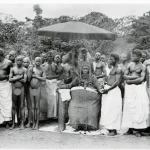
Hausa people in Nigeria
The Hausa People
Culture · History · Commerce · Islam
Explore the rich heritage of the Hausa people, the largest ethnic group in West Africa, renowned for their ancient city-states, trans-Saharan trade networks, and profound Islamic scholarship.
Masters of
Trade and Faith
The Hausa people constitute the largest ethnic group in West Africa, primarily concentrated in Northern Nigeria and southeastern Niger. With a history spanning over a millennium, the Hausa are renowned for establishing a network of powerful, independent city-states—known as the Hausa Bakwai (The Seven True States)—including Kano, Katsina, Zaria, and Gobir.
Hausa culture is deeply intertwined with Islam, which was introduced via the trans-Saharan trade routes in the 11th century. Following the Fulani Jihad led by Usman dan Fodio in the early 19th century, the region was consolidated into the Sokoto Caliphate. This led to a profound integration of the Hausa and Fulani populations, often referred to collectively today as the Hausa-Fulani.
Historically, the Hausa have been master merchants, agriculturalists, and craftsmen. From the ancient leatherwork and indigo dye pits of Kano to the massive groundnut pyramids of the 20th century, their entrepreneurial spirit has driven the economy of the Sahel and Savanna for centuries.
- Language: Hausa is an Afroasiatic language that serves as a massive lingua franca across West Africa.
- Religion: Deeply grounded in Sunni Islam, which influences jurisprudence, social norms, and scholarship.
- Architecture: Traditional Tubali (mud-brick) architecture, characterized by domed roofs and intricate façade designs.
- Economy: A dual heritage of expansive agriculture and long-distance mercantile trade.
Demographics & Scale
Understanding the group’s footprint
Explore the Heritage
The defining aspects of Hausa identity
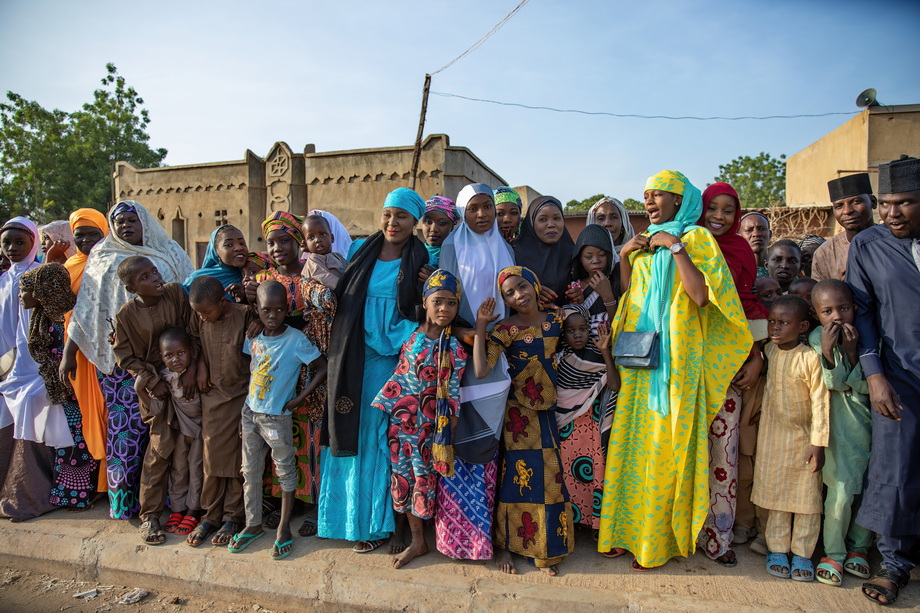
A vivid representation of Hausa culture in Northern Nigeria, highlighting traditional attire and architectural elements.
| Kano | The economic powerhouse and center of commerce and crafts (especially dyeing and weaving). |
|---|---|
| Katsina | Historically known as the center of Islamic learning, scholarship, and trade. |
| Zaria (Zazzau) | The primary source of labor and military power, historically ruled by the famous Queen Amina. |
| Gobir | The northernmost state, responsible for defending the empire against invaders from the Sahara. |
| Daura | The spiritual home of the Hausa people, where the legendary Bayajidda slew the snake in the well. |
| Rano | An early industrial center, famous for its ironworks and craftsmanship. |
| Biram | The seat of government and administration in the ancient mythology. |
Society & Modernity
How ancient traditions shape the present
Islam is the foundational bedrock of modern Hausa society. Introduced centuries before colonial rule, it brought literacy (via the Arabic script), advanced jurisprudence, and a network of scholarship connecting Northern Nigeria to the wider Islamic world, from Timbuktu to Mecca.
In 1804, the Fulani scholar Usman dan Fodio launched a jihad against the Hausa kings, accusing them of corrupting Islam. This led to the creation of the Sokoto Caliphate. The Fulani elites assimilated into Hausa culture and adopted the Hausa language, creating the deeply intertwined ‘Hausa-Fulani’ identity dominant today.
Hausa has a rich literary tradition. Long before European contact, Hausa scholars wrote poetry, history, and theology using Ajami—a modified Arabic alphabet. Today, it remains one of the most broadcast languages in Africa, featuring prominently on international networks like the BBC and Voice of America.
The Hausa have historically dominated trade across the Sahel. Kano remains a massive commercial hub. In the 20th century, the region was world-famous for its massive groundnut pyramids. Today, Hausa farmers and traders continue to be the primary suppliers of grain, livestock, and vegetables to the rest of Nigeria.
Aesthetics & Governance
A guide to traditional heritage
| Element | Description / Use |
|---|---|
| Babban Riga | The flowing, heavily embroidered grand robe worn by men, symbolizing prestige and status. |
| Zanna Bukar | A traditional, beautifully woven cap worn by Hausa men. |
| Lalle (Henna) | Intricate, temporary body art applied to the hands and feet of women, especially for weddings. |
| Tubali | Traditional sun-dried mud-brick architecture, known for domed ceilings and cooling properties in the hot Savanna. |
| Kofar Mata | The ancient, 500-year-old indigo dye pits of Kano, historically producing cloth prized across the Sahara. |
| City / Emirate | Significance |
|---|---|
| Sokoto | The spiritual headquarters of Nigerian Muslims. The Sultan of Sokoto is the supreme traditional leader. |
| Kano | The commercial capital of Northern Nigeria. The Emir of Kano wields immense cultural and economic influence. |
| Zaria | A major educational hub, home to Ahmadu Bello University, the largest university in Sub-Saharan Africa. |
| Katsina | A historic center of scholarship and a major modern political base. |