Now Reading: Ndidi Dike: Sculpting Memory, Justice, and Identity
-
01
Ndidi Dike: Sculpting Memory, Justice, and Identity
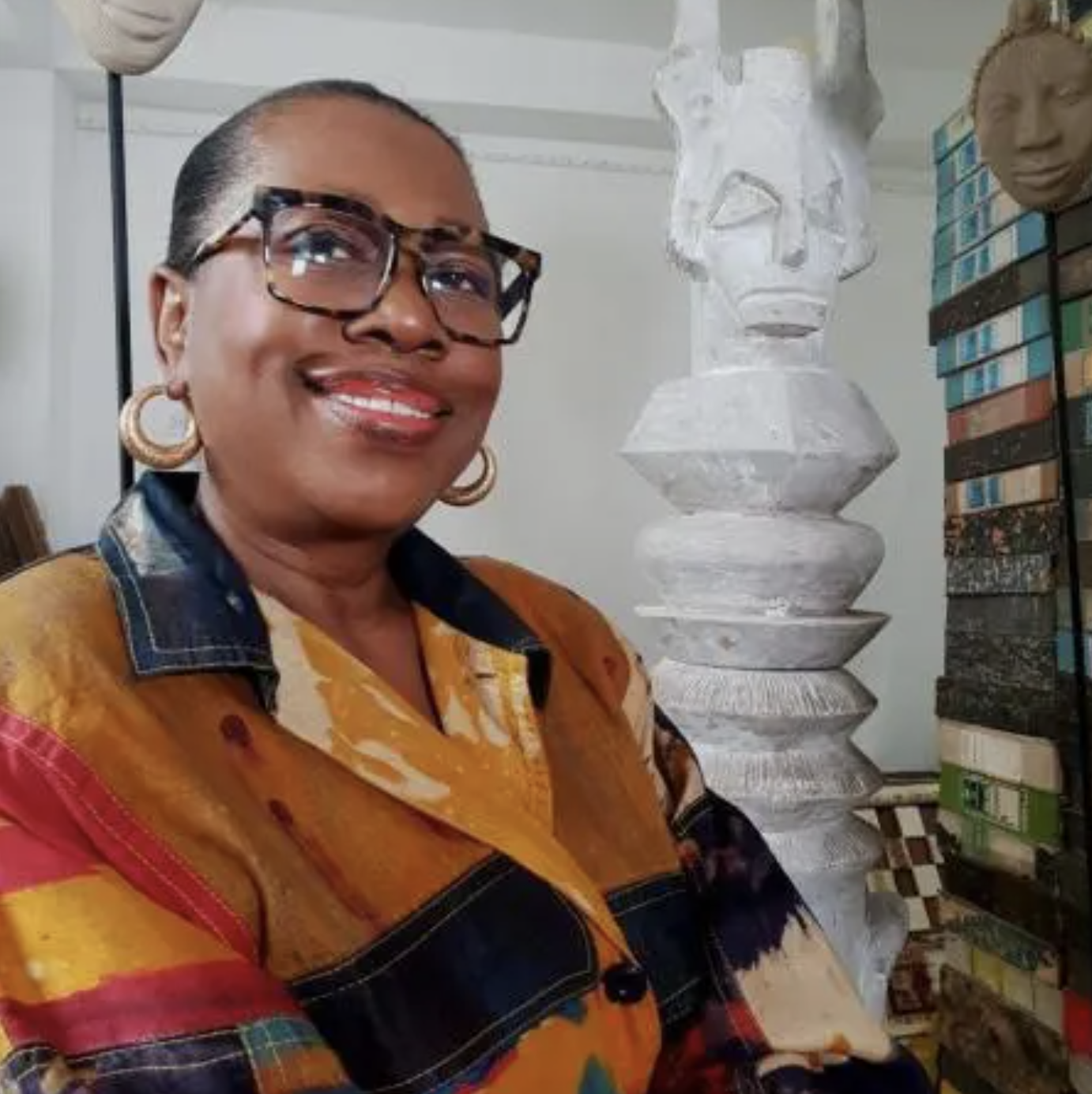

Early Life and Background
Ndidi Dike was born in 1960 in London, UK, to Nigerian parents and raised in Nigeria. She studied Fine Art at the University of Nigeria, Nsukka, graduating in 1984 with a major in Painting.
While trained as a painter, Dike became best known for her work as a sculptor and installation artist, pushing Nigerian contemporary art into bold, socially engaged directions.
Artistic Career
Early Work
In the mid-1980s, Dike began exhibiting works that combined wood, metal, and found objects, often drawing on African traditions while experimenting with modern forms.
She quickly became recognized as one of Nigeria’s first female sculptors to gain national and international attention.
Themes and Subjects
Ndidi Dike’s art addresses memory, history, and justice, focusing on issues often silenced in Nigeria:
- Transatlantic slave trade – confronting historical trauma and its modern legacies.
- Colonialism and postcolonial power – critiquing exploitation and inequality.
- Contemporary politics – including corruption, violence, and displacement.
- Gender and identity – exploring women’s roles in cultural and political history.
Notable Works and Exhibitions
- Waka-into-Bondage: The Last ¾ Mile (2008): A large-scale installation at the Centre for Contemporary Art, Lagos, reflecting on the slave trade and its memory.
- Unknown Pleasures and Competing Tendencies (2015): An installation critiquing Nigeria’s political instability and consumerism.
- Commodities of Consumption (2017): Work addressing human trafficking, slavery, and migration crises.
- Exhibited across Nigeria, Europe, the U.S., and South Africa, including biennales and international museums.
Mediums and Techniques
- Works primarily in sculpture and installation art, often on monumental scale.
- Uses wood, metal, textiles, paper, photography, and found materials.
- Combines Nsukka School aesthetics (symbolism, uli-inspired abstraction) with conceptual art.
Activism and Voice
Dike is not only an artist but also an activist:
- Uses her art as a platform for social justice, memory, and healing.
- One of Nigeria’s leading female voices in contemporary art, paving the way for other women artists.
Recognition and Awards
- Widely exhibited and collected internationally.
- Recognized as a trailblazer for Nigerian women in sculpture and installation art.
- Respected critic and thinker, often writing and speaking about Nigerian art history and politics.
Legacy and Influence
- One of the first prominent Nigerian women sculptors, breaking gender barriers in a male-dominated field.
- Expanded the language of Nigerian contemporary art to include installation and conceptual practices.
- Her works keep alive the memory of slavery, colonialism, and modern injustices, ensuring they remain part of Nigeria’s cultural discourse.
Conclusion
Ndidi Dike is more than an artist — she is a memory keeper, activist, and pioneer. Through installations like Waka-into-Bondage, she forces Nigeria and the world to confront histories of slavery, violence, and inequality, while envisioning paths of resilience and justice. She remains one of Nigeria’s most influential contemporary artists.










Related Posts

Stay Informed With the Latest & Most Important News
Previous Post
Next Post

Advertisement