Now Reading: The City of Jos, Nigeria
-
01
The City of Jos, Nigeria
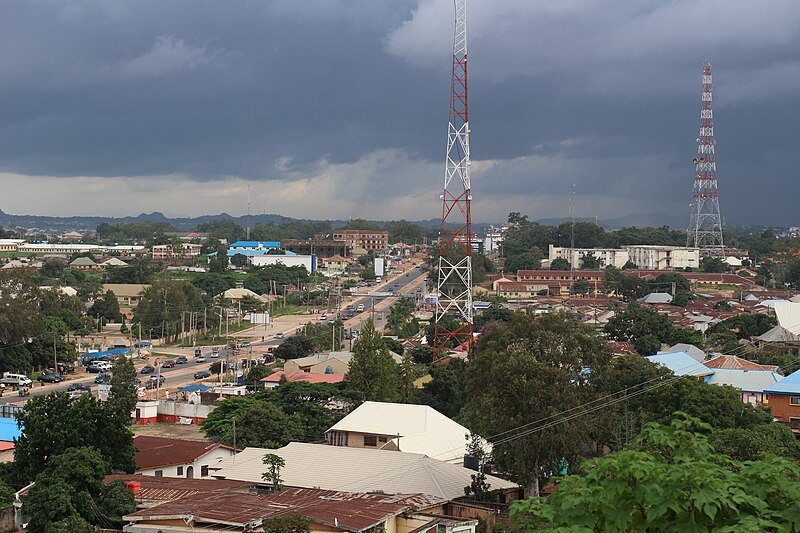

The city of Jos, located in the North-Central region of Nigeria, is the administrative capital of Plateau State. Positioned on a high-altitude plateau, the city’s unique geography and temperate climate have long been its defining physical attributes. This environment was the backdrop for a colonial-era tin and columbite mining boom that fundamentally shaped Jos’s identity. The influx of labor from across Nigeria and Europe transformed a cluster of indigenous settlements into a cosmopolitan “Tin City.”
This historical development, however, is the direct origin of the city’s most significant and enduring challenge: the “indigene-settler” conflict. This deep-seated ethno-political and economic rivalry over power and resources, exacerbated by religious differences, has manifested in a series of devastating riots and clashes since 2001. These conflicts have not only caused immense human suffering but have also physically and economically fragmented the city. While Jos has successfully diversified its economy beyond its mining origins into sectors like commerce, manufacturing, and agriculture, this new economic foundation remains perpetually vulnerable to periodic eruptions of violence.
Systemic failures in public services and infrastructure, including inadequate road networks and an aging power grid, further compound these challenges, creating a self-reinforcing cycle of hardship. The city’s rich cultural heritage and immense tourism potential, which should be key drivers of its economy, have been severely impeded by the insecurity stemming from these conflicts. The analysis indicates that Jos’s future stability and prosperity are inextricably linked to its ability to address the historical grievances that continue to define its socio-political landscape and undermine its development trajectory.
Geographic, Demographic, and Climatic Profile
Location and Topography
Jos is situated in the North-Central region of Nigeria, positioned on the Jos Plateau, which is the source of its state’s name. The city is strategically located almost at the geographical center of the country, approximately 179 kilometers from the Federal Capital Territory, Abuja. Its location makes it a vital nexus, connecting most of Nigeria’s northeastern capitals to Abuja by road. The drive to and from the city is characterized by steep, winding bends and mountainous scenery typical of the plateau.
A defining feature of Jos is its elevation, which ranges between 1,220 meters and 1,295 meters above sea level. This high altitude fundamentally distinguishes its climate from the rest of Nigeria, lending it a closer resemblance to a temperate environment.
Climate and Environmental Context
The city’s climate is classified as a tropical savanna climate, abbreviated as ‘Aw’ under the Köppen climate classification system. However, its high altitude tempers the heat, with average monthly temperatures ranging from 21°C to 25°C. A notable feature of the climate is the cool season from mid-November to late January, when night-time temperatures can drop to as low as 7°C. Jos receives approximately 1,400 millimeters of rainfall annually, a phenomenon attributed to both convectional and orographic sources due to its location on the plateau.
Historically, the region’s natural vegetation was a mosaic of savanna, open woodland, and forests. However, centuries of human activities, particularly farming and mining, have significantly reduced the tree cover, converting most of the plateau into open grassland.
Demographics and Administrative Divisions
Population data for Jos reveals a pattern of rapid urban expansion. Based on the 2006 census, the city had a population of about 900,000 residents, a figure that grew to approximately 1.56 million by 2022. The city has expanded to form a conurbation with the town of Bukuru, creating the Jos-Bukuru Metropolis.
Administratively, the city is divided into two local government areas (LGAs), Jos North and Jos South, although some sources mention a third, Jos East. Historically, Jos North served as the state’s commercial heart, housing key financial institutions like the Central Bank of Nigeria’s state branch and the headquarters of many commercial banks. It was also home to the Jos Main Market, a hub for essential services. However, due to recurring communal clashes, a significant portion of commercial activities has shifted to Jos South.
The city’s rapid demographic growth and the internal geographical shift of its commercial core reflect a reactive response to deep-seated socio-political instability rather than a healthy, planned urban expansion. The growth has been described as “unplanned, irregular, and disorderly,” encroaching on agricultural land and consuming a large proportion of land from 3,494 hectares in 1999 to 16,995 hectares in 2022. The physical development of the city has thus been fragmented, with expansion and reorientation occurring along the fault lines of conflict and insecurity. This creates new patterns of spatial inequality and resource strain that pose significant challenges for future urban governance.
Historical Evolution and Colonial Legacy
The Genesis of a City
The area now known as Jos was originally inhabited by indigenous ethnic groups, predominantly farmers, including the Izere (Afusari) people. The city’s name is a product of colonial mispronunciation, derived either from “Gwosh” in the Izere language or “Jas” in Arabic, which referred to a village located at the city’s current site. This region also holds immense historical significance as the home of the ancient Nok culture, a civilization of skilled artisans dating back to at least 1000 BC and renowned for its sophisticated terracotta artwork.
The Transformative Impact of Tin Mining
The modern development of Jos was fundamentally altered by the arrival of the British and the discovery of vast tin deposits around 1903. This marked the city’s transformation from a rural community to an industrial hub. The British began large-scale commercial mining in 1904, and the industry grew rapidly, with tin and columbite being extensively mined in the area until the 1960s. At its height, the Jos Plateau supplied almost a tenth of the world’s tin, earning the city the lasting nickname “Tin City”. The mining operations necessitated the construction of a railway line that transported the ore to coastal ports for export.
This industrial boom spurred a massive demographic shift. The demand for labor attracted a diverse influx of migrants from across Nigeria, including the Hausa from the north, the Igbo from the southeast, and the Yoruba from the southwest, as well as Europeans. This “melting pot” of ethnicities and religions made Jos one of the most cosmopolitan cities in Nigeria.
The Legacy of Mining
The impact of the mining era was a double-edged sword. While it fueled economic prosperity and rapid urban expansion, it also left a lasting environmental footprint. Large areas of land were “devastated and abandoned,” becoming unsuitable for crop production. The discovery of ancient Nok artifacts during mining operations also had an important institutional legacy, as it prompted the establishment of the Jos Museum in 1952, which is now the second oldest museum in Nigeria.
The very foundation of modern Jos—the colonial-era tin mining industry—is the direct origin of its most profound and persistent crisis: the “indigene-settler” conflict. The catalyst was the colonial resource extraction, which created a labor demand that led to a mass influx of “non-indigenous” migrants. This new population, while contributing to the city’s cosmopolitan character, came to contest for political power and economic resources with the indigenous groups, who felt their traditional rights were threatened. This created a permanent, institutionalized tension that would later erupt into ethno-religious violence decades after the mining boom had ended, making the city’s economic origin story inseparable from its social crisis.
The Socio-Political Landscape: The “Indigene-Settler” Divide
The Roots of Conflict
The core of the socio-political conflict in Jos is a deep-seated struggle for power and resources between “indigenous” and “non-indigenous” ethnic groups, often referred to as “settlers”. This dynamic is a direct legacy of the colonial-era migration spurred by the tin mining industry. While the conflict is often portrayed as a religious one between Christians and Muslims, the evidence suggests that religion is primarily a tool used by both sides to manipulate popular emotions and inflame the situation. The competition for “indigene certificates,” which grant access to political representation and civil service positions, is a central manifestation of this power struggle.
Timeline of Major Conflicts
Decades of simmering tensions erupted into mass violence for the first time in September 2001. The immediate trigger was the appointment of a Hausa Muslim politician as the local coordinator of a federal poverty alleviation program, which was seen as a provocation by indigenous Christian groups. This six-day period of riots resulted in more than 1,000 deaths and displaced tens of thousands of people. Subsequent major riots occurred in 2008, following a contested local government election, and again in 2010, resulting in hundreds of deaths and displacements.
The table below provides a concise overview of these major conflicts, highlighting the triggers and consequences.
| Date/Period | Event/Conflict Name | Primary Trigger/Cause | Key Consequences |
| September 2001 | 2001 Jos Riots | Appointment of a Muslim politician as poverty alleviation coordinator. | Over 1,000 deaths; tens of thousands displaced; extensive destruction of property. |
| 2008 | 2008 Jos Riots | Contested local government election results. | At least 761 deaths; over 10,000 displaced; homes, schools, churches, and mosques destroyed. |
| 2010 | 2010 Clashes | Small-scale reprisal and revenge killings following earlier conflicts. | Around 18,000 people displaced; continued destruction and social fragmentation. |
| 2001-Present | Ongoing Conflicts | Disputes between Fulani herders and farmers over land and resources. | Sustained violence in urban and rural areas; thousands of deaths since 2001. |
Human and Social Consequences
The human cost of this prolonged violence is immense. The conflicts have resulted in thousands of deaths and the displacement of a quarter of a million people since 2001. The violence has also physically reshaped the city, leading to the creation of religiously segregated “no-go areas” that alter patterns of residency, business, and daily life. Extensive damage to homes, mosques, churches, schools, and shops is clearly visible, and some villages on the outskirts of the city have been almost completely destroyed.
The city’s reputation as a “Home of Peace and Tourism” ironically contributed to the later conflicts, as its history as a safe haven attracted populations fleeing conflicts in neighboring states. This influx of people, while a testament to Jos’s historical stability, created an increase in economic pressures and resource scarcity, further straining the delicate social fabric and contributing to the very instability that would eventually define it.
Failures of Governance
A recurring theme in the analysis of the conflicts is the failure of government authorities to prevent the violence. Research indicates that the conflicts were foreseeable, yet the state government adopted a “passive attitude” and did not take seriously the threats issued by rival groups in the lead-up to the crises. The police have been widely criticized for their lack of presence and intervention, with the military only intervening after many lives had been lost. This failure of state capacity and accountability is further highlighted by the fact that, despite mass arrests, no one was successfully prosecuted for the 2008 riots, which perpetuates a cycle of violence and impunity.
Economic Structure and Development Trajectory
From Mining to Diversification
After the 1960s, the importance of tin mining diminished as Nigeria’s economy became increasingly reliant on the petroleum industry. This decline forced Jos to undergo a significant economic transition. The city successfully evolved into an important national administrative, commercial, and tourist center, becoming the capital of Plateau State in 1975.
Key Economic Sectors
The city’s economy is now a mix of industrial, agricultural, and commercial activities. Jos South has emerged as the industrial center of Plateau State, with a presence of major companies such as the NASCO group, Standard Biscuits, Grand Cereals and Oil Mills, and Zuma steel. Other local enterprises include food processing, beer brewing, and the manufacture of cosmetics, soap, and furniture.
Agriculture remains a critical sector. Farmers on the Jos Plateau cultivate staple foods like sorghum, millet, and acha, as well as cash crops such as potatoes, yams, and green vegetables for the local market. The Jos South Local Government Area is focused on advancing agricultural development through policies that promote crop diversification and the introduction of innovative technologies. A local agric-tech company, Green Eden Farms, is a leader in this area, revolutionizing farming with greenhouses that allow for year-round production, unaffected by external weather conditions, and significantly reduce water usage.
The commercial sector, historically concentrated in Jos North, has seen a geographical shift. The Jos Main Market, once known as the largest indoor market in West Africa, was destroyed by a fire in 2002 and a subsequent bomb blast in 2014. This destruction, coupled with the recurring communal clashes, has led to a lot of commercial activity shifting to Jos South.
Economic Challenges and Fragility
The analysis indicates that while the decline of tin mining forced Jos to diversify its economy, the enduring socio-political instability has repeatedly undermined this new economic foundation. This creates a cycle of fragile progress and economic reversal. The destruction of key commercial infrastructure, like the Jos Main Market, and the displacement of business activities by conflict demonstrate this pattern.
The city’s economy also faces broader national challenges, including high inflation and the effects of policy changes such as the removal of fuel subsidies, which have led to a decline in patronage for small and medium-scale businesses. Furthermore, localized conflicts over land and property rights, as seen in the protests by traders near the railway station against planned demolitions, add another layer of vulnerability to the economic environment.
This table summarizes the city’s economic transition and current status:
| Historical Period | Primary Economic Driver | Key Sectors/Industries | Associated Challenges |
| Early 20th Century | Tin and Columbite Mining | Extraction of mineral resources (tin, columbite, etc.) | Long-term environmental degradation; social tensions from mass migration. |
| Post-1960s | Administrative & Commercial Hub | Manufacturing (food, textiles), commerce, administration, and tourism | Decline of mining; reliance on petroleum-driven national economy; recurrent conflicts. |
| Present Day | Diversified Economy | Manufacturing, agriculture (with emerging agric-tech), commerce, and services | Insecurity undermining commerce and tourism; broader national economic hardship (inflation, subsidy removal). |
Infrastructure and Public Services
Transportation and Connectivity
Jos is a major transportation hub, linked by road, rail, and air to the rest of Nigeria. It has crucial road connections to Lafia, Bauchi, Kaduna, and Zaria, as well as to Abuja. A historical rail spur joins the city to Port Harcourt. While the road network may appear well-planned and connected, it is plagued by significant issues. Research on the road network in Jos indicates an average level of connectivity but highlights consistent problems with surface quality, frequent maintenance needs, safety hazards, and inadequate coverage. This poor state of roads contributes to increased interstate transport fares and places a heavy financial burden on transporters due to increased vehicle maintenance costs.
Power and Utilities
The state government has plans for integrated power utility and mini-grid development. However, a significant gap exists between these plans and the current reality. The power distribution network, much of which is over 70 years old, is considered to be of a quality “unsuitable” for sensitive equipment. This forces critical institutions, such as the Jos University Teaching Hospital (JUTH), to rely heavily on expensive diesel generators, a cost that is difficult to sustain with unstable government funding. The systemic failures in Jos’s infrastructure and public services create a self-reinforcing cycle of compounded hardship. The lack of reliable power compromises healthcare delivery, and poor roads limit access to it, creating a cascading failure that directly reduces the standard of living and makes the city less attractive for investment.
Healthcare System
Jos has a mix of public, private, and religious hospitals. A cornerstone of the city’s healthcare system is the Jos University Teaching Hospital (JUTH), a federal tertiary health institution established in 1975. Despite its significance, JUTH faces persistent challenges, including a lack of consumables like gloves and emergency drugs, chronic staff shortages, and unstable funding from the federal government.
An analysis of primary healthcare centers in the Jos metropolis revealed a severe imbalance in their distribution, with 20 centers in Jos North, nine in Jos South, and only one in Jos East. This disproportionate distribution creates significant gaps in access to essential services, particularly in areas with high population density. In response to these challenges, the Plateau State Ministry of Health has announced a new plan to “reposition” the health system to achieve Universal Health Coverage, with a focus on strengthening resilient health systems and improving maternal and neonatal outcomes.
Education
Jos is an important educational and research hub, home to several key institutions. The University of Jos, established in 1975, has since become a major federal university in Nigeria. The city also houses the Nigerian Film Institute and the National Veterinary Research Institute, further cementing its role as a center for specialized training and research.
This table highlights the disparity between the on-the-ground reality and the government’s plans for infrastructure and public services:
| Service/Sector | On-the-Ground Reality (based on research) | Government Plans/Initiatives (from research) |
| Roads & Transport | Poor surface quality, inadequate maintenance, safety hazards, and traffic congestion. | Plans for infrastructure development to support agricultural, mining, and tourism objectives. |
| Power Supply | Aging network (over 70 years old); reliance on generators due to unsuitable power quality. | Planned expansion of integrated power utilities and mini-grid development. |
| Healthcare | Shortages of staff and consumables; unstable funding; inequitable distribution of primary healthcare centers. | New plans to “reposition” the health system to achieve Universal Health Coverage. |
Cultural Heritage and Tourism Potential
A Hub of Diversity
The Jos Plateau is renowned for its exceptional cultural and linguistic diversity. With over 60 ethno-linguistic groups, the region is a microcosm of Nigeria’s broader diversity. This cultural richness is a product of both its ancient indigenous populations, such as the Berom and Ngas, and the demographic influx of various ethnic groups during the tin mining boom of the colonial era.
The Berom people, one of the largest indigenous groups, possess a rich cultural heritage, celebrated through festivals centered on agriculture and hunting. A key example is the Nzem Berom festival, which was established in the 1980s to unify and preserve pre-colonial traditions like the Mandyɛng and Nshok festivals in the face of modern influences.
Cultural Landmarks and Natural Attractions
Jos offers a unique blend of historical, cultural, and natural attractions. The Jos Museum, established in 1952, is a primary cultural landmark, housing the world’s most comprehensive collection of Nok terracotta artifacts dating from 500 BC to AD 200. Adjacent to it is the Museum of Traditional Nigerian Architecture, which features life-sized replicas of traditional buildings from various ethnic groups across the country, providing an immersive journey through Nigeria’s architectural heritage.
The natural landscape also contributes to the city’s appeal. Notable attractions include Assop Falls, a pleasant picnic spot, and the Shere Hills, which offer panoramic views of the city and attract mountain climbers. Other landmarks include the distinctive Riyom Rock formation and Wase Rock, a dome-shaped inselberg that serves as a protected bird sanctuary. The city also provides a variety of recreational spaces, including the Jos Zoo, Solomon Lar Amusement Park, and numerous other parks and gardens.
The city’s unique geographical and historical identity, which once positioned it as a prime tourist destination and a “hill resort,” is now a source of its most significant challenges. The same demographic influx that created this cultural tapestry also created the “indigene-settler” divide , which is the root cause of the ethno-religious violence. This violence has severely impeded tourist activity in the 21st century , creating a tragic paradox where the city cannot fully leverage its unique assets until it resolves the very conflicts that those assets helped create.
Conclusion and Recommendations
The city of Jos is a complex urban environment whose present state is a direct product of its colonial history. The resource-driven economic boom of the tin mining era created the demographic conditions for a deeply entrenched socio-political conflict that continues to undermine all aspects of development, from the economy to public services and social cohesion.
Based on this analysis, the following recommendations are proposed to address these intertwined challenges:
- Reframe and Address the “Indigene-Settler” Divide: Move beyond a superficial religious narrative to tackle the fundamental issues of political and economic marginalization. This requires implementing institutional reforms that establish a clear, equitable framework for resource sharing and political representation, which would render the “indigene certificate” a historical artifact rather than a source of conflict.
- Invest in Governance and Accountability: Focus on enhancing the capacity and independence of local security forces. The pattern of official inaction and impunity observed in past crises must be broken to build trust and ensure the safety of all communities.
- Strategically Leverage Economic Assets: Build on the city’s economic diversification by creating a strategic plan that addresses the long-term consequences of conflict. This should include targeted investments in the agricultural sector, particularly in sustainable agric-tech initiatives, to revitalize land degraded by historical mining. A parallel effort should be made to revive the tourism sector by building a robust security framework and marketing Jos’s unique cultural and natural landmarks as assets of national significance.
- Modernize Critical Infrastructure: Prioritize systemic infrastructure improvements to mitigate the cascading effects of current deficits. This includes a multi-pronged approach to providing a reliable power supply that reduces reliance on expensive, inefficient generators and a comprehensive plan to repair and expand the road network to improve connectivity and reduce the cost of business and daily life.










Related Posts

Stay Informed With the Latest & Most Important News

Advertisement