Now Reading: Sport in Nigeria: A Comprehensive Analysis of its Landscape, Challenges, and Future Trajectory
-
01
Sport in Nigeria: A Comprehensive Analysis of its Landscape, Challenges, and Future Trajectory
Sport in Nigeria: A Comprehensive Analysis of its Landscape, Challenges, and Future Trajectory

Sport in Nigeria is more than a recreational pursuit; it is a profound cultural phenomenon and a critical unifying force in a nation characterized by vast linguistic and ethnic diversity. With a rich history dating back to the early 20th century, Nigerian sport has evolved from indigenous traditions to embrace global disciplines, most notably football, which has become deeply embedded in the national identity. The country boasts a commendable record of achievements across various fields, including Olympic gold in football, multiple Africa Cup of Nations titles, and unparalleled dominance in African women’s basketball. However, this vibrant sporting landscape is simultaneously grappling with persistent systemic challenges, including chronic underfunding, dilapidated infrastructure, and administrative inefficiencies that have historically hindered sustained international excellence. Recent strategic initiatives, such as the “Renewed Hope Agenda” and the revitalization of the National Sports Commission (NSC) under the RHINSE framework, signal a deliberate shift towards professionalizing the sector, leveraging public-private partnerships, and fostering grassroots development. The trajectory for Nigerian sport hinges on the effective implementation of these reforms, aiming to transform it into a value-adding industry that consistently nurtures talent, ensures athlete welfare, and maximizes its potential for national unity and economic contribution.
1. Introduction: The Enduring Spirit of Nigerian Sport
1.1. Historical Context and Evolution
The history of sport in Nigeria is a tapestry woven from indigenous traditions and the influences of colonial introduction. Prior to European contact, Nigerian communities engaged in a vibrant array of indigenous sports and games that were integral to their social and cultural fabric. These activities included physical contests such as canoeing, archery, various forms of wrestling (known as Kokawa in Hausa, Ngba in Igbo, and Ijakadi in Yoruba), horse riding, hunting, and traditional boxing (Dambe), which is particularly prevalent in Northern Nigeria. Indoor games like Ayo (a Yoruba board game akin to Mancala), Dara, Akhue, Ise, and Koto also formed part of this rich heritage. These practices were not merely recreational but served as mechanisms for cultural preservation, skill development, and community bonding, passed down through generations.
The early 20th century marked a significant turning point with the arrival of British colonialists, who introduced structured European sports. Football, or soccer, was among the most prominent, with the first recorded match in Nigeria occurring in 1904. This introduction gradually led to a decline in the prominence of indigenous sports within formal educational and recreational settings, as European disciplines gained ascendancy. By 1950, football had rapidly become the undisputed national game. Its rise coincided with burgeoning nationalist movements across Africa, and in Nigeria, football played a crucial role in fostering a collective sense of national pride, inspiring aspirations for political freedom from colonial rule. The West African Pilot newspaper, founded by nationalist leader Nnamdi Azikiwe in 1937, was instrumental in popularizing football, transforming it into a cornerstone of Nigeria’s identity by the end of World War II. Through its extensive coverage, the newspaper helped to cultivate a stronger sense of community and pan-African solidarity, demonstrating football’s power as a social and political tool.
Nigeria’s formal engagement with international sporting events commenced in the 1950s. The nation made its debut on the global stage at the 1952 Helsinki Olympic Games. A significant early achievement followed swiftly, with Emmanuel Ifeanjuna securing Nigeria’s first gold medal at the 1954 Commonwealth Games in Cardiff, triumphing in the high jump event. This historical trajectory reveals a dual sporting heritage: deeply rooted indigenous practices alongside globally adopted sports. The prominence of the latter, especially football, was not just a matter of sporting preference but also served as a powerful instrument for forging national identity and unity during the struggle for independence. This historical context is crucial for understanding that modern sports development strategies in Nigeria must navigate this duality, balancing the preservation and promotion of traditional sports with the pursuit of global competitiveness in modern disciplines. The historical capacity of football to generate national pride and inspire political freedom highlights its inherent power as a social and political tool, a characteristic that can be strategically leveraged for contemporary national development goals beyond mere athletic achievement.
1.2. The Societal Fabric of Sport
In Nigeria, sport transcends simple recreation; it is a profound cultural expression, a celebration of human endurance and excellence, and a significant wellspring of national pride. Football, in particular, is not merely the most popular sport but is deeply woven into the nation’s cultural fabric, serving as an unparalleled unifying force. This passion for football permeates all levels of society, from local communities to the international arena, bringing together people of all ages and backgrounds and fostering a profound sense of collective identity.
The unifying power of sport becomes most evident during major international competitions, such as the FIFA World Cup. Despite Nigeria being a country with over 510 spoken languages, during these periods, the nation collectively “speaks football”. This shared experience fosters an intense sense of national unity, where traditional distinctions of tribe or social class temporarily dissolve. The focus narrows to the performance of the national team – who they are playing, who scored, and whether they won – creating a powerful atmosphere of shared hope and belonging. This demonstrates football’s unique capacity to build national pride and social cohesion in a pluralistic society.
Beyond football, sporting events generally act as crucial platforms for community building and national unity. These occasions allow individuals from diverse backgrounds to come together, setting aside differences in pursuit of shared passions and national identity. Such gatherings are not just about competition but also serve as vital opportunities for socializing, strengthening community ties, and reinforcing a collective sense of purpose. The consistent emphasis on sport, particularly football, as a unifying force and a source of national pride in a country with significant linguistic and ethnic diversity suggests that sport plays an indispensable role in maintaining social cohesion and national identity. This goes beyond mere entertainment; it is a fundamental aspect of national stability and a powerful tool for social engineering, making it a critical area for government attention and investment, not solely for athletic performance but for its broader societal benefits.
2. The Dominant Force: Football in Nigeria
2.1. Cultural Hegemony and Popularity
Football holds an unparalleled position as the most popular sport in Nigeria, deeply ingrained in the nation’s culture and a significant source of national pride. The fervor for football extends from local pitches in neighborhoods to the grand international stages where Nigerian teams and players compete.
The engagement of Nigerian fans with football is extensive, encompassing both international and domestic leagues. However, a notable disparity exists in this viewership. Polling data indicates that the English Premier League (EPL) commands an overwhelming majority of Nigerian viewership, followed by 59% of the population. In stark contrast, the local Nigerian Premier Football League (NPFL) attracts only 34% of followers. This preference for foreign leagues is further amplified by the significant presence of Nigerian footballers in the EPL and the shared English language, leading a majority of Nigerians to support English clubs. Chelsea, Manchester United, and Arsenal are particularly popular, alongside Spanish giants Real Madrid and Barcelona.
This overwhelming preference for international football, while demonstrating Nigeria’s global engagement and passion for the sport, presents a significant challenge for the growth and financial sustainability of the domestic league. This phenomenon, where viewership, potential sponsorship, and revenue are primarily directed towards foreign competitions, creates a ‘brain drain’ of attention and resources from the local football ecosystem. The aspiration of top Nigerian players to compete in more lucrative and professionally structured international leagues further exacerbates this situation, impacting the NPFL’s ability to attract and retain talent. This dynamic contributes to a cycle where the domestic league struggles to improve its quality and appeal, which in turn reinforces the fan preference for the more polished and well-resourced international competitions. Addressing this imbalance is crucial for the long-term health and development of Nigerian football.
2.2. National Teams: The Super Eagles and Super Falcons
Nigeria’s national football teams, the Super Eagles (men’s) and Super Falcons (women’s), are central to the nation’s sporting identity, embodying its aspirations and achievements on the global stage.
The Super Eagles (Men’s National Team)
The Nigeria national football team, affectionately known as the Super Eagles, operates under the governance of the Nigeria Football Federation (NFF). The team’s moniker has evolved through history, initially being referred to as the “Red Devils” before Nigeria gained independence. Following independence in October 1960, the name transitioned to “Green Eagles” to reflect the national colors and symbols. The current and enduring nickname, “Super Eagles,” was adopted after a contentious loss during the 1998 African Cup of Nations. While the Moshood Abiola National Stadium in Abuja serves as their primary home ground, other significant venues such as Teslim Balogun Stadium, Obafemi Awolowo Stadium, Godswill Akpabio International Stadium, and Lagos National Stadium also host their matches.
The Super Eagles’ international journey began with a 2-0 victory over Sierra Leone in Freetown on October 8, 1949. Their record for the biggest victory stands at 16-1 against Benin , a feat recently echoed by a 10-0 win against Sao Tome and Principe in June 2022.
The team boasts a rich history of significant achievements, particularly on the African continent. They have clinched the Africa Cup of Nations (AFCON) title three times: in 1980, 1994, and 2013. Additionally, they have been AFCON runners-up on five occasions (1984, 1988, 1990, 2000, and 2023) and secured third place eight times. In the 2023 AFCON tournament, the Super Eagles reached the final but ultimately lost 2-1 to Côte d’Ivoire. Despite the defeat, William Troost-Ekong was recognized as the player of the tournament. The team also holds an impressive record of six penalty shootout victories in AFCON history, a tally matched only by Egypt.
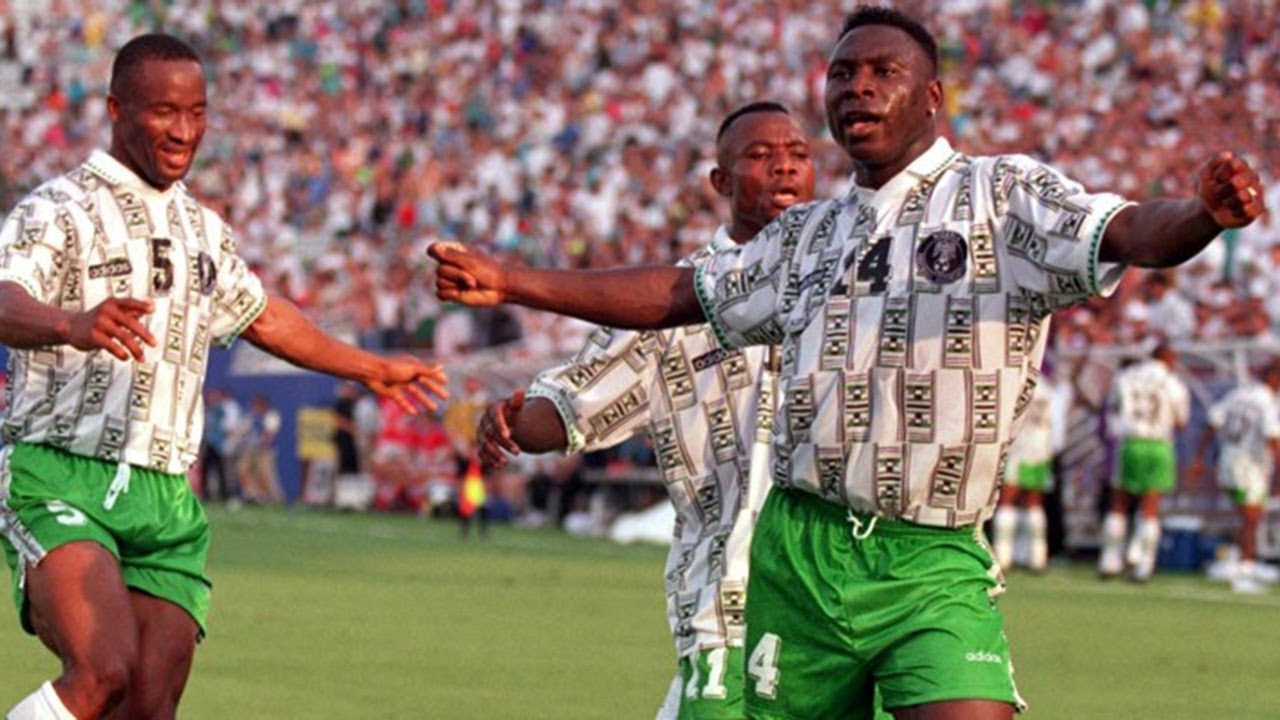
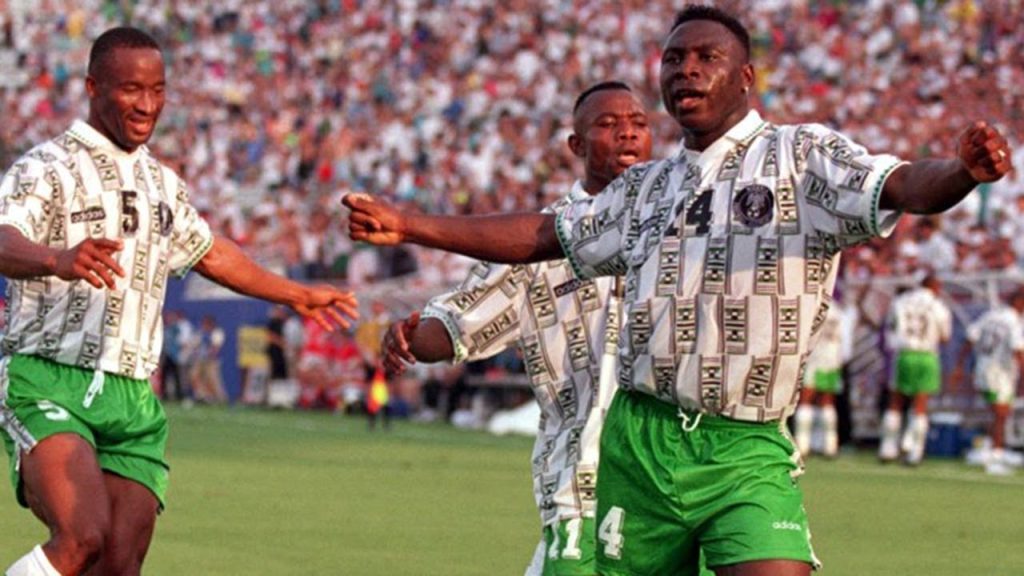
On the global stage, Nigeria has qualified for six of the last eight FIFA World Cups, notably missing the 2006 and 2022 editions. Their best performance at the World Cup has been reaching the Round of 16 on three occasions: in 1994, 1998, and 2014. The 1994 campaign saw them top a challenging group that included Argentina, Bulgaria, and Greece, before being narrowly defeated by Italy in the second round. In 1998, they again advanced from their group (Spain, Bulgaria, Paraguay) but were eliminated by Denmark in the second round. A pinnacle of their international success was winning the men’s football gold medal at the 1996 Atlanta Olympics, overcoming formidable footballing nations such as Mexico, Brazil, and Argentina. Other notable titles include the Afro-Asian Cup of Nations (1995), a gold medal at the African Games (1973), and the WAFU Nations Cup (2010), alongside two CEDEAO Cup victories. In terms of FIFA rankings, Nigeria achieved its highest position of 5th in April 1994, a record for any African team. Currently, the Super Eagles are ranked 44th globally and are the 5th best team within the Confederation of African Football (CAF).
Nigeria has produced a pantheon of iconic footballers who have made significant impacts both domestically and internationally. These include legends such as Mudashiru Lawal, Rashidi Yekini (the all-time top scorer for the Super Eagles with 37 goals), Jay-Jay Okocha, Nwankwo Kanu, Vincent Enyeama, Joseph Yobo, Mikel John Obi, Victor Osimhen, Christian Chukwu, Segun Odegbami, Stephen Keshi, and Finidi George.
The Super Eagles’ journey presents a compelling paradox of past glory and current inconsistency. While the team possesses a rich history of continental and Olympic success, including a peak FIFA ranking that stands as an African record , recent World Cup qualification failures and the 2023 AFCON final loss indicate a struggle to consistently maintain peak performance. This pattern suggests that underlying systemic issues, such as those related to funding, administrative stability, and the player development pipeline, may be hindering the translation of raw talent into sustained international dominance. Without addressing these foundational challenges, the team may continue to experience fluctuations in its global standing.
The Super Falcons (Women’s National Team)
The Super Falcons represent Nigeria in international women’s football. They hold an unparalleled record of dominance within African women’s football.
Major Achievements: The Super Falcons clinched a record-extending 10th Women’s Africa Cup of Nations (WAFCON) title in 2024, staging a dramatic comeback from a 2-0 deficit to defeat hosts Morocco 3-2 in the final. Their history of WAFCON victories includes previous triumphs over Cameroon in the 2004, 2014, and 2016 finals. Their consistent excellence led to them being named Africa’s Team of the Year for 2023.
FIFA Women’s World Cup Performance: Despite their continental supremacy, the Super Falcons have faced greater challenges on the global stage. They have participated in every FIFA Women’s World Cup since its inception in 1991, but have only managed to finish among the top eight teams on one occasion.
Recent Performance (Paris 2024 Olympics): A recent setback occurred at the Paris 2024 Olympics, where, despite being nine-time African champions (at the time of the event), they were eliminated without securing a single victory in the group stage.
Iconic Player: Chiamaka Nnadozie has emerged as a prominent figure, making history as the inaugural recipient of the African Goalkeeper of the Year award in 2023, a recognition she repeated in 2024.
The Super Falcons’ journey highlights a significant discrepancy between their overwhelming dominance in African women’s football and their limited impact on the global stage. This suggests a gap in preparation, exposure, or investment that prevents their African supremacy from consistently translating into global competitiveness. This situation points to the need for a targeted strategy to bridge this international performance gap, potentially through increased international friendlies, more players competing in top global leagues, and enhanced high-performance training facilities and programs.
2.3. Domestic Football Landscape
Nigeria’s domestic football landscape is structured through a hierarchical league system, designed to foster professionalism and develop talent from the grassroots to the elite level.
Structure and Evolution
The Nigerian football league system is an interconnected network of competitions, with the Nigeria Premier Football League (NPFL) serving as the pinnacle of club football in the nation. The NPFL, founded in 1972, has undergone several name changes throughout its history, including the “Nigerian National League – First Division” (1979-1990) and the “Nigerian Professional League” (1990-1993). The Nigeria Football Federation (NFF) established the Premier League in 1990 as a strategic step towards achieving full professionalism in Nigerian football.
The NPFL comprises 20 clubs and is directly fed by the Nigeria National League (NNL). Below the NNL lies the Nigeria Nationwide League One (NLO), which is the third-tier level, formerly known as the Nigerian Amateur League. The NLO facilitates the promotion of up to eight teams to the professional Division One annually. Further down the pyramid are the Nigeria Nationwide League Division Two and Division Three, with local and state amateur leagues forming the base as Non-League football. The standard league format involves home and away matches, totaling 380 games played over 38 MatchDays in a season. In 2016, the NPFL adopted the TMS Domestic Transfer Matching System (DTMS), becoming the first league in Africa to implement such a system, aimed at streamlining player transfers and enhancing transparency.
Key Clubs and Dynamics
Enyimba International F.C. stands as the most successful club in NPFL history, boasting an impressive nine titles. The 2024–25 season saw Remo Stars F.C. emerge as current champions, marking a historic achievement as the first privately-owned club to win the NPFL title. This victory was not merely a win for the team but a powerful statement affirming that dedicated resources and private management can enable clubs to compete effectively with traditional government-backed teams. Notable rivalries, such as the intense contests between Enyimba and Kano Pillars, are considered among the biggest matches of the season. Other prominent clubs in the league include Rivers United, Plateau United, Kwara United, Enugu Rangers, Gombe United, Akwa United, Sunshine Stars, Niger Tornadoes, Abia Warriors, Shooting Stars, Katsina United, Heartland, and MFM FC. The NPFL AllStars, a selection of the league’s best players, have engaged in pre-season and winter break friendlies with top Spanish sides like Atlético Madrid and Valencia, aimed at providing exposure and testing local players against elite international competition.
Challenges and Opportunities
Despite its structured system, the NPFL has historically faced significant challenges, particularly financial instability and dwindling fortunes since the late 2000s. These issues have largely stemmed from internal schisms and administrative inconsistencies within the league’s governance. The NPFL’s history of financial instability and administrative challenges directly correlates with its lower popularity compared to foreign leagues. This situation impacts its ability to attract and retain talent, invest in infrastructure, and market itself effectively.
However, recent efforts have aimed to inject a “new lease of life” into the league, notably with the inauguration of a substantive Board led by Hon. Gbenga Elegbeleye. The success of a privately-owned club like Remo Stars in winning the league offers a potential blueprint for future stability and growth. This demonstrates that private investment and professional management can serve as a crucial antidote to the league’s historical woes, potentially shifting it away from dependency on government funding and towards greater self-sustainability. Such a model could foster improved competitiveness, attract more commercial partners, and ultimately enhance the league’s appeal to fans, thereby strengthening the entire domestic football ecosystem.
3. Beyond Football: A Diverse Sporting Nation
While football undeniably holds a dominant position in Nigeria’s sporting landscape, the nation also boasts a diverse array of other sports, each with its own history, achievements, and cultural significance.
3.1. Basketball: Rising Global Presence
Basketball has steadily gained popularity in Nigeria, marking its presence both domestically and on the international stage.
History and Governance
The sport’s roots in Nigeria trace back to the late 1950s, when Walid Zabadne introduced basketball and served as the first coach to train Nigerians. He is widely regarded as the “father of Nigerian Basketball”. Zabadne later became the first president of the Nigerian Basketball Federation (NBBF), the governing body responsible for overseeing the sport’s activities in the country. Basketball began to gain significant recognition in Nigeria around 1964.
National Teams: D’Tigers and D’Tigress
The NBBF manages both the men’s national team, D’Tigers, and the women’s national team, D’Tigress.
D’Tigers (Men’s National Team): D’Tigers have achieved international recognition, notably becoming the first African team to defeat the United States men’s national team. They have consistently participated in FIBA Africa championships since 1972, securing one gold, three silver, and multiple bronze medals. The team has also featured in the FIBA World Cup (1998, 2006) and made history by qualifying for the Summer Olympics in 2012 (London) and again in 2015. Following their gold medal win at the FIBA Africa Championship, where they defeated Angola, D’Tigers’ world ranking climbed to 16th.
D’Tigress (Women’s National Team): The D’Tigress have demonstrated remarkable dominance within African basketball. They are currently ranked 6th in Africa and 42nd globally. In a historic achievement, they became the first team to win the Women’s AfroBasket five times in a row, securing their 7th overall title with a 78-64 victory over Mali in 2025. This triumph extended their winning streak in the AfroBasket competition to an impressive 29-0, dating back to 2015. Key players contributing to this sustained success include Promise Amukamara (three AfroBasket titles), Pallas Kunayi-Akpannah, Amy Okonkwo (MVP in 2023 and 2025 AfroBasket), Nicole Enabosi, Victoria Macaulay, and Sarah Ogoke, who stands as the only African player to win five consecutive AfroBasket titles.
Impact of Nigerian Players in International Leagues
Nigeria has produced numerous internationally recognized basketball players, most notably Basketball Hall of Famer Hakeem Olajuwon. The influence extends to women’s professional basketball, with many players of Nigerian heritage dominating the WNBA courts. Prominent examples include Michaela Onyenwere, who won the WNBA Rookie of the Year award in 2021; Elizabeth Williams, a two-time WNBA All-Defensive honouree; Arike Ogunbowale, an All-Star MVP; Temi Fagbenle, a WNBA champion; and Nneka Ogwumike, a former league MVP, six-time All-Star, and influential union leader.
The sustained dominance of D’Tigress in African basketball and the significant presence of Nigerian heritage players in the WNBA indicate that even within a challenging national sports ecosystem, specific teams or disciplines can achieve remarkable excellence. This success can be attributed to factors such as consistent effort, dedicated coaching, and potentially a strong connection to the Nigerian diaspora, which provides access to international training and competitive environments. This offers a valuable model for other sports in Nigeria on how to cultivate and maintain a winning culture, even when broader infrastructural and funding issues persist. The ability of D’Tigress to consistently perform at a high level suggests that focused development and leveraging global networks can overcome some of the systemic limitations faced by Nigerian sports.
3.2. Athletics: Track and Field Prowess
Nigeria possesses a proud and rich tradition in athletics, particularly excelling in sprinting and various field events. The nation’s athletes have consistently demonstrated talent and achieved notable successes on the international stage.
Historical Strengths and Medalists
Historically, Nigeria’s first gold medal at the Commonwealth Games was secured in the high jump by Emmanuel Ifeanjuna in 1954. The nation has also produced several Olympic medalists in athletics. Chioma Ajunwa made history at the Atlanta 1996 Olympics, becoming not only the first Nigerian to win an Olympic gold medal but also the first black African woman to achieve Olympic gold in a field event, specifically the long jump. Blessing Okagbare secured a silver medal in the long jump at the Beijing 2008 Summer Olympics, in addition to being a world medalist in the 200 meters. Enefiok Udo-Obong is the only Nigerian man to win two Olympic medals, earning a gold in the 4x400m relay at Sydney 2000 and a bronze in the same event at Athens 2004. Falilat Ogunkoya achieved a silver medal in the 4x400m relay and a bronze in the 400m at Atlanta 1996, making her the first Nigerian to win an individual track and field medal at the Olympic Games. Mary Onyali contributed to a bronze medal in the 4x100m relay at Barcelona 1992. Other notable relay medalists include Beatrice Utondu, Christy Opara-Thompson, and Faith Idehen (1992 4x100m bronze); Olabisi Afolabi, Fatima Yusuf, and Charity Opara (1996 4x400m silver); Innocent Egbunike, Sunday Uti, Moses Ugbisie, and Rotimi Peters (1984 4x400m bronze); Olapade Adeniken, Davidson Ezinwa, Chidi Imoh, Oluyemi Kayode, and Osmond Ezinwa (1992 4x100m silver); Olusoji Fasuba, Uchenna Emedolu, Aaron Egbele, and Deji Aliu (Athens 2004 4x100m bronze); and Franca Idoko, Gloria Kemasuode, Halimat Ismaila, Oludamola Osayomi, and Agnes Osazuwa (Beijing 2008 4x100m silver).
Current Talents
Nigeria continues to produce exceptional athletic talent. Tobi Amusan stands out as a world record holder in the 100m hurdles and a five-time national champion. Favour Ofili is a prominent sprinter, holding national records in the 150m and 200m. Samuel Ogazi is an emerging talent in the 400m. In field events, Ese Brume is a distinguished long jumper and an Olympic medalist from Tokyo 2020. Ruth Usoro holds the national triple jump record, Temitope Adeshina holds the high jump record, and Chukwuebuka Enekwechi is the national record holder in shot put.
Athlete Emigration (The “Japa Syndrome”)
Despite the abundance of talent, a significant and concerning challenge facing Nigerian athletics is the pervasive issue of athlete emigration, often referred to as the “Japa Syndrome.” This phenomenon sees talented Nigerian athletes switching nationalities to represent other countries. The reasons cited for these switches are consistently rooted in frustration with Nigerian sports officials, experiences of unjust treatment, unfulfilled promises, a lack of adequate support, and the allure of better opportunities, structure, and professionalism abroad, sometimes exacerbated by political unrest.
Numerous examples illustrate this trend:
- Annette Echikunwoke, a hammer thrower, initially chose to represent Nigeria but switched to the USA after the Tokyo Olympics debacle, subsequently winning an Olympic silver medal for the USA.
- Salwa Eid Naser, a sprinter born Ebelechukwu Agbapuonwu, switched to Bahrain in 2014 at age 16 and became the 2019 World 400m champion.
- Femi Ogunode, a sprinter, accepted Qatar’s offer to compete internationally after being inexplicably left off Nigerian rosters for the 2007 All-Africa Games and 2008 Olympics despite qualifying. He went on to become an Asian 100m record holder and a double Asian Games champion.
- Francis Obikwelu, a sprinter, switched to Portugal and won an Olympic silver medal in the 100m at the 2004 Athens Games. He cited frustration with Nigerian Athletics Federation (AFN) officials who dismissed his knee injury complaints and failed to release approved funds for his treatment.
- Glory Alozie, a world-class hurdler, switched to Spain, where she became a European champion. Her decision stemmed from a “forbidden story” of unfulfilled promises and a lack of support from Nigerian officials.
- Florence Ekpo-Umoh, a 400m sprinter, defected to Germany in 1995, citing a feeling that her career would end if she stayed in Nigeria due to the perceived need for athletes to “beg to make the team”.
- Daniel Igali, a wrestler, came to Canada as captain of Nigeria’s wrestling team for the 1994 Commonwealth Games but remained there seeking refugee status due to political unrest. He acquired Canadian citizenship and won Canada’s first and only Olympic gold medal in men’s wrestling at Sydney 2000, although he later returned to contribute to Nigerian wrestling as president of the Nigeria Wrestling Federation.
This trend of athlete emigration is not confined to athletics but extends across other sports, including football, basketball, wrestling, and weightlifting. The pervasive issue of athlete emigration is a direct and devastating consequence of chronic maladministration, unfulfilled promises, and inadequate athlete welfare. This systemic failure not only deprives Nigeria of its most talented individuals, thereby weakening its immediate international competitiveness, but also severely impacts the future talent pipeline and grassroots development. It sends a discouraging message to aspiring young athletes that success may necessitate leaving their home country, thereby perpetuating a self-defeating cycle of talent drain. Without fundamental reforms in sports administration and comprehensive athlete support, Nigeria will continue to lose its competitive edge and its future stars.
3.3. Combat Sports: Boxing and Wrestling
Combat sports hold a significant place in Nigeria’s sporting culture, encompassing both traditional forms and modern Olympic disciplines. The nation has a rich history of producing formidable athletes in boxing and wrestling.
Boxing
Nigeria has a proud boxing heritage, with several athletes achieving international acclaim.
Famous Boxers: Among the most renowned is Dick Tiger (Richard Ihetu), an undisputed middleweight and light-heavyweight world champion in the 1960s, celebrated for his powerful style and resilience. Other notable professional boxers include Hogan Bassey, Samuel Peter, Obisia Nwakpa (who held Nigerian, African, and Commonwealth lightweight titles and won gold at the 1973 All-Africa Games), Bash Ali (known for numerous local and international titles), and Olaide Fijabi (the current Nigerian super lightweight champion). Anthony Konyegwachie, a Commonwealth Boxing Champion, has also served as Head Coach of the Nigeria Boxing Federation. Contemporary figures like Efe Ajagba, Henry Akinwande, Ike Ibeabuchi, and Israel Adesanya also feature among famous Nigerian boxers.
Olympic Medalists: Nigerian boxers have consistently delivered Olympic medals. Nojim Maiyegun secured a bronze medal at the Tokyo 1964 Games. Isaac Ikhouria followed with another bronze at Munich 1972. Peter Konyegwachie earned a silver medal at Los Angeles 1984. At Barcelona 1992, Nigeria won two silver medals in boxing through David Izonritei and Richard Igbineghu. Duncan Dokiwari added a bronze medal at Atlanta 1996.
Traditional Wrestling (Kokawa/Ngba/Ijakadi/Even)
Traditional wrestling holds a deeply entrenched cultural significance in Nigeria, particularly within indigenous communities. It is more than a sport; it is a display of skill, strength, and honor, intimately connected to cultural practices and often accompanied by music and festivities. Known by various names across ethnic groups—Kokawa in Hausa, Ngba in Igbo, Ijakadi in Yoruba, and Even in Benin—its origins are lost to history, having been an integral part of community life for generations. The objective in traditional wrestling is typically to eject the opponent from a circular ring or to cause them to fall onto their feet or all fours.
Dambe (Traditional Boxing): Dambe is a unique martial art practiced by the Hausa people, predominantly in Northern Nigeria, including areas like Sokoto and Kogi. Competitors, known as “Yan Dambe,” aim to subdue each other, often leading to serious bodily injury. Historically, Dambe evolved from the practices of butchers’ guilds who would travel to farming villages during harvest festivals, integrating fighting challenges into local entertainment. It also served as a traditional method for men to prepare for warfare, with many techniques and terminologies reflecting military contexts.
Dambe possesses a distinctive fighting style: the dominant hand, referred to as the “spear,” is tightly wrapped in cloth and rope, sometimes hardened with resin to enhance impact. The other hand, the “shield,” remains free for defense. The lead leg is often wrapped in a chain for both offense and defense. Matches typically consist of three rounds, with no time limit, ending when there is no activity, an official calls a halt, or a participant’s hand, knee, or body touches the ground, which is termed “killing” the opponent. Percussive music, chants, and traditional spiritual practices known as Juju (involving amulets and rituals for protection or advantage) are integral to Dambe culture, adding to its electrifying atmosphere.
Modern Wrestling
Wrestling gained popularity as a competitive Olympic sport in Nigeria around the 1980s, following the establishment of the wrestling federation. The Nigerian Wrestling Federation (NWF) was formally inaugurated on September 27, 1981, with the primary aim of organizing and administering wrestling competitions at both national and international levels. Pioneer wrestlers like Michael Okpala (“Power Mike”), Michael Bamidele, Maman Zaria, Ben Lion Heart, and Power Uti played crucial roles in establishing Nigeria’s reputation in global wrestling.
Olympic Medalists: Blessing Oborududu made history at the Tokyo 2020 Olympics, securing a silver medal in the 68kg freestyle event, becoming the first Nigerian wrestler to win an Olympic medal. As mentioned earlier, Daniel Igali, though representing Canada, originally captained Nigeria’s wrestling team and later became president of the Nigeria Wrestling Federation, contributing significantly to the sport’s development in his birth country.
Commonwealth Games Success: Nigerian wrestlers have consistently excelled at the Commonwealth Games. Odunayo Adekuoroye has won multiple gold medals at the Commonwealth Games (2014, 2018, 2022) and a bronze medal at the 2015 World Wrestling Championships. She was also ranked world No. 1 in the 55kg category in 2017. Blessing Oborududu also secured gold medals at the 2018 and 2022 Commonwealth Games. At the 2018 Africa Wrestling Championships, the Nigerian team showcased its strength by winning 21 medals, comprising 10 for females and 11 for males.
The detailed descriptions of Dambe and Kokawa highlight their deep cultural roots, unique rules, and strong community engagement. While modern sports dominate the national conversation, these traditional forms represent a significant cultural asset and a potential avenue for grassroots talent identification and even tourism, if properly structured and promoted without compromising their authenticity. Investing in and formalizing traditional sports could not only preserve cultural heritage but also create new economic opportunities and diversify Nigeria’s sporting portfolio beyond the currently dominant disciplines, potentially attracting niche investments and broader participation.
3.4. Other Emerging and Traditional Sports
Beyond the major sports of football, basketball, athletics, and combat sports, Nigeria demonstrates a growing presence in other disciplines and continues to uphold its indigenous games.
Volleyball: Nigeria’s commitment to volleyball is evident through the participation of both its women’s and men’s national teams in the 2018–2020 CAVB Beach Volleyball Continental Cup. Furthermore, the country’s U21 national teams successfully qualified for the 2019 FIVB Beach Volleyball U21 World Championships, indicating a focus on youth development in the sport.
Bobsled: In a remarkable achievement, Nigeria’s women’s two-person bobsled team made history by becoming the first bobsled team from the African continent to qualify for the Winter Olympics, competing at the XXIII Olympic Winter Games. This pioneering effort highlights Nigeria’s ambition to compete in diverse global sports.
Curling: The Nigerian Curling Federation was established in 2018 with the aim of integrating curling into the country’s educational curriculum from elementary to university levels. In a significant milestone, Nigeria secured its first international victory in curling, defeating France 8–5 at the 2019 World Mixed Doubles Curling Championship.
Indigenous Games: Alongside the traditional wrestling and boxing forms, other indigenous games remain popular among Nigerian youth. Ayo, a Yoruba board game also known as Mancala, is widely played. Abula, a unique ball game invented in Nigeria in 1984 by Elias Foluso Yusuf, combines elements from badminton, table tennis, tennis, and volleyball, offering a local variation of a net sport. Langa, a one-leg hip game, is also mentioned as a traditional activity.
The emergence and international participation of sports like bobsled and curling, alongside the continued relevance of traditional games, suggest a significant potential for diversification beyond the established popular sports. This diversification could broaden Nigeria’s medal prospects on the global stage, engage a wider demographic of participants and fans, and potentially attract niche investments. By reducing an over-reliance on a few dominant sports like football, Nigeria could foster a more robust and resilient sporting ecosystem, providing more pathways for athletic development and national representation across a wider spectrum of disciplines.
4. Governance, Infrastructure, and Ecosystem
The effective functioning of Nigeria’s sports sector relies heavily on its institutional framework, physical infrastructure, and capacity to host international events. These elements collectively shape the environment for athlete development and performance.
4.1. Key Sporting Institutions
Nigeria’s sports landscape is governed by a network of key institutions, each with distinct mandates and responsibilities.
Federal Ministry of Youth and Sports Development: The Federal Ministry of Youth and Sports Development is tasked with the crucial mandate of “formulation, implementation, monitoring and evaluation of policies and programmes on youths and sports development towards wealth creation, youth empowerment, physical fitness and well-being, achieving excellence in sports, national unity”. Beyond sports, the ministry is responsible for broader youth affairs, including the development of national youth policy, the execution of youth development programs, funding for youth initiatives, enterprise development, vocational skills training, and youth engagement. It also oversees significant national programs such as the National Youth Service Corps (NYSC) and the Citizenship and Leadership Training Centre. Historically, the ministry underwent a merger with the National Sports Commission (NSC) in 2016. However, in October 2024, President Bola Tinubu separated the sports portfolio, effectively scrapping the Ministry of Sports Development and restoring an independent focus on youth development, while transferring sports responsibilities back to a revitalized NSC.
National Sports Commission (NSC): The National Sports Commission has a long history as Nigeria’s apex body responsible for regulating sports, having been established in 1971. It was dissolved by the Muhammadu Buhari government in 2015 but was notably revived by President Tinubu in October 2024, assuming all sports-related responsibilities from the defunct Ministry of Sports Development. The current leadership of the NSC comprises Chairman Mallam Shehu Dikko and Director-General Bukola Olopade.
Under its new leadership, the NSC has adopted a transformative guiding mantra known as RHINSE (Renewed Hope Initiative for Nigeria’s Sports Economy). RHINSE signifies a strategic shift in the national approach to sports, moving from a predominantly competition-driven model to one that emphasizes sports as a development-focused, value-adding industry. This initiative is anchored on a “Reset, Refocus, and Re-launch” (RRR) framework. The NSC’s strategic plans include ensuring the availability of at least six functional and FIFA-approved stadiums nationwide , implementing Public-Private Partnerships (PPPs) for the concessioning and revitalization of national stadiums , and generally upgrading all available stadium infrastructure across the country.
The repeated restructuring of the sports ministry, including its merger, subsequent separation, and eventual scrapping in favor of the NSC’s revival, indicates a persistent search for an optimal governance model for Nigerian sports. The latest shift back to a revitalized NSC, with a pronounced focus on developing a “sports economy” through the RHINSE framework, suggests a recognition that sports must be managed as an industry rather than merely a social service. This unbundling, if sustained and effectively implemented, holds the potential to lead to more focused policies, reduced bureaucratic bottlenecks, and potentially greater private sector involvement. Such a transformation could directly address historical issues of maladministration and pave the way for more sustainable growth in the sector.
Nigeria Olympic Committee (NOC): The Nigeria Olympic Committee (NOC) plays a vital role in coordinating and supporting Nigerian athletes for participation in the Olympic, Paralympic, Youth Olympic, Commonwealth, and African Games. It serves as the official custodian of the Olympic Movement within Nigeria. The NOC provides essential financial support, facilitates international Olympic training scholarships, and offers career services to athletes through their respective National Governing Bodies. The committee is affiliated with the International Olympic Committee (IOC) and is a member of the Association of National Olympic Committees (ANOC) and the Association of National Olympic Committees of Africa (ANOCA).
In response to a growing number of court cases related to sports in Nigeria, the NOC initiated the process to establish a local branch of the Court of Arbitration for Sport in 2011. For the London 2012 Olympic Games, the NOC initially selected Loughborough University as a training camp for Team Nigeria, later signing a deal for training at the University of Surrey. For the 2012 Games, the NOC had a budget of $220,000, with an ambitious target of obtaining 11 gold medals, and committed to providing 11 selected athletes with $4,000 every three months in the lead-up to the event.
The NOC’s stated ambitions, such as aiming for 11 gold medals at London 2012 and aspiring to surpass the Atlanta ’96 achievement at Paris 2024 , often stand in stark contrast to the reality of “poor funding” and actual medal outcomes, as evidenced by zero medals at the Paris 2024 Olympics. This significant gap between strategic planning and execution points to a fundamental disconnect, likely stemming from financial constraints and broader systemic issues that impede comprehensive athlete preparation. The lack of adequate funding directly undermines the ability to achieve ambitious sporting goals, regardless of the NOC’s strategic intent, highlighting a critical area for reform.
National Federations (NFF, NBBF, NWF, AFN): Various national federations, such as the Nigeria Football Federation (NFF), Nigerian Basketball Federation (NBBF), Nigerian Wrestling Federation (NWF), and Athletics Federation of Nigeria (AFN), are responsible for the specific organization and administration of their respective sports. Their roles encompass managing national teams, organizing domestic competitions, and overseeing talent development programs within their disciplines.
4.2. Sports Infrastructure
Nigeria possesses a considerable number of sports facilities, predominantly football stadiums, distributed across various states.
Key Stadiums: The nation’s sporting infrastructure includes several major stadiums with significant capacities.
- Moshood Abiola National Stadium (Abuja): This is the largest stadium, with a capacity of 60,491. Commissioned in 2003, it serves as the home ground for the Nigeria national football team. Its construction cost NGN 54 billion (approximately 360millionin2003),makingitoneofthemostexpensivestadiumsgloballyatthetime.[73]Itisamulti−disciplinestadiumfeaturingalightweightPTFEmembraneroof,providing33,000m^2$ of shade.
- Jos International Stadium (Jos): Boasts a capacity of 60,000.
- Lagos National Stadium (Lagos): Commissioned in 1972, it has a capacity of 45,000 and is home to the Cowrie Rugby Football Club.
- Adokiye Amiesimaka Stadium (Port Harcourt): Commissioned in 2015, with a capacity of 38,000.
- Muhammadu Dikko Stadium (Katsina): Commissioned in 2013, it has a capacity of 35,000 and is the home of Katsina United F.C..
- Godswill Akpabio International Stadium (Uyo): Commissioned in 2014, with a capacity of 30,000, and is home to Akwa United. Other notable stadiums include Teslim Balogun Stadium (Lagos, 24,325), Nnamdi Azikiwe Stadium (Enugu, 22,000), Stephen Keshi Stadium (Asaba, 22,000), Gateway Stadium (Ijebu-Ode, 20,000), Warri Township Stadium (Warri, 20,000), Kwara State Stadium (Ilorin, 18,000), Ahmadu Bello Stadium (Kaduna, 16,000), Enyimba International Stadium (Aba, 16,000), and Sani Abacha Stadium (Kano, 16,000).
State of Infrastructure: Despite the presence of numerous stadiums and facilities, Nigeria faces significant challenges regarding the quality and maintenance of its sports infrastructure. The country struggles with inadequate sports facilities and limited investments. A pervasive “poor maintenance culture” has led to the widespread deterioration of stadiums, arenas, and training facilities. This neglect results in substandard playing conditions, compromised safety for athletes and spectators, and a general decrease in the overall quality of sporting events.
Stadiums and arenas, for instance, require regular upkeep to ensure they meet safety standards, possess well-maintained playing surfaces, and have functioning seating areas and adequate lighting. Similarly, sports training facilities like gyms, training fields, and swimming pools demand consistent maintenance of equipment, repair of damaged surfaces, and assurance of cleanliness and safety for athletes. Furthermore, in modern sports, technological systems such as scoreboards, video displays, and sound systems are crucial and necessitate regular maintenance and upgrades for efficient operation. The challenges in maintaining this infrastructure stem from limited funding, inadequate expertise, and a lack of proper management and maintenance practices.
Nigeria possesses a significant number of large-capacity stadiums, which suggests a robust physical infrastructure base for sports. However, the consistent reporting of “inadequate sports facilities,” “limited investments” , and a “poor maintenance culture” reveals a critical paradox: the sheer quantity of facilities does not equate to functional, world-class infrastructure. This indicates a deeper systemic issue with asset management, funding allocation, and potentially a lack of long-term planning for sustainability. The consequence is a direct impact on athlete performance and the nation’s capacity to effectively host international events. Without a fundamental shift in maintenance culture and the implementation of sustainable funding models, such as Public-Private Partnerships, new constructions risk falling into the same state of disrepair, perpetuating a cycle of dilapidated infrastructure.
4.3. International Sporting Events Hosted
Nigeria has a notable history of hosting significant international sporting competitions, demonstrating its ambition and capacity to stage major events.
Notable Hosted Events:
- 1973 All-Africa Games (Lagos): The second edition of the All-Africa Games, also known as Lagos 1973, was successfully held in Lagos, Nigeria, from January 7 to 18, 1973. As the host nation, Nigeria finished an impressive second in the overall medal table, securing 18 gold, 25 silver, and 20 bronze medals. Notably, Nigeria also won the football tournament at these Games. Security measures were exceptionally tight, a direct response to the massacre of Israeli athletes at the Munich Olympic Games just four months prior. The event also drew global sports heroes, including Pelé and Muhammad Ali, who attended the opening ceremonies.
- 2027 African School Games: Nigeria recently secured the hosting rights for the second edition of the African School Games in 2027, successfully outbidding countries like Kenya and South Africa. This achievement is seen as a reflection of Nigeria’s “Renewed Hope Mandate” and a strategic move to enhance its international image as a prime destination for global sporting events.
- Confederation of African Athletics U-18/U-20 Athletics Championships: Nigeria has a track record of successfully hosting top-tier competitions, including the third edition of the Confederation of African Athletics U-18/U-20 Athletics Championships.
- FIFA U-17 World Cup: Nigeria has also served as a host for the FIFA U-17 World Cup, with matches played at various venues, including the Teslim Balogun Stadium.
While Nigeria has demonstrated its capability to successfully bid for and host international events, such as the African School Games and the All-Africa Games , incidents like athletes being stranded at Lagos airport due to visa payment issues for the African Athletics Championship highlight operational and logistical challenges. This suggests a gap between the national ambition to host and the administrative efficiency required for seamless execution. Such operational shortcomings can potentially impact Nigeria’s reputation as a reliable and efficient host for major international sporting events, potentially undermining the very “international image” that hosting aims to enhance. Addressing these logistical and bureaucratic hurdles is crucial for future hosting endeavors.
5. Critical Challenges and Systemic Issues
Despite Nigeria’s immense sporting talent and passion, the sector is plagued by a confluence of deep-seated challenges that consistently hinder its potential for sustained excellence and development.
5.1. Funding and Investment Deficiencies
One of the most pervasive issues facing Nigerian sports is chronic underfunding and inadequate investment, which have severely crippled the entire sports system for decades. This long-standing neglect has systematically weakened Nigeria’s competitive edge on the international stage. The consequences of this financial scarcity are far-reaching: athletes are frequently compelled to self-fund their international travel, bear out-of-pocket medical expenses, and struggle to access even basic training resources. Furthermore, the problem is compounded by instances of budget misappropriation, diverting crucial funds away from their intended purposes.
Insufficient funding is not merely a challenge but a fundamental root cause that perpetuates a vicious cycle of underdevelopment and underperformance. This financial deficit directly leads to dilapidated infrastructure, inadequate athlete welfare programs, and widespread administrative inefficiencies. These deficiencies, in turn, result in subpar performances on the international stage, which further erodes public and private sector confidence, making it even more difficult to attract necessary investments. Without breaking this cycle through consistent, transparent, and substantial funding, Nigeria will continue to underperform despite its abundant talent pool.
5.2. Infrastructure Deterioration and Maintenance
The physical infrastructure supporting sports in Nigeria is in a state of significant deterioration, largely due to inadequate maintenance practices. This problem extends beyond sports facilities to broader public infrastructure, including roads, bridges, and power systems, contributing to a decline in performance and potential safety hazards.
Stadiums and arenas, which are critical for hosting events and training, require continuous upkeep to meet safety standards, ensure well-maintained playing surfaces, and guarantee functioning seating areas, lighting, and other essential amenities. Similarly, sports training facilities such as gyms, training fields, and swimming pools are in constant need of equipment maintenance, repair of damaged surfaces, and consistent efforts to ensure cleanliness and safety for athletes. In the modern sporting landscape, technological systems like scoreboards, video displays, and sound systems are indispensable for broadcasting and enhancing the spectator experience, yet these too suffer from a lack of regular maintenance and upgrades.
The challenges in maintaining this infrastructure are multifaceted, stemming from limited funding, inadequate technical expertise, and, critically, a pervasive lack of proper management and maintenance practices. This collective failure results in substandard playing conditions, reduced safety, and a diminished overall quality of sporting events across the country. The phrase “lackadaisical attitude of Nigerians on maintenance culture” points to a deeper societal issue, suggesting that infrastructure decay is not solely a financial problem but also a cultural or behavioral one. This implies that solutions must extend beyond merely providing funds; they necessitate a fundamental shift in mindset towards asset preservation, accountability, and long-term planning, potentially achievable through public awareness campaigns, stricter enforcement mechanisms, and incentivizing proper upkeep. Without addressing this underlying cultural dimension, new investments in infrastructure may also fall into disrepair, perpetuating the cycle.
5.3. Maladministration and Governance Gaps
Chronic maladministration, characterized by bureaucratic bottlenecks, corruption, and institutional disrepair, has plagued Nigerian sports for decades. This systemic failure is arguably the most significant impediment to sporting progress. Evidence suggests that government officials frequently prioritize ceremonial send-offs and photo opportunities over the substantive welfare and development of athletes.
The impact of these governance failures is evident even in domestic competitions. Events like the National Sports Festival are often marred by disorganization, late funding, and chaotic conditions, with reports of athletes sometimes forced to sleep on floors and food being rationed. This environment not only compromises athlete performance but also discourages participation and investment. A particularly damaging aspect is the “culture of impunity” within Nigerian sports, where officials who contribute to the detriment of athletes’ careers often face no consequences, and sometimes even retain or regain positions of power.
The recurring themes of maladministration, corruption, and lack of accountability suggest that these governance failures are the primary bottleneck preventing the effective utilization of talent and resources. This implies that structural reforms, robust transparency mechanisms, and punitive measures for malpractice are more critical than isolated investments. Without addressing these fundamental issues, any new funding or strategic initiative risks being undermined by the same systemic flaws, leading to continued underperformance and talent drain. Effective governance is a prerequisite for sustainable growth and the realization of Nigeria’s sporting potential.
5.4. Athlete Welfare and Development
The welfare and holistic development of athletes in Nigeria face significant challenges, extending beyond mere performance metrics to encompass profound human costs. Athletes are frequently burdened by the necessity to self-fund their international travel and bear out-of-pocket medical expenses, a situation that places immense financial strain on them. Beyond the financial aspect, the psychological toll of neglect and unfulfilled promises is substantial. A poignant example is Chioma Ajunwa, Nigeria’s first Olympic gold medalist, who was denied a promised house by the Lagos State Government for 25 years, a situation that only saw resolution after widespread public outrage. Such instances contribute to deep disillusionment among athletes.
These challenges highlight a significant human cost associated with systemic failures within Nigerian sports, including financial hardship, psychological distress, and the tragic unfulfillment of athletic potential. This underscores a critical ethical imperative for comprehensive systemic reform. Recognizing athletes not merely as performers or commodities but as individuals deserving of comprehensive support and protection is paramount. A robust athlete welfare program should encompass consistent financial stipends, access to top-tier medical and psychological care, and transparent fulfillment of promises and incentives. Prioritizing athlete welfare is crucial not only for ethical reasons but also for enhancing morale, retaining talent, and ultimately improving performance and national representation.
5.5. Athlete Emigration (The “Japa Syndrome”)
The “Japa Syndrome,” or the emigration of talented Nigerian athletes, represents a profound and continuous drain on Nigeria’s most valuable sporting asset: its human talent. This phenomenon sees promising athletes frequently switching their national allegiance to represent other countries.
The reasons cited for these switches are consistently rooted in deep-seated frustrations with the Nigerian sports system. Athletes report experiencing unjust treatment, unfulfilled promises, and a pervasive lack of adequate support from sports officials. They often seek better opportunities, more structured and professional environments, and a greater sense of dignity that they perceive as lacking at home.
Numerous high-profile examples underscore this trend:
- Annette Echikunwoke, a hammer thrower born to Nigerian parents, initially chose to represent Nigeria but switched to the USA after the “Tokyo Olympics debacle” and subsequently won an Olympic silver medal for the United States.
- Salwa Eid Naser (born Ebelechukwu Agbapuonwu), a sprinter, switched allegiance to Bahrain at age 16 in 2014 and later became the 2019 World 400m champion.
- Femi Ogunode, a sprinter, accepted Qatar’s offer to compete internationally after being inexplicably omitted from Nigeria’s final rosters for the 2007 All-Africa Games and 2008 Olympics despite qualifying. He went on to become an Asian 100m record holder and a double Asian Games champion.
- Francis Obikwelu, a sprinter, switched to Portugal and won an Olympic silver medal in the 100m at the 2004 Athens Games. He explicitly stated his frustration with AFN officials who dismissed his knee injury complaints and failed to provide approved funds, leading him to seek opportunities abroad.
- Glory Alozie, a world-class hurdler, switched to Spain and became a European champion. Her decision followed a “forbidden story” involving unfulfilled promises and a lack of support from Nigerian authorities.
- Florence Ekpo-Umoh, a 400m sprinter, defected to Germany in 1995, explaining that she felt her career would end if she remained in Nigeria, observing athletes “begging to make the team”.
- Daniel Igali, a wrestler, sought refugee status in Canada after the 1994 Commonwealth Games due to political unrest in Nigeria. He gained Canadian citizenship and won Canada’s first Olympic gold medal in men’s wrestling at the Sydney 2000 Olympics.
This trend is not isolated to athletics but is observed across various sports, including football, basketball, wrestling, and weightlifting. The “japa syndrome” represents a continuous erosion of Nigeria’s sporting capital. This not only diminishes the nation’s immediate competitive capacity but also severely impacts the future talent pipeline and grassroots development by sending a discouraging message to aspiring young athletes that “If you want to succeed, leave”. Furthermore, it deprives the domestic system of experienced mentors and role models. This constitutes a self-perpetuating cycle of decline if not addressed through comprehensive reforms focused on athlete retention, trust-building, and professional pathways.
Table 4: Notable Nigerian Athletes Who Switched Nationalities
| Athlete Name | Original Sport | New Country Represented | Primary Reason(s) Cited for Switch | Notable Achievements for New Country |
| Annette Echikunwoke | Hammer Throw | USA | Tokyo Olympics debacle, lack of support | Olympic Silver Medal (2024) |
| Salwa Eid Naser | Sprinting | Bahrain | Better opportunities for development | 2019 World 400m Champion |
| Femi Ogunode | Sprinting | Qatar | Omission from national rosters without explanation | Asian 100m Record Holder, Double Asian Games Champion |
| Francis Obikwelu | Sprinting | Portugal | Unjust treatment, unfulfilled promises regarding injury | Olympic Silver Medal (100m, 2004) |
| Glory Alozie | Hurdles | Spain | Unfulfilled promises, lack of support, career flow | European Champion (2002) |
| Daniel Igali | Wrestling | Canada | Political unrest, seeking refugee status | Olympic Gold Medal (2000) |
| Florence Ekpo-Umoh | Sprinting | Germany | Career stagnation, perceived need to “beg to make the team” | European Championship Gold, World Championship Silver |
5.6. Doping and Integrity Concerns
The integrity of Nigerian sports has faced challenges, notably highlighted by doping controversies. At the Paris 2024 Olympics, the boxing contingent was reportedly “clouded by doping controversies”. Such incidents pose a significant threat to Nigeria’s international sporting reputation and can cast a shadow of doubt over the achievements of its athletes.
Recognizing this critical issue, the Nigerian government has taken steps to address it. The 2025 national budget includes specific funding for the establishment of a new Anti-Doping Laboratory. This investment represents a necessary and proactive measure to restore trust and ensure fair play within Nigerian sports. However, the effectiveness of this initiative will depend crucially on the independent operation of the laboratory, adherence to international anti-doping standards, and rigorous enforcement of anti-doping regulations. Without robust anti-doping measures, past and future achievements risk being questioned, potentially leading to reputational damage and sanctions from international governing bodies.
5.7. Grassroots Development and Talent Nurturing
Despite Nigeria’s consistent ability to unearth raw talent across various sports, as evidenced by its numerous successful athletes, the nation’s struggles at elite international competitions, such as the disappointing performance at the Paris 2024 Olympics , point to a fundamental weakness in the grassroots development and talent nurturing pipeline. There is a recognized need to invest in sports development “right from the primary school”.
This situation suggests that while raw potential is abundant, the systematic process of identifying, training, and progressing young athletes from foundational levels to elite competition is insufficient. Without a robust and well-structured system that provides consistent coaching, adequate facilities, and clear pathways for progression from primary school upwards, Nigeria will continue to rely on raw, often unrefined, talent. This talent, while impressive, frequently struggles to compete effectively against international counterparts who benefit from more systematically developed and sustained training environments. The absence of a strong grassroots foundation is a critical missing link in the talent pipeline, hindering the nation’s ability to achieve consistent elite performance and retain its promising athletes.
6. Strategic Initiatives and Future Outlook
In response to the persistent challenges and a desire to unlock the full potential of its sporting sector, Nigeria has embarked on a series of strategic initiatives, primarily encapsulated within the current administration’s “Renewed Hope Agenda.” These initiatives signal a deliberate shift towards professionalization, economic leveraging, and sustainable development.
6.1. The “Renewed Hope Agenda” for Sports
President Bola Ahmed Tinubu’s administration has explicitly declared its intention to treat sports with a seriousness that was often lacking in previous governments. This commitment forms a core component of the broader “Renewed Hope Agenda.”
Policy Shifts: A significant policy shift under this agenda was the unbundling of the sports ministry from youth development, a move designed to grant the sports sector the independence it critically needed. This restructuring culminated in October 2024 with the scrapping of the Ministry of Sports Development itself. All sports-related responsibilities were subsequently transferred to a newly revitalized National Sports Commission (NSC). To lead this revitalized body, Mallam Shehu Dikko was appointed as Chairman and Bukola Olopade as Director-General.
The W.A.I.F.A.R. Agenda: Prior to the NSC’s full revival, Senator John Owan Enoh, as the former Minister of Sports Development, launched a six-point agenda known as W.A.I.F.A.R. This framework focused on: Welfare for athletes, Activation of grassroots sports, Infrastructure development, Funding mechanisms, Administration and reorganisation of federations, and Revitalisation of school sports. A tangible demonstration of this commitment was President Tinubu’s approval and release of N12 billion to settle outstanding payments owed to Nigeria’s national teams ahead of the 2023 Africa Cup of Nations, aiming to boost morale.
The RHINSE Framework: The NSC has since adopted a new guiding principle: the Renewed Hope Initiative for Nigeria’s Sports Economy (RHINSE). This framework aims to fundamentally shift the sports paradigm from a traditional competition-driven approach to a development-focused, value-adding industry. RHINSE is anchored on a “Reset, Refocus, and Re-launch” (RRR) initiative. The underlying philosophy recognizes sports not merely as an event but as a culture, a powerful tool for national integration, a rallying ground for patriotism, and a workshop for shaping the body, mind, and spirit of the populace.
Increased Budgetary Allocations: A concrete reflection of this new direction is the 2025 national budget, which includes an unprecedented capital proposal of over N78 billion for the sports sector. This substantial funding is intended to jumpstart the sports economy and specifically covers infrastructure development, including the establishment of a new Anti-Doping Laboratory.
The “Renewed Hope Agenda” and the RHINSE framework represent a significant conceptual shift, moving beyond viewing sports merely as a social activity or a source of national pride to recognizing its potential as a substantial economic contributor. This implies a more professional, business-oriented approach to sports management, which could potentially attract more diverse investments and foster sustainable growth. However, the success of this ambitious paradigm shift hinges critically on overcoming historical implementation failures, bureaucratic inertia, and corruption that have plagued the sector.
6.2. Public-Private Partnerships (PPPs) for Infrastructure
A key component of the strategic initiatives to address the long-standing issue of dilapidated sports infrastructure is the aggressive pursuit of Public-Private Partnerships (PPPs). This approach aims to revitalize Nigeria’s iconic sports facilities by leveraging private sector efficiency and capital.
The NSC has outlined plans to begin with the concessioning of the National Stadium in Surulere, Lagos, as a flagship project. The objective is to transform these facilities into world-class multi-purpose hubs that can serve not only for sports but also for entertainment and commerce, thereby ensuring their commercial viability and sustainable upkeep. This concession plan is not limited to Lagos but extends nationwide, targeting other key stadiums such as the Ahmadu Bello Stadium in Kaduna, Tafawa Balewa Stadium in Bauchi, Obafemi Awolowo Stadium (Liberty Stadium) in Ibadan, and the Nnamdi Azikiwe Stadium in Enugu. The Nnamdi Azikiwe Stadium, now under the control of the Enugu State Government, is slated for significant upgrades in preparation for hosting the 2026 National Sports Festival.
Furthermore, the Moshood Abiola National Stadium in Abuja has been prioritized for comprehensive rehabilitation in the 2025 fiscal year. Plans include a complete overhaul of its main bowl and collaboration with an international group to transform the entire facility into a comprehensive sports city, utilizing its vast land resources. The NSC is actively engaging with state governments to ensure that all available stadium infrastructure, whether state or federally owned, undergoes necessary upgrades to advance sports development across the country.
The focus on Public-Private Partnerships for infrastructure development and maintenance is a direct response to the chronic issues of deterioration and the “poor maintenance culture” that have historically plagued Nigerian sports facilities. This strategy aims to leverage private sector expertise, efficiency, and capital to ensure sustainable upkeep and commercial viability, thereby potentially overcoming the “lackadaisical attitude” towards maintenance and reducing the financial burden on public funds. Successful PPPs could transform sports facilities from liabilities into revenue-generating assets, fostering a more sustainable and functional sporting environment.
6.3. Grassroots and Youth Development Programs
Recognizing that sustained sporting excellence begins at the foundational level, Nigeria is implementing new grassroots and youth development programs aimed at nurturing talent and addressing societal challenges.
Lagos Street Soccer Star Oshodi 2025: The Lagos State Government has launched this initiative as part of a broader strategy to combat crime and address its root causes in urban neighborhoods. The program seeks to channel youthful energy away from social vices by leveraging the unifying power of sports, offering young people productive alternatives to idleness and gang involvement. Its primary goals include providing safe, structured recreation for at-risk youth, instilling essential life skills such as teamwork, discipline, and resilience, fostering community engagement and social cohesion, boosting self-confidence, and creating pathways for personal and professional growth through sports.
Sports University of Nigeria (SUN) Idumuje-Ugboko: Senator Ned Nwoko has launched this pioneering institution, which is the first of its kind in Sub-Saharan Africa. The university offers 100% tuition-free education and provides outstanding students with exposure to cutting-edge academic and athletic programs. This initiative, tagged “Sports meet Education,” aims to harness the potential of youth by integrating academic excellence with athletic brilliance, producing ambassadors who can make Nigeria proud.
Invited Junior Athletes (IJA) program: As part of the upcoming National Sports Festival, the IJA program is a strategic move designed to deepen talent discovery at younger ages. This initiative aims to identify and nurture promising young athletes, providing them with opportunities to develop their skills and progress within the sports system.
The emergence of specific, localized grassroots initiatives like Lagos Street Soccer and the establishment of the Sports University demonstrates a clear recognition that talent development must begin at the community level. These programs, by explicitly linking sports to broader social development goals such as crime reduction and youth empowerment, offer a more holistic approach to nurturing talent. This approach not only focuses on athletic prowess but also addresses underlying societal issues that impact youth participation and well-being. Such a bottom-up strategy can be more effective in building a sustainable talent pipeline and fostering positive social change than solely concentrating on elite performance.
6.4. Recommendations for Sustainable Growth
Based on the comprehensive analysis of Nigeria’s sporting landscape, its historical achievements, persistent challenges, and recent strategic shifts, the following recommendations are crucial for charting a course towards sustainable growth and consistent global excellence:
- Diversify and Enhance Funding Mechanisms:
- Actively seek and attract private sector investment through transparent and incentivized Public-Private Partnerships (PPPs).
- Implement robust financial management systems within all sports bodies to ensure transparent allocation of funds and eliminate misappropriation.
- Explore innovative funding models, potentially including sports lotteries or dedicated levies, to create consistent revenue streams.
- Prioritize Robust Infrastructure Development and Maintenance:
- Systematically renovate existing dilapidated facilities, ensuring that new constructions adhere to international standards and incorporate long-term maintenance plans.
- Leverage the planned PPPs effectively to bring in private sector expertise and capital for the sustainable upkeep and commercialization of sports venues.
- Instill a strong “maintenance culture” through training, accountability mechanisms, and public awareness campaigns, treating infrastructure as a national asset requiring continuous preservation.
- Strengthen Governance, Transparency, and Accountability:
- Implement comprehensive institutional reforms within all sports federations and governing bodies to combat chronic maladministration and bureaucratic bottlenecks.
- Establish independent oversight mechanisms and enforce strict anti-corruption measures, ensuring that officials who compromise athlete welfare or mismanage funds face severe consequences.
- Promote merit-based appointments for leadership positions within sports organizations to foster professionalism and competence.
- Prioritize Comprehensive Athlete Welfare and Development:
- Establish and consistently implement comprehensive programs for athlete support, including guaranteed financial stipends, access to world-class medical care, psychological support, and nutritional guidance.
- Ensure the timely fulfillment of all promises and incentives made to athletes, rebuilding trust and morale.
- Implement robust anti-doping compliance measures, including independent testing and education, supported by the new Anti-Doping Laboratory, to safeguard the integrity of Nigerian athletes’ achievements.
- Strategic Talent Identification and Retention:
- Invest significantly in grassroots sports development, starting from primary schools, to create a robust and sustainable talent pipeline.
- Expand and strengthen programs like the Invited Junior Athletes (IJA) initiative to systematically identify and nurture young talent.
- Develop compelling incentives and professional pathways within Nigeria to retain top talent and mitigate the “Japa Syndrome,” ensuring that athletes see a viable and rewarding future in representing their home country. This includes creating more competitive domestic leagues and providing opportunities for international exposure.
- Leverage Sports for National Unity and Economic Diversification:
- Continue to maximize sports’ proven role as a tool for social cohesion and national integration, particularly football, by fostering inclusive participation and celebration.
- Fully embrace and implement the “sports economy” model (RHINSE), treating sports as a significant contributor to GDP, thereby attracting more diverse investments and fostering sustainable growth beyond just government funding.
- Explore the commercialization and promotion of traditional sports, recognizing their cultural and economic potential.
Table 1: Major Sporting Achievements of Nigeria (Selected)
| Sport/Team | Achievement | Year(s) | Significance/Notes |
| Super Eagles | Africa Cup of Nations Winner | 1980, 1994, 2013 | Three-time continental champions |
| Super Eagles | Olympic Gold Medal (Men’s Football) | 1996 | First African team to win Olympic football gold |
| Super Eagles | FIFA World Cup Round of 16 | 1994, 1998, 2014 | Best World Cup performance (3 appearances in R16) |
| Super Eagles | Highest FIFA Ranking | April 1994 | Ranked 5th, highest ever by an African team |
| Super Falcons | Women’s Africa Cup of Nations (WAFCON) Title | 2004, 2014, 2016, 2024 | Record-extending 10th WAFCON title (2024) |
| D’Tigress | Women’s AfroBasket Title | 2015-2025 (5 consecutive) | First team to win 5 consecutive continental crowns; 7th overall |
| Athletics (Chioma Ajunwa) | Olympic Gold Medal (Long Jump) | 1996 | First Nigerian Olympic gold medalist; first black African woman to win Olympic gold in a field event |
| Athletics (Blessing Okagbare) | Olympic Silver Medal (Long Jump) | 2008 | Also a world medalist in 200m |
| Athletics (Enefiok Udo-Obong) | Olympic Gold (4x400m relay) & Bronze (4x400m relay) | 2000, 2004 | Only Nigerian man with two Olympic medals |
| Athletics (Tobi Amusan) | World Record (100m Hurdles) | 2022 | 5-time national champion |
| Boxing (Dick Tiger) | Undisputed World Middleweight & Light-Heavyweight Champion | 1960s | Iconic professional boxer |
| Boxing (Peter Konyegwachie) | Olympic Silver Medal | 1984 | Notable Olympic boxing achievement |
| Wrestling (Blessing Oborududu) | Olympic Silver Medal (68kg freestyle) | 2020 | First Nigerian wrestler to win an Olympic medal |
| Wrestling (Odunayo Adekuoroye) | Commonwealth Games Gold Medal | 2014, 2018, 2022 | Multiple Commonwealth gold medalist, World Championship bronze |
Table 2: Major Sports Facilities in Nigeria
| Stadium Name | Capacity | City/State | Commissioned Year | Key Tenants/Primary Use |
| Moshood Abiola National Stadium | 60,491 | Abuja, FCT | 2003 | Nigeria national football team |
| Jos International Stadium | 60,000 | Jos, Plateau | – | – |
| Lagos National Stadium | 45,000 | Lagos, Lagos | 1972 | Cowrie Rugby Football Club |
| Adokiye Amiesimaka Stadium | 38,000 | Port Harcourt, Rivers | 2015 | – |
| Muhammadu Dikko Stadium | 35,000 | Katsina, Katsina | 2013 | Katsina United F.C. |
| Godswill Akpabio International Stadium | 30,000 | Uyo, Akwa Ibom | 2014 | Akwa United |
| Teslim Balogun Stadium | 24,325 | Surulere, Lagos | 2007 | First Bank F.C. |
| Nnamdi Azikiwe Stadium | 22,000 | Enugu, Enugu | – | Enugu Rangers |
| Stephen Keshi Stadium | 22,000 | Asaba, Delta | 2018 | – |
| Gateway Stadium | 20,000 | Ijebu-Ode, Ogun | – | FC Ebedei |
Export to Sheets
Table 3: Key Sporting Institutions in Nigeria
| Institution Name | Primary Mandate/Role | Key Responsibilities/Functions |
| Federal Ministry of Youth and Sports Development (Defunct as of Oct 2024) | Policy formulation, implementation, monitoring, and evaluation for youth and sports development | National youth policy, youth development programs, funding youth initiatives, NYSC oversight, Citizenship and Leadership Training Centre oversight |
| National Sports Commission (NSC) | Apex body responsible for regulating sports; shift to development-focused, value-adding industry | Infrastructure oversight, talent nurturing, policy enforcement, RHINSE framework implementation, PPPs for facilities, national sports festival organization |
| Nigeria Olympic Committee (NOC) | Coordinating and supporting Nigerian competitors for Olympic, Paralympic, Youth Olympic, Commonwealth, and African Games | Training, entering, and funding teams; custodian of Olympic Movement; providing financial support and scholarships; overseeing bidding processes for international competitions |
| Nigeria Football Federation (NFF) | Governing body for football in Nigeria | Management of national football teams (Super Eagles, Super Falcons), organization of domestic leagues (NPFL, NNL), player development |
| Nigerian Basketball Federation (NBBF) | Governing body for basketball in Nigeria | Management of national basketball teams (D’Tigers, D’Tigress), organization of basketball competitions, promotion of the sport |
| Nigerian Wrestling Federation (NWF) | Governing body for wrestling in Nigeria | Organization and administration of wrestling sport, competitions at national and international levels, talent development |
| Athletics Federation of Nigeria (AFN) | Governing body for athletics (track and field) in Nigeria | Organization of athletic competitions, management of national athletic teams, talent identification and development |
7. Conclusion: Charting a Course for Sporting Excellence
Sport in Nigeria is a powerful force, deeply embedded in the nation’s cultural identity and serving as an unparalleled catalyst for national unity. The country possesses an undeniable reservoir of raw talent, evidenced by its significant historical achievements across various disciplines, from the Super Eagles’ Olympic gold and multiple AFCON titles to the Super Falcons’ continental dominance and the rise of Nigerian basketball and athletics stars. This inherent potential, combined with the profound national passion for sports, presents a unique opportunity for Nigeria to achieve consistent global excellence and harness the sector for broader socio-economic development.
However, the analysis reveals that this potential is consistently undermined by a complex interplay of systemic challenges. Chronic underfunding, dilapidated infrastructure exacerbated by a pervasive lack of maintenance, and deep-seated maladministration characterized by corruption and accountability gaps, have created a vicious cycle of underperformance. The distressing “Japa Syndrome,” where talented athletes emigrate due to unfulfilled promises and inadequate support, is a direct consequence of these systemic failures, leading to a continuous erosion of Nigeria’s sporting capital and a discouraging message to aspiring youth. Furthermore, integrity concerns, such as doping controversies, threaten the credibility of Nigerian achievements on the international stage.
The current administration’s “Renewed Hope Agenda” and the strategic shift towards the “sports economy” through the revitalized National Sports Commission’s RHINSE framework represent a crucial and timely recognition of these issues. The commitment to increased budgetary allocations, the pursuit of Public-Private Partnerships for infrastructure development, and the launch of localized grassroots and youth development programs indicate a promising paradigm shift. This new direction aims to professionalize sports management, attract diverse investments, and foster sustainable growth by treating sports as a value-adding industry rather than merely a social service.
To truly chart a course for sustained sporting excellence and maximize the socio-economic benefits of sports for Nigeria, the following actions are imperative:
- Sustained and Transparent Investment: The increased budgetary allocation must be consistently maintained and transparently managed, complemented by aggressive diversification of funding sources through attractive PPP models.
- Infrastructure Renaissance: Beyond new constructions, a fundamental shift in maintenance culture is required, ensuring that existing and new facilities are sustainably managed and remain world-class.
- Root-and-Branch Governance Reform: Comprehensive institutional reforms, robust anti-corruption measures, and strict accountability for all sports officials are non-negotiable to rebuild trust and efficiency.
- Athlete-Centric Development: Prioritizing athlete welfare through guaranteed support, timely fulfillment of promises, and comprehensive anti-doping programs is essential to retain talent and foster a high-performance environment.
- Holistic Talent Pipeline: Strengthening grassroots sports from primary school, coupled with strategic talent identification and retention programs, is crucial to build a robust and sustainable talent pipeline for future generations.
- Strategic Diversification: While football remains paramount, strategic investment in other sports, including traditional ones, can broaden Nigeria’s medal prospects and economic opportunities.
Ultimately, the future trajectory of sport in Nigeria depends on the political will to implement these reforms diligently and consistently, transforming the nation’s immense passion and talent into a sustainable engine for both athletic glory and national prosperity.










Related Posts
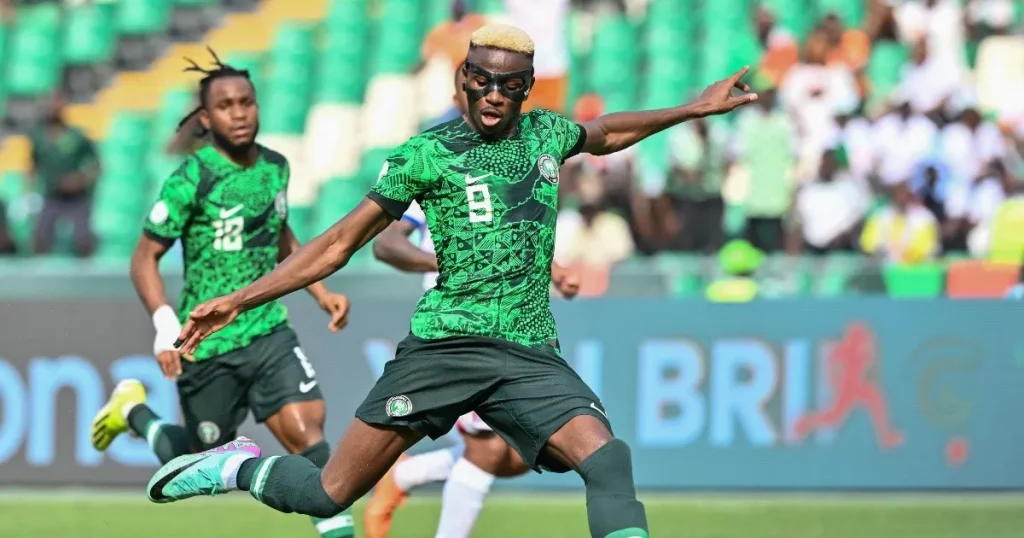
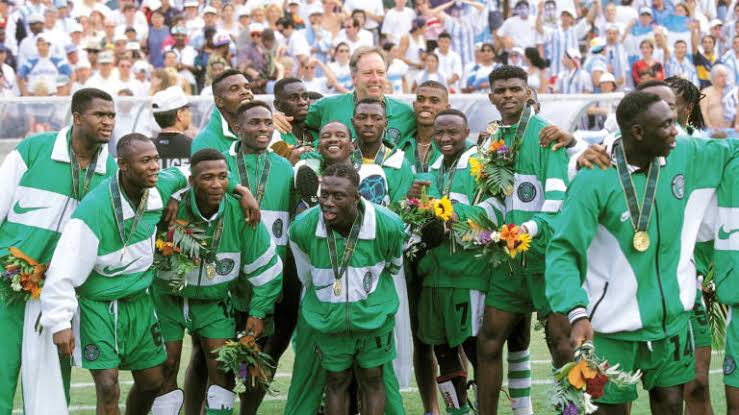
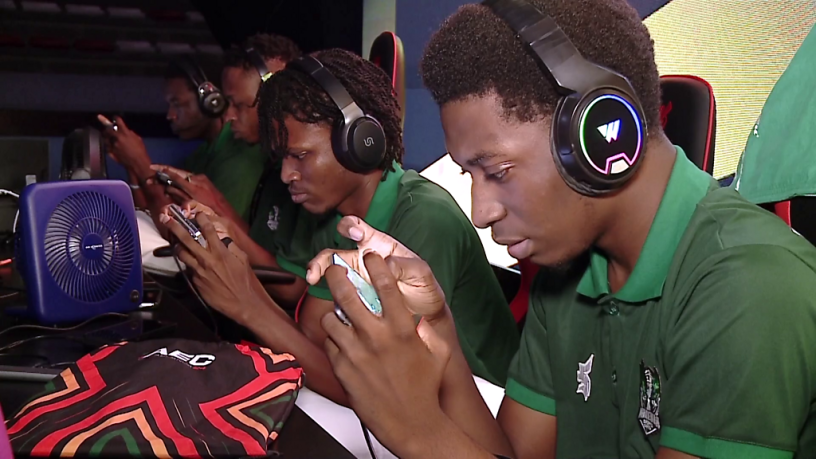
Stay Informed With the Latest & Most Important News
Previous Post
Next Post
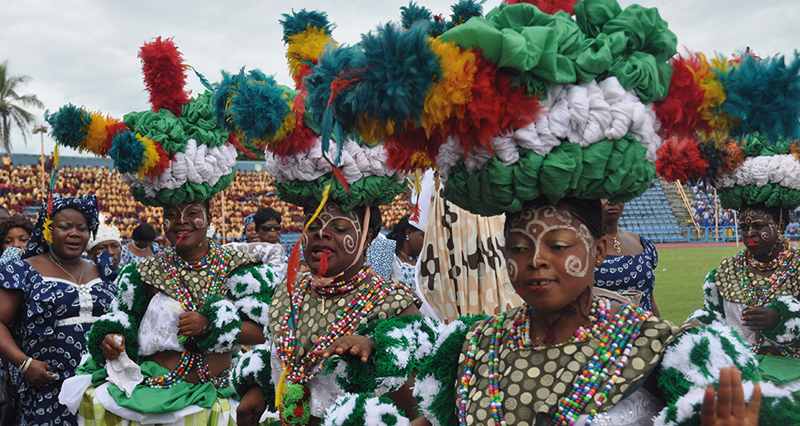
Advertisement