Now Reading: The Future of Nigerian Agriculture: A Comprehensive Analysis of Challenges, Opportunities, and Pathways to Economic Diversification
-
01
The Future of Nigerian Agriculture: A Comprehensive Analysis of Challenges, Opportunities, and Pathways to Economic Diversification
The Future of Nigerian Agriculture: A Comprehensive Analysis of Challenges, Opportunities, and Pathways to Economic Diversification

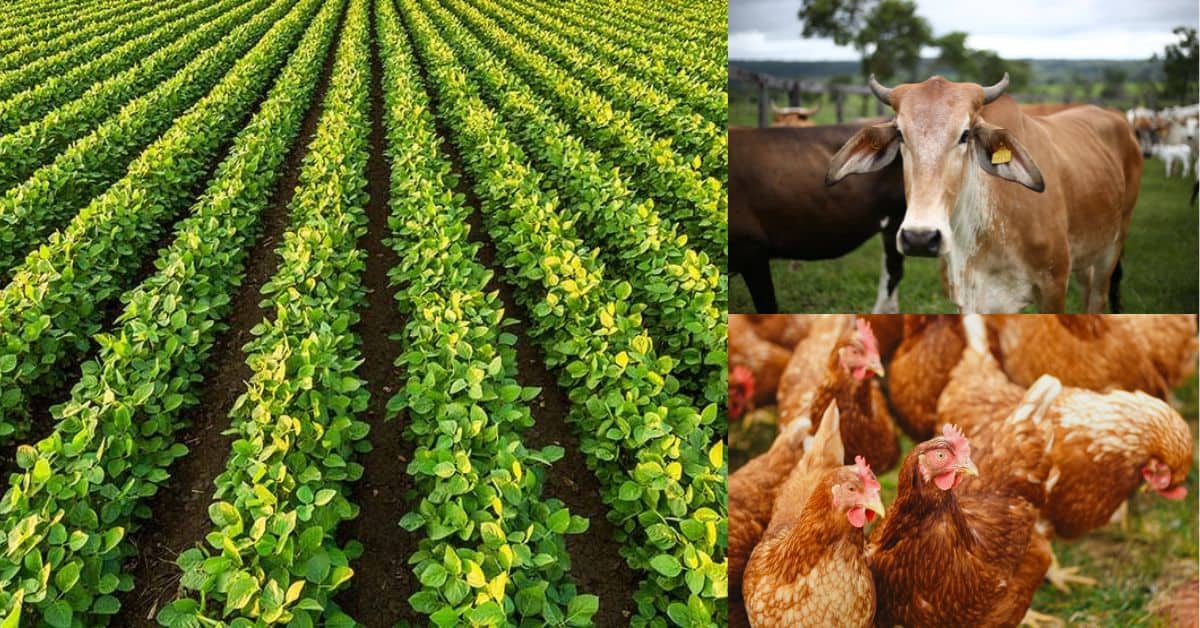
The Nigerian agricultural sector presents a profound and enduring paradox. While it serves as the foundational pillar of the nation’s non-oil economy, contributing a substantial portion of the Gross Domestic Product (GDP) and employing the majority of the population, the country paradoxically remains a significant food importer, facing a severe and persistent food security crisis. The core of this contradiction lies not in a lack of agricultural potential—as evidenced by Nigeria’s status as a top global producer of numerous crops—but in a complex web of systemic challenges.
This report conducts a comprehensive analysis of these challenges, including the existential threat of widespread insecurity, the amplifying effects of climate change on a vulnerable, rain-fed system, the crippling inefficiencies of inadequate infrastructure, and the self-reinforcing cycle of financial exclusion for smallholder farmers. It also delves into the historical context, tracing the sector’s decline from a pre-oil boom mainstay to its current state, a trajectory influenced by a colonial legacy that prioritized cash crops for export over domestic food production.
Despite these formidable hurdles, the report identifies clear and tangible pathways to revitalization and economic diversification. Strategic opportunities exist in leveraging modern agricultural technology, such as precision farming and digital platforms, to bypass traditional barriers. Furthermore, significant economic gains can be unlocked by shifting focus from raw commodity production to high-value agro-processing and packaging. The success of government initiatives, as exemplified by the Anchor Borrowers’ Programme, underscores that effective policies can work, provided they are backed by transparent and equitable implementation.
Ultimately, the analysis concludes that Nigeria’s agricultural sector is a sleeping giant. Unlocking its full potential requires a holistic and multi-stakeholder strategy that moves beyond singular policy pronouncements to a steadfast commitment to execution. By addressing the root causes of its current struggles, Nigeria can not only achieve food self-sufficiency but also build a resilient, diversified, and prosperous economy for the future.
1. Introduction: The Strategic Imperative of Agriculture in Nigeria
1.1. Background and Report Scope
Nigeria stands at a critical juncture in its economic history. For decades, the nation’s economy has been defined by its dependence on crude oil, a reliance that has left it acutely vulnerable to the volatile fluctuations of the global energy market. This vulnerability has exposed Nigeria to a “resource curse,” leading to long-term underinvestment, policy neglect, and corruption in other critical sectors. A strategic pivot away from this mono-economy is not merely a policy goal but a national imperative for achieving sustained economic resilience and stability.
Within this context, agriculture emerges as the most viable and sustainable path forward. It is not simply one sector among many; it is the bedrock upon which Nigeria’s economic diversification must be built. The scope of this report is to provide a holistic, data-driven analysis of the Nigerian agricultural landscape. It aims to dissect the systemic factors that prevent the sector from reaching its full potential, identify the key challenges that must be overcome, and propose actionable pathways to leverage its inherent strengths for the nation’s benefit.
1.2. The Central Paradox of Nigerian Agriculture
The strategic importance of agriculture is underscored by its paradoxical reality. On one hand, the sector is consistently identified as the most vibrant component of the non-oil economy. On the other hand, Nigeria, despite its vast agricultural potential, remains a net importer of food and is categorized as largely food insecure. This report seeks to deconstruct this central contradiction, moving beyond a simple listing of crops and production numbers to a deep examination of the underlying systemic factors that prevent growth from translating into widespread food security and prosperity.
2. A Historical and Economic Retrospective
2.1. From Subsistence to Dominance: The Pre-Oil Era
To understand the present state of Nigerian agriculture, it is essential to look back at its historical trajectory. Prior to the discovery of crude oil, agriculture was the undisputed mainstay of the Nigerian economy. Data from the pre-oil era illustrates its foundational role: it contributed over 60% of the GDP and provided employment for more than 70% of the population. Other figures from the time of independence in 1960 show an even greater dependence, with the sector accounting for 85% of Nigeria’s foreign exchange earnings and 90% of employment.
Pre-colonial Nigerian societies were predominantly subsistence cultivators, employing rudimentary farm implements and a system of bush fallowing. This system, despite its simplicity, ensured self-sufficiency in food supply. However, distinct regional specializations emerged, with the North producing drought-resistant grains like millet and sorghum, while the South focused on root crops and tree crops such as cocoa, palm oil, and rubber. The revenue generated from these agricultural activities was the primary driver of infrastructural development and social amenities across the country.
This historical narrative is incomplete without an acknowledgment of the lasting impact of British colonial policy. The modern-day food crisis and the structural deficits in Nigeria’s agricultural sector can be traced back to this period. The colonial administration deliberately discouraged the cultivation of food crops for domestic consumption, instead forcing a pivot toward cash crops for export to fuel British industries. This strategic redirection of land use and farming expertise created a long-term structural dependency on external markets and a persistent deficiency in domestic food production, a legacy that continues to hamper the sector’s ability to ensure national food security.
2.2. The Impact of the Oil Boom and Subsequent Decline
The discovery of crude oil in the 1970s marked a turning point. The influx of oil revenue led to a national shift in focus and decades of underinvestment and policy neglect in the agricultural sector. This led to a complete reversal of Nigeria’s trade patterns. At the time of independence, food exports constituted more than 70% of the country’s Gross National Product. However, within a mere 25 years, food items accounted for over 50% of imports. This hollowing out of Nigeria’s agricultural foundation serves as a textbook example of a resource curse, where the abundance of a single resource leads to the decline of other vital economic sectors.
2.3. Current Economic Landscape: Contribution and Employment
Despite decades of neglect, agriculture remains a foundational component of Nigeria’s economy. The sector’s contribution to GDP varies depending on the reporting period, but it consistently constitutes a significant portion of the national output. In the fourth quarter of 2024, for example, agriculture contributed 24.64% to real GDP. For the full year, its nominal contribution was 20.97%. Other sources corroborate this, citing a 21.07% contribution in the first quarter of 2024 and 21.96% in 2020.
Similarly, the sector is a massive employer of labor. The share of the labor force engaged in agriculture is reported to be about 45% in 2018/19, though other sources indicate it accounts for up to two-thirds of employment.
The data, despite its variations, clearly establishes that the sector contributes a massive portion of the national GDP and employs the majority of the population. However, a deeper look reveals a critical disconnect between this high-level contribution and the reality on the ground. The sector’s growth rate is modest, at 1.2% to 1.76% across different quarters of 2024, and the vast majority of farmers operate at a subsistence level. This indicates that the sector’s growth is not translating into meaningful poverty reduction or livelihood improvement for the average farmer. The problem is not one of scale or potential but of systemic inefficiencies that prevent the sector from generating sustainable wealth and ensuring food security.
3. State of the Sector: Major Crops, Livestock, and Regional Specialization
3.1. Dominant Crop Production
Nigeria is a global agricultural powerhouse in terms of production volume for several key crops. The country is the world’s largest producer of cassava, yam, taro, cowpea, and sorghum. It also holds top-tier rankings for other significant products, including being the second-largest producer of okra, the third-largest of peanut, sweet potato, and ginger, and the fourth-largest producer of millet, palm oil, sesame seed, and cocoa.
However, a fundamental paradox exists between this high production volume and the nation’s food security. Despite being the world’s largest producer of cassava, a major staple food, and the leading African producer of rice, Nigeria is also one of the world’s largest rice importers. This contradiction highlights a critical point: high production numbers alone are insufficient to ensure national food security. The problem lies in the entire value chain, where a significant portion of the harvest is lost due to inadequate storage and poor distribution. The gap between local production and national demand is further widened by a rapidly growing population, which local output has not been able to match.
3.2. Livestock, Aquaculture, and Other Sub-Sectors
The agricultural sector is not limited to crop production. It also comprises three other key sub-sectors: livestock, forestry, and fishing. Livestock farming alone accounts for a significant portion of the agricultural economy, contributing approximately 5% to the national GDP and 17% to the agricultural GDP. Nigeria is the main livestock producer in Central and West Africa, with a large population of animals. In 2017, the country had over 80 million poultry, 76 million goats, 43.4 million sheep, and 18.4 million cattle.
Despite these impressive numbers, the animal production sub-sector remains largely underexploited. It is also undergoing a complex transition from traditional nomadic pastoralism to more sedentary and intensive grazing practices, which places immense pressure on available land and resources and is a major source of conflict.
3.3. Regional Agricultural Profile
The Nigerian agricultural landscape is geographically diverse, with distinct regional specializations shaped by climate and environment.
- Northern Region: Characterized by a long dry season, this region’s agriculture is centered around drought-resistant grains. The staples are millet, cowpeas, and a type of sorghum known as “guinea corn”. Principal commercial crops are cotton and groundnuts. Livestock farming, particularly the raising of cattle, is heavily concentrated in the Sudan-Sahel region of the northern states. The reliance of this region on rain-fed agriculture makes it disproportionately vulnerable to climate change-induced droughts and delayed rainfall, which can lead to poor yields. This vulnerability is further compounded by conflict arising from competition for dwindling land and water resources between farmers and herders.
- Middle Belt: This region serves as a transitional zone, experiencing heavier rainfall than the North. It produces a mix of northern and southern staples, including yams, sorghum, millet, and cassava. The most significant commercial crop of the Middle Belt is sesame.
- Southern Region: With its high rainfall and forest environment, the southern region specializes in root crops like cassava, yams, and taro. The key commercial products are tree crops, with cacao growing predominantly in the southwest, oil palms in the southeast and south-central areas, and rubber stands common in the south-central and southeastern parts of the country. Fishing is also a significant activity, practiced by 7.3% of households in the region.
Connecting regional specialization to vulnerabilities reveals a critical weakness in the national food supply chain. The geographic concentration of staples and livestock in the North makes the entire country’s food system sensitive to a single regional shock, whether it be a flood, a drought, or a surge in banditry in a single food-producing state. This demonstrates how a regional problem in one part of the country can become a national crisis, driving up food prices and contributing to widespread food insecurity.
Table 1: Regional Agricultural Specializations: Crops, Livestock, and Key Features
| Region | Primary Staples | Key Commercial Crops | Primary Livestock/Other Activities | Key Environmental Characteristics |
| Northern Region | Millet, Sorghum, Cowpeas, Corn | Cotton, Groundnuts | Cattle, Goats, Sheep (Northwest) | Long dry season, Sudan-Sahel zone, marginal savannah vegetation, semi-arid soils |
| Middle Belt | Yams, Sorghum, Millet, Cassava, Corn | Sesame | N/A | Guinea savanna, heavier rainfall |
| Southern Region | Cassava, Yams, Taro, Sweet Potatoes | Cocoa, Oil Palm, Rubber | Fishing, Piggery | High rainfall, swamp and forest environment |
Export to Sheets
Table 2: Key Nigerian Agricultural Products and Their Global Production Ranking (2022)
| Product | Tonnage (in millions) | Global Ranking |
| Cassava | 59.6 | 1st |
| Yam | 47.5 | 1st |
| Taro | 3.3 | 1st |
| Cowpea | 2.6 | 1st |
| Sorghum | 6.8 | 1st |
| Okra | 2.0 | 2nd |
| Peanut | 2.8 | 3rd |
| Sweet Potato | 4.0 | 3rd |
| Ginger | 0.369 | 3rd |
| Millet | 2.2 | 4th |
| Palm Oil | 7.8 | 4th |
| Sesame Seed | 0.572 | 4th |
| Cocoa | 0.332 | 4th |
| Plantain | 3.0 | 5th |
| Papaya | 0.833 | 6th |
| Pineapple | 1.6 | 7th |
Export to Sheets
4. Analysis of Foundational and Systemic Challenges
4.1. Insecurity and Its Existential Threat
The ambitious agricultural agenda of the Nigerian government faces a formidable adversary: widespread insecurity. Across various regions, particularly in the food-producing states, farmers are increasingly subjected to violent attacks, kidnappings, and extortion. This instability is not merely a regional law and order issue; it is a direct and systemic threat to national food security. The violence forces farmers to abandon their land, leading to a significant reduction in food production, which in turn drives up food prices and contributes to the worst food crisis the nation has faced in decades. Without a secure environment, any strategic policy or investment will struggle to take root, and the promise of a thriving agricultural sector will remain elusive.
This security crisis creates a vicious, self-perpetuating cycle that directly impacts the national economy. When farmers cannot safely access their land, farm output decreases. This reduced output creates scarcity, which drives up the cost of food items. These soaring food prices are a primary contributor to food inflation, which is a major component of Nigeria’s overall macroeconomic inflation. This inflationary pressure erodes the purchasing power of the population, making food less accessible and compounding the food insecurity problem. The issue is a negative feedback loop where insecurity breeds scarcity, which breeds inflation, making the population more vulnerable and exacerbating social instability.
4.2. Climate Change and Environmental Vulnerability
Climate change is another critical challenge, manifesting as erratic rainfall patterns, floods, droughts, and off-season rains. In 2024, farmers in northern Nigeria reported delayed rainfall, which resulted in poor crop yields. Conversely, torrential rains and floods destroyed more than 1 million tons of crops in the same year, a quantity capable of feeding 13 million people for a year. The collapse of the Alau Dam, a specific instance of climate-induced disaster, wiped out approximately 700,000 hectares of farmland.
These environmental challenges are a direct threat to a system that is overwhelmingly reliant on rain-fed agriculture. The lack of widespread irrigation infrastructure—with only about 7% of irrigable land currently utilized—makes the entire food system extremely vulnerable to climate unpredictability. The effects of climate change are not a separate, isolated problem but rather an amplifier of existing infrastructural deficits, directly threatening the livelihoods of millions of farmers and the nation’s food supply.
4.3. Infrastructure and Post-Harvest Losses
Inadequate infrastructure is a long-standing constraint that has hindered agricultural output for decades. The challenges include a lack of effective transportation networks, limited storage facilities, and unreliable power supply. These deficits lead to “significant post-harvest losses,” a systemic issue that erodes profitability and food availability.
High logistics costs, exacerbated by fuel subsidy removal and illegal levies imposed by middlemen and security personnel, are a hidden tax on the food supply chain. These expended costs are inevitably passed on to consumers, further driving up food prices. The lack of cold storage and processing facilities means a substantial portion of produce spoils before it even reaches the market. The poor state of roads makes transportation slow, expensive, and risky. This combination of losses and costs reduces the actual volume of food that reaches the market, creates an artificial scarcity, and inflates the final price for the consumer. This deficit is a direct consequence of decades of underinvestment in non-oil infrastructure.
4.4. Financing, Credit, and Input Costs
Nigerian farmers, most of whom are smallholders, face significant financial barriers. They often rely on informal lenders charging exorbitant interest rates. Formal financial institutions are reluctant to provide credit to the sector due to a perceived high risk and farmers’ inability to provide acceptable collateral. As a result, only about 5% of African farmers have access to formal credit, a figure that highlights the deep-seated problem of financial exclusion.
This lack of access to finance is exacerbated by high production costs, including expensive fertilizers, machinery, pesticides, and quality seeds. The removal of fuel subsidies has further compounded this problem. Without the necessary capital, farmers are forced to use low-quality inputs that yield poorly, trapping them in a cycle of low productivity and perpetual poverty. This creates a negative feedback loop: without access to credit, farmers cannot afford modern inputs or equipment. This leads to low output and low income, which in turn prevents them from saving or acquiring the assets needed to access formal loans, locking them into a cycle of underperformance.
Table 3: Summary of Key Challenges and Their Socio-Economic Impact
| Challenge | Specific Manifestations | Socio-Economic Impact |
| Insecurity | Widespread banditry, kidnapping, and violent attacks on farmers | Reduced food production, driven-up food prices, food inflation, and social instability |
| Climate Change | Erratic rainfall, floods, droughts, off-season rains | Poor crop yields, destruction of farmland, increased vulnerability for rain-fed agriculture |
| Infrastructure | Poor roads, limited storage facilities, unreliable power | Significant post-harvest losses, high logistics costs, increased consumer prices, reduced food availability |
| Finance | Poor access to formal credit, high input costs, lack of collateral | Perpetual subsistence farming, low productivity, inability to adopt modern technologies, high reliance on informal lending |
Export to Sheets
5. The Policy and Regulatory Environment
5.1. Historical Policies and Their Legacy
The history of Nigerian agricultural policy since the oil boom is marked by a series of programs that have largely failed to achieve their objectives. This failure is often attributed to a combination of mismanagement, inconsistent and poorly conceived policies, and a lack of basic infrastructure. These historical shortcomings have created a context of public skepticism and have made the effective implementation of new initiatives a persistent hurdle.
5.2. Recent Policies and Initiatives
The current government has demonstrated a clear intent to revitalize the agricultural sector and diversify the economy away from its dependence on oil. Key initiatives include the Agro-Pocket Initiative under the National Agricultural Growth Scheme, which aims to provide targeted support and input vouchers to farmers for the cultivation of staple crops. Additionally, the government has launched the National Agricultural Technology and Innovation Policy to promote mechanization and digital farming, with a focus on empowering young people and women. To address the immediate inflationary pressures, the administration has also suspended duties and tariffs on essential food imports.
5.3. Case Study: The Anchor Borrowers’ Programme (ABP)
The Anchor Borrowers’ Programme (ABP), a Central Bank of Nigeria initiative, serves as a crucial case study in the intersection of policy and implementation. The program’s objective is to provide loans and essential farm inputs to smallholder farmers, creating linkages with reputable anchor companies to boost agricultural production.
On the one hand, the program has had notable successes. A study on rice farmers in Nasarawa State revealed that the ABP significantly increased the availability of rice at affordable rates, boosting local production and reducing the nation’s reliance on imports. Another study in Niger State found that the program substantially increased the agricultural output of its beneficiaries. Before the program, an average farmer was producing 1 to 20 bags of produce, but with ABP’s assistance, they were able to embrace mechanized farming, cultivate more land, and produce 50 bags and above. The program also provided tangible socio-economic benefits, enabling farmers to pay school fees and purchase assets.
However, the ABP is also plagued by significant implementation challenges that undermine its full potential. These include the lack of a comprehensive program manual, which leaves farmers uncertain about what to do when problems arise, as well as delayed access to funds. The program has also faced issues with “elite capture,” where powerful individuals manipulate and monopolize resources, hindering equitable distribution. This case study provides a powerful demonstration: the problem in Nigerian agriculture is not a lack of vision or policy frameworks, but a systemic failure in the effective, equitable, and transparent execution of those policies.
6. The Role of Technology and Modernization
The adoption of modern technology presents a vital pathway for Nigeria to overcome its systemic agricultural challenges. Technology serves as a critical tool for bypassing traditional barriers and enhancing efficiency across the entire value chain.
6.1. Precision Agriculture and Data Analytics
Precision farming employs technologies such as GPS-guided machinery, drones, and sensors to collect data on soil conditions, weather patterns, and crop health. This data-driven approach allows farmers to make informed decisions, leading to more efficient use of inputs like water and fertilizer. The Nigeria Agricultural Extension Service reports that precision farming can increase crop yields by up to 30% while reducing input costs by 20%.
A prime example is the Nigerian startup Hello Tractor, which utilizes Internet of Things (IoT) technology and data analytics to connect smallholder farmers with tractor services. This innovative model has reportedly increased land productivity by a remarkable 200% by addressing labor constraints and ensuring that farmers can cultivate their land more efficiently.
6.2. Mechanization and Farm Equipment
The adoption of modern farm machinery is critical to transforming Nigeria’s traditional, labor-intensive farming practices. The International Food Policy Research Institute (IFPRI) indicates that mechanization can reduce labor costs by up to 40% and increase overall farming efficiency by 25%. Beyond tractors and harvesters, the use of irrigation systems, especially solar-powered ones, is enabling year-round farming and has led to a reported 30% increase in agricultural output in arid regions.
6.3. Digital Platforms and Market Linkages
Mobile technology and digital platforms have become crucial tools for empowering farmers by bridging information and market access gaps. Platforms like Farmcrowdy provide farmers with access to extension services, real-time market prices, and weather forecasts, which in turn improves their bargaining power and reduces the influence of middlemen. This technological integration is a powerful way to address the lack of physical infrastructure and a flawed financial system. Mobile apps can provide market information, and fintech solutions can offer access to credit, directly addressing the core barriers that have perpetuated subsistence farming.
7. Strategic Opportunities and Pathways for Diversification
7.1. Investing in the Value Chain: The Promise of Agro-Processing
The most significant opportunity for Nigerian agriculture lies not simply in increasing production but in moving up the value chain through agro-processing. Currently, a substantial amount of produce is lost due to a lack of processing and preservation facilities. By establishing processing plants, Nigeria can reduce post-harvest losses, add significant market value, create jobs, and capture a greater share of the global food market. Examples include processing raw cassava into high-demand products like garri, flour, and starch or transforming cocoa beans into powder and butter for export.
7.2. High-Yield Investment Opportunities
Analysis of the market and production data points to several specific, high-return ventures for investors. Cassava and rice farming and processing are at the top of the list, driven by Nigeria’s status as a world leader in production and its immense local consumption. The high demand for eggs and poultry meat makes poultry farming a highly profitable venture. Similarly, fish farming, particularly for catfish and tilapia, presents a lucrative opportunity to meet the annual national deficit of 1.2 million metric tons. Other promising ventures include snail farming, beekeeping, and greenhouse farming for high-demand vegetables like tomatoes and peppers. The profitability of sesame cultivation is particularly notable, with a reported return of N2.08 for every N1 invested.
Table 4: High-Return Agricultural Investment Opportunities in Nigeria
| Venture | Rationale/Market Demand | Specific Investment Opportunities |
| Cassava Farming & Processing | World’s largest producer; high demand for processed products (garri, flour, starch) | Large-scale farming, establishing processing plants, exporting derivatives |
| Poultry Farming | High and growing local demand for eggs and meat | Commercial broiler and layer farming, processing and packaging |
| Fish Farming | Significant annual import deficit of 1.2 million metric tons | Catfish and tilapia farming, smoked fish processing, exporting |
| Rice Farming & Processing | Largest African producer and consumer, yet a major importer | Large-scale cultivation, establishing milling plants, selling branded products |
| Snail Farming | Low capital requirement, minimal space, high local/international demand | Indoor/outdoor farming, processing and packaging for export |
| Cocoa Farming | Major global producer; high demand in chocolate and beverage industries | Large-scale cultivation, processing beans into powder/butter, exporting |
| Beekeeping | Nigeria imports 80% of its honey; low capital, high demand | Establishing beekeeping farms, processing and packaging honey |
| Agro-Processing & Packaging | Reduces post-harvest losses, adds market value, and creates jobs | Setting up plants for crops like maize and rice, branding processed food |
Export to Sheets
7.3. Fostering a Robust Non-Oil Export Economy
The journey beyond oil will be long and arduous, but agriculture offers Nigeria a “tangible and sustainable path to economic resilience”. By strategically focusing on value addition and diversifying crop production to include high-demand items, Nigeria can rebuild its economy on a more stable and diversified foundation. This approach allows the country to not only achieve food security but also generate foreign exchange and government revenue from a sector that is not subject to the same global price volatility as oil.
8. Recommendations for Stakeholders
Based on the comprehensive analysis of challenges and opportunities, the following recommendations are proposed for key stakeholders:
- Policy and Governance: The government must prioritize the effective and transparent implementation of existing and future agricultural policies. This includes establishing a robust implementation manual for programs like the Anchor Borrowers’ Programme to reduce uncertainty for farmers and to enforce standards to combat elite capture and the manipulation of resources. The government must also demonstrate a clear ability to tackle the escalating violence against farmers, as all other initiatives will fail without a secure environment.
- Infrastructure and Technology: There must be targeted and significant investment in rural infrastructure. This includes building and rehabilitating rural roads to reduce logistics costs, establishing cold storage and processing hubs to mitigate post-harvest losses, and investing in stable power supply. Additionally, the government should forge partnerships with the private sector to scale up the adoption of modern technologies, such as precision farming, mechanization, and digital platforms, which can help bypass traditional barriers and improve productivity.
- Finance and Investment: Financial institutions, in collaboration with the government, should develop de-risked financial products tailored to the needs of smallholder farmers. Leveraging digital platforms and fintech solutions can help provide equitable access to credit, enabling farmers to purchase high-quality inputs and transition from subsistence to commercial-scale farming. Incentives should be created for formal financial institutions to lend to the agricultural sector, shifting their bias away from non-agricultural and large-scale transactions.
9. Conclusion
The Nigerian agricultural sector is a sleeping giant with immense potential for driving national prosperity and achieving genuine economic diversification. The analysis presented in this report reveals that the challenges are significant and deeply interconnected, ranging from the existential threat of insecurity to systemic failures in infrastructure and finance. These are not insurmountable obstacles but rather symptoms of a long-standing neglect that began with the onset of the oil boom and was compounded by a colonial legacy that prioritized export over domestic food security.
The pathway to unlocking the sector’s full potential lies in a holistic and multi-faceted strategy. It requires a steadfast commitment from all stakeholders to move beyond rhetoric and toward transparent, equitable, and effective implementation. By addressing the root causes of the challenges—securing farmlands, investing in climate-resilient infrastructure, leveraging technology to democratize access to information and finance, and shifting the focus to high-value agro-processing—Nigeria can transform its agricultural sector. This transformation will not only ensure food security for its rapidly growing population but will also build a diversified, resilient, and prosperous economy for generations to come. The future of Nigeria is inextricably linked to the future of its agriculture, and the time to act is now.










Related Posts


Stay Informed With the Latest & Most Important News


Advertisement