Now Reading: The Global Influence of Nigerian Fashion: A Nexus of Culture, Creativity, and Commerce
-
01
The Global Influence of Nigerian Fashion: A Nexus of Culture, Creativity, and Commerce
The Global Influence of Nigerian Fashion: A Nexus of Culture, Creativity, and Commerce

1. Introduction: A Tapestry of Identity and Commerce
Nigerian fashion is not merely a domestic industry but a profound cultural force whose global ascendancy is a testament to its resilience, innovation, and digital-age dynamism. This report posits that the sector’s international rise is a multifaceted story of cultural reclamation and economic re-appropriation, moving from indigenous traditions to a globally recognized, distinct aesthetic. It seeks to provide a comprehensive, multi-faceted analysis of this influence, exploring its deep historical roots, its complex economic landscape, and the powerful cultural vectors that amplify its reach, while also identifying key challenges and charting a strategic path for future growth. The analysis defines Nigerian fashion by its unique blend of indigenous textiles, traditional silhouettes, and a modern, transnational sensibility, positioning it as a significant contributor to the global creative economy.
1.1. Defining Nigerian Fashion in a Global Context
The journey of Nigerian fashion is a compelling narrative of survival and adaptation. It traces its origins to the pre-colonial practices of body adornment and indigenous dress, which served as social markers long before the arrival of European influences. Following the colonial period, indigenous styles were often seen as backward, with European garments becoming a symbol of “civilization and…elitism”. This imposed aesthetic, however, gave way to a powerful movement of cultural re-appropriation and re-interpretation. Modern Nigerian fashion is now characterized by a fusion of these influences, where Western silhouettes are re-engineered to “suit local realities,” and traditional fabrics are infused with new life and meaning. This evolution from imitation to innovation is a core theme of the industry’s contemporary identity.
1.2. Scope and Objectives
The primary objective of this report is to provide an in-depth, expert-level examination of Nigerian fashion’s expanding global footprint. The analysis will not be limited to a simple description of trends but will delve into the economic drivers, cultural narratives, and technological platforms that underpin its success. This includes a detailed look at the industry’s market valuation, its trade dynamics, and the pivotal role of creative trailblazers and digital media in its international promotion. By integrating a deep understanding of the historical and cultural context with a data-driven approach, this report aims to offer nuanced conclusions and actionable recommendations for stakeholders seeking to navigate and support this burgeoning sector.
2. The Foundation: Historical Context and Cultural Significance
The global recognition of Nigerian fashion is deeply rooted in its rich history and the symbolic weight carried by its traditional garments and textiles. This cultural foundation serves as the blueprint for modern innovation.
2.1. From Colonial Imposition to Cultural Reclamation
The historical trajectory of Nigerian fashion reveals a profound struggle for identity. Before the colonial era, traditional dress and body adornment practices, such as facial and body scarification and tattooing, were integral to communicating identity and social status. The arrival of European powers, however, introduced a new sartorial paradigm. During British colonization, indigenous fashion traditions, such as
Adire indigo dyeing, came to be “viewed negatively,” while Western attire was embraced by the elite as a “mark of civilization and as a sign of association” with the colonizers’ world. This period of cultural imposition created a dynamic tension that would later define the industry’s post-independence revival.
The 1960s marked a pivotal turning point. Following independence, Nigerian designers began to reclaim their cultural heritage, not by rejecting Western styles outright, but by reinterpreting them to resonate with local sensibilities. The pioneering work of designers like Shade Thomas-Fahm, who established a shop in Lagos in the 1950s before Nigeria’s independence, exemplified this shift. She specialized in simple designs using locally woven and dyed textiles, gaining both local and international acclaim in the 1960s and 1970s. This period established a precedent for fusion and creative adaptation, setting the stage for the modern Nigerian fashion industry.
2.2. The Symbolic Language of Attire
The diverse and decentralized nature of Nigerian fashion is one of its greatest strengths. The country’s more than 250 ethnic groups each possess a characteristic style of dress that is integral to their heritage. This rich cultural diversity is reflected in a non-monolithic fashion landscape where attire acts as a form of non-verbal communication, conveying messages about social status, religious affiliation, and personal identity.
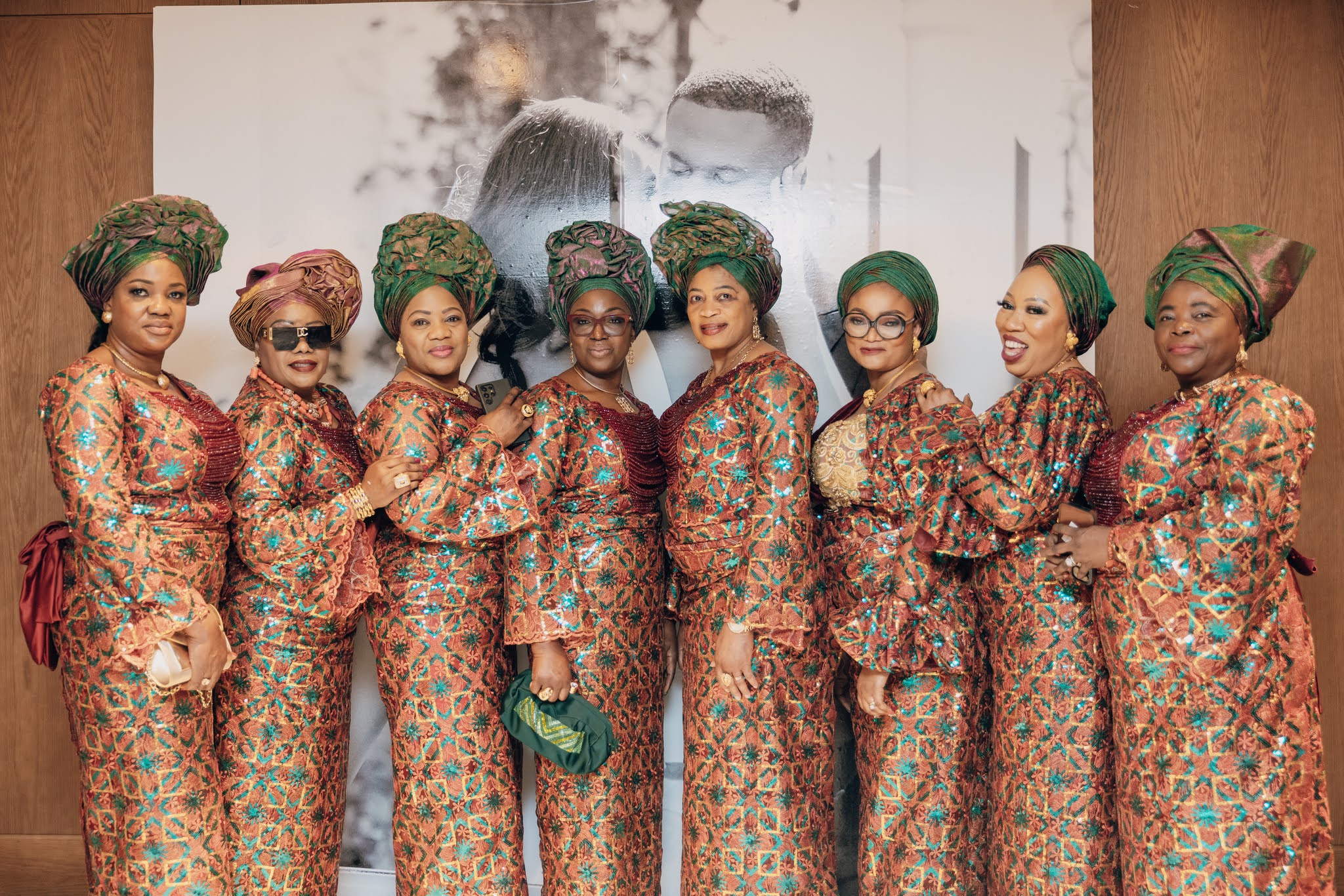
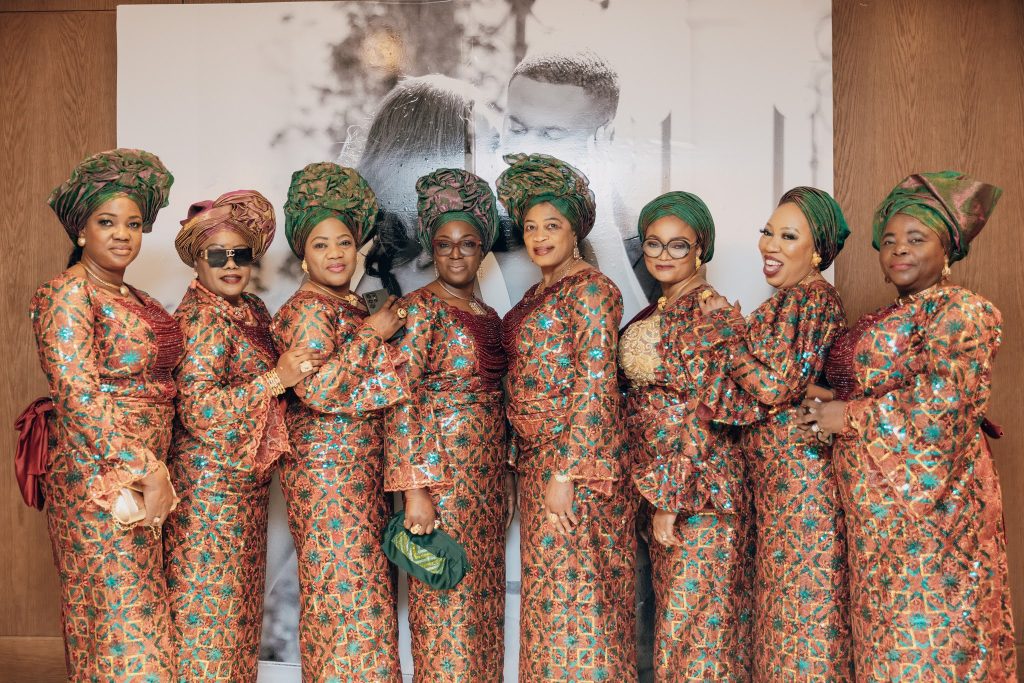
- Yoruba: The Yoruba people of the Southwest are known for the formal Agbada, a flowing three-piece robe for men, and the Iro (wrapper) and Buba (blouse) for women. These outfits are often complemented by the Gele headwrap and fine beads that communicate social status and personal taste.
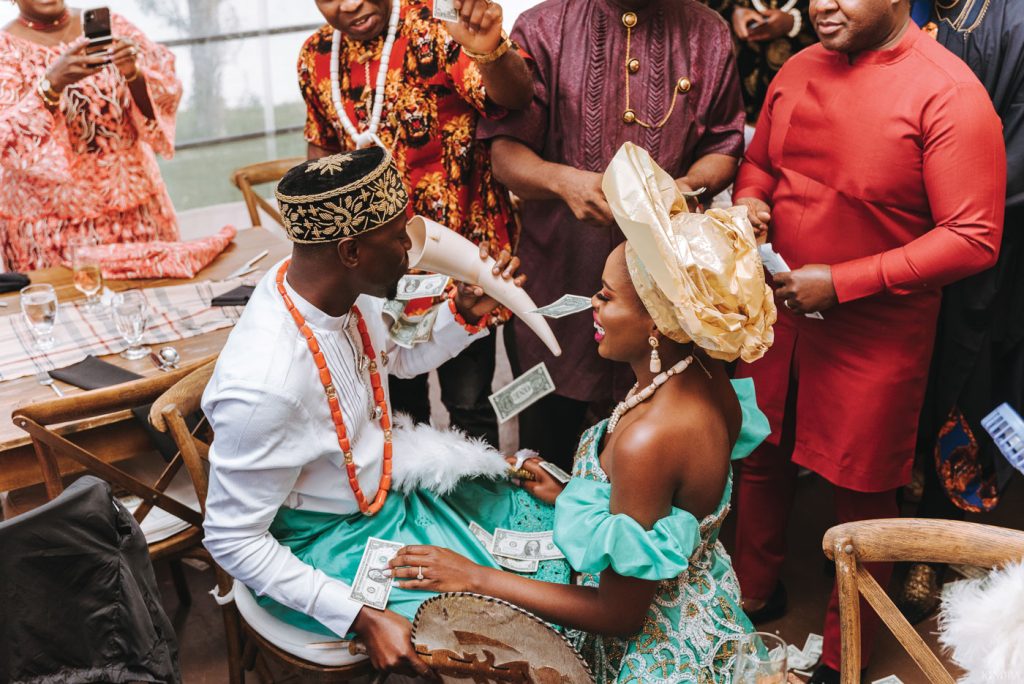
- Igbo: In the Southeast, the Isiagu is a prominent pullover shirt for men, traditionally worn by chiefs and now popular among a wider audience. Adorned with embroidered lion heads, the Isiagu signifies chieftaincy and respect. Women’s ceremonial attire is frequently embellished with coral beads, a symbol of “affluence and cultural pride”.
- Hausa/Fulani: In the North, the Hausa and Fulani are distinguished by the Babban Riga, a flowing robe that represents “dignity and religious scholarship” and is worn by figures of influence such as emirs and scholars. Their women’s attire often features body paintings known as lali and veils or headscarves that emphasize modesty and tradition.
This reliance on clothing as a form of communication is a profound aspect of Nigerian culture. The attires are more than decorative; they are a living “repository of indigenous knowledge”. Modern designers who draw on these elements are not simply creating aesthetically pleasing garments; they are actively preserving and globalizing a form of cultural heritage.
Table 1: Key Traditional Garments and Their Cultural Significance
| Ethnic Group | Garment(s) | Cultural Significance |
| Yoruba | Agbada (men), Iro and Buba (women), Gele (women) | Symbolizes social status, religious affiliation, and personal identity. Beads and specific textiles reflect rank and heritage. |
| Igbo | Isiagu (men’s pullover shirt), coral beads | Isiagu signifies chieftaincy and respect. Coral beads on women’s attire represent affluence and cultural pride. |
| Hausa/Fulani | Babban Riga (men’s robe), lali (body painting), veils | Babban Riga represents dignity and religious scholarship. Women’s veils and body painting emphasize modesty and tradition. |
Export to Sheets
2.3. Indigenous Textiles: The Soul of Nigerian Fashion
The textiles themselves are arguably the most powerful ambassadors of Nigerian culture. They carry within them the history, artistry, and symbolic narratives that resonate on the global stage.
- Aso-Oke: As a “prestige cloth” of the Yoruba people, Aso-Oke is not merely a fabric but a symbol of “tradition, identity, and social status”. Worn for celebratory occasions such as weddings and naming ceremonies, it is often passed down through generations as an heirloom. The three historical types of Aso-Oke—Sanyan (tan wild silk), Alaari (magenta imported silk), and Etu (indigo cotton)—each have their own unique color theory and cultural meaning. The shift in the 20th century to synthetic fibers that create a “shining” effect demonstrates how traditional craftsmanship has adapted to modern materials, a change that aligns with the Yoruba aesthetic of “Shine-Shine,” which associates reflectivity with wealth and high social status.
- Adire: This centuries-old craft of the Yoruba people is a symbol of “identity, resistance, and aesthetic expression”. Made by decorating white cotton with wax or stitching before dyeing, the intricate production process is often passed down through family lineages, serving as a source of income and empowerment for women. Each motif and color on Adire fabric conveys a message or tells a story, making it a powerful medium for social memory and cultural preservation.
- Ankara: The story of Ankara is a compelling example of cultural re-appropriation. Originally known as Dutch Wax Print, it was produced in the Netherlands for the Indonesian market but gained more popularity in West Africa. As African nations gained independence, this foreign fabric was embraced and redefined as a “symbol of African nationalism and a rejection of Western influence”. The vibrant patterns and colors became a celebration of African heritage, unity, and resilience, turning a colonial product into an icon of post-colonial identity. This same philosophical approach to re-appropriation is evident in the modern era, where Afrobeats artists blend American hip-hop aesthetics with their own cultural flair, creating a unique visual and sonic identity. This is a recurring mechanism in Nigerian creative production: taking an external influence and imbuing it with a distinct local essence to create something entirely new and resonant on the global stage.
3. The Economic and Market Landscape
While Nigerian fashion’s cultural influence is undeniable, a closer look at its economic landscape reveals a complex picture of immense potential coexisting with significant structural challenges. The industry’s economic power is driven by a robust domestic market, yet its ability to compete globally is hindered by a substantial trade imbalance.
3.1. Market Valuation and Growth Drivers
The Nigerian fashion market is a significant and rapidly expanding component of the nation’s economy. Estimates of its annual value range from $2.5 billion to $6.1 billion. This growth is not uniform but is fueled by diverse consumer segments, from the informal economy to the ultra-affluent. The “thrift and tailor-made” segment, for instance, represents the largest share of the market, accounting for an estimated 40 to 45% of consumer activity. This segment is largely informal and cash-based, with businesses funded through personal savings or small informal loans. Conversely, a small but powerful ultra-affluent segment, comprising less than 1% of the market, spends millions annually on fashion, often sourcing high-end items through personal shoppers in fashion capitals like Paris and Milan. The existence of these varied consumer classes highlights the market’s dynamism and complexity.
3.2. Trade Dynamics: Exports, Imports, and Imbalances
Despite the industry’s domestic boom, a critical examination of its trade balance reveals a significant paradox. The industry’s cultural influence is not yet translating into commensurate global economic power. In 2023, Nigeria exported $70.7 million in textiles while importing a staggering $2.86 billion, resulting in a substantial trade deficit of approximately $-2.79 billion. This imbalance is further underscored by the fact that textile imports surged by nearly 298% from 2020 to 2024, reaching N726.18 billion. The primary sources of these imports are China, India, and Japan.
This data challenges the perception of a fully mature, globally competitive industry. The “boom” appears to be primarily driven by a strong domestic consumer base that has a high demand for both local and imported goods. The underlying structural weaknesses—including a lack of a clear policy framework, infrastructural bottlenecks, high foreign exchange costs, and unreliable power supply—prevent the industry from scaling its production to meet its export potential. While exports are low, the primary destinations are Mali, the United States, and Bangladesh, indicating existing channels that could be leveraged for future growth.
Table 2: Nigeria’s Textile Trade Balance (2023)
| Trade Direction | Value (USD) | Primary Partners |
| Exports | $70.7 million | Mali, United States, Bangladesh |
| Imports | $2.86 billion | China, India, Japan |
| Trade Balance | $-2.79 billion |
Export to Sheets
3.3. The Ecosystem of Innovation
The industry’s creative core is propelled by a generation of visionary designers who are translating traditional aesthetics into modern, globally relevant collections. Pioneers like Shade Thomas-Fahm paved the way by reinterpreting local textiles and styles. Today, a new wave of designers is expanding on that legacy. Deola Sagoe, for example, is renowned for her fusion of traditional weaving with high fashion, a skill she inherited from her family’s history in the textile trade. Lisa Folawiyo’s brand, Jewel by Lisa, gained international attention for its use of embellished Ankara, a style that was novel when she launched her label in 2005. These designers, alongside others like Kenneth Ize, are at the forefront of the industry’s creative renaissance.
This creative class, while representing a small share of the market, exerts an outsized influence on trends. Their success is increasingly facilitated by digital platforms. E-commerce platforms like Jumia and Konga, and social media sites like Instagram, have enabled designers to reach customers directly, bypassing traditional retail and expanding their market access.
Table 3: Prominent Nigerian Designers and Their Contributions
| Designer | Brand | Contribution |
| Shade Thomas-Fahm | N/A | Nigeria’s first widely recognized fashion designer; pioneered the use of locally woven and dyed textiles in simple, modern designs post-independence. |
| Deola Sagoe | The House of Deola Sagoe | Known for her specialty in African fashion, blending traditional weaving with high fashion. Won the AMVCA for best costume designer. |
| Lisa Folawiyo | Jewel by Lisa | Pioneer of contemporary African fashion, known for using embellished Ankara and expanding into luxury prints, jewelry, and accessories. |
| Kenneth Ize | Kenneth Ize | A menswear designer who has gained international recognition, drawing inspiration from his Yoruba heritage and being featured in global retail outlets. |
Export to Sheets
4. The Global Ascendancy: Pillars of Influence
The globalization of Nigerian fashion is not a random occurrence; it is a meticulously engineered phenomenon driven by a powerful synergy between culture, celebrity, and technology. The industry’s influence is propelled by a virtuous cycle where cultural products, like Afrobeats music, serve as powerful visual and commercial platforms for fashion.
4.1. The Afrobeats Aesthetic: From Lagos to the Red Carpet
The intersection of Afrobeats and fashion is arguably the most potent catalyst for the industry’s global influence. The aesthetic roots can be traced back to the legendary Fela Kuti, whose revolutionary stage outfits were not mere sartorial choices but acts of “political resistance and cultural pride”. His rejection of Western fashion norms created a distinct visual identity that continues to influence generations of artists.
Today, a new generation of Afrobeats artists, including Wizkid, Burna Boy, and Rema, have become bona fide fashion tastemakers. Their bold embrace of traditional fabrics like Ankara and Dashiki has “elevated these materials…to global fashion statements” on the world’s most prestigious runways and red carpets. This is not a one-way street; the relationship is reciprocal. The global success of Afrobeats music provides a massive platform for these artists to engage in high-profile fashion collaborations, which in turn reinforces their cultural and commercial power. Wizkid’s “Starboy” jersey with Nike, for example, became an instant sellout phenomenon, demonstrating the artists’ ability to translate their musical charisma into significant retail success. Burna Boy’s partnership with Burberry and his appearances at the Met Gala and fashion shows have cemented his status as a fashion icon, while Rema’s collaboration with Jacquemus culminated in a show-stopping appearance at Paris Fashion Week. This symbiotic relationship between music and fashion is a powerful, self-reinforcing loop that sets Nigerian creative influence apart.
Table 4: Key Celebrity-Brand Collaborations and Their Impact
| Artist | Brand | Collaboration Details | Impact |
| Wizkid | Nike | Designed a “Starboy” jersey inspired by Nigeria’s Super Eagles, featuring his hometown “Surulere” and the Nigerian flag’s colors. | The jersey sold out in 10 minutes upon release, proving the artists’ commercial power and the growing global audience for Afrobeats-inspired fashion. |
| Burna Boy | Burberry, BOSS | Featured in Burberry’s holiday campaign, attended the Met Gala in a custom Burberry fit, and has a collaboration with BOSS. | These partnerships signal the acceptance of Afrobeats artists at the highest levels of global luxury fashion. |
| Rema | Jacquemus | Collaborated with the brand on the release of the Jumpman 2023 and appeared at Paris Fashion Week. | His collaboration with a major luxury brand demonstrates the increasing influence of Afrobeats artists on haute couture. |
| Tems | Tommy Hilfiger | Was the face of Tommy Jeans’ Fall/Winter campaign, championing the “Play to Progress” theme. | Her partnership highlights the alignment of Nigerian artists’ personal brands with global corporate messaging. |
4.2. Digital Catalysis: Social Media and the New Gatekeepers
The digital revolution has been a pivotal force in the global dissemination of Nigerian fashion, effectively democratizing the industry and creating new avenues for brands to reach a worldwide audience. Social media platforms like Instagram and TikTok have become a new “marketplace” where designers can bypass traditional retail spaces and engage directly with consumers.
This has created a new class of fashion gatekeepers: the influencers. These figures, such as Denola Grey and Temi Otedola, are not just promoters but cultural curators and trusted trendsetters for their vast audiences. Their ability to generate real-time engagement and translate social media interactions into sales has reduced market entry barriers, allowing smaller, independent designers to compete with established brands.
A significant shift is occurring in how African fashion is perceived on the global stage. As noted, African women in fashion are no longer “just ticking the diversity box anymore” but are “opening shows, leading campaigns, and setting the pace”. This reflects a movement from passive inclusion to active influence. For years, the idea of African beauty creatives and models taking over international fashion weeks seemed far-fetched; the industry celebrated the “exceptions” that came along so rarely. Now, thanks to the combined power of social media and the cultural momentum of Afrobeats, these creative talents are shaping global conversations and setting standards, becoming “the blueprint” for a new era of African creative excellence.
5. Benchmarking Nigerian Fashion on the Global Stage
To fully understand Nigerian fashion’s standing, it is essential to position it within the broader African and international fashion ecosystem. The industry’s strategic development is exemplified by key events like Lagos Fashion Week and a comparative analysis with other African fashion capitals reveals a network of complementary creative hubs.
5.1. Lagos Fashion Week: A Global Hub of Creativity
Founded in 2011 by Omoyemi Akerele, Lagos Fashion Week (LagosFW) has rapidly become “Africa’s largest fashion event,” drawing significant media attention from both national and international outlets. Its strategic objective is to secure international recognition for Nigerian and other African designers. LagosFW achieves this through collaborations with international partners like the British Council and London Fashion Week, and through its role in prestigious global exhibitions, such as the Victoria & Albert Museum’s
Africa Fashion. The event has been instrumental in propelling emerging designers and brands to international acclaim, including Orange Culture and Lisa Folawiyo. The week is characterized by a high-energy atmosphere and is a fusion of traditional African aesthetics with modern flair, with a growing emphasis on sustainable practices.
5.2. A Comparative Look: Lagos vs. Other African Capitals
The rise of African fashion is not centered in a single city but is a distributed phenomenon across the continent. Each major hub possesses a unique identity and strategic specialization, and together, they form a powerful, interconnected ecosystem.
- Lagos, Nigeria: Lagos is the creative and commercial nexus, known for its “high-energy” scene and “fearless streetwear culture”. Its Fashion Week is a major global draw that cements its position as a key player on the international style map.
- Johannesburg, South Africa: In contrast, Johannesburg is a city where “creativity and commerce meet,” distinguishing itself through a focus on ethical and sustainable fashion. Its fashion scene is characterized by a blend of polished elegance and cutting-edge street style, with designers like Thebe Magugu and Rich Mnisi leading the way.
- Accra, Ghana: Accra is described as a hub of “color, culture, and a strong sense of identity rooted in Ghanaian craftsmanship”. Accra Fashion Week showcases a wide range of styles, with designers like Christie Brown blending traditional techniques with modern design.
This comparative analysis reveals that these cities are not simply rivals. Instead, they operate as specialized nodes in a larger pan-African network. Lagos serves as the innovative and commercial heart, Johannesburg as the leader in ethical and sustainable practices, and Accra as a hub for cultural fusion. The global influence of African fashion is thus a distributed, collaborative effort that leverages the unique strengths of each creative capital.
6. Challenges, Opportunities, and Recommendations
Despite its cultural power and significant market size, the Nigerian fashion industry faces systemic challenges that hinder its ability to achieve its full potential. Addressing these obstacles is crucial for transitioning from a culturally influential sector to a globally dominant economic force.
6.1. Obstacles to Sustainable Growth
The most significant challenge is the stark trade imbalance. The massive trade deficit, where textile imports vastly outstrip exports, is not merely a data point; it is a symptom of deep-seated structural issues. These include a “lack of a clear policy framework, infrastructural bottlenecks, and weak industrial systems,” as well as high foreign exchange costs and unreliable power supply, which inflate production costs and make domestic manufacturing uncompetitive.
Furthermore, the industry’s largely informal nature poses a significant barrier to scalability. With many businesses relying on personal savings and small, informal loans, it is difficult to attract the substantial foreign investment required for large-scale, formalized production.
A critical discrepancy is observed between the cultural recognition of Nigerian fashion and the production capacity of the domestic industry. While Nigerian-American models like Mayowa Nicholas are global fixtures on runways, and diaspora designers like Duro Olowu have achieved international acclaim, the most high-profile red-carpet appearances by Nigerian celebrities often feature non-Nigerian designers. For example, Nigerian superstar Tems wore a custom gown by London-based designer Robert Wun to the 2025 Grammy Awards, while Burna Boy chose a custom look from British-Ghanaian designer Ozwald Boateng for the Met Gala. This illustrates a gap: while the
idea of Nigerian fashion and its cultural aesthetics are globally influential, the local production base still struggles to compete at the highest echelons of global luxury couture.
6.2. The Path Forward: A Vision for the Future
The path to a more robust and sustainable industry requires a multi-pronged approach that leverages its existing strengths while addressing its weaknesses.
- Prioritizing Sustainable Practices: The industry can transform its vulnerabilities into a competitive advantage by strategically specializing in ethical and sustainable production. By leveraging its centuries-old traditions of handcraftsmanship and low-impact production, Nigerian fashion can offer a powerful alternative to fast fashion, appealing to a growing global consumer base that values ethical and environmentally conscious practices.
- Harnessing Technology: Beyond marketing, technology must be integrated into the business model for robust growth. This includes developing and leveraging e-commerce platforms with features like “Shop Now” buttons and digital payment integration, which can streamline the entire consumer journey from browsing to purchase. Data-driven strategies, facilitated by social media analytics, can help designers optimize their operations and better understand consumer trends.
- Policy and Investment: Targeted government support is essential. This includes enacting policies that protect local production, addressing infrastructural deficits, and creating a more formalized business environment that incentivizes investment from both local and foreign sources.
6.3. Recommendations for Stakeholders
- For Designers: Focus on building a strong, unique brand identity rooted in traditional craftsmanship. Leverage digital platforms for direct-to-consumer sales and use data analytics to inform design and business strategy.
- For Investors: Look beyond the informal market to identify mid-tier, digitally native brands that have demonstrated scalability. Invest in local textile production to reduce import dependence and enhance export capacity.
- For Policymakers: Implement targeted financial support and creative grants to help emerging designers. Work to address infrastructural issues, particularly power supply and logistics, to create a more favorable environment for manufacturing.
7. Conclusion: An Enduring Legacy in Motion
The global influence of Nigerian fashion is a powerful, deeply rooted cultural phenomenon propelled by a confluence of historical resilience, creative innovation, and digital empowerment. Its foundation lies in a rich tapestry of indigenous knowledge, where attire is a symbolic language and textiles carry the weight of history and identity. The industry’s current boom is fueled by a dynamic domestic market and a synergistic relationship with Afrobeats, where music provides the global platform for fashion to thrive.
However, the journey from cultural prominence to economic dominance is not complete. The sector’s potential is tempered by a significant trade deficit and structural challenges that prevent it from scaling at the same pace as its cultural influence. The evidence suggests a critical opportunity for a strategic shift—one that prioritizes sustainable practices, formalizes business operations, and secures targeted investment. By leveraging its unique heritage and creative talent, Nigerian fashion is poised to move beyond its current “booming” status and establish itself as an enduring and powerful force on the world stage, not just as a cultural export, but as a defining economic powerhouse of the future.










Related Posts

Stay Informed With the Latest & Most Important News
Previous Post
Next Post


Advertisement