Now Reading: An Expert-Level Report on the Evolution and Impact of Nigerian Literature
-
01
An Expert-Level Report on the Evolution and Impact of Nigerian Literature
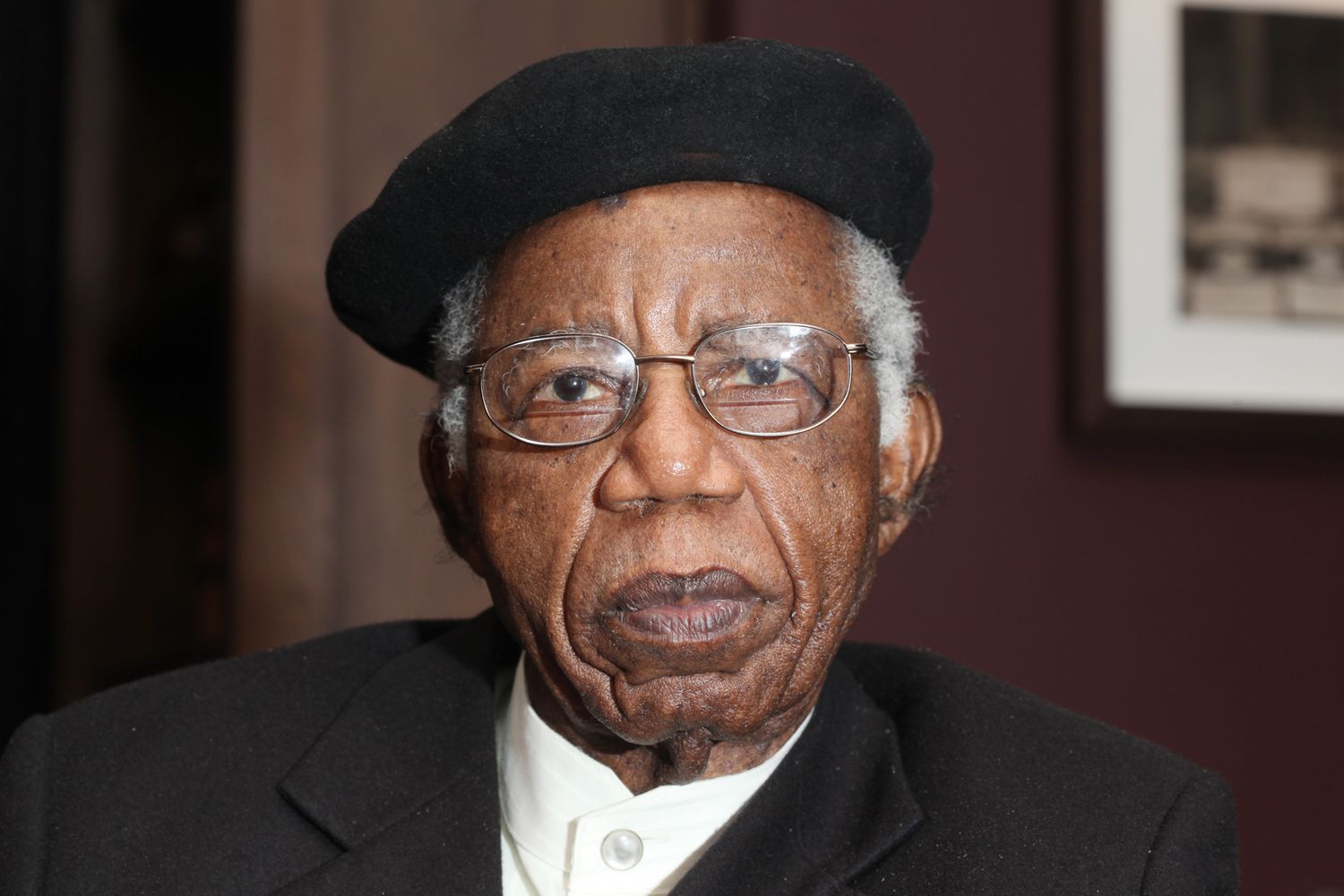
An Expert-Level Report on the Evolution and Impact of Nigerian Literature

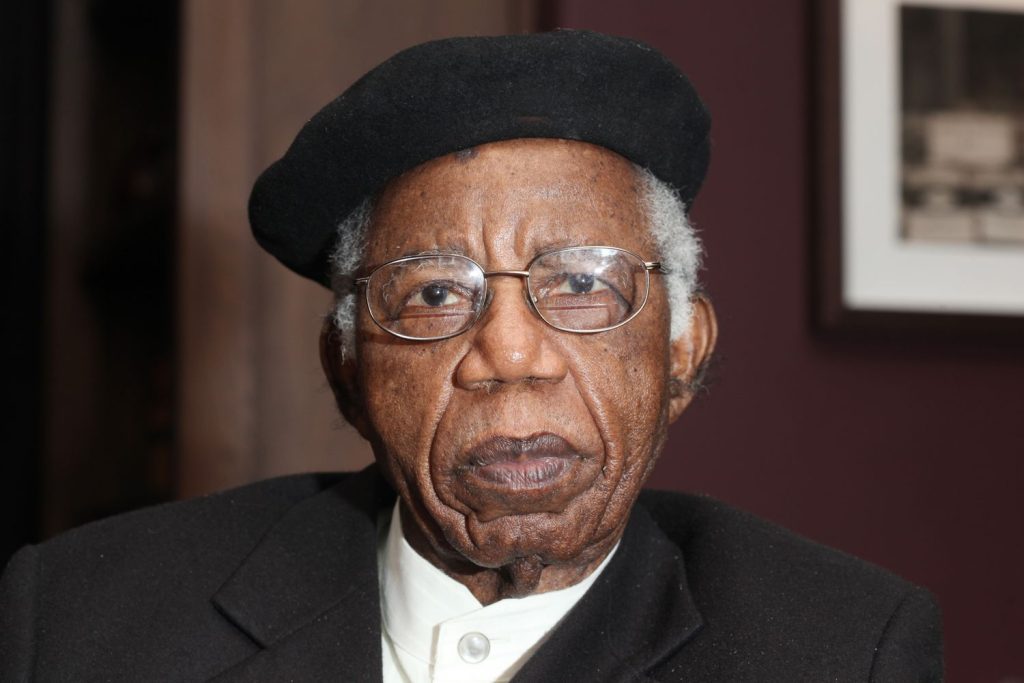
This report provides a comprehensive examination of Nigerian literature, tracing its evolution from deep-seated oral traditions to its current status as a formidable global literary force. It argues that Nigerian literature is not merely a reflection of a nation’s history but an active agent in its construction and critique. The report is structured across three primary epochs—the foundational era of anti-colonial resistance, the period of post-independence disillusionment and civil war, and the contemporary wave of diasporic and speculative fiction. Through a detailed analysis of key authors like Chinua Achebe, Wole Soyinka, Chimamanda Ngozi Adichie, and Nnedi Okorafor, the report demonstrates how Nigerian writers have consistently used their craft to challenge oppressive narratives, expose sociopolitical failures, and redefine African identity on their own terms. It also highlights the critical role of institutional support, such as major literary awards and publishing series, in cementing the genre’s international prominence. The conclusion affirms that Nigerian literature’s enduring legacy lies in its capacity for self-criticism and its powerful fusion of indigenous and modern forms to address both local realities and universal human experiences.
1. Introduction: The Literary Renaissance of Nigeria
1.1. Defining the Scope and Context
Nigerian literature, in its truest sense, is far more than a collection of imaginative works. It functions as a “vehicle of ideology” and a “product of conventions,” deeply embedded in the nation’s historical, cultural, and political landscape. The writers of this genre do not merely tell stories; they are “sensitive ‘questioners’ and reformers” who adopt a crucial social role. Their mission is to act as the conscience of their society, exposing what is “bad and the ugly” to facilitate a process of self-cleansing and reformation. This activist-oriented stance establishes a fundamental understanding of Nigerian literature, distinguishing it from other genres by its profound “Nigerian sympathy or consciousness”.
1.2. A Symbiotic Relationship
The relationship between Nigerian literature and its society is profoundly symbiotic. The nation “nurtures and nourishes” its writers, providing the raw material of its lived experiences, and in turn, the writers document and interpret the nation’s “painful transformation”. This literary body of work serves as a reflection of the “bewildering amalgam of socio-political contingencies and economic realities” that have plagued Nigeria since its independence. Through its narratives, the genre manifests the ongoing struggle of a people grappling with the complexities of its past and the challenges of its present. The writers, by engaging with these realities, demonstrate a reciprocal dependency, where their art is shaped by the society they inhabit, and their work, in turn, influences and critiques that very society.
2. Foundations and Pioneers: From Oral Tradition to the First Generation (1950s-1970s)
2.1. The Pre-Colonial and Oral Antecedents
Nigerian literature did not spontaneously appear with the arrival of European colonizers. Long before the introduction of Western education and the English language, a rich tapestry of literary traditions existed. These included oral traditions, or “orature,” which acted as a “survivalist art” and a vital means of preserving cultural values, historical events, and societal norms. Simultaneously, a vibrant written culture had flourished for centuries, particularly in Northern Nigeria. Figures such as Ibn Furtu in the 16th century and Uthman dan Fodio in the 19th century produced historical chronicles and intricate poetry in Arabic and Hausa (Ajami), showcasing a deep-rooted literary heritage.
The birth of modern Nigerian literature in English was, therefore, not an act of creating something from nothing but a sophisticated re-channeling of these established oral and written traditions into a new medium. The foundational writers did not simply adopt European forms; they strategically fused their indigenous heritage with the new tools provided by the colonial system. The British had introduced Western education and the English language as instruments of governance, unintentionally creating a paradox for these early writers. They were given the very language of their colonizers to articulate a new, decolonized identity. To resolve this, these authors deliberately integrated the “functional didacticism of oral literature,” relying on folklore, proverbs, and oratory, a stylistic hallmark most evident in the work of Chinua Achebe. This fusion was a powerful act of resistance, a deliberate refutation of the colonial designation that Africans were “primitive” and “without history or culture”. By infusing their narratives with the intellectual and cultural richness of their own heritage, they demonstrated that Nigerian stories were not only valid but could stand on “an equal footing with any European creation”.
2.2. The First Generation (1950s-1970s): A New Canon
The first generation of Nigerian authors, writing between the 1950s and 1970s, emerged as a vanguard to challenge and correct the Eurocentric narratives that had dominated the literary landscape. This era saw the rise of a new literary canon, led by figures such as Chinua Achebe, Wole Soyinka, Cyprian Ekwensi, and Flora Nwapa.
Chinua Achebe is widely regarded as the central figure of this movement, often called the “Father of Nigerian Literature”. Academic Simon Gikandi credits Achebe with having “invented African literature” by demonstrating that its future lay in the “fusion of… European forms with the oral tradition”. His debut novel,
Things Fall Apart (1958), is a “milestone in African literature” and holds the distinction of being the “most widely studied, translated, and read African novel”. The novel provides a “nuanced portrayal of pre-colonial life and the impact of European colonization”. Together with
No Longer at Ease (1960) and Arrow of God (1964), it forms the “African Trilogy,” a narrative that traces Nigeria’s socio-political journey from its pre-colonial existence through the early struggles of independence.
Achebe’s influence extended beyond his writing to the institutionalization of African literature. His pivotal appointment as an editorial advisor for the Heinemann African Writers Series in 1962 was a causal factor in the “boom in Nigerian writing”. This role enabled a wider distribution of African authors and allowed their works to reach broader audiences, “crucially within the continent”. This situation presents a fascinating paradox: the very literature that was born out of a resistance to colonialism was disseminated and institutionalized through a neo-colonial publishing structure. By leveraging this Western institution, Achebe became a crucial intermediary, using his position to empower an African literary movement and solidify its global presence.
2.3. The Pioneering Women Writers
While the first generation was predominantly male, it included trailblazing women who paved the way for future female voices. Flora Nwapa’s inclusion in the Heinemann African Writers Series in 1966 was a landmark achievement, making her the “first woman to be included in the series”. Her novels, such as
Efuru (1966) and Idu (1970), were set in her native village and were groundbreaking for their focus on themes critical to women’s lives, including the “position of women in Nigerian society and their vital need for economic independence”. Another notable woman author of this era was Adaora Lily Ulasi.
2.4. Wole Soyinka and the Nobel Prize
Wole Soyinka, a playwright, poet, and versatile artist, is a towering figure in Nigerian literature and was the first Black person to win the Nobel Prize in Literature in 1986. The Nobel committee praised his work for its ability to fashion “the drama of existence” with “poetic overtones” and a “wide cultural perspective”. His works explore a vast range of genres and themes, from anti-colonialism and tyranny to the complexities of cultural identity and social justice. His notable plays, including
Death and the King’s Horseman (1975) and The Lion and the Jewel (1962), skillfully fuse traditional Yoruba culture and mythology with Western influences, creating a unique and profound artistic voice.
Soyinka’s career provides a powerful case study of the inseparable connection between artistic expression and political activism. His opposition to military regimes and relentless advocacy for human rights were not external to his writing but were central to his literary project. His activism led to personal persecution, including imprisonment, arbitrary arrests, and forced exiles, demonstrating that for many Nigerian writers, literature is not a detached art form but a vital tool for social and political change. His Nobel Prize win was a global acknowledgment of this dual role, challenging the prevailing stereotypes that African writing was limited to themes of poverty or conflict. The prize celebrated a multifaceted body of work that intertwined traditional storytelling with universal human experiences, inspiring a new generation of writers and expanding the reach of African literature on the global stage.
3. Literature of Disillusionment: The Post-Independence Crisis (1970s-1980s)
3.1. The Thematic Shift: A Scathing Self-Critique
The second generation of Nigerian writers, emerging from the 1970s, turned their focus from an external critique of colonialism to a searing internal examination of post-independence failures. This period’s literature is a “deploration of the harsh and inhuman condition” and a mirror of the “monumental incoherence” that defined the nation’s political and social life. These writers were preoccupied with the “disintegration of commonly held morality and value systems” and the pervasive presence of “political corruption and violence”. Their works reflect a profound disillusionment with a failed political class, including both “new and old breed politicians,” the military, and even the traditional rulers and academia, all of whom are seen as having failed to provide the necessary leadership for the country.
3.2. Satire, Irony, and Derision as Literary Tools
In response to this widespread misgovernance, Nigerian writers of this era refined a powerful set of literary tools. They employed the “satirical deployment of wit in the form of irony, innuendo or outright derision” to expose the “political wickedness, ineptitude and folly” of their leaders. For instance, Ademola’s Dasylva’s
Songs of Odamolugbe uses the bold allegory of Satan being granted “reprieve” from his jail term to assist Nigeria’s “politricksters” at the highest levels of government. Similarly, Ola Rotimi’s play
Our Husband Has Gone Mad Again satirizes the self-serving political class through a character who enters politics solely to gain access to the “national chin-chin”. These examples illustrate how literature became a primary vehicle for holding the nation’s leadership accountable and for conscientizing the public to the pervasive corruption that had taken root.
3.3. Prominent Voices of the Era
Among the prominent voices of this era was Buchi Emecheta, a Nigerian writer based in London, who explored themes of motherhood, social contrasts, and the independence of women. Her novels, such as
Second Class Citizen (1974) and The Bride Price (1976), reflected the social conventions of Nigeria and the challenges women faced in a patriarchal society. Another significant figure was Ben Okri, who won the Booker Prize in 1991 for his magical surrealist novel,
The Famished Road, which first emerged from his earlier short stories addressing “social and political problems”.
4. The Biafran War: A Defining Literary Lens
4.1. The War as a Central and Recurring Theme
Nigeria’s “turbulent history, including the Biafran War, has provided fertile ground for literary exploration” across multiple generations of writers. The conflict, which spanned from 1967 to 1970, is consistently revisited in literature not just as a historical event but as a defining moment that inflicted “psychic trauma” and led to immense suffering for millions, particularly the Igbo people. Early works like Flora Nwapa’s
Never again (1975) offered a direct, immediate response, recalling the “terrible years of the Biafra war and the devastating effects of propaganda”.
4.2. A Comparative Literary-Historical Account: Achebe vs. Adichie
The enduring significance of the Biafran War is best understood through a comparative analysis of two monumental works: Chinua Achebe’s memoir, There Was a Country, and Chimamanda Ngozi Adichie’s novel, Half of a Yellow Sun.
Chinua Achebe’s There Was a Country (2012) provides a “personal history of Biafra” that serves as a blend of memoir, historical analysis, and poetry. Achebe’s firsthand account foregrounds the “marginalization of the Easterners” and the “anti-Igbo pogroms” as the primary catalysts for the war, aiming to educate future generations about this critical period of Nigerian history.
In contrast, Chimamanda Ngozi Adichie’s Half of a Yellow Sun (2006) offers a powerful and deeply human depiction of the war’s “human cost” through the medium of fiction. Adichie’s work is a powerful act of “re-historicization” that uses Achebe’s memoir as a guide, providing an “unapologetic Biafran perspective” that challenges and “subverts official narratives of post-war national reconciliation”.
The difference between these two works reveals a crucial shift in the purpose of the war narrative. Achebe, writing decades after the conflict, sought to provide a definitive historical record from his personal perspective, narrating the events as he experienced them. Adichie, by contrast, uses fiction to uncover the “emotional truth” of the war, focusing on its psychological and human impact, particularly on women and children. While Achebe laid the historical groundwork, Adichie delved into the resulting trauma, exploring themes of loyalty, betrayal, and the loss of a unified identity that preceded the conflict. Her work demonstrates a vital literary function: using narrative to fill the gaps left by official histories and to keep the memory of the conflict alive in a visceral, emotionally resonant way for a new generation that did not experience it directly.
5. The New Wave: Contemporary Voices and Evolving Themes (1990s-Present)
5.1. The Diasporic and Transnational Experience
The latest generation of Nigerian writers, many of whom are part of a global diaspora, have expanded the genre’s scope while remaining connected to its historical roots. These authors, including Chimamanda Ngozi Adichie, Lola Shoneyin, and Adaobi Tricia Nwaubani, explore the complexities of the transnational experience, focusing on themes such as identity, cultural hybridity, and the search for belonging in a globalized world.
Even while charting new territories, these writers are engaged in a “creative call-and-response with Chinua Achebe”. The diaspora’s struggle with identity is not a break from the past but an evolution of the questions of identity first posed by the pioneer generation. While early authors grappled with a single, linear clash between traditional and colonial knowledge, diaspora writers face a more complex, multi-directional struggle, navigating multiple cultures and identities in a world where home is both a physical place and a psychological state. This demonstrates that the core concerns of Nigerian literature have remained constant, but their manifestation has adapted to the new realities of migration and global connectivity.
5.2. Environmentalism and Social Justice (Niger Delta Literature)
A distinct and politically charged sub-genre has emerged from the Niger Delta region, focusing on the “devastating impact of oil exploration and exploitation”. Writers such as Ken Saro-Wiwa, Helon Habila, and Tanure Ojaide use their work as a form of testimony and advocacy, addressing themes of environmental degradation, political corruption, and the fight for social justice and human rights. This body of work is a powerful form of political protest, giving a voice to a marginalized population and providing a critical counter-narrative to official accounts that often ignore the humanitarian and ecological crises in the region. By employing literary ecocriticism, these writers create a direct link between the nation’s political failures and the destruction of its natural resources. This represents an evolution of the “writer as reformer” role, adapting it to address a specific, localized crisis with global implications.
5.3. The Rise of Africanfuturism
Coined by Nnedi Okorafor, Africanfuturism is a sub-genre of speculative fiction that “narrates events centered on Africa from an African point of view rather than a Western point of view”. This genre is distinct from Afrofuturism because it is “rooted first and foremost in Africa” and does not privilege a Western perspective. Okorafor is a leading figure in this movement, with award-winning works like
Who Fears Death, Lagoon, and the Binti trilogy. Her work explores themes of identity, tradition, and the future from a uniquely African perspective. The
Binti trilogy, for instance, addresses the inner conflict of adhering to native traditions while engaging with a technologically advanced, “colonizing” world.
Africanfuturism, as practiced by Okorafor, is a profound act of literary decolonization. It rejects the Western linear narrative of “progress” and instead envisions futures that are “deliberate, ethical, and relational,” rooted in indigenous knowledge, cyclical time, and ecological harmony. Unlike Western science fiction, which often re-enacts European and settler colonialism through themes of alien invasion, Okorafor’s work presents “first contact” as a “catalyst for transformation” that harmonizes with the local ecosystem. By moving the future from the West to the African continent and infusing it with African traditions and spiritualities, Okorafor is not just telling a new story; she is fundamentally rewriting the narrative for how Africa’s past, present, and future can be envisioned, independent of the Western gaze.
6. Form, Style, and Global Recognition
6.1. Stylistic Innovations
Nigerian writers have consistently fused oral tradition with modern forms to create a unique and influential literary style. Chinua Achebe’s work “relies heavily on the Igbo oral tradition,” using proverbs and folk stories to give his narratives an authentic, culturally rich texture. Similarly, Wole Soyinka’s use of “Yoruba mythology and symbolism” is a hallmark of his style, blending “traditional and modern forms” to explore complex themes. This fusion continues in contemporary works, with writers like Chigozie Obioma drawing on the “mythic style of the Igbo literary tradition” to create contemporary narratives infused with ancient power.
6.2. The Role of Major Awards
The global success and influence of Nigerian literature are inseparable from its recognition by prestigious literary awards. The Nobel Prize in Literature awarded to Wole Soyinka in 1986 “marked a significant milestone for African literature,” bringing global attention to its richness and diversity. The Booker Prize has also recognized Nigerian talent, with Ben Okri winning in 1991 for
The Famished Road and Chinua Achebe receiving the Man Booker International Prize for his entire body of work in 2007. Other nominees include Chigozie Obioma for his works
The Fishermen and An Orchestra of Minorities.
Beyond these international awards, the establishment of the Nigeria Prize for Literature in 2004 has played a crucial role. Administered by respected academics and writers, this “transparently adjudicated” prize is Africa’s “biggest literary award” and has been instrumental in fostering a vibrant domestic literary culture. This dual recognition—from both global and domestic institutions—is significant. The Nobel and Booker wins validated Nigerian literature on the world stage, demonstrating that it was not “limited to themes of poverty or conflict”. The Nigeria Prize, in turn, has helped to “improve the quality of writing, editing, proof-reading, and publishing” within the country, creating a self-sustaining cycle of domestic nurturing and international recognition. The following tables summarize the generational and institutional milestones discussed in this report.
| Generations of Nigerian Literature | |
| Timeframe | Prominent Authors |
| 1950s-1970s | Chinua Achebe, Wole Soyinka, Flora Nwapa, Cyprian Ekwensi |
| 1970s-1980s | Buchi Emecheta, Ben Okri, Femi Osofisan |
| 1990s-Present | Chimamanda Ngozi Adichie, Nnedi Okorafor, Helon Habila, Ken Saro-Wiwa |
| Notable Nigerian Literary Awards and Laureates | ||
| Award Name | Award-Winning Author | Award-Winning Work/Achievement |
| Nobel Prize in Literature | Wole Soyinka | Body of Work |
| Booker Prize | Ben Okri | The Famished Road |
| Man Booker International Prize | Chinua Achebe | Body of Work |
| Nigeria Prize for Literature | Gabriel Okara | The Dreamer: His Vision |
| Nigeria Prize for Literature | Kaine Agary | Yellow Yellow |
| Nigeria Prize for Literature | Tade Ipadeola | The Sahara Testaments |
| Nigeria Prize for Literature | Abubakar Adam Ibrahim | Season of Crimson Blossoms |
7. Conclusion: The Enduring Legacy of Nigerian Literature
7.1. A Literature of Self-Critique
From its very beginnings, Nigerian literature has served as an engine of relentless self-critique. It began by challenging the colonial system and its dehumanizing narratives, then turned its focus inward to scathingly examine the failures of its own nascent nation. This role of the writer as a “questioner” and “reformer” remains a constant, a defining characteristic that transcends generational and thematic shifts. This literature’s power lies in its ability to be a mirror, a hammer, and a scaffold—reflecting the nation’s realities, breaking down oppressive ideologies, and building new visions for the future.
7.2. A Dynamic and Evolving Genre
Nigerian literature is not a static body of work but a living tradition that continues to evolve. It has moved from the foundational anti-colonial works of its pioneers to the literature of post-independence disillusionment, and on to the contemporary explorations of the diaspora, environmental crises, and speculative futures. Each phase has been a response to its specific historical moment, yet all have remained tethered to the core mission of telling Nigerian stories with “Nigerian sympathy or consciousness”. The fusion of oral tradition with modern forms remains a stylistic constant, and the pursuit of global recognition, while maintaining a strong domestic focus, has become a hallmark of the genre’s maturation. The enduring legacy of Nigerian literature lies in its capacity to address both local realities and universal human experiences, ensuring its continued relevance and influence on the world stage.










Related Posts


Stay Informed With the Latest & Most Important News
Previous Post
Next Post
Advertisement