Now Reading: Islam in Nigeria: Historical Trajectories, Contemporary Dynamics, and Socio-Political Influence
-
01
Islam in Nigeria: Historical Trajectories, Contemporary Dynamics, and Socio-Political Influence
Islam in Nigeria: Historical Trajectories, Contemporary Dynamics, and Socio-Political Influence

1. Introduction
This report provides a multi-dimensional analysis of Islam’s profound historical and contemporary role in Nigeria. Far from a monolithic force, Islam in Nigeria is a dynamic and complex entity, shaped by centuries of trade, conquest, colonialism, and internal reform. This report will trace the religion’s journey from its early, peaceful introduction to its current position as a central pillar of Nigerian identity, while also examining the internal schisms and external conflicts that define its contemporary landscape. The analysis will integrate historical context with current socio-political and legal realities to provide a holistic and nuanced understanding.
2. Historical Trajectories and Diffusion
This section details the chronological progression of Islam in Nigeria, highlighting the various vectors of its spread and the foundational events that shaped its character.
2.1. Early Penetration via Trade and Scholarship
Islam’s initial arrival in the region that is now Nigeria predated Christianity, with the first Muslims—primarily Arab and Berber traders—arriving from Egypt as early as the 9th century. The more substantial and widely accepted introduction of the faith began around the 11th century, facilitated by the vibrant network of trans-Saharan trade routes. This extensive trade system connected North Africa with the emerging West African kingdoms, allowing for a multifaceted exchange of not only valuable commodities like gold and salt but also of ideas, cultures, and religious practices.
The spread of Islam was primarily non-coercive and was driven by the influence of Muslim merchants and scholars, often referred to as mallams. These itinerant scholars and traders established Qur’anic schools, built mosques, and introduced Islamic courts, integrating Islamic principles into local governance and daily life. The adoption of Arabic literacy was a key outcome of this period, as the script was used for religious and administrative purposes and was adapted to write several local languages, including Hausa and Fulani. The early, peaceful nature of this process is exemplified by the first documented conversion of a traditional ruler, Mai Ume Jilmi of Kanem, in the 11th century. The descendants of the scholar who converted him later held the hereditary title of Chief Imam of Kanem, demonstrating the institutionalization of Islam without military conquest.
This peaceful diffusion, rooted in commerce and intellectual exchange, stands in contrast to the more militant expansion that would later occur. This distinction reveals a fundamental and enduring paradox in Nigerian religious dynamics: the faith’s ability to be a force for both peaceful coexistence and violent revolution. The initial non-coercive adoption of the faith provided a foundation upon which later, more ambitious political projects could be built, demonstrating that Islam’s role in the region has been actively shaped and reinterpreted by various groups for different purposes, first for commerce and scholarship, and later for political revolution.
2.2. The Fulani Jihad and the Creation of a Politico-Religious State
The most significant and transformative event in Nigerian Islamic history was the Fulani Jihad of the 19th century. Fulani Muslims, a nomadic group that had migrated into Nigeria from the 15th century, became the principal agents of Islamic propagation in the region. The Fulani elite, having gained prestige through Islamic education in centers like Timbuktu, saw Islam as a “religion of the rulers” and of “political power”. At the start of the 19th century, their numbers had increased significantly, and under the leadership of Usman dan Fodio, they launched a revolution to overthrow the existing Hausa kings.
The revolution, which began in 1804, led to the establishment of the Sokoto Caliphate, one of the largest empires in Africa. This new state extended from modern-day Burkina Faso to Cameroon and included most of northern Nigeria and southern Niger. The caliphate established Islam as the predominant religion and a centralized political ideology, creating a system where the government and society were organized around Islamic principles. The enduring influence of this state, which ruled for most of the 19th century until its dissolution by British and German forces in 1903, solidified an Islamic identity that remains central to northern Nigeria’s sense of self and its relationship with the rest of the federation. The fact that the caliphate was founded on the pretext of a failure to properly apply Sharia law demonstrates how religion was explicitly used as a justification for a fundamental political and social restructuring.
2.3. The Enduring Legacy of Colonialism
Following the defeat of the Sokoto Caliphate, the British instituted a policy of “Indirect Rule”. This system of governance had a profound and lasting impact on the religious and political landscape of Nigeria. The British gave “strong support to Hausa-Islamic culture” by co-opting the existing emirate system, which solidified the power of the traditional ruling elite while simultaneously suppressing the views of minority groups in the Middle Belt and other regions. This policy had a negative effect on minority populations, impacting their interethnic relations, trade, and even their settlement patterns.
Furthermore, as a condition of this arrangement, Christian missionary activity and modern Western-style education were largely restricted from advancing into the Muslim heartland of the north. This policy had a direct, long-term consequence: it created a significant and enduring educational and developmental imbalance between northern and southern Nigeria. This disparity is not an accidental outcome but a direct legacy of British colonial policy. The North’s limited access to modern education contributed to its economic and political marginalization after independence, fueling regional resentment and inter-religious tensions. This colonial legacy continues to shape contemporary conflicts, where the lack of development and access to resources are often framed in religious terms.
3. Demographics and the Spectrum of Islamic Practice
This section analyzes the contemporary religious landscape, exploring population distribution and the diverse sectarian allegiances that define Nigerian Islam.
3.1. A Contested Demography
Nigeria is one of the world’s most religiously diverse nations, with its population nearly evenly divided between Islam and Christianity. However, the precise demographic figures are a subject of considerable debate. Different sources offer varying estimates for the Muslim population, ranging from 45.5% to 53.5%. For instance, a 2022 Afrobarometer survey reported 54.2% Christian and 45.5% Muslim, while Pew Research Centre estimates from 2015, adjusted for higher Muslim fertility rates, suggested a slight Muslim majority at 50%.
This contested demography is more than a statistical curiosity; it is a fundamental source of national tension and political competition. The near-even split in the population means that a shift of just a few percentage points can alter the political balance of the country. This creates a power struggle where each major religious bloc vies for numeric superiority to secure political influence and resources. This dynamic extends beyond mere religious belief, making demographics a political battlefield.
The religious distribution is strongly regional, with Islam dominating northern Nigeria and Christianity prevailing in the south. The Middle Belt serves as a host to a mix of faiths. This geographic divide largely corresponds to ethnic lines: the Hausa-Fulani and Kanuri ethnic groups in the north are predominantly Muslim, while southern groups like the Igbo are mostly Christian. The Yoruba in the southwest are a notable exception, with Christians and Muslims residing in equal numbers, and interfaith marriages are widespread in the region. This regional and ethnic concentration of religious identity is a critical factor in Nigeria’s socio-political dynamics.
3.2. Sectarian Diversity: From Sufi to Salafi
The majority of Nigerian Muslims are Sunni, primarily adhering to the Maliki school of law, with a smaller Shaf’i presence. Within this group, a significant portion identifies with Sufi brotherhoods, a mystical approach to Islam that emphasizes a personal spiritual path. The Tijaniyya and Qadiriyya orders are particularly influential, with about 37% of Nigerian Muslims identifying with a Sufi group. These orders have played a historical role in the spread of Islam throughout West Africa and are deeply embedded in the religious and social life of northern Nigeria.
However, the late 20th century saw the rise of a powerful counter-movement that introduced a profound internal schism within Nigerian Islam. Founded in 1978 by Sheikh Isma’ila Idris, the Jama’atul Izalatul Bid’ah Wa’ikhamatul Sunnah (Izala) is a major Salafi organization that was established to fight against what it perceived as the “innovations” (bid’ah) and “idolatry” (shirk) practiced by Sufi orders. This movement promotes a more puritanical, scripture-centered approach that has profoundly reshaped Islamic discourse and community life in northern Nigeria. The Izala movement’s hostility toward Sufism reveals a deep-seated ideological conflict within the Nigerian Muslim community. This rivalry, which is often expressed politically, demonstrates that a simple “Islam vs. Christianity” narrative is insufficient to capture the complexity of the religious landscape. The influx of Medina-educated scholars, who returned in the 1990s and 2000s with a strict adherence to a “Salafi canon” of texts and scholars, further internationalized this internal struggle, connecting local debates to a global intellectual genealogy.
3.3. Mainstream vs. Jihadist Salafism
It is crucial to differentiate between the vast majority of mainstream Salafis and fringe groups like Boko Haram. Mainstream Nigerian Salafis, while often using “strident and confrontational rhetoric” toward other Muslims and Christians, do not generally engage in violence or advocate for the overthrow of the secular state. In contrast, Boko Haram is a fringe offshoot of the Salafi movement that embraces a violent, jihadist ideology.
A clear example of this ideological chasm is the conflict between prominent Salafi preacher Ja‘far Adam and Boko Haram founder Muhammad Yusuf. Adam, a Medina graduate, openly criticized Yusuf’s scholarly credentials and argued that armed jihad was not the correct approach, advocating instead for the benefits of Western-style education. The fact that mainstream Salafis have themselves been assassinated by Salafi-jihadists further underscores this fundamental divide. This distinction is critical for correcting the common misconception that conflates all Salafis with extremist groups and for understanding that violence in Nigeria is a product of a specific, radical interpretation of the faith, not an inherent quality of Salafism in general.
4. Sharia Law and Governance
This section examines the re-implementation of Sharia law and its complex role in Nigeria’s political and legal systems.
4.1. The Political Re-implementation of Sharia
Since 1999, twelve northern states in Nigeria have gradually adopted Sharia law as a main body of civil and criminal law. This was a significant expansion from its historical application, which had been limited to personal status and civil matters. The re-implementation of Sharia was not a spontaneous religious revival but a calculated political maneuver initiated by state governors, such as Ahmad Sani Yerima of Zamfara State, who began the push to institute Sharia at the state level.
The re-introduction of Sharia was launched as a political project to secure votes and to assert northern identity and the “right to self-determination”. This occurred in the context of Nigeria’s return to democracy and the election of a southern president, which signaled a power shift from the northern-dominated military elite to a southern civilian government. For many northern politicians, the re-implementation of Sharia provided a powerful “ideology” and “panacea” to rally the masses, restore a sense of moral and economic order, and differentiate the north from the rest of the federation. The fact that the movement lost political momentum after its initial implementation, with the political will to enforce it strictly waning after 2002, reinforces its initial status as a political tool.
4.2. Controversies and Human Rights Concerns
The application of Sharia has raised serious human rights concerns. Provisions for and the imposition of sentences such as the death penalty, amputations, and floggings have been a primary area of critique. Since 2000, at least ten people have been sentenced to death and dozens to amputation, although these sentences are rarely carried out. A study by Human Rights Watch revealed a pattern of human rights violations, including a lack of due process, the use of confessions extracted under torture, and discrimination against women in the law itself and its practical application.
The implementation of Sharia is often policed by Hisbah, the religious police, who enforce moral codes and have been criticized for their extra-legal activities. Hisbah has targeted everything from the playing of music at weddings to the use of mannequins in shops, and has been involved in the destruction of alcohol belonging to non-Muslims. In theory, Hisbah enforcement applies only to Muslims, but in practice, non-Muslims often come under pressure to adhere to their rulings.
A central paradox of Sharia implementation is the gap between its harsh legal provisions and their actual enforcement. Harsher sentences, such as death and amputation, are rarely carried out and are often overturned on appeal. This suggests a deliberate political showmanship where the threat of punishment serves a symbolic purpose—to assure a pious electorate—without necessarily following through on the full consequences.
4.3. The Dual Legal System
Nigeria’s legal system is a complex mix of Sharia, customary, and statutory law. While Sharia governs personal and family matters for Muslims in the twelve states that have adopted it, conflicts often arise. For instance, Sharia’s rules on inheritance, which typically give male heirs double the share of female heirs and prohibit non-Muslims from inheriting from a Muslim, can clash with statutory laws.
The existence of multiple, and at times conflicting, legal systems creates a complex landscape for citizens and the judiciary. The fact that Sharia courts handle over 70% of inheritance-related disputes in states like Kano and Sokoto and that even the federal Sharia Court of Appeals must interpret Sharia law highlights the deep integration of Islamic jurisprudence into the state’s legal framework, despite Nigeria’s secular constitution. This system creates a form of legal insecurity and has been a source of significant controversy, particularly for non-Muslim minorities in the northern states.
5. Socio-Cultural and Economic Dimensions
This section explores Islam’s pervasive influence on daily life, culture, and the challenges faced by its traditional educational system.
5.1. The Pervasive Influence on Daily Life and Culture
Islam has left an indelible mark on Nigerian culture, shaping language, art, architecture, and social customs. The influence of the faith on language is particularly notable; the Arabic script was adapted to write languages like Hausa and Fulani, becoming the first form of written communication for business and diplomatic correspondence in certain regions before the arrival of Europeans. The Qur’an is regarded as the highest linguistic achievement of the Arabic language, and its study facilitated the rapid development of Arabic literacy and scholarship.
Islamic principles permeate daily life, from the observance of the five pillars of faith—prayer, fasting, almsgiving, pilgrimage, and the profession of faith —to norms around clothing, family life, and social welfare. Islamic art and architecture, particularly in the north, emphasize non-figurative expression, with intricate geometric patterns and calligraphy adorning mosques in cities like Kano and Sokoto.
However, Nigerian Islam is a unique blend of imported doctrine and local tradition. This syncretism is evident in practices like Sufi dhikr ceremonies that incorporate local rhythms and the persistence of traditional beliefs alongside Islamic practices among many ethnic groups, even in the north. This demonstrates a remarkable cultural capacity to adapt and integrate, rather than simply replace, existing traditions.
5.2. The Almajiri Educational System: Tradition in Crisis
The Almajiri system, an ancient non-formal Qur’anic education tradition, has been in existence for over 500 years. The term itself is derived from the Arabic word ‘al-Muhajirun’, meaning a migrant. Historically, it was a respected system where children, or almajirai, were sent to a teacher (mallam) to memorize the Qur’an. This system provided a path for religious education and scholarship and was a well-funded institution during the pre-colonial era under the Sokoto Caliphate.
The contemporary Almajiri crisis is not a direct continuation of its historical form but a modern socio-economic problem. The system’s decline, exacerbated by the lack of state support during the colonial and post-colonial eras, has led to a breakdown in the traditional teacher-student relationship and has turned the system into a source of widespread child abuse, poverty, and vulnerability. Children are now often sent with little to no provision from their parents, forcing them to beg for food and other basic needs on the streets. This has devolved a respected religious institution into a visible manifestation of northern Nigeria’s developmental failures, where a lack of education and vocational skills leaves youths ill-equipped for a 21st-century economy.
5.3. Reforms and Future Outlooks
The negative effects of the Almajiri system—including child abuse, poverty, and political thuggery—are now widely acknowledged by the government and civil society. In response, there have been several attempts to reform the system. Proposed reforms include remodeling and integrating the Almajiri system with conventional education to provide students with both religious and secular knowledge. The Federal Government has formed a National Committee to tackle the crisis, with plans to develop a national policy that includes infrastructure upgrades and legal safeguards to ensure parental accountability and teacher incentives.
However, past reform efforts have had limited success due to a lack of legal backing, inconsistent funding, and the challenge of implementing a “bottom-up” approach that engages communities and state governments effectively. The problem is also complicated by the porous borders that allow children to migrate from neighboring countries, swelling the ranks of almajirai. A sustainable solution requires not just policy but a comprehensive, multi-faceted strategy that addresses the underlying issues of poverty, governance, and regional cooperation.
6. Interfaith and Intra-religious Relations
This section addresses the complex and often violent dynamics that characterize relations between and within Nigeria’s religious communities.
6.1. The Intertwining of Religion, Ethnicity, and Politics
Religious violence, often intertwined with ethnic and political divides, has punctuated Nigeria’s history since at least the 1950s. In the post-1999 democratic era, the violence has intensified, with thousands of victims on both sides. Contemporary conflicts are frequently framed as religious, but their root causes are more complex. For example, herder-farmer conflicts are fundamentally rooted in disputes over land and grazing rights, but religious rhetoric—pitting mostly Muslim Fulani herders against predominantly Christian farmers—exacerbates the violence and complicates peace efforts.
A key takeaway is that religion is not the sole cause of violence but often a powerful amplifier. Economic scarcity, ethnic identity politics, and political manipulation are the underlying drivers that give rise to religious conflict. The Boko Haram insurgency, which aims to establish an Islamic state in the north, and the herder-farmer conflicts highlight how these tensions have devolved into armed conflict and have led to the deaths of tens of thousands of people.
6.2. Paradox of Coexistence
Despite the documented violence, significant efforts at coexistence and peacebuilding exist. In the southwest, interfaith marriages are widespread, and the society is known for its religious tolerance. At the national level, the Nigeria Inter-Religious Council (NIREC), formed in 1999 and co-chaired by the Sultan of Sokoto and the President of the Christian Association of Nigeria, actively promotes dialogue and conflict resolution. The organization is engaged in practical, joint-action initiatives to address issues like insecurity, poverty, and corruption, and collaborates with government agencies and international bodies.
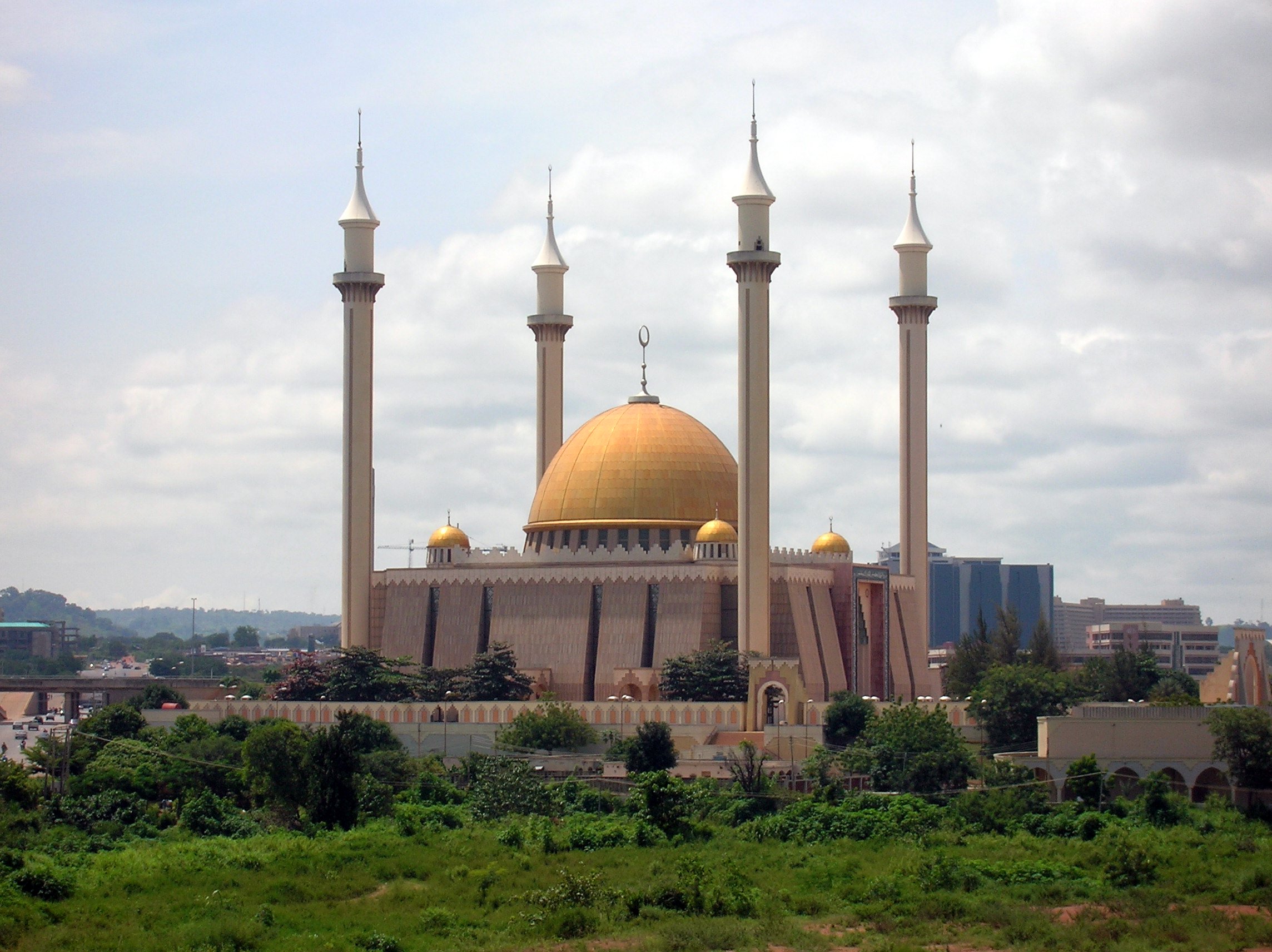
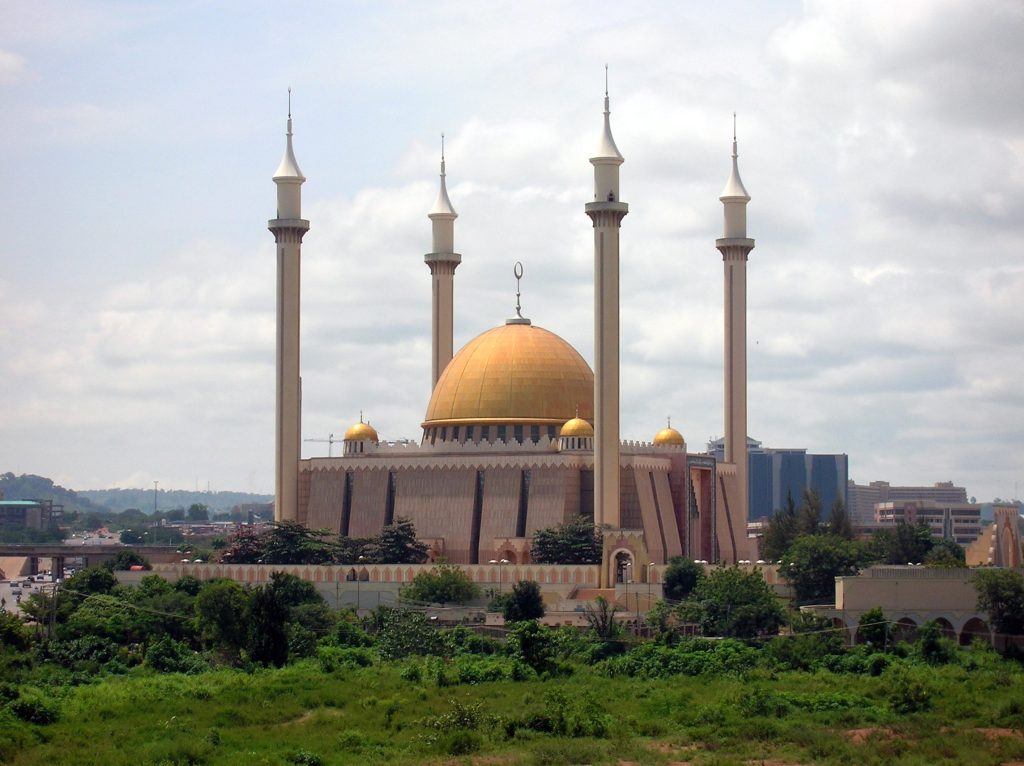
The symbolic placement of the Abuja National Mosque and the National Church opposite each other in the capital city underscores a national commitment to pluralism. Additionally, grassroots initiatives and organizations like the Interfaith Activity and Partnership for Peace (IFAPP) and the Global Peace Foundation (GPF) Nigeria are working to foster mutual understanding through youth summits, media campaigns, and training programs.
The simultaneous existence of extreme violence and widespread, institutionalized efforts at dialogue presents a central paradox of modern Nigeria. This suggests that the narrative of “religious conflict” is often oversimplified. The vast majority of Nigerians live and interact peacefully, but the actions of a violent minority and the manipulation of political elites can easily disrupt this harmony. This underscores the need for continued support for both top-down and bottom-up peacebuilding efforts.
7. Conclusion: Synthesis and Future Outlook
This report has shown that Islam in Nigeria is a multifaceted force that is central to the nation’s identity and its most profound challenges. Its history is a complex tapestry woven from peaceful commerce, scholarly propagation, and revolutionary conquest. The establishment of the Sokoto Caliphate provided a foundational model of a state where Islam was both a religion and a political ideology, a legacy that continues to define northern Nigeria’s sense of self and its relationship with the rest of the federation. The enduring educational and developmental imbalance between the north and south, a direct consequence of British colonial policy, remains a primary source of national tension.
The contemporary landscape is defined by a contested demography and a rich, yet often volatile, sectarian diversity. The rise of Salafi movements, exemplified by Izala, has created a significant internal schism that complicates the traditional interfaith narrative. The implementation of Sharia law, while rooted in genuine religious belief for many, has been primarily a political project aimed at securing regional power and asserting a distinct northern identity. The disconnect between the harsh legal provisions of Sharia and their actual application in many instances highlights a dynamic of political showmanship, where symbolism often outweighs strict enforcement.
The Almajiri educational system stands as a powerful symbol of a tradition in crisis. What was once a respected path to scholarship has degraded into a source of child abuse and poverty, underscoring the deep socio-economic challenges that fuel instability. The resolution of this issue, and of wider religious and ethnic violence, requires a multi-faceted approach that addresses underlying drivers like economic scarcity and political manipulation, rather than focusing solely on religious differences.
Looking ahead, Nigeria’s stability will depend on its ability to manage these complex dynamics. This involves not only fostering inclusive governance that respects both religious freedom and the secular constitutional framework but also implementing comprehensive reforms in education and justice. Continued support for interfaith and intra-religious dialogue will be crucial to building a more stable and harmonious society where the actions of a violent minority do not define the national reality. Islam is inextricably linked to Nigeria’s past and present, and its future role will be a decisive factor in the nation’s destiny.










Related Posts

Stay Informed With the Latest & Most Important News
Previous Post
Next Post

Advertisement