Now Reading: Tanure Ojaide: Nigeria’s Poet of the Niger Delta
-
01
Tanure Ojaide: Nigeria’s Poet of the Niger Delta
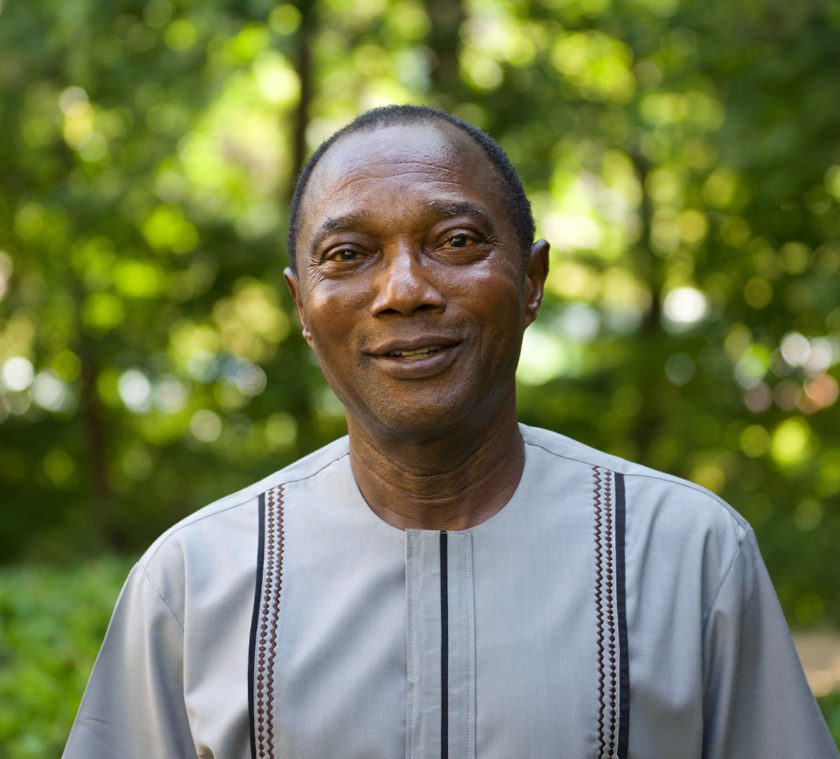

Early Life and Background
Tanure Ojaide was born in 1948 in Ibada-Elume, in the oil-rich Niger Delta region of Delta State, Nigeria. He grew up in a traditional Urhobo-speaking environment, where storytelling, proverbs, and oral poetry shaped his early worldview.
He studied English at the University of Ibadan, where he was influenced by Wole Soyinka and J.P. Clark. He later obtained an M.A. in Creative Writing and a Ph.D. in English from Syracuse University, USA.
Academic and Professional Career
Ojaide has had a distinguished academic career, teaching African literature at universities in the U.S. and Nigeria. He is currently the Franklin Professor of English at the University of North Carolina at Charlotte.
He is also a prolific scholar, publishing critical works on African poetry, folklore, and oral traditions.
Literary Career
Poetry
Ojaide is one of Africa’s most prolific poets, with over 20 poetry collections. He emerged in the 1970s–1980s as part of the “second generation” of Nigerian poets, after Wole Soyinka, Gabriel Okara, and J.P. Clark.
His poetry is deeply influenced by his Niger Delta background, particularly the environmental destruction caused by oil exploration, as well as themes of justice, exile, and African identity.
Themes
- Environmental justice: degradation of the Niger Delta.
- Political critique: corruption, dictatorship, and inequality.
- Exile and displacement: his years abroad and reflections on belonging.
- Urhobo oral tradition: heavy use of folklore, myths, and ancestral memory.
- Spirituality and human resilience.
Because of his focus on justice and his Niger Delta identity, he is often compared to Ken Saro-Wiwa (though Ojaide works primarily in poetry and scholarship).
Major Works
Selected Poetry Collections
- Children of Iroko and Other Poems (1973)
- Labyrinths of the Delta (1986)
- The Fate of Vultures and Other Poems (1990) – joint winner of the Commonwealth Poetry Prize (Africa).
- Daydream of Ants (1997)
- Delta Blues and Home Songs (1998)
- In the Kingdom of Songs (2002)
- Waiting for the Hatching of a Cockerel (2008)
- Songs of Myself: A Quartet (2015)
- The Questioner (2018)
- A Tale of Hell and Other Poems (2022)
Prose
- God’s Medicine-Men and Other Stories (2004)
- The Activist (2006, novel): about Niger Delta oil exploitation.
- Stars of the Long Night (2012, novel)
- God’s Naked Children (2020, novel)
Scholarship
Ojaide has published influential critical works, including studies on modern African poetry and the relationship between oral traditions and contemporary writing.
Awards and Recognition
- Commonwealth Poetry Prize for Africa (1987) – The Fate of Vultures.
- All-Africa Okigbo Prize for Poetry (1988, 1997).
- BBC Arts and Africa Poetry Award (1980s).
- Nigeria National Order of Merit (NNOM, 2016) – Nigeria’s highest academic honor.
- Multiple fellowships, residencies, and international recognitions for his contribution to African literature.
Legacy and Influence
- One of the foremost poets of environmental justice in African literature.
- A bridge between oral traditions and modern poetry, preserving Urhobo heritage.
- A mentor to generations of African writers through his teaching and scholarship.
Conclusion
Tanure Ojaide is more than a poet — he is a custodian of the Niger Delta’s voice. Through collections like The Fate of Vultures and Delta Blues and Home Songs, he has documented the struggles of his people against environmental destruction and political neglect. As both a poet and scholar, he stands as a major figure in Nigerian and African literature, blending activism, tradition, and artistry.










Related Posts



Stay Informed With the Latest & Most Important News
Previous Post
Next Post


Advertisement