Now Reading: Uche Okeke: Father of Modern Nigerian Art and the Spirit of Natural Synthesis
-
01
Uche Okeke: Father of Modern Nigerian Art and the Spirit of Natural Synthesis
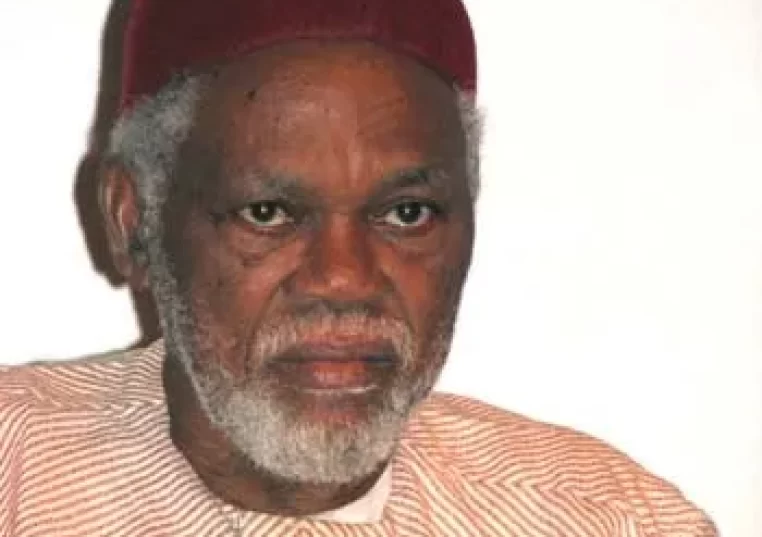

Early Life and Background
Uche Okeke (full name: Christopher Uchefuna Okeke) was born on 30 April 1933 in Nimo, Anambra State, Nigeria.
From childhood, he was immersed in Igbo folklore, storytelling, and uli art traditions (a form of linear, symbolic body and wall painting used by Igbo women). These influences would later define his artistic philosophy.
He studied Fine Arts at the Nigerian College of Arts, Science and Technology, Zaria (1957–1961), where he became one of the leaders of the Zaria Art Society (Zaria Rebels) — a radical student movement that sought to decolonize art education.
Career and Contributions
Zaria Art Society and Natural Synthesis
In the late 1950s, Okeke and fellow artists like Bruce Onobrakpeya, Yusuf Grillo, and Demas Nwoko rejected colonial art syllabi that privileged European styles over African traditions.
They advocated for “Natural Synthesis” — the blending of indigenous Nigerian art forms with modern techniques to create an authentic modern African art. Uche Okeke became the chief theorist and driving force behind this philosophy.
Artistic Work
- Uche Okeke’s art is best known for its uli-inspired linear drawings — fluid, symbolic, and rooted in Igbo culture.
- He combined uli with modernist abstraction, creating works that were both contemporary and deeply traditional.
- His paintings, sketches, and murals explored themes of myth, spirituality, folklore, and national identity.
Teaching and Leadership
- In the 1960s, after Nigeria’s independence, Okeke was appointed the first Head of the Department of Fine Arts at the University of Nigeria, Nsukka.
- He mentored a generation of artists, including Obiora Udechukwu and members of the later Nsukka School of Art.
- His teachings made uli revival a central element of modern Nigerian art.
Later Years
Despite the disruptions of the Nigerian Civil War (1967–1970), Okeke continued producing art and promoting cultural nationalism. His postwar works often reflected loss, healing, and resilience.
Style and Themes
- Uli linearity: curves, spirals, and symbolic motifs.
- Folklore and mythology: reinterpretation of Igbo myths and deities.
- Cultural nationalism: affirming African identity in modern art.
- Modernist experimentation: merging traditional forms with abstraction.
Major Works
- Ana Mmuo series: uli-inspired drawings exploring spirit and ritual.
- Drawings from Igbo folktales (1950s–1960s).
- Murals and teaching works at the University of Nigeria, Nsukka.
Legacy and Influence
- Regarded as the Father of Modern Nigerian Art.
- Architect of Natural Synthesis, which remains a guiding principle of African modernism.
- Reviver of uli art traditions, ensuring their continuity in contemporary practice.
- Mentor to multiple generations of Nigerian artists through academia and practice.
Death
Uche Okeke passed away on 5 January 2016 in Enugu, at the age of 82.
Conclusion
Uche Okeke was more than an artist — he was a philosopher of Nigerian modernism, a teacher, and a cultural nationalist. Through his uli-inspired works and his leadership in the Zaria Art Society, he redefined what it meant to be a modern African artist. Today, he is remembered as the spiritual father of Nigerian modern art, whose vision still shapes contemporary creativity.










Related Posts

Stay Informed With the Latest & Most Important News
Previous Post
Next Post
Advertisement