Now Reading: A Biographical Study of Wole Soyinka: The Drama of a Lived Existence
-
01
A Biographical Study of Wole Soyinka: The Drama of a Lived Existence

A Biographical Study of Wole Soyinka: The Drama of a Lived Existence

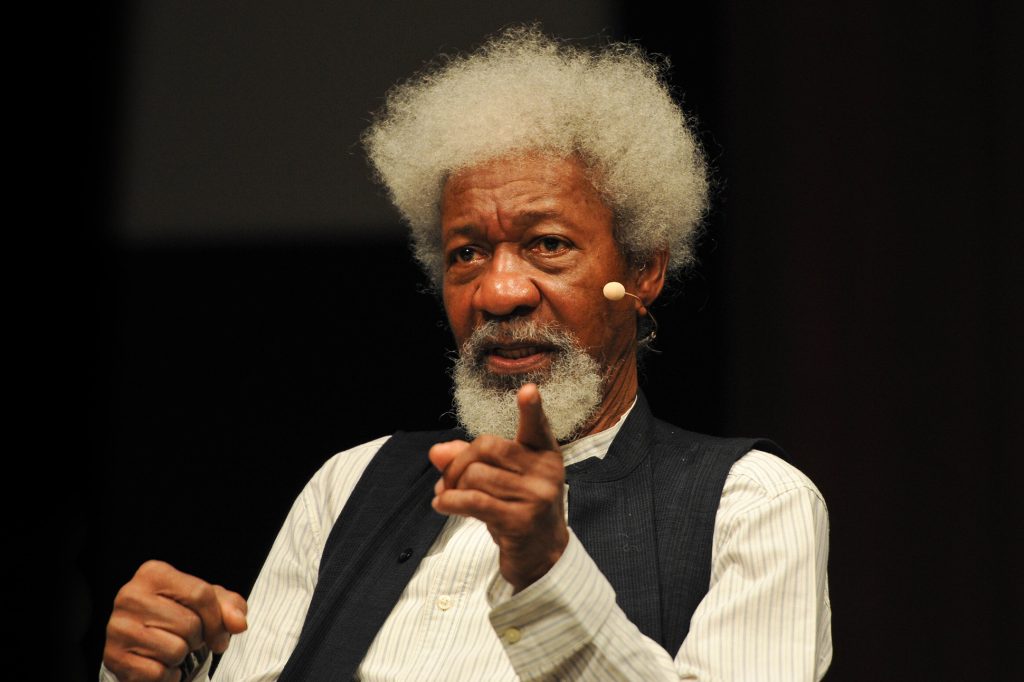
Executive Summary: The Drama of a Lived Existence
Wole Soyinka, born Akinwande Oluwole Babatunde Soyinka, is a Nigerian author, playwright, and poet who stands as a towering figure in world literature and a relentless advocate for human rights. As the first Black African to be awarded the Nobel Prize in Literature in 1986, Soyinka’s life and work are inextricably linked, forming a singular narrative of artistic expression and political engagement. The Swedish Academy’s citation, recognizing him as one “who in a wide cultural perspective and with poetic overtones fashions the drama of existence,” serves as the guiding principle for understanding his career.
This report examines Soyinka’s biography as a testament to the artist’s role as a public conscience. His formative years, marked by a dual heritage of Yoruba tradition and Christian modernity, laid the groundwork for a literary style that masterfully synthesizes disparate cultural influences. His transatlantic education, particularly at the University of Leeds and the Royal Court Theatre in London, was a strategic period of acquiring the tools of Western literary and dramatic traditions to better articulate the African experience. Upon his return to Nigeria, he used his art as a vehicle for political critique, a path that led to two periods of imprisonment and two periods of exile under repressive regimes. The seminal works that emerged from these experiences, such as the memoir
The Man Died and the novel Chronicles from the Land of the Happiest People on Earth, are not merely literary achievements but are records of his unwavering commitment to justice and truth. Ultimately, Soyinka’s legacy is defined by his profound belief that art and activism are not separate domains, but a unified expression of a life dedicated to confronting tyranny and injustice.
Part 1: The Foundations of a Polymath (1934-1960)
1.1. Roots in Tradition and Modernity: A Dual Heritage
Akinwande Oluwole Babatunde Soyinka was born on 13 July 1934, in Aké, Abeokuta, in what was then British Nigeria. He was the second of seven children and was raised in a family that embodied a dynamic blend of traditional and modern influences. His father, Samuel Ayodele Soyinka, was an Anglican minister and a headmaster at St. Peter’s Primary School, a position that placed him at the heart of the Christian educational system. This paternal lineage also connected him to the royal family of Isara-Remo, anchoring his identity in a history of traditional governance and aristocracy. His mother, Grace Soyinka, was a shopkeeper and a fervent political activist who belonged to the prominent Ransome-Kuti family. Her activism was deeply influential; Soyinka’s aunt, Funmilayo Ransome-Kuti, was a notable leader of a women’s revolt against excessive taxation, a struggle that led to the abdication of a local king.
This dual lineage, blending the intellectual discipline of an Anglican minister’s home with the revolutionary spirit of the Ransome-Kuti family, created a dynamic and fertile ground for his later work. From an early age, Soyinka was exposed to a central tension between spiritual doctrine and social action. His childhood education at St. Peter’s Primary School, a place led by his father, was complemented by a simultaneous immersion in the rich cultural heritage of the Yoruba people, including its mythology and folklore. His youthful penchant for intellectual challenge was evident in his nickname, “the questioner,” given to him by elders who were fascinated by his presence and his inquiries. This early predisposition for challenging authority and his upbringing in a home where he was taught to question everything foreshadowed his lifelong journey as a dissenter and a critic of power. The struggle to reconcile these conflicting worldviews—the Christian tenets of his father’s faith and the activist tradition of his mother’s family—did not create an internal schism. Instead, it became a source of immense creative power, an intellectual synthesis that would define his later literary and political endeavors.
1.2. A Transatlantic Apprenticeship: London, Leeds, and The Royal Court
After completing his secondary education at Abeokuta Grammar School, Soyinka pursued preparatory studies at Government College, Ibadan, from 1946 to 1951. He then attended University College Ibadan, where he studied English literature, Greek, and Western history from 1952 to 1954. It was during his time at this institution, which was affiliated with the University of London, that he co-founded the Pyrate Confraternity, an organization initially formed to fight against colonialism and tribalism on campus. This early act of dissent marked the beginning of his lifelong commitment to social justice.
In 1954, Soyinka left Nigeria for England to continue his studies in English literature at the University of Leeds. He earned an honors degree in 1957 and would later be awarded an honorary doctorate from the same institution in 1973. His time at Leeds was a formative intellectual period that he fondly referred to as his “rascally times”. During this era, he immersed himself in the work of literary giants, from William Shakespeare to the English Romantic poets, while also being influenced by Nigerian folklore. He saw his time abroad not as a rejection of his roots but as a strategic period for acquiring the tools of Western literary and dramatic traditions to better articulate the African experience. He noted that his explorations of English religious institutions led him to see an “equivalence” between the wooden carvings in church pews and those in Nigeria, an observation that made him “question received knowledge about primitivism”. This demonstrated a fundamental intellectual philosophy of seeking synthesis over opposition.
After graduating from Leeds, Soyinka worked as a dramaturgist at the Royal Court Theatre in London from 1958 to 1959, a period he later reflected upon in his Nobel lecture. It was during these years in London that he wrote his first plays,
The Swamp Dwellers and The Lion and the Jewel. The fact that he was writing works that seamlessly blended Yoruba and Western elements while living in England demonstrates that this cultural fusion was a core creative impulse from the very beginning of his career. This approach directly contrasts with the “négritude” movement, which he criticized for its self-absorption and its tendency to affirm Eurocentric prejudices by creating a dichotomy between European rationalism and African emotionalism. Instead, Soyinka championed a holistic worldview where cultures could inform one another, a view that positioned him as a unique voice in postcolonial discourse.
Part 2: The Voice of a Nascent Nation (1960-1967)
2.1. A Return to a Fractured Reality: The Pen as a Warning
In 1960, with the support of a Rockefeller bursary, Soyinka returned to Nigeria to study African drama and to begin his work as a teacher and theater director. He founded two influential theater troupes, “The 1960 Masks” and later the “Orisun Theatre Company,” which became platforms for his own works and for nurturing new talent. This period was marked by an early and audacious political statement in his art: the creation of the play
A Dance of the Forests for Nigeria’s independence celebrations. The play, which was a “dense, powerful work” featuring ghosts, masquerades, and the Yoruba god Ogun, was a striking departure from the celebratory mood of the nation. Soyinka had observed with misgivings the “rush of the African nationalists” who, he felt, were “anxious to grab the positions” being vacated by the colonial masters without a clear plan for the future.
His play served as a “prescient” prediction of the chaos and corruption that would plague post-independent Africa, challenging the audience to confront the difficult realities of their past and the moral ambiguities of their present. This act established a defining template for his entire career: using art as a vehicle for truth-telling, even when it was dangerous or unpopular. It demonstrated his fundamental conviction that the artist’s role is not to celebrate uncritically but to act as a public conscience, a role that put him on a direct collision course with state power.
2.2. The Interpreters and a New Literary Canon: Alienation in Post-Colonial Society
In 1965, Soyinka published his first novel, The Interpreters, a work that cemented his status as a major literary figure. The novel follows a group of young Nigerian intellectuals who return to Lagos after studying abroad, only to find themselves navigating a “decaying, morally corrupt society”. The narrative explores complex and multifaceted themes, including the quest for identity, a profound sense of alienation, the enduring legacies of colonialism, and the tension between tradition and modernity. Soyinka masterfully uses the characters’ experiences to portray the internal and external conflicts of a generation trying to find a sense of self and belonging in a society marked by shifting power dynamics.
The novel’s complex, fragmented narrative structure led to it being compared to the works of literary modernists like James Joyce and William Faulkner. This stylistic choice was a deliberate one, as it elevated the specific Nigerian reality to a universal human drama, solidifying Soyinka’s place in a new, postcolonial literary canon that reflected the diversity and complexity of African experiences.
The Interpreters is more than a novel; it is a sociological document that captures the profound disillusionment of a generation. By chronicling the painful journey of a nation grappling with the failures of its new elite, Soyinka positioned himself as an essential voice of critique from within.
| Genre | Work Title(s) | Year(s) |
| Plays | The Swamp Dwellers, The Lion and the Jewel | 1958, 1959 |
| A Dance of the Forests, The Trials of Brother Jero | 1960 | |
| Kongi’s Harvest | 1965 | |
| Death and the King’s Horseman | 1975 | |
| Novels | The Interpreters | 1965 |
| Season of Anomy | 1973 | |
| Chronicles from the Land of the Happiest People on Earth | 2021 | |
| Poetry | Idanre, and Other Poems | 1967 |
| Poems from Prison (A Shuttle in the Crypt) | 1969, 1972 | |
| Mandela’s Earth and Other Poems | 1988 | |
| Memoirs/Non-fiction | The Man Died: Prison Notes | 1972 |
| Myth, Literature and the African World | 1976 | |
| Aké: The Years of Childhood | 1981 | |
| You Must Set Forth at Dawn | 2006 |
Export to Sheets
2.3. The First Act of Defiance and the Warning Signs of Tyranny
Soyinka’s intellectual critique of Nigeria’s nascent government escalated into direct political intervention in 1965, when he was arrested for the first time. He was charged with holding up a radio station at gunpoint to replace a premier’s speech with accusations of electoral fraud. This act was not an isolated incident but a crucial test of his willingness to move from symbolic protest through art to direct, physical disruption. It was the first time his intellectual dissent collided directly with state power, a pattern that would define the rest of his life.
Although he was released after only a few months, due in part to protests from an international group of writers , the incident demonstrated a critical element of his character: his belief that true engagement requires an active refusal to be silent in the face of injustice. This event was a prelude to the much more severe consequences he would face later. The swift international support for his release also revealed the power of the global literary community to act as a check on local tyranny, a dynamic that would play a significant role in his future struggles.
Part 3: The Crucible of Confinement and the Rebirth of Art (1967-1972)
3.1. Imprisonment for Peace: The Dangers of a Public Conscience
The period from 1967 to 1969 marked a devastating and transformative chapter in Soyinka’s life. With the Nigerian Civil War looming, he undertook a personal mission to avert the bloodshed. He secretly and illegally met with General Emeka Ojukwu, the leader of the secessionist state of Biafra, in an attempt to make a “personal appeal for peace”. This act of conscience, which was an attempt to de-escalate the conflict, was tragically misinterpreted by the federal military government. In August 1967, Soyinka was arrested, accused of conspiring with the Biafran rebels, and jailed without charges. He would spend 22 of 26 months of his imprisonment in solitary confinement.
His imprisonment was not for a crime but for an act of noble conscience. The discrepancy between his intent—seeking peace—and the official charge—treason—demonstrated the arbitrary and brutal nature of the military regime’s power. Soyinka’s suffering highlighted a critical theme in his life: the punishment of those who seek a middle ground of peace and justice in a world consumed by violence. It also underscores his willingness to risk his life for his beliefs.
3.2. From Prison Notes to Poetic Outcry: The Pen Smuggled from a Cell
During his harrowing experience in solitary confinement, Soyinka’s creative will became his primary tool for survival. He occupied his mind by composing and memorizing poems, a desperate act to assert his humanity against the dehumanizing conditions of his imprisonment. He famously stole a pen from the prison doctor’s pocket and wrote on any available scraps of paper, creating what he called “prisonettes”. These works were smuggled out of his cell and later published, a testament to the network of supporters, including his publisher Rex Collings, who ensured his voice would not be silenced.
This period of confinement produced two of his most profound works: the poetry collections Poems from Prison (1969) and its expanded edition A Shuttle in the Crypt (1972), and the memoir The Man Died: Prison Notes (1972). In his memoir, Soyinka articulated his defining philosophical credo: “The man dies in all who keep silent in the face of tyranny”. These works were not just a record of his suffering but an act of artistic and political defiance, asserting that the human spirit cannot be imprisoned as long as it has the capacity for thought and expression. This experience established his moral stature and made him a living symbol of the power of words against oppression, cementing his place as an international human rights icon.
Part 4: The Global Stage and the Nobel Prize (1972-1994)
4.1. The Artist in Exile: Professor, Editor, and Critic
After his release from prison in 1969, Soyinka returned to teaching and theater but entered a period of voluntary exile from 1972 to 1975. During this time, he served as the editor of
Transition, a leading intellectual journal in Ghana. His exile transformed him from a Nigerian national critic into a global public intellectual. He held numerous academic appointments as a visiting professor at prestigious universities worldwide, including Yale, Cambridge, and Harvard. These roles provided him with new platforms to engage with and influence a wider discourse on postcolonial identity and human rights.
A seminal work from this era is his collection of essays, Myth, Literature, and the African World (1976), in which he examines the role of the artist and society through the lens of Yoruba mythology and symbolism. In this work and others, Soyinka articulated his famous critique of the “négritude” movement, which he saw as a flawed ideology that encouraged a limiting form of self-absorption. By establishing himself in these global academic and editorial roles, he demonstrated that he was not merely fleeing persecution but was actively seeking and creating new forums for his intellectual work. His work during this period showed that his political and artistic fight was not just against tyranny but also against what he saw as limiting or misleading cultural ideologies.
4.2. A First for the Continent: The Nobel Prize
The apex of Soyinka’s international recognition came in 1986, when he was awarded the Nobel Prize in Literature. He was the first Black African to receive the honor, a fact that he immediately contextualized beyond personal achievement. He stated that he did not view the prize as being for him alone, but rather as a “tribute to Africa and its literary tradition” and a recognition of “what I represent”. The Nobel Committee’s citation praised him for his ability to “fashions the drama of existence” with a “wide cultural perspective and with poetic overtones”.
The prize was not a culmination of his work but a new and powerful platform for his ongoing activism. Soyinka immediately leveraged his new global standing to address the most pressing political issues of his time. In his Nobel lecture, This Past Must Address Its Present, he dedicated his speech to the South African freedom fighter Nelson Mandela, who was then imprisoned. He used the platform to deliver an outspoken criticism of apartheid and to advocate for the end of racism and the universal enthronement of human rights. The lecture, which began with a detailed account of a formative theatrical experience that made him question the adequacy of “playacting” in the face of brutal reality, showed that he viewed the prize as a tool to amplify his message. He was, and remains, more concerned with the message than with the personal honor.
Part 5: Enduring Activism and Recent Works (1994-Present)
5.1. The Abacha Regime and a Second Exile
Soyinka’s life demonstrated a disturbing cycle of history as he once again faced persecution under a new military dictatorship in Nigeria. In November 1994, after his open criticism of the regime of General Sani Abacha, his passport was confiscated, and he was forced to flee the country. His escape, which he described as a “Rambo departure,” involved a “12-hour motorbike ride over the Benin border,” a dramatic event that highlights the constant danger he faced as a dissident. The Abacha government later charged him with treason
in absentia in 1997, a crime punishable by death, but the charges were dropped after Abacha’s death in 1998.
This second period of exile and the treason charges filed against him demonstrated a grim repetition of his past struggles. The circumstances mirrored his imprisonment during the civil war, but his response was now honed and amplified by his global stature. He saw the Abacha regime as the “worst and most brutal” in Nigeria’s history and feared he would suffer the same fate as his fellow writer and activist Ken Saro-Wiwa, who was hanged by the regime in 1995. This recurring pattern of opposition and persecution underscores the central role of protest in his life and the continuous struggle for democracy in Nigeria, a struggle that he continued to wage from abroad.
5.2. The Pen as a Weapon: Satire Against Power
From exile, Soyinka continued to use his literary work as a weapon against tyranny. His publications from this period, such as The Open Sore of a Continent (1996), offered a personal narrative of the Nigerian crisis and its history from independence to the Abacha regime. He also turned to satire, a form of critique that marked a notable evolution in his artistic strategy. His play
King Baabu (2001), for example, is a satirical lampoon of African dictators, including Abacha and Uganda’s Idi Amin.
This evolution culminated in his 2021 novel, Chronicles from the Land of the Happiest People on Earth. The title itself is a biting satire, as the book is a “withering indictment of the way political and social corruption becomes normalized through indifference”. The novel, which Soyinka described as a “gift to Nigeria,” is a witty whodunit that explores themes of greed, betrayal, and power. In contrast to the tragic outcry of
The Man Died, his later work uses humor and farce to expose the absurdity of power. This shift in artistic strategy reflects a deepening cynicism about the political class and a belief that, for a populace desensitized to corruption, only a sharp, unflinching satire can cut through the noise.
| Theme/Influence | Yoruba Elements/Concepts | Western Elements/Concepts | Related Work(s) |
| Cultural & Thematic Synthesis | The god Ogun (god of iron and war), ritual, sacrifice, dance, music, masquerades | Greek tragedy (Euripides, Sophocles), Joycean and Faulknerian narrative, Brechtian theatre, symbolism, Modernism | A Dance of the Forests, Death and the King’s Horseman, The Interpreters, The Bacchae of Euripides |
| Political Dissent & The Artist’s Role | The artist as a prophet or conscience, the “enemy within” | The writer in exile, the intellectual as a critic, the role of international pressure | The Man Died, A Shuttle in the Crypt, The Open Sore of a Continent, King Baabu |
| Conflict & The Human Condition | Communalism vs. individual will, mythic pacts of life and death, the unborn vs. the living | Existential angst, moral and psychological conflicts, power dynamics, satire | Death and the King’s Horseman, The Interpreters, Madmen and Specialists, Chronicles from the Land of the Happiest People on Earth |
Part 6: Conclusion: A Legacy of Synthesis and Enduring Influence
6.1. The Interlocking Themes: Tradition, Dissent, and the Human Condition
The life and work of Wole Soyinka are defined by a profound and consistent synthesis of seemingly disparate elements. From his youth, he was immersed in a dual heritage that blended Yoruba mythology with Christian ideology, a combination that created a unique and fertile ground for his intellectual and artistic development. This early experience with cultural fusion became a core principle of his literary aesthetic, leading him to reject the limitations of cultural binaries and instead seek a holistic worldview. His works consistently draw on the mythology of his own tribe, particularly the god Ogun, but also incorporate elements of Western literary tradition, from the narrative complexity of Joyce and Faulkner to the dramatic structures of Greek tragedy and the satire of Brecht. This synthesis created what he called an “aesthetic matrix,” a framework that allowed him to explore universal themes—such as the conflict between individual agency and communal duty in
Death and the King’s Horseman—in a deeply authentic way.
His biography illustrates a clear and direct feedback loop between his lived experience and his creative output. His early observations of post-independence corruption in Nigeria led him to write plays like A Dance of the Forests that warned of coming chaos. His subsequent direct interventions and imprisonments produced the raw, visceral prose of
The Man Died and the raw, unadorned poetry of A Shuttle in the Crypt. His Nobel Prize, which he viewed not as a personal honor but as a platform for his message, was immediately used to condemn apartheid and advocate for human rights on a global stage. This life-art-activism dynamic is his most profound contribution. One cannot understand Soyinka’s work without understanding his life, and one cannot understand his life without recognizing that his purpose has always been to use his art as a means to a moral end.
6.2. An Ongoing Influence and a Call to Conscience
Wole Soyinka’s influence extends far beyond the realm of literature. He is a master of many literary forms, from plays and poetry to novels and memoirs, and his work has inspired a “flourishing crop of successful African writers”. He is widely regarded as one of Africa’s greatest writers and one of the world’s most important dramatists. His contributions helped create a new literary canon that authentically reflects the “diversity and complexity of African experiences” in a way that had never been done before.
As a public intellectual, Soyinka’s voice remains as vital and sharp as ever. He continues to live a life of unwavering principle, and his latest works continue to explore the themes of tradition, modernity, and colonialism that have defined his career. He maintains that the artist’s role is not a choice between aesthetics and politics, but an obligation to fuse them, creating meticulously crafted works that are simultaneously committed to justice, integrity, and equality. By consistently challenging tyranny, advocating for human dignity, and using his pen to expose the “enemy within” in his own nation, Soyinka has ensured his enduring legacy as a moral and intellectual force whose “drama of existence” continues to serve as a call to conscience for all humanity.
| Key Date | Associated Event(s) | Key Work(s) Published/Inspired |
| 1934 | Birth in Abeokuta, Nigeria | – |
| 1954-1957 | Attends University of Leeds; studies English literature | The Swamp Dwellers, The Lion and the Jewel |
| 1960 | Returns to Nigeria; founds “The 1960 Masks” theatre company | A Dance of the Forests |
| 1965 | First arrest for holding up a radio station at gunpoint; publishes his first novel | The Interpreters |
| 1967-1969 | Imprisoned during the Nigerian Civil War for appealing for peace | The Man Died, A Shuttle in the Crypt |
| 1972-1975 | Enters voluntary exile; serves as editor of Transition journal | Season of Anomy |
| 1976 | Publishes his most significant critical work | Myth, Literature and the African World |
| 1981 | Publishes his childhood autobiography | Aké: The Years of Childhood |
| 1986 | Awarded the Nobel Prize in Literature | – |
| 1994-1998 | Enters second exile under the Sani Abacha regime | The Open Sore of a Continent, King Baabu |
| 2021 | Publishes his most recent novel | Chronicles from the Land of the Happiest People on Earth |










Related Posts

Stay Informed With the Latest & Most Important News
Previous Post
Next Post


Advertisement