Now Reading: A Comprehensive Analysis of the Nigerian Political System
-
01
A Comprehensive Analysis of the Nigerian Political System
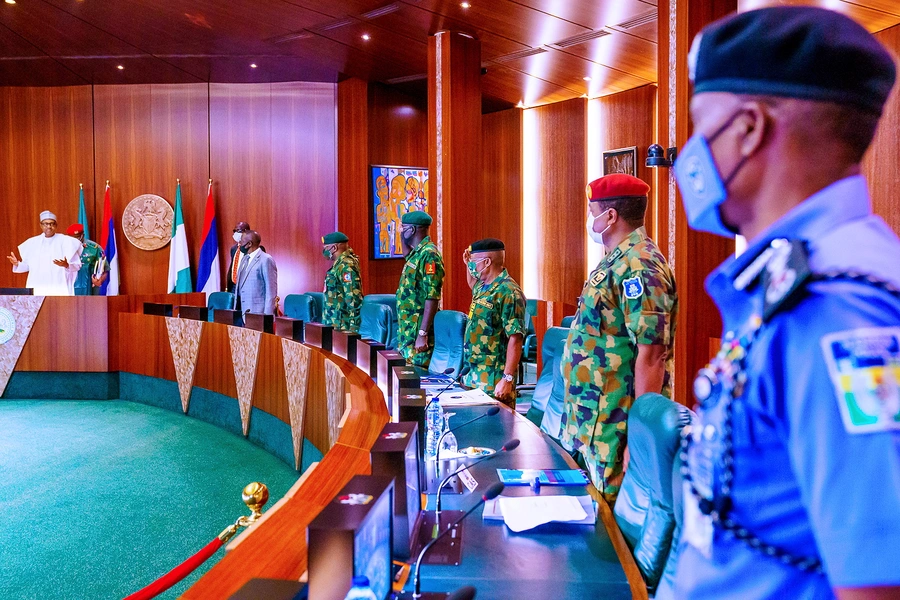

The political system of Nigeria is a federal presidential republic, a structure formally defined by the 1999 Constitution of the Federal Republic of Nigeria. This framework establishes a tripartite separation of powers among the executive, legislative, and judicial branches, closely mirroring the United States model. The constitution, which ushered in the Fourth Republic in 1999, is the bedrock of the nation’s governance, providing for a robust system of checks and balances and a multi-party representative democracy.
This report explores the political workings of Nigeria by examining its historical evolution, formal institutional design, intergovernmental dynamics, and the critical challenges that shape its reality. The current political landscape is a direct product of its history, particularly the enduring legacy of British colonialism and the long period of military rule from 1966 to 1999. These historical forces centralized power, entrenched a culture of corruption, and politicized deep-seated ethnic and religious divisions. As a result, the formal structures of democracy often operate within a complex and informal environment of patronage, clientelism, and intense competition for resources.
While Nigeria has achieved its longest period of uninterrupted civilian rule since independence, marked by peaceful transfers of power, it continues to grapple with fundamental issues. These include contentious fiscal federalism, widespread systemic corruption, and multifaceted security challenges ranging from insurgency to kidnapping. The report concludes that a truly nuanced understanding of how Nigeria politically works requires an appreciation of the inherent contradictions between its constitutional ideals and the socio-political realities that define its governance.
The Foundations of Nigeria’s Political System
The Federal Republic of Nigeria, Africa’s most populous nation, operates as a federal presidential republic with a government structure that is a direct legacy of British colonial influence, but formally modeled after the U.S. Constitution. The current political order, known as the Fourth Nigerian Republic, was inaugurated on May 29, 1999, with the adoption of a new constitution. This constitution is the supreme law of the land, establishing the institutions and apparatus of government, defining the scope of sovereign powers, and guaranteeing individual civil rights and liberties. A cornerstone of this framework is the principle of separation of powers, which vests authority in three distinct arms: the executive, the legislative, and the judiciary. This design aims to prevent the concentration of power and institutionalize a system of checks and balances.
Historical Evolution: From Colonialism to Civilian Rule
The current political environment in Nigeria is deeply rooted in its complex and turbulent history. The trajectory of Nigerian politics, from colonial administration to civilian democracy, has been fundamentally shaped by external influence, military intervention, and internal socio-political dynamics.
Colonial Roots and the Genesis of Division
Nigeria’s political structure is a direct consequence of British colonial rule, which grew through the 19th century. The British administration, facing a vast and ethnically diverse territory, adopted a policy of “divide and rule” that institutionalized regionalism and ethno-religious divisions. The 1946 Arthur Richard Constitution, for instance, established the first regional governments and, while it integrated the North and South into a common legislative council, it simultaneously reinforced fragmentation along ethnic lines by creating three distinct administrative regions: the Hausa-Fulani-dominated North, the Yoruba-dominated West, and the Igbo-dominated East. This political framework prevented the rise of a unified Nigerian nationalist movement and instead transformed ethnicity into a primary identity for political mobilization and competition for resources.
The Era of Military Dictatorship (1966-1999)
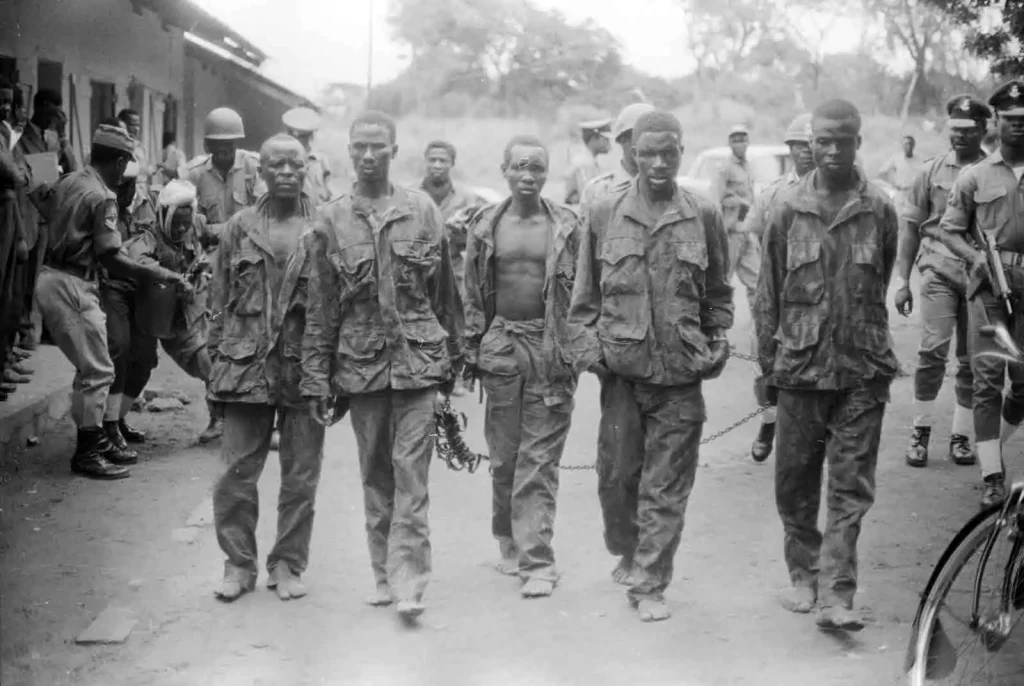
The period following independence in 1960 was marked by politics characterized by ethnic-based power struggles, which ultimately led to a military coup in 1966 and a subsequent civil war. Military rule, which persisted for most of the next three decades, profoundly altered Nigeria’s political institutions and culture. The military, by its very nature, operates as a command-and-control institution with a unitary, hierarchical structure. When the military seized power, it imposed this system upon the nation, systematically dismantling the regional autonomy of the federating units and concentrating power at the federal level. This created a powerful central government that continues to resist calls for the devolution of power.
Beyond institutional changes, military rule also normalized and entrenched systemic corruption and a culture of impunity. Operating outside the bounds of constitutional limits and institutional checks and balances, military leaders and their elites were able to exercise powers without public accountability. A former military head of state, General Yakubu Gowon, openly acknowledged that military regimes enabled corruption, suppressed civil liberties, and created structures that encouraged misgovernance. The widespread loss of economic and political rights under military rule constituted a form of corruption in itself, and it prevented the nation from developing a culture of transparency and accountability. The result of this era is a political environment where the population has become accustomed to a lack of genuine accountability, and where corruption is viewed as endemic and systemic.
The Return to Civilian Rule (1999)
The political transition that led to the Fourth Republic was precipitated by the death of military dictator General Sani Abacha in 1998. In 1999, a new constitution was adopted, and a peaceful handover of power was completed, with the military government transferring authority to a democratically elected civilian president, Olusegun Obasanjo. This event marked the beginning of Nigeria’s longest period of uninterrupted civilian governance since independence.
The Constitutional and Institutional Framework
The 1999 Constitution serves as the blueprint for Nigeria’s political architecture, defining the roles, powers, and relationships of the three distinct arms of government.
The 1999 Constitution
Modeled after the U.S. Constitution, Nigeria’s supreme law provides for the separation of powers among a strong executive, an elected legislature, and an independent judiciary. The constitution’s provisions extend to defining the structure of government, detailing the responsibilities of its branches, and outlining the division of power between the federal government and the states. It also guarantees fundamental individual rights, including personal freedom and religious freedom. A notable aspect is that while it proclaims a secular state, it also permits Muslims to follow Sharia, or Islamic law. A point of enduring contention, however, is that critics argue the constitution grants too much power to the federal government at the expense of the states.
The Executive Branch
Executive power is vested in the President, who functions as both the chief of state and the head of government, as well as the Commander-in-Chief of the armed forces. The President and Vice President are directly elected for a four-year term, with a limit of two terms. The current president is Bola Tinubu, who was elected in 2023, and the vice president is Kashim Shettima. The President’s executive authority extends to enforcing the provisions of the constitution and applying legislation enacted by the National Assembly.
The President’s cabinet, known as the Federal Executive Council, is composed of ministers who head the Federal Ministries. The constitution mandates that the President’s cabinet must include at least one member from each of Nigeria’s 36 states, a measure aimed at ensuring the nation’s “federal character”. The appointments of these ministers are subject to confirmation by the Senate.
The Legislative Branch
Nigeria’s legislative power is constitutionally vested in a bicameral National Assembly, a structure that ensures both proportional and fair representation in lawmaking. The assembly is comprised of two chambers: the Senate and the House of Representatives.
Table 1: The Bicameral National Assembly
| Chamber | Nickname | Members | Representation Basis | Leadership |
| Senate | “Red Chamber,” “Upper House” | 109 | Equal: three senators from each of the 36 states, plus one from the FCT | Senate President and Deputy Senate President |
| House of Representatives | “Green Chamber,” “Lower House” | 360 | Proportional: seats allocated by population and federal constituencies | Speaker and Deputy Speaker |
The National Assembly is the legislative arm of government, deriving its power from Section 4 of the 1999 Constitution. Its core functions are lawmaking, representation, and oversight. This body acts as a crucial check on the executive branch, and its members are elected for four-year terms.
The Lawmaking Process
The process for a bill to become law in Nigeria is a rigorous, multi-stage procedure that involves both chambers of the National Assembly and the President.
- Introduction and First Reading: A bill, which can be proposed by a legislator, a member of the public, or the executive branch, is presented to the National Assembly. At the first reading, the Clerk of the relevant chamber reads the bill’s short title to members, but no debate or discussion is permitted at this stage.
- Second Reading and Committee Stage: A motion to begin a debate on the bill is moved and seconded. This is the stage where the bill’s merits and principles are discussed. If a simple majority votes in favor, the bill is referred to a relevant Standing Committee for detailed review, suggested amendments, and public hearings to gather input from stakeholders.
- Report Stage and Third Reading: The committee’s report is presented to the chamber, which deliberates on the proposed amendments. After this, a final vote is held, and if the bill passes, it is sent to the other chamber for concurrence.
- Passage to the Other House: The receiving chamber follows a similar process. If the bill is amended, a Harmonisation/Conference Committee, composed of members from both chambers, is established to reconcile the differences and propose a unified version.
- Presidential Assent: The final, harmonized bill is sent to the President, who has 30 days to sign it into law or veto it. The National Assembly has the power to override a presidential veto with a two-thirds majority vote in both chambers, at which point the bill becomes law without presidential assent.
The Judicial Branch
The Nigerian judiciary is a hierarchical system responsible for upholding the rule of law and interpreting the constitution and laws. The constitution guarantees the independence of the judiciary, and the legal system is based on English common law.
Table 2: Hierarchy of the Nigerian Judiciary
| Court Name | Hierarchy Level | Composition | Appointment Process | Primary Jurisdiction |
| Supreme Court of Nigeria | Highest Court | Chief Justice and up to 21 Justices | Presidential nomination on recommendation of the National Judicial Council (NJC), subject to Senate confirmation | Original jurisdiction for disputes between states or with the federal government; appellate jurisdiction for appeals from the Court of Appeal |
| Court of Appeal | Below the Supreme Court | President of the Court and at least 35 justices | Presidential nomination on NJC recommendation, subject to Senate confirmation | Exclusive appellate jurisdiction for appeals from Federal and State High Courts, Election Tribunals, and other tribunals |
| Federal High Court, State High Courts | Trial Courts | Chief Judge/President and other judges | Federal judges appointed by the President; state judges appointed by state governors, both with NJC recommendation and legislative approval | Original jurisdiction over civil and criminal matters |
| Sharia Courts, Customary Courts | Trial and Appellate Courts (State Level) | Varies | Appointed by state governors | Adjudicate on matters related to Islamic and customary law |
Judicial decisions can be a powerful tool for holding other arms of government accountable and ensuring that their actions do not contravene the supreme law. The decisions of the Supreme Court are enforced in all parts of the federation by all persons and authorities.
Intergovernmental Relations: The Dynamics of Nigerian Federalism
Nigeria’s federal system is a tripartite structure comprising the federal, state, and local governments. This arrangement, designed to manage the country’s vast ethnic and cultural diversity, is characterized by a constitutional division of powers. The federal government has exclusive legislative authority over defense, foreign affairs, and major economic policies, while states and local governments are responsible for areas like health, agriculture, and public utilities.
Fiscal Federalism and Revenue Allocation
The distribution of national revenue has been a highly contentious and politically charged issue throughout Nigeria’s history. While all levels of government have their own independent revenue sources, the bulk of government expenditure is funded by federally collected revenues, which are accumulated in the Federation Account at the Central Bank of Nigeria and distributed among the tiers. The nation’s immense wealth from petroleum, which accounts for up to 75% of government revenue, is centrally managed by the federal government.
The history of revenue sharing reveals a profound shift from a system that once promoted regional autonomy to one that has created significant state dependency on the central government. Prior to 1966, a “derivation principle” was used, allocating a significant portion of federally collected revenues to regions based on the resources generated within their territory. This contributed to healthy competition and development among the regions. However, following military intervention, this principle was largely abandoned in favor of a formula based on criteria like population size and the need to achieve “national integration”. This change allowed the central government to capture and redistribute the vast oil revenues, which had a centralizing effect on the nation’s political economy.
This centralization of fiscal power has a direct impact on the nature of political competition. Because the federal government controls the majority of the nation’s wealth, the struggle for the presidency becomes a zero-sum game for political elites. The control of the national purse is a powerful incentive, making political competition intense and focused on ethnic and religious blocs rather than on policy or ideology. This centralization of revenue is a key factor in the ongoing political instability and the persistent demand for true federalism. The current review of the revenue allocation formula by the Revenue Mobilisation Allocation and Fiscal Commission (RMAFC) directly addresses this systemic issue.
Table 3: Intergovernmental Revenue Allocation Formula
| Government Tier | Current Allocation (1992) | Proposed Allocation (2022) |
| Federal Government | 52.68% | 45.17% |
| State Governments | 26.72% | 29.79% |
| Local Governments | 20.60% | 21.04% |
Note: The proposed 2022 formula was submitted to the former president but has not been implemented.
The Political and Electoral Landscape
Nigeria operates a multi-party system, with a dynamic political landscape that has evolved significantly since the return to civilian rule in 1999.
Political Parties and Their Ideologies
The political arena is dominated by two major parties: the All Progressives Congress (APC) and the Peoples Democratic Party (PDP). The APC, which came to power in 2015 through a peaceful transfer of power, and the PDP, which had governed since 1999, represent the largest blocs in the National Assembly.
The APC’s manifesto emphasizes a restructuring of governance to entrench true federalism, reform of the justice system, and a zero-tolerance approach to corruption. Its platform also includes a focus on diversifying the economy away from its over-reliance on oil and investing in agriculture and infrastructure. The PDP’s manifesto affirms a belief in Nigeria’s unity under a federal system, with a commitment to democracy, human rights, social justice, and accountability. The Labour Party (LP), which gained a significant following in the 2023 elections, identifies as a social democratic party with an ideology rooted in social justice, progress, and unity for the welfare of the masses.
Despite these stated platforms, the reality of political practice often contradicts these high-level commitments. For instance, while both major parties espouse the principles of “true federalism,” the struggle for a more equitable revenue-sharing formula and the decentralization of power continues. This discrepancy is a reflection of the deep-seated political culture where patronage and clientelist loyalties often take precedence over ideological principles. This disconnect between rhetoric and action contributes to public cynicism and a general skepticism about the sincerity of government reforms, including those aimed at combating corruption.
Table 4: Major Political Parties in the 10th National Assembly
| Party Name | Senate Seats (out of 109) | House of Representatives Seats (out of 360) |
| All Progressives Congress (APC) | 59 | 176 |
| Peoples Democratic Party (PDP) | 37 | 119 |
| Labour Party (LP) | 8 | 35 |
| New Nigeria People’s Party (NNPP) | 2 | 19 |
| All Progressives Grand Alliance (APGA) | 1 | 5 |
| Social Democratic Party (SDP) | 2 | 2 |
| African Democratic Congress (ADC) | N/A | 2 |
| Young Progressives Party (YPP) | N/A | 2 |
Elections and Electoral Management
The Independent National Electoral Commission (INEC) is a permanent, constitutionally established body tasked with organizing and conducting elections for all political offices. Its functions include voter registration, monitoring political campaigns, and providing regulations for political parties. INEC is mandated to be independent and impartial, ensuring a level playing field for all political actors.
However, Nigeria’s electoral process has been historically plagued by significant challenges, including irregularities, violence, and fraud. Incidents of voter intimidation, ballot box stuffing, and the diversion of polling materials have been widely reported by observers. These procedural irregularities and a lack of transparency have often been cited as reasons for election-related conflicts.
The judiciary plays a particularly prominent and consequential role in the aftermath of these elections. Because of widespread electoral fraud and a lack of public confidence in the process, the courtroom has become the de facto final arbiter of electoral outcomes. Aggrieved parties frequently resort to election litigation, transforming the political battle from the ballot box to the judicial system. This constant cycle of litigation, while providing a legal avenue for redress, places immense strain on the judiciary, which itself has faced criticism for delays, corruption, and a lack of capacity. The extensive and prolonged nature of these legal challenges prolongs political uncertainty and, in turn, erodes public trust in both the electoral and judicial processes.
Critical Challenges and Their Impact on Governance
The formal democratic structures in Nigeria are constantly tested by a set of interconnected and deeply entrenched challenges. These issues are not isolated problems but are part of a complex feedback loop that has a profound impact on governance, economic development, and national stability.
Systemic Corruption
Corruption is a severe and long-standing issue in Nigeria, estimated to have cost the country over $400 billion since independence. This pervasive problem, which runs through every level of government, is inextricably linked to the nation’s political evolution. The rise of oil as the dominant source of revenue transformed government office into the primary means of personal enrichment, rather than public service. The long era of military rule, with its lack of accountability and institutional checks and balances, created the perfect environment for this to flourish. The military-era practice of operating outside constitutional limits normalized administrative abuse and a lack of transparency, a legacy that continues to undermine good governance.
The connection between corruption and insecurity is not merely coincidental; it is a direct and causal relationship. Insecurity in Nigeria is fueled by corrupt practices, particularly within the defense and security sectors. The “opaque security funding system” known as “security votes” is often characterized by secrecy and embezzlement, leading to the misdirection of funds intended for tackling security threats. Furthermore, corruption in law enforcement and the judiciary allows criminals to operate with impunity, as they can bribe their way out of the justice system. The embezzlement of public funds, which should be used for development, education, and job creation, worsens economic hardship and creates a pool of unemployed and disenfranchised young people who are vulnerable to recruitment by extremist and criminal organizations.
Insecurity and Conflict
Nigeria faces a multitude of security challenges that have a direct impact on its political and economic stability. These threats include the Boko Haram insurgency in the north-east, widespread banditry and kidnapping for ransom, conflicts between farmers and herders, and separatist agitations. The pervasive insecurity discourages both domestic and foreign investment, stalls economic development, and has forced many businesses to close or relocate. These security issues consume a significant portion of the national budget, diverting funds that could otherwise be used for infrastructure and poverty alleviation.
Ethnic and Religious Tensions
The politics of ethnic and religious identity play a key role in Nigeria’s political crises and developmental challenges. The country is home to over 374 multilingual groups, and the competition for political power and natural resources has been a major source of conflict since independence, including the civil war. This competition is exacerbated by a highly centralized political system where controlling the presidency means controlling the majority of the nation’s wealth and patronage networks. This creates a “winner-takes-all” mentality where the political struggle becomes a zero-sum game for the major ethnic and religious blocs.
Political elites frequently exploit these deep-seated divisions to mobilize their support bases, often with inflammatory rhetoric that pushes exclusionary identity politics. The contentious debates over the introduction of Sharia law in northern states and the historical annulment of the 1993 presidential election, which was widely seen as a rejection of a power shift to the South, are prime examples of how these tensions have been leveraged to perpetuate political power. This politicization of identity remains a fundamental obstacle to national unity and effective governance.
Conclusion: A Nuanced Assessment
The Nigerian political system is a dynamic and complex entity, defined by a powerful interplay of its formal constitutional design and the deeply entrenched realities of its history. While the 1999 Constitution provides a robust democratic framework with a separation of powers and a system of checks and balances, the actual workings of the government are profoundly shaped by the legacies of colonialism and military rule.
Since 1999, Nigeria has made notable progress, achieving its longest period of sustained civilian rule and successfully conducting peaceful civilian-to-civilian transfers of power. However, the analysis shows that the country remains vulnerable to fundamental structural and systemic issues. These challenges, including the contentious nature of fiscal federalism, the corrosive effect of systemic corruption, and the persistent manipulation of ethnic and religious tensions, are not isolated problems. They are deeply intertwined, forming a complex web where corruption fuels insecurity, and competition for centralized oil revenues exacerbates identity-based conflict.
The political debates of the present, such as the ongoing review of the revenue allocation formula, demonstrate that these foundational contradictions are at the forefront of the national discourse. Ultimately, a definitive assessment of how Nigeria politically works must acknowledge the inherent tension between its constitutional ideals and the practical realities of its political culture. Sustainable progress will require not only the continued strengthening of its formal democratic institutions but also a fundamental reform of the patronage systems, which would effectively diminish the high-stakes, “winner-takes-all” nature of political competition and foster a more accountable and unified nation.










Related Posts

Stay Informed With the Latest & Most Important News
Previous Post
Next Post


Advertisement