Now Reading: The Foreign Relations of Nigeria
-
01
The Foreign Relations of Nigeria
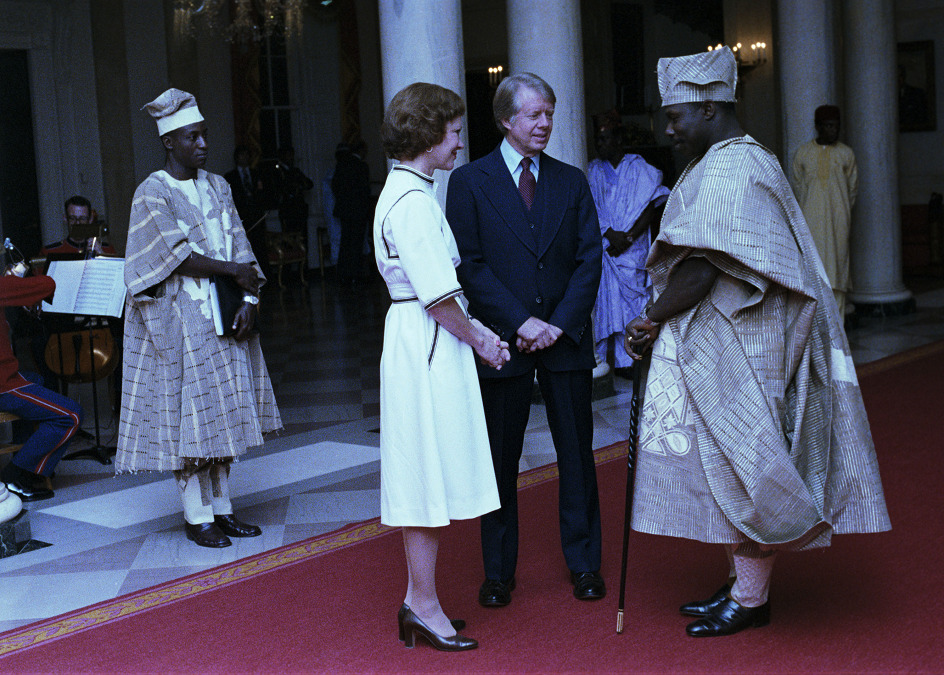

The foreign relations of Nigeria are characterized by a profound and continuous aspiration for regional and global leadership, a vision that is both enabled and constrained by its domestic realities. Since gaining independence in 1960, Nigeria’s foreign policy has been anchored in core principles, most notably its Afrocentric orientation, which places the African continent at the nucleus of its external strategy. This report demonstrates how this commitment is realized through Nigeria’s indispensable role in regional security and development, particularly within the Economic Community of West African States (ECOWAS) and the African Union (AU). However, the pursuit of this leadership role is not without significant trade-offs, as the immense financial and logistical burdens of peacekeeping often strain domestic resources needed to address persistent internal challenges like insecurity and socio-economic deficits.
The report further analyzes Nigeria’s strategic bilateral engagements, revealing a complex dynamic of both traditional and evolving partnerships. Relations with the United States are shifting from a historical focus on resource extraction to a more diversified collaboration on security, digital innovation, and human development. In contrast, ties with China, while providing crucial funding for large-scale infrastructure projects, have created a serious trade imbalance that threatens Nigeria’s long-term economic diversification goals. Domestically, the nation’s foreign policy is deeply intertwined with the fortunes of its oil sector, which has historically provided diplomatic leverage but also introduced a fundamental structural vulnerability to global price shocks and corruption.
Finally, the report examines the growing influence of non-traditional foreign policy instruments. The phenomenal success of Nigeria’s creative industries, such as Nollywood and the music scene, has become a powerful source of soft power, reshaping global perceptions of the country. Similarly, the vast Nigerian diaspora, with its substantial economic contributions through remittances, represents a strategic asset, though its political potential remains largely unharnessed due to a disconnect between official rhetoric and a lack of legislative frameworks like diaspora voting. In essence, Nigeria’s foreign policy is a delicate balancing act, navigating a complex future where its ambitions for global recognition are continuously tested by its internal capacity and structural challenges.
1. Introduction: A Strategic Overview of Nigeria’s Foreign Policy
Guiding Principles and Objectives
Nigeria’s foreign policy, since its independence in 1960, has been a meticulously crafted instrument designed to promote its national interests and project its influence on the global stage. This strategy is fundamentally guided by a set of core tenets that have remained consistent across various administrations. A central principle is
Afrocentrism, which places the African continent at the nucleus of Nigeria’s external strategy. This concept is twofold: it is designed to advance the interests of African countries through diplomatic channels and to assert Nigeria’s role as a regional leader. Beyond its continental focus, Nigeria’s foreign policy is also predicated on the principles of
non-alignment, which involves avoiding affiliation with major global power blocs; the promotion of African solidarity and regional integration; and the pursuit of economic diplomacy and peacekeeping. These foundational principles are not merely abstract concepts; they are reflected in Nigeria’s active engagement with a wide array of international organizations, its participation in global governance, and the nature of its bilateral and multilateral relations with other nations.
The Evolution of a Giant: From Post-Colonial Aspirations to Regional Power
The history of Nigeria’s foreign relations is a narrative of a former British colony seeking to define its own destiny and exert its influence, particularly within Africa. Following independence, with Jaja Wachuku serving as the first Minister for Foreign Affairs, the nation’s external policy was characterized by a clear focus on African unity and independence. This Afrocentric orientation was a deliberate strategic choice to lead the decolonization and anti-racism agenda on the continent. Nigeria demonstrated this commitment by taking a tough stance against the apartheid government in South Africa, including nationalizing companies like British Petroleum for supplying oil to the regime. The country also extended diplomatic support to liberation movements, such as Sam Nujoma’s Southwest Africa People’s Organization in Namibia.
While this period was defined by a commitment to African liberation struggles, it was also shaped by the domestic turmoil of the civil war from 1967 to 1970 and subsequent decades of restrictive military dictatorships. Nigeria leveraged its demographic size and resources to project power, but the domestic challenges meant that its foreign policy often reflected a constant trade-off between external commitments and internal stability. This historical trajectory underscores the central theme of Nigeria’s international posture: the delicate balance between a powerful, ambitious vision and the internal capacity to achieve it.
2. Regional and Continental Leadership: The Backbone of Africa
Nigeria in ECOWAS: The Core of West African Security
Nigeria’s role within the Economic Community of West African States (ECOWAS) is central to regional stability and security in West Africa. The country has been a key player since the formation of the organization’s military wing, ECOMOG, in 1990, which was a direct response to civil wars in neighboring Liberia and Sierra Leone. As the largest contributor of troops, finance, and logistics to ECOMOG, Nigeria provided the backbone for the initial missions, assuming a leading role in enforcing ceasefires, managing disarmament processes, and facilitating elections in these war-torn nations. This commitment established a precedent for regional intervention and solidified Nigeria’s position as a leader in West Africa’s security affairs.
However, this leadership role is not without significant challenges. While Nigeria’s active involvement in peacekeeping has boosted its diplomatic standing and enhanced its credibility within the African Union (AU) and the United Nations (UN), it has placed a substantial burden on its domestic resources. The immense financial and logistical costs of these missions strain the country’s budget, which is simultaneously needed to address pressing internal security issues, such as the Boko Haram insurgency, and socio-economic challenges like poverty and infrastructure deficits. The pursuit of regional power creates a tangible paradox, forcing Nigeria to make a continuous trade-off between its self-image as a regional leader and the urgent needs of its population.
Nigeria in the African Union (AU): Advancing Peace and Development
Nigeria’s commitment to Africa extends beyond West Africa to the continental level, where it has consistently played a prominent role in the African Union’s Peace and Security Council (PSC), the AU’s primary organ for conflict prevention and resolution. This influence is underpinned by Nigeria’s status as one of the five major countries funding the AU’s operational budget, which grants it full voting rights and the ability to sponsor its nationals for key positions within the organization.
The country’s contributions to the African Peace and Security Architecture (APSA) are further evidence of its commitment. Nigeria participates in capacity-building exercises for the African Standby Force (ASF) and has engaged in the promotion of democracy and good governance across the continent, ratifying key charters like the African Charter on Democracy, Elections and Governance. This sustained diplomatic engagement and financial commitment have been crucial in articulating and defending African concerns and interests on the world stage.
Nigeria in the United Nations (UN): The Quest for Global Influence
Since joining the UN as its 99th member in 1960, Nigeria has played a pivotal and active role in global governance. The country’s influence is particularly visible on the UN’s First Committee, which deals with disarmament and international peace and security, where Nigeria has for years served as the coordinator of the 53-member African Group. Nigeria’s commitment to arms control is unwavering, as demonstrated by its early signing of the Non-Nuclear Proliferation Treaty (NPT) in 1968 and its promotion of the African Treaty of Nuclear-Weapon-Free Zone.
Nigeria’s multi-layered engagement in the AU and UN is part of a deliberate, long-term strategic campaign aimed at securing a permanent seat on the UN Security Council as a representative of Africa. Its financial, military, and diplomatic contributions are carefully crafted to build the credibility and legitimacy required to justify this claim. The nation’s role as a top funder of the AU, a mediator in conflicts from Darfur to Guinea-Bissau, and a leader on disarmament issues within the UN are not isolated actions. They constitute a coordinated effort to demonstrate Nigeria’s indispensability as a security and diplomatic actor, representing a case study of a nation using a combination of soft and hard power to re-engineer global governance in its favor.
3. Strategic Bilateral Engagements
Nigeria-United States Relations: A Partnership of Democratic Giants
The relationship between Nigeria and the United States has evolved significantly, particularly in recent years, reflecting a partnership grounded in shared values of pluralism and respect for sovereignty. Recent engagements through the U.S.-Nigeria Binational Commission have spanned a wide range of bilateral and global issues. In the security sphere, cooperation includes counterterrorism, police reform, and combating cybercrime, with the U.S. providing support to build the capacity of Nigeria’s criminal justice system and rapid reaction units.
The economic relationship is also diversifying beyond oil. The U.S. International Development Finance Corporation (DFC) has announced a new $75 million investment to support a urea-ammonia fertilizer facility in Port Harcourt, while USAID has approved a $50 million, five-year plan for water and food security. A key aspect of this new partnership is the burgeoning collaboration in the digital economy. Both governments have committed to the Digital Transformation with Africa (DTA) initiative, with plans for a U.S.-funded artificial intelligence (AI) conference in Lagos and discussions on Nigeria joining the Global Cross Border Privacy Rules Forum. The nature of the relationship is shifting from a historical focus on resource extraction to a more diversified, forward-looking partnership centered on security, human capital, and the digital economy, signaling a mutual recognition of shared challenges that transcend commodities.
Nigeria-China Relations: The Dynamics of Economic Pragmatism
Formal diplomatic relations between Nigeria and the People’s Republic of China were established in 1971, with ties strengthening as a result of the international isolation of Nigeria’s military dictatorships. The relationship has since expanded on growing bilateral trade and strategic cooperation.
Table 3.2.1: Nigeria-China Bilateral Trade Value and Balance (2018-2019)
| Year | Total Bilateral Trade (USD) | Nigeria’s Exports to China (USD) | Nigeria’s Imports from China (USD) | Trade Balance (USD) |
| 2019 | $19.27B | – | – | – |
| 2016 | $10.38B | – | – | -$8.3B* |
| 2010 | $7.8B | – | – | – |
| 2006 | $3B | – | – | – |
| 1998 | $384M | – | – | – |
*Based on the statement that Chinese exports accounted for 80% of total bilateral trade.
The trade relationship has seen exponential growth, with total bilateral trade reaching nearly $20 billion by 2019. However, a significant and politically sensitive issue is the severe trade imbalance, where Chinese exports constitute approximately 80% of the total trade volume. This imbalance has led to a clear decline in Nigerian industries, with the influx of cheap Chinese goods contributing to the closure of 65 textile mills and the layoff of 150,000 workers over a decade.
While the relationship has been described as “mutually beneficial” , China’s development finance to Nigeria, which includes projects like the Abuja-Kaduna Railway, the Abuja Metro Light Rail, and the Zungeru Hydro Power Dam, often comes at a cost. In exchange for financing, Nigeria often hires Chinese firms to oversee its development projects, creating a dependency dynamic that undermines the country’s long-term goal of economic diversification and industrial growth.
Nigeria-United Kingdom Relations: A Post-Colonial Partnership
The relationship between Nigeria and the United Kingdom is a complex post-colonial partnership that has experienced periods of both tension and rapprochement since Nigeria’s independence in 1960. While both countries share membership in international organizations like the Commonwealth, the relationship has not always been smooth, with a major diplomatic rift occurring in 1984.
Today, a cornerstone of the relationship is the robust security and defense partnership. The UK maintains a resident British Military Advisory and Training Team (BMATT) in Nigeria and has provided extensive training to over 28,000 members of the Nigerian military in areas such as counter-insurgency and leadership. In addition to this cooperation, cultural diplomacy plays a significant role. The British Council promotes English-language education and cultural programs, while an ongoing dialogue exists regarding the repatriation of Nigerian cultural artifacts, such as the Benin Bronzes, which were looted in 1897. The relationship is a microcosm of the complexities inherent in post-colonial ties, where modern security and economic cooperation exist alongside persistent issues rooted in historical power imbalances. The demand for the return of artifacts is not a separate issue but a diplomatic expression of a nation reclaiming its cultural sovereignty.
4. Domestic Forces and Diplomatic Leverage
The Nexus of Oil and Foreign Policy: Strength and Vulnerability
Crude oil is the central pillar of Nigeria’s economy and a primary determinant of its foreign policy. As a “rentier state” heavily dependent on oil exports, the country’s international engagements and economic resilience are deeply intertwined with the fortunes of this single commodity.
Table 4.1.1: The Role of Oil in Nigeria’s Economy
| Sector | Contribution to the Economy |
| Foreign Exchange Earnings | ~95% |
| Budget Revenues | ~70% |
| GDP | ~40% |
As the table illustrates, oil has historically served as a strategic asset for diplomatic projection, providing the financial muscle to fund international commitments, such as ECOWAS peacekeeping missions, and support liberation struggles in Southern Africa. However, this overdependence has simultaneously created a deep structural vulnerability. The nation is highly susceptible to external price shocks, which can lead to economic instability, weaken its diplomatic posture, and exacerbate domestic issues like corruption and insecurity. The source of Nigeria’s external strength is also the primary source of its internal weakness.
Security and Border Dynamics: Externalities of Internal Challenges
Nigeria’s internal security challenges have significant external implications. The country’s maritime security in the Gulf of Guinea, for instance, is a major international concern due to piracy, illicit trafficking, and illegal fishing. As a key player in the Yaoundé architecture, Nigeria is working to combat these transnational threats, which directly impact international trade and maritime safety.
A landmark example of Nigerian diplomacy is the resolution of the Bakassi conflict with Cameroon, a dispute that nearly escalated to war. The conflict was resolved through adherence to international law via a 2002 International Court of Justice (ICJ) ruling and subsequent UN-mediated agreements, culminating in the Greentree Agreement. This resolution is a diplomatic success story in averting armed conflict, yet it also serves as a cautionary tale about the limits of state-centric diplomacy. The resolution failed to fully address the human dimension of the conflict, particularly the desire of the local population of Nigerian origin for self-determination. This failure to include the affected people in the negotiation process has led to new waves of refugee outflows and lingering sources of conflict. A legal solution can thus be a humanitarian failure, and true diplomatic success requires addressing the needs of all affected parties, not just the states involved.
Challenges to Foreign Investment Promotion
Despite its potential, Nigeria faces significant domestic challenges that hinder its ability to attract and retain Foreign Direct Investment (FDI). These obstacles include political risks, high production costs, corruption, inadequate infrastructure, and bureaucratic hurdles. These issues have contributed to a recent decline in foreign investment inflows, prompting some multinational companies to divest.
The challenges to attracting FDI are not isolated issues but are symptoms of a deeper structural problem: a lack of economic complexity. According to the Economic Complexity Index (ECI), Nigeria ranks 129th out of 132 countries, indicating an over-reliance on raw material exports and a low-tech industrial base. This low ranking makes it difficult to attract high-value, technology-intensive investment and explains why Nigeria’s trade fairs are often criticized for promoting foreign goods instead of locally manufactured ones. While the Nigerian Investment Promotion Commission (NIPC) is working to attract investors and the government has enacted pro-market reforms, these efforts must be coupled with a fundamental re-engineering of the economy to address the root causes of the investment climate challenges.
5. Non-Traditional Instruments of Foreign Policy
The Power of Culture: Nollywood, Music, and Nation Branding
Nigeria’s cultural and creative industries are emerging as powerful vehicles for cultural diplomacy and soft power. The phenomenal growth of Nollywood, the nation’s film industry, and the international rise of Afrobeat music have provided effective channels for reshaping global perceptions, challenging stereotypes, and promoting a more nuanced understanding of Nigerian society. The initial success of these industries was driven by a “do-it-yourself mindset” in response to domestic crises. This bottom-up, grassroots innovation has proven to be a highly effective form of public diplomacy.
The Nigerian government has recognized the importance of this cultural influence and is now attempting to formalize and capitalize on it. Under its Vision 2030 framework, the government is creating strategic policies and investing in infrastructure, skills development, and policy enhancements to strengthen the creative economy and tourism sectors. The objective is to use this growing soft power to improve international relations, attract foreign investment, and reduce the nation’s economic dependence on oil and gas.
The Diaspora as a Strategic Asset
The Nigerian diaspora, with an estimated population of over 17 million individuals, represents a vital, yet largely unharnessed, strategic asset for the nation’s development and foreign policy.
Table 5.2.1: Nigerian Diaspora Remittance Inflows (2021-2022)
| Year | Remittance Inflows (USD) | Source |
| 2022 | >$21B | World Bank |
| 2021 | >$21B | World Bank |
As the table shows, their most significant economic contribution is through remittances, which exceeded $21 billion in 2022, making Nigeria one of the largest recipients in Africa. These funds are crucial for stabilizing household incomes, reducing poverty, and fostering local economies. The diaspora also contributes to foreign direct investment, knowledge transfer, and trade facilitation, acting as a bridge between Nigerian businesses and global markets.
From a political standpoint, the Nigerian government has embraced the concept of “diaspora diplomacy,” an effort to harness the loyalty and political influence of Nigerians abroad to advance foreign policy goals. The “Citizen Diplomacy” initiative was launched to reflect the interests and welfare of citizens abroad in Nigeria’s bilateral engagements. However, a profound disconnect exists between this official rhetoric and the reality on the ground. Despite the significant economic contributions of the diaspora, millions of Nigerians abroad are disenfranchised by a lack of a legal framework for voting in national elections, as current laws require physical residency. This gap between stated policy and practical reality creates apathy and represents a significant barrier to fully leveraging this powerful strategic asset.
6. Conclusion: Navigating a Complex Future
Nigeria’s foreign policy is a rich and complex tapestry woven from historical aspirations, domestic realities, and an evolving set of global challenges. The analysis reveals a nation that has consistently positioned itself as a leader in Africa, a role cemented by its indispensable contributions to peacekeeping in ECOWAS and its prominent status within the AU. This Afrocentric vision is a core element of its identity and a key driver of its diplomatic engagements.
However, Nigeria’s foreign policy is simultaneously characterized by a series of fundamental paradoxes. The nation’s quest for leadership is enabled by its vast resources and population but is continuously constrained by its domestic fragility. The oil sector provides immense diplomatic leverage, yet overdependence on this single commodity creates a structural vulnerability that limits strategic autonomy and fuels internal instability. Similarly, while Nigeria has shown a remarkable ability to resolve complex border disputes through adherence to international law, the Bakassi conflict demonstrates that a legalistic solution can be a humanitarian failure if it neglects the needs of local populations.
Looking ahead, Nigeria’s diplomatic success will increasingly depend on its ability to bridge these gaps. The burgeoning, diversified partnerships with the U.S. and the strategic reliance on non-traditional instruments like cultural diplomacy and the diaspora offer promising new pathways. To fully capitalize on this potential, Nigeria must address the internal challenges that weaken its external posture. This includes reforming its domestic economy to reduce the trade imbalance with China and attract high-value foreign investment, as well as resolving the legal and political disenfranchisement of its diaspora to transform it from an unharnessed asset into a fully integrated strategic partner. The future of Nigeria’s foreign relations hinges on its capacity to reconcile its external ambitions with the urgent demands of its internal development.










Related Posts

Stay Informed With the Latest & Most Important News
Previous Post
Next Post

Advertisement