Now Reading: A Pan-African Giant on Shifting Sands: A Critical Examination of Nigeria’s Contributions to Continental Unity
-
01
A Pan-African Giant on Shifting Sands: A Critical Examination of Nigeria’s Contributions to Continental Unity
A Pan-African Giant on Shifting Sands: A Critical Examination of Nigeria’s Contributions to Continental Unity

I. Introduction: Defining Nigeria’s Pan-African Trajectory
The concept of Pan-Africanism represents a profound philosophical and political movement, rooted in the shared struggles of people of African descent against enslavement, colonialism, and racism. It is a belief system that posits a common history and a unified destiny for Africans, both on the continent and in the diaspora. Pan-Africanists advocate for solidarity as a vital means to achieve collective self-reliance and empowerment, with the ultimate goal of fostering social, economic, and political progress across the continent. This ideology has manifested in various forms, from early diasporic “Back to Africa” movements and the political conferences of the 20th century to the creation of continental bodies like the Organisation of African Unity (OAU).
Within this expansive historical and ideological landscape, Nigeria has consistently projected itself as the “Giant of Africa”. This self-perception is based on its immense population, its status as the continent’s largest economy, and its significant regional influence. Since gaining independence in 1960, Nigeria’s foreign policy has been guided by an Africa-centric doctrine, positioning continental unity and independence at its core. Nigeria has been a founding member of key Pan-African institutions, including the OAU (later the African Union), the Economic Community of West African States (ECOWAS), and the Non-Aligned Movement. This foundational commitment has defined Nigeria’s external relations, framing its actions as essential for the continent’s progress and stability.
This report aims to provide a critical and nuanced examination of Nigeria’s contributions to Pan-Africanism. It argues that Nigeria’s role has been a complex and often contradictory force, shaped by a persistent tension between its immense potential and its significant domestic challenges, including political instability and institutional weaknesses. The analysis will traverse Nigeria’s ideological origins, its political and diplomatic actions, its military and economic influence, and its cultural and intellectual contributions. By exploring both the triumphs and the paradoxes, this report seeks to illuminate the full scope of Nigeria’s Pan-African legacy and its ongoing relevance in the contemporary era.
II. The Ideological Foundations: Founding Leaders and the Great Debate
Nigeria’s engagement with Pan-Africanism was not a monolithic political project but a tapestry woven from the distinct and often competing visions of its founding leaders. Their ideological differences created a dynamic intellectual environment that shaped the nation’s post-independence trajectory and its role on the continent.
Nnamdi Azikiwe’s “Zikism” as a Pan-African Philosophy
Dr. Nnamdi Azikiwe, widely known as “Zik,” emerged as one of the most prominent Pan-Africanists in British West Africa during the 1930s. His anti-colonial writings from the United States, Accra, and Lagos positioned him as a intellectual and political force. Colonial Secretary Oliver Stanley regarded him as “the biggest danger of the lot”. Zik’s Pan-Africanist philosophy, which he termed “Zikism,” was inspired by prominent figures of the Black Atlantic, including Edward Wilmot Blyden, W.E.B. Du Bois, and Marcus Garvey.
Zikism was founded on five core principles aimed at achieving true liberation: balanced spirituality, social regeneration, financial independence, mental liberation, and political resurgence. Among these, the principle of “mental liberation” was particularly central. Azikiwe believed that genuine freedom extended beyond the mere exchange of flags; it required Africans to intentionally and self-sustainably reclaim their history and achievements to overcome the inferiority complexes imposed by colonialism. This concept positioned him not just as a political nationalist but as a philosophical theorist for post-colonial existence, advocating for a fundamental shift in the African psyche.
Azikiwe used his journalism as a powerful vehicle for propagating his ideology. Through publications such as the African Morning Post and the West African Pilot, he championed radical nationalism and black pride, fiercely criticizing the racial discrimination and violence of the colonial regime. He fearlessly exposed what he saw as the hypocrisy of European powers who claimed to be “civilising” and “Christianising” Africans with “machine guns” and “bombs”. His writings laid the groundwork for the nationalist movements and fostered a sense of unity and pride that was critical for the eventual liberation of Nigeria and other African nations. His active participation in Pan-African politics, through his writings and in-person engagement across the “Black Atlantic” from West Africa to Europe, underscored his commitment to a globally interconnected movement for black empowerment.
Abubakar Tafawa Balewa’s Gradualist and Pragmatic Approach
Sir Abubakar Tafawa Balewa, Nigeria’s first and only prime minister, was another pivotal figure in shaping the country’s Pan-African policy. Known as the “Golden Voice of Africa” for his oratory skills, he was a key leader in the formation of the Organisation of African Unity (OAU). Balewa’s vision stood in stark contrast to the more radical and immediate unionist proposals put forward by leaders like Ghana’s Kwame Nkrumah.
Balewa became the leading voice of the “Monrovia bloc,” which advocated for a functionalist and gradualist approach to African unity. This group, which included Nigeria and most of the former French colonies, favored economic cooperation and the preservation of national sovereignty over Nkrumah’s call for an immediate political federation. The OAU charter, signed in 1963, reflected this gradualist philosophy, incorporating principles of sovereign equality and non-interference in the internal affairs of member states. Nigeria’s mature and modest diplomacy in reconciling the ideologically opposed Monrovia and Casablanca blocs was instrumental in the OAU’s formation. The OAU Charter was also substantially authored by Nigeria under the supervision of Dr. Taslim Olawale Elias, with Balewa’s endorsement confirming it bore Nigeria’s imprimatur.
Balewa’s pragmatic stance was rooted in a recognition of the continent’s diverse historical, cultural, and linguistic landscape, as well as the fragility of the newly independent states. This position was not a lack of ambition but a deliberate choice to build a stable foundation for unity. However, this same principle of non-interference would later be a source of criticism for the OAU, which was often derided as a “Dictators’ Club” for its inability to act decisively in the face of civil wars and human rights violations within member states. This contradiction shows how a founding principle, while securing the initial formation of the union, also became a structural limitation on its effectiveness.
Obafemi Awolowo’s Federalist Counterpoint
Chief Obafemi Awolowo, a celebrated nationalist and one of Nigeria’s national heroes, offered a different perspective on the path to African unity. As a strict adherent of federalism, he understood the importance of regionalism and believed that self-determination could not end at the nation-state level; it had to be granted to each region of the country.
Awolowo’s political philosophy was a form of Fabian socialism combined with capitalist principles. His primary focus was on domestic socio-economic transformation, believing that a nation’s strength lay in the well-being and education of its citizens. He championed public education, social welfare, and equitable resource distribution, famously implementing free primary education as Premier of the Western Region.
While his focus was predominantly internal, his vision was not antithetical to Pan-Africanism. His “Afropolitan motivations” were noticeable in his politics. He held the view that building strong, well-governed, and prosperous nations was a necessary precursor to a successful Pan-African confederation. His approach suggested that a continent of stable, internally prosperous states would form a stronger and more effective union than a single, centralized entity built on a weak foundation. This intellectual position, while seemingly at odds with the continental visions of Nkrumah and Azikiwe, provides a valid and compelling alternative perspective on achieving African unity. His political career was marked by an intense rivalry with Azikiwe, and their ideological differences often reflected a tension between continental idealism and the pragmatic, self-interested realities of domestic politics.
Table 1: Key Nigerian Pan-Africanist Figures and Their Ideologies
| Name | Core Ideology | Key Contributions | Relationship to Pan-Africanism |
| Nnamdi Azikiwe | Zikism (Mental Liberation) | Anti-colonial journalism, intellectual engagement in the “Black Atlantic” | Continentalist: Focus on a unified, spiritually and mentally liberated Africa |
| Abubakar Tafawa Balewa | Gradualism and Pragmatism | Led the Monrovia bloc, instrumental in the OAU’s formation and charter | Pragmatic: Advocated for a loose union based on sovereign states and economic cooperation |
| Obafemi Awolowo | Federalist Socialism | Championed regional autonomy, social welfare, and universal education in Nigeria | Nationalist/Pragmatic: Believed strong, well-governed nations were the prerequisite for a strong continent |
Export to Sheets
III. The Political and Diplomatic Engine
Nigeria’s contributions to Pan-Africanism extend far beyond the ideological realm, manifesting in its foreign policy and concrete diplomatic and military actions. These efforts were a core component of the nation’s identity and were often driven by a sense of responsibility as Africa’s most populous and resource-rich country.
The ‘Africa Centre Piece’ Foreign Policy
Since independence, Nigeria’s foreign policy has been characterized by a resolute focus on Africa. This doctrine, known as the “Africa Centre Piece,” is built on core principles of African unity, independence, and the total decolonization of the continent. This commitment led Nigeria to become a founding member of the Organisation for African Unity (OAU), the predecessor to the African Union (AU).
Nigeria’s diplomatic skill was on full display during the formation of the OAU in 1963. The ideological schism between Kwame Nkrumah’s “radical” Casablanca bloc, which demanded immediate political union, and Nigeria’s “conservative” Monrovia bloc, which favored a gradualist approach, threatened to derail the organization’s creation. Nigeria’s moderate and mature diplomacy was crucial in bridging this divide and persuading the majority of African leaders to adopt a continental organization built on the principles of gradualism, functionalism, and respect for national sovereignty. This foundational compromise, while ensuring the OAU’s establishment, would later become a source of both its enduring existence and its operational limitations.
Anti-Apartheid and Decolonization Advocacy
Nigeria’s commitment to Pan-Africanism was perhaps most forcefully demonstrated through its unwavering opposition to apartheid in South Africa and white minority rule across the continent. Nigeria adopted a committed tough line against the South African regime, backing liberation movements like the African National Congress (ANC) with significant diplomatic, financial, and military support.
Nigeria’s actions were not merely symbolic. The country nationalized the local operations of Barclays Bank and British Petroleum (BP) for their trade with the apartheid regime, demonstrating a willingness to incur economic costs for a principled stand. Financial and material aid was also extended to armed liberation movements. In 1977, the military regime of General Olusegun Obasanjo donated $20 million to the Zimbabwean movement against the white minority government of Rhodesia. Nigeria also provided military equipment and training to guerrilla forces led by Joshua Nkomo and Robert Mugabe in Zimbabwe and sent military aid to Mozambique to help suppress South African-backed insurgents. It also mobilized diplomatic influence within the OAU to support the Popular Movement for the Liberation of Angola (MPLA) and Sam Nujoma’s Southwest Africa People’s Organization (SWAPO) in Namibia.
This aggressive anti-apartheid stance was profoundly shaped by Nigeria’s own internal history. Nigeria’s leadership in the anti-apartheid fight was intensified by the devastating experience of its 30-month civil war. The internal conflict, which brought the nation to the brink of collapse, seemed to have “supercharged” successive Nigerian leaders, making them more vocal and active in their opposition to institutionalized racism and colonialism. This suggests a direct link between a traumatic domestic event and a more forceful, principled foreign policy. The immense suffering witnessed at home galvanized a determination to fight for a free and unified Africa abroad.
IV. The Military and Economic Nexus
Nigeria’s contributions to Pan-Africanism are not solely a matter of rhetoric and diplomacy; they are also grounded in concrete military and economic power. The country has used its considerable resources to promote regional stability and foster economic integration, but these efforts have not been without complication and criticism.
Leadership in Regional Security: The ECOMOG Experience
Nigeria is widely regarded as the “arrowhead” of the Economic Community of West African States (ECOWAS), a regional bloc established in 1975 to promote economic and political cooperation. The most visible manifestation of this leadership was the formation of the ECOWAS Monitoring Group (ECOMOG), a multilateral armed force designed to intervene in West African conflicts.
ECOMOG was largely supported by the personnel and resources of the Nigerian Armed Forces, with other ECOWAS members contributing smaller units. The force was a first-of-its-kind regional security initiative in Africa and was deployed to restore peace and order in nations beset by civil war. Key interventions include the Liberian civil war (1989-1997) and the Sierra Leonean conflict in 1997 to stop the RUF rebellion. Nigeria’s commitment was substantial, with an estimated cost of $8 billion to restore peace in Liberia alone.
However, the ECOMOG experience also exposed a profound paradox. Nigeria, a country with a history of frequent military coups and political instability, was leading an international force to restore democracy and order in other countries. A 1997 Human Rights Watch report highlighted the “unnoticed irony” of Nigeria’s military government suppressing its own political opposition at home while intervening abroad in support of an elected government. This tension between external aspiration and internal governance challenges was a recurring theme. The ECOMOG mission was also criticized for alleged “serious human rights violations” and “systematic looting” by its troops, which led some Liberians to re-coin its acronym as “Every Car or Movable Object Gone”. This demonstrated that while the political will for intervention was present, the institutional frameworks and conduct were often deeply flawed.
Table 2: Nigeria’s Financial Contributions to ECOWAS (2003-2015)
| Financial Contribution from Nigeria | Other ECOWAS Member States Combined |
| $710,497,352 | $697.947 million (13 states) |
Export to Sheets
Table 3: Select Nigerian Peacekeeping Missions in Africa
| Mission Name | Location | Key Outcome |
| UN Operation in the Congo (ONUC) | Congo | First Nigerian Police contingent deployed to a UN mission |
| ECOMOG | Liberia | Ended protracted civil war at a cost of $8 billion to Nigeria |
| ECOMOG | Sierra Leone | Restored the elected civilian government after a military coup |
| ECOMICI | Côte d’Ivoire | Maintained a ceasefire alongside UN and French troops |
| AFISMA | Mali | Fought against rebel groups after a 2012 coup |
| Operation Restore Democracy | The Gambia | Forced a peaceful transition of power after a disputed election |
Nigeria’s Economic Influence and Integration Efforts
As Africa’s largest economy and one of the world’s major oil producers, Nigeria has long been a significant economic power in West Africa. Its financial contributions to regional organizations like ECOWAS have been substantial. For example, between 2003 and 2015, Nigeria injected over $710 million into ECOWAS, an amount greater than the combined contributions of 13 other member states. This financial muscle has been critical for the survival of the bloc and its various initiatives.
The African Continental Free Trade Area (AfCFTA), an initiative aimed at creating a single continental market, represents a new frontier for Nigeria’s economic Pan-Africanism. Nigeria signed the agreement in 2019, recognizing its potential for increasing intra-African trade and reducing poverty. Projections suggest that the AfCFTA could lead to a 1.55% gain in welfare for Nigeria, with significant increases in exports of agricultural products and food.
However, the implementation of AfCFTA also highlights the deep-seated challenges facing Nigeria. While the ideal of a single market is compelling, Nigerian businesses have expressed concerns about rising foreign competition and the dumping of substandard goods. Furthermore, high domestic costs of doing business, inadequate infrastructure, and a lack of awareness among businesses pose significant obstacles to realizing the full benefits of the agreement. This situation reveals a fundamental tension: the Pan-African ideal of integration requires a solid domestic foundation, but Nigeria’s internal weaknesses can turn a continental opportunity into a national vulnerability.
V. Pan-Africanism Beyond Politics: Cultural and Intellectual Contributions
The discourse of Pan-Africanism in Nigeria has been shaped not only by politicians and diplomats but also by a vibrant intellectual and artistic class. These figures have used literature, music, and art to challenge colonial legacies and articulate a vision of a truly liberated African identity.
The Negritude Debate and Nigerian Intellectuals
The Negritude movement, founded by French-speaking Black intellectuals in the 1930s, celebrated “Blackness” and traditional African values as a response to colonial oppression and assimilation. While a predominantly Francophone phenomenon, its ideas of Black consciousness resonated widely. However, the movement faced a famous critique from Nigerian Nobel laureate Wole Soyinka, who argued against what he perceived as its essentialist and defensive nature.
Soyinka’s famous declaration that “A tiger doesn’t proclaim its tigritude, it pounces on its prey” was a challenge to the idea that a “deliberate and outspoken pride in one’s blackness” was necessary. His work, deeply rooted in his Yoruba culture, explored the complexities of post-colonial identity and the conflicts between tradition and modernity. He argued for a more nuanced and critical engagement with history and culture, transcending a race-based framework to focus on human complexities and political realities. This debate reflected a fundamental intellectual divide within Nigeria over the best way to assert African identity and sovereignty on the world stage.
Art and Activism: The Fela Kuti Legacy
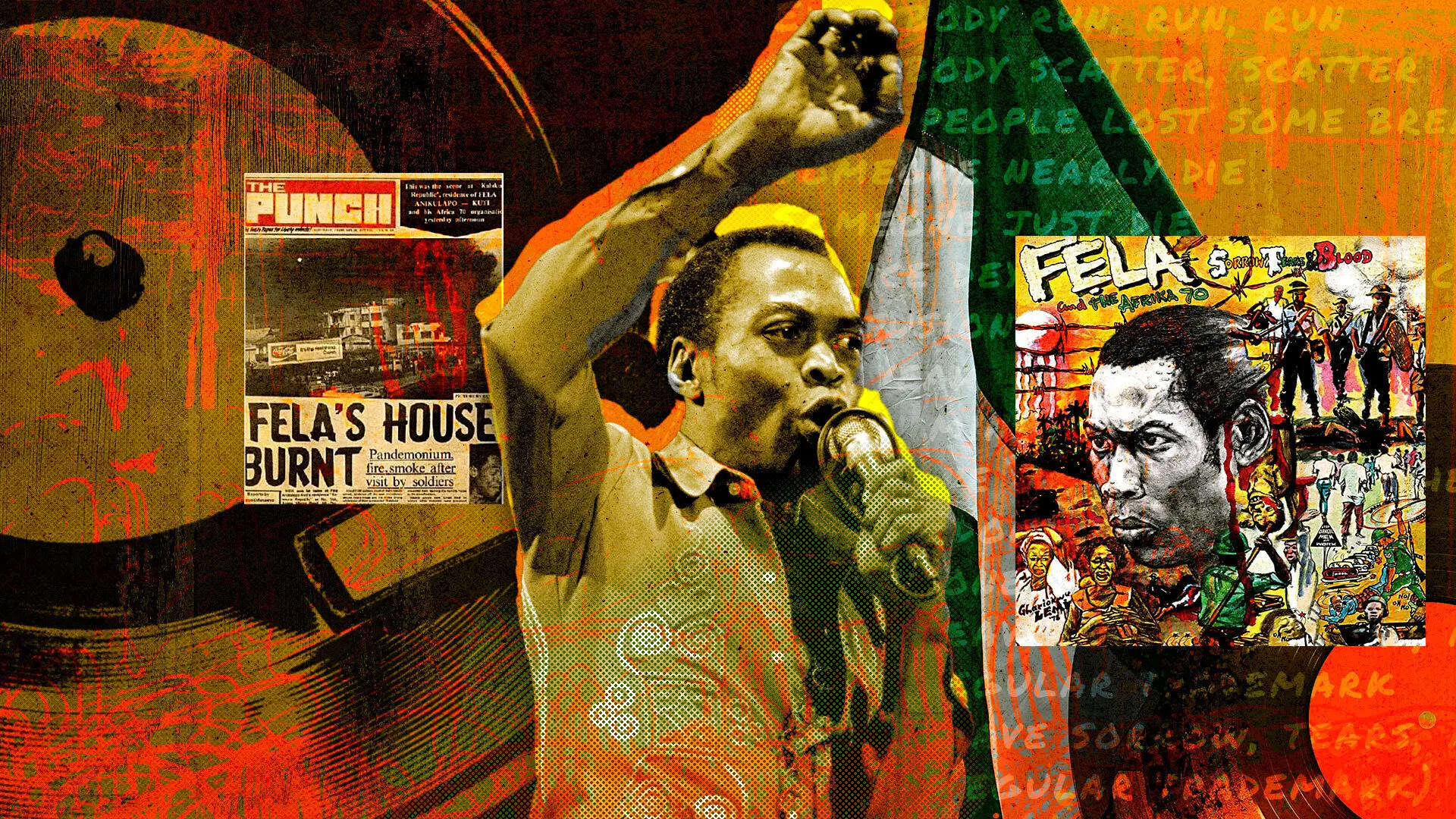
The musician and activist Fela Aníkúlápó Kútì created Afrobeat, a musical genre that was also a powerful Pan-African movement. Fela’s music blended jazz, highlife, and traditional Yoruba rhythms with politically charged lyrics that directly challenged government corruption, social injustice, and human rights abuses. His songs, such as “Zombie” and “Colonial Mentality,” mocked the blind obedience of soldiers and criticized African elites for perpetuating a “colonial mentality” that kept the continent in a state of neo-colonial subjugation.
Fela’s Pan-Africanism was not confined to his music; it was embodied in his communal homestead, the “Kalakuta Republic” in Lagos. This space served as a sanctuary for artists and activists and was a physical manifestation of his vision for an Africa free from external and internal oppression. The brutal military raid on the commune, which resulted in the death of his mother and the destruction of his property, underscored the dangers of his defiance. This event solidified his status as a martyr for the cause and showed that the struggle for true independence was not just a philosophical one but a literal, life-or-death battle against both colonial blueprints and their local proxies.
The intellectual and cultural contributions of figures like Soyinka and Fela resonate with Nnamdi Azikiwe’s early philosophy. They collectively emphasize that true liberation requires “mental decolonization”. Azikiwe theorized this concept, Soyinka offered a nuanced critique of its romanticized forms, and Fela lived it through his music and defiant lifestyle. The brutality of the state’s response to Fela’s activism demonstrated that the struggle to truly “release yourself” from a colonial mindset was a physically dangerous endeavor, a battle to be fought on the streets and in the mind.
VI. Challenges, Contradictions, and Contemporary Critiques
While Nigeria’s contributions to Pan-Africanism have been significant, the country’s trajectory has been consistently hampered by profound internal challenges. These domestic issues have often created a dissonance between Nigeria’s stated foreign policy ambitions and its ability to act as a credible and consistent leader.
The Impact of Domestic Instability
Nigeria’s political history is marked by a series of military coups that undermined democratic governance and damaged the nation’s international standing. From 1966 to 1999, the country was ruled by successive military regimes. This era was particularly detrimental to Nigeria’s foreign policy image, as human rights abuses, political repression, and financial waste tarnished its reputation abroad. The annulment of the June 12, 1993, election and the execution of the “Ogoni Nine” activists, including Ken Saro-Wiwa, solidified Nigeria’s status as a “pariah state” in the eyes of the international community.
During this period, Nigerian diplomats struggled to defend the regime’s actions, clinging to an “obsolete definition of national sovereignty” that argued human rights were purely internal affairs. This stance was at odds with the evolving norms of international relations, where human rights and good governance were becoming increasingly important determinants of foreign policy. The inability of officials to counter the negative international press left Nigeria with a deeply “deteriorated image abroad” that would take years to correct.
The Waning of a Giant’s Influence
In the 21st century, Nigeria’s diplomatic influence has receded, as its leaders have become increasingly preoccupied with domestic crises. Political instability, acute security threats from non-state actors, and a distressed economy have diverted focus, funding, and personnel away from external relations. The rise of other continental powers, most notably post-apartheid South Africa, has also challenged Nigeria’s long-held status as the sole diplomatic heavyweight.
Recent events highlight this diminished stature. As the chairman of ECOWAS, the administration of President Bola Tinubu miscalculated its strong response to the 2023 coup in Niger, leading three military-ruled Sahelian states—Niger, Mali, and Burkina Faso—to break away from the bloc. This action has further eroded Nigeria’s regional influence and complicated its efforts to promote stability and integration in West Africa. At the same time, smaller states are more willing to assert their sovereignty and reject intervention from their larger neighbor.
Table 4: Factors Limiting Nigeria’s Pan-African Leadership (1999-Present)
| Factor | Description |
| Domestic Political Flux | Insecurity, political instability, and a distressed economy have diverted leadership focus and resources from foreign policy. |
| Rise of Other Powers | The emergence of post-apartheid South Africa has challenged Nigeria’s traditional diplomatic pre-eminence. |
| Leadership Shifts | Successive administrations after President Olusegun Obasanjo have presided over a period of diminished diplomatic influence. |
| Policy Miscalculations | The recent strong response to the coup in Niger led to three Sahelian states seceding from ECOWAS, diminishing Nigeria’s regional influence. |
| Assertion of Sovereignty | Smaller West African states have become more assertive, rejecting intervention from their larger neighbor, Nigeria. |
VII. Conclusion: A Legacy of Ambition and Paradox
Nigeria’s contributions to Pan-Africanism are a complex tapestry of ideological fervor, pragmatic diplomacy, and the paradoxical use of force. The country’s history as the self-proclaimed “Giant of Africa” has fueled a consistent and ambitious foreign policy centered on continental unity and liberation. From the philosophical underpinnings of Azikiwe’s “Zikism” to Balewa’s pragmatic gradualism and Awolowo’s federalist socialism, Nigerian leaders have articulated diverse yet compelling visions for African progress.
The nation’s diplomatic and military actions have left an indelible mark. Its principled stand against apartheid, backed by tangible economic and military sanctions, was a crucial part of the fight against white minority rule. The ECOMOG interventions, while costly and controversial, demonstrated a willingness to use force to restore peace and democracy in a region where such initiatives were rare.
Yet, this legacy is fraught with paradox and contradiction. The nation that championed non-interference in the OAU was the first to intervene militarily in its neighbors’ conflicts. The military that led a Pan-African peacekeeping force was simultaneously suppressing dissent and democratic aspirations at home. The economic powerhouse that bankrolls regional integration has struggled with internal governance issues that make its own businesses wary of free trade.
To reclaim its leadership mantle in the 21st century, Nigeria must bridge the gap between its Pan-African aspirations and its domestic realities. Its internal challenges—corruption, insecurity, and political instability—must be addressed decisively to build the institutional and ethical foundation required for credible leadership. True leadership will not come from mere proclamations but from demonstrating, through stable governance and tangible progress at home, that Nigeria can be a model for the continent. The future of Nigeria’s Pan-Africanism lies not in repeating the past, but in forging a new, more sustainable path—one where a strong and prosperous Nigeria serves as a beacon for a continent that is truly unified, both in spirit and in practice.










Related Posts

Stay Informed With the Latest & Most Important News
Previous Post
Next Post
Advertisement