Now Reading: The Royal Houses of Nigeria: An Examination of Historical Authority and Modern Relevance
-
01
The Royal Houses of Nigeria: An Examination of Historical Authority and Modern Relevance
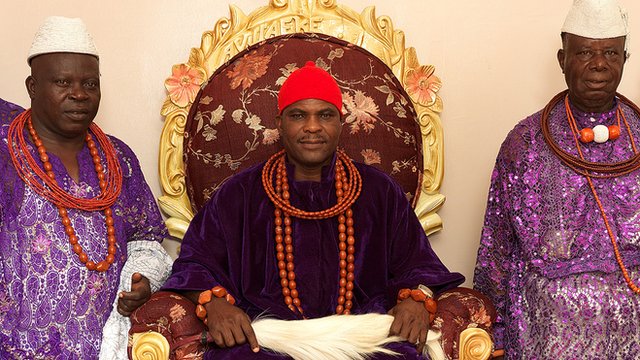
The Royal Houses of Nigeria: An Examination of Historical Authority and Modern Relevance

Introduction: The Enduring Crown in a Modern State
The Royal Houses of Nigeria present a profound paradox, serving as a dynamic link between the nation’s pre-colonial past and its contemporary democratic future. Despite their lack of formal constitutional power, traditional rulers—including kings, emirs, and chiefs—remain influential figures, wielding significant “soft power” that extends into the social, political, and economic fabric of the country. This report provides an exhaustive, expert-level analysis of Nigeria’s traditional monarchies. It begins by dissecting the diverse and sophisticated pre-colonial political systems, examining how their unique structures determined the varied outcomes of British colonialism. The report then transitions to the post-independence era, exploring the paradoxical role of monarchs in a modern democracy, where they are simultaneously custodians of culture and informal power brokers. Finally, it addresses the most critical challenges facing the institution today, from high-stakes political interference to internal succession crises and a decline in public trust. By synthesizing historical data with contemporary case studies, this analysis aims to offer a nuanced understanding of these institutions, revealing their complex and often contradictory position in the Nigerian state.
Part 1: Foundational Systems: The Tapestry of Pre-Colonial Rulership
1.1 The Hausa-Fulani Emirate System: Centralized Islamic Authority
The Hausa-Fulani political system was characterized by a highly centralized, monarchical structure headed by an Emir. This system was the result of a “holy war” led by the Fulani scholar Usman Dan Fodio, which established a new caliphate and replaced the former Hausa kingdoms. The caliphate was divided into numerous emirates, each led by an Emir who was expected to maintain peace, enforce laws, and serve as the supreme ruler of his subjects. The Emir’s power was absolute and authoritarian, even though he was assisted by a number of advisors, including the Waziri, who acted as prime minister and was the head of all officials; the Galadima, in charge of the capital; and the Madaki, the commander of the army.
The core of this system was its religious foundation. The Emir was not only the political head but also the spiritual leader of the emirate, enforcing Sharia (Islamic law) throughout his domain. The judicial administration was managed by Alkali judges, with only the most serious cases going to the Sultan for appeal. At the apex of this hierarchy was the Sultan of Sokoto, the hereditary leader of the Sokoto Caliphate, who held primacy among all of Nigeria’s emirs and was considered the “Commander of the Faithful”. The pre-colonial architecture of the Hausa kingdom, which was made of simple materials such as mud, stones, and corn stalks, reflected this extensive, family-centered structure, forming large, walled housing units that could accommodate a man, his wives, and their children.
This centralized, top-down structure was a key factor in the later implementation of British colonial rule. The British policy of Indirect Rule was predicated on the assumption that they could govern through a single, powerful local authority. The existing Hausa-Fulani system, with its single, absolute ruler who commanded both fear and reverence from his people, provided a ready-made framework for this system. The British simply made the Emirs answerable to them, allowing for an efficient and inexpensive form of governance.
1.2 The Yoruba Kingdom Model: Constitutional Monarchy and Accountability
In contrast to the North, the Yoruba political system was a semi-centralized constitutional monarchy headed by an Oba. This structure was founded on principles of checks and balances, ensuring that no single individual, not even the Oba, could wield autocratic power. The Oba governed with a council of senior chiefs, known as Oloyes, who functioned in a manner similar to a modern parliament or cabinet, advising the ruler and representing various interests. The most powerful of these was the Oyo Mesi, a council of kingmakers led by the Bashorun, who played a crucial role in advising the Oba and selecting a new ruler from the Oranmiyan lineage.
The power of the Oyo Mesi was so substantial that they could compel an Oba to commit ritual suicide if he was deemed unfit for the throne, a practice known as “Awon Eniyan Koo”. While succession was hereditary, it was not absolute, as the Oyo Mesi had the final say in selecting the new Alaafin. The monarch was accountable to his people, and his authority was not considered absolute like that of the Emirs in the North. Traditional Yoruba architecture, characterized by large family compounds and elaborate courtyards, reflected this communal and extended family-based social structure.
The inherent system of checks and balances within the Yoruba political structure made the implementation of British Indirect Rule more complex and less straightforward than in the North. The Oba was not an absolute ruler, and his authority was constrained by other powerful institutions. This meant that the British could not simply co-opt a single figure to govern an entire populace. The system of Indirect Rule was therefore only “partially successful” in the West, as the pre-colonial structure, while more centralized than the Igbo’s, was not as perfectly suited to the British model of top-down, authoritarian control.
1.3 The Igbo Acephalous Society: A Decentralized “Republic”
The Igbo political system was fundamentally distinct from both the Hausa-Fulani and Yoruba models, being an acephalous society that lacked a centralized monarchy or a single paramount ruler. Instead of a king, governance was decentralized, with power distributed among titled elders (Okpara), age grades, and a general assembly of the entire village. The Okpara, or first son/eldest male, served as the head of a family compound and led the family unit, but his power did not extend beyond his immediate village. This ensured that political decisions were made by collective consensus, not by a single authority figure. Traditional Igbo houses were predominantly round-walled mud houses with thatched roofs, and the most important structure within a family compound was the Obi, or meeting house, where the head of the family entertained guests and kept his altars. This architectural style, often a single entrance and exit, reflected the tight-knit family unit that formed the bedrock of the decentralized system.
This decentralized, republican political structure was in direct opposition to the British policy of Indirect Rule, which assumed the existence of a centralized, hierarchical system of governance. With no pre-existing kings or chiefs to rule through, the British were compelled to create their own. This led to the creation of the “Warrant Chiefs,” an artificial and deeply flawed chieftaincy system that fundamentally disrupted the Igbo social order. The fact that the British had to invent a ruling class highlights a profound misunderstanding or deliberate disregard for the existing political complexities of the region, which created “divisions and confusion that did not previously exist”.
1.4 A Case Study in Sovereignty: The Oba of Benin
The Oba of Benin is the traditional ruler and custodian of the culture of the Edo people, with a dynasty dating back to around 1300 C.E.. The Oba was considered a divine ruler and the head of the royal cult, with an elevated status that reflected his role as a link between the spiritual and earthly realms. This divine status was powerfully manifested in the kingdom’s renowned court and ceremonial arts. The Oba was the exclusive patron of hereditary artisan guilds, who worked solely to produce the courtly arts of bronze casting and ivory carvings, including the famous “Benin Bronzes”.
These artifacts were far more than mere artistic creations; they were a physical record of the kingdom’s history and the Oba’s imperial power. The commemorative heads were placed on ancestral altars to honor past Obas and validate the accession of a new ruler, while plaques depicted scenes from the kingdom’s history. The artistry was a central component of court rituals and ceremonies, visually communicating the Oba’s power and reinforcing social hierarchies.
The cultural and political significance of these objects was brutally revealed during the British “punitive expedition” of 1897. In retaliation for an ambush of a British party, a force of 1,200 men sacked and burned Benin City, exiling Oba Ovonramwen. To “break the power of the monarchy and to end ritual practices,” the British systematically looted all the royal art treasures. The sale of these artifacts was used to pay for the cost of the expedition. The act of looting was not just a theft of treasure; it was a deliberate and strategic act to dismantle the kingdom’s cultural and political authority. By confiscating the physical symbols of royal and spiritual power, the British sought to psychologically and culturally incapacitate the monarchy, making it easier to impose colonial rule. The Oba’s title was eventually restored to his son, Eweka II, but the once-sovereign throne was now a colonial vassalage.
Part 2: Transformation and Erosion: The Colonial Encounter
2.1 The Philosophy of Indirect Rule: Efficiency and Co-option
The British colonial administration, under Lord Frederick Lugard, implemented a system of “Indirect Rule” in Nigeria in the early 20th century. This policy was not a benevolent effort to preserve indigenous traditions but a calculated strategy rooted in pragmatism, efficiency, and control. The primary reasons for adopting Indirect Rule were logistical and financial: the British lacked the adequate personnel and finances to govern directly, and using existing traditional structures was “way cheaper”.
By employing traditional rulers as intermediaries, the British could govern their vast colony with minimal manpower, thereby reducing the risk of insurrection and the associated costs. This system was designed to allow local chiefs and emirs to maintain some degree of authority, but their power was ultimately subordinate to British officials. The British used the cultural legitimacy of these rulers to their advantage, recognizing them as “the priests of indirect rule” to reduce resistance. However, this was a coercive relationship. Rulers who welcomed the British were integrated, while those who resisted, like Jaja of Opobo and Nana Olomu, were either “banished or killed and then replaced”. The rulers were not partners but “stooges and employees” of the colonial administration, with no power to act independently. This initial co-option sowed the seeds of a future in which traditional legitimacy would be perpetually tied to external political forces.
2.2 A Tale of Three Regions: Varied Outcomes of a Single Policy
The uniform application of Indirect Rule, a policy designed for a centralized state, yielded dramatically different results across Nigeria’s diverse regions. The success of the policy was directly correlated with the degree of pre-colonial centralization in a given area.
- Northern Nigeria: Indirect Rule was most “robust” and “successful” in the North. This was due to the existing centralized traditional administration of the Hausa-Fulani emirates, where the Emir was already an absolute ruler. The British simply made the Emirs “answerable to the British officials” and worked “behind the scenes” to exercise veto power, with minimal disruption to the existing societal structure.
- Western Nigeria: The policy was only “partially successful” in the West. While the Yoruba political system was semi-centralized and the people were accustomed to paying taxes, the principle of checks and balances on the Oba’s power made it less receptive to the British model of governance. The British exploited the Obas’ lack of Western education, having them sign treaties in English, a language they did not understand. This dynamic led to a more complex and less “pliant” colonial experience compared to the North.
- Eastern Nigeria: In the East, the policy was a catastrophic failure. The Igbo society’s acephalous structure—lacking a paramount ruler or a centralized government—made it impossible for the British to find an existing authority figure to rule through. Their solution was to invent “Warrant Chiefs,” giving them a “warrant to rule” and investing them with unprecedented legislative and executive powers. These chiefs, lacking traditional legitimacy, quickly became corrupt and tyrannical, leading to widespread exploitation and resentment. This disastrous experiment created deep-seated divisions and confusion that had not existed before.
This varied reception demonstrates that Indirect Rule was a blunt instrument that failed to account for the rich tapestry of Nigeria’s political history, ultimately laying the groundwork for future conflicts and exacerbating ethnic tensions.
2.3 The Failed Experiment: The Warrant Chiefs of Igboland
The Warrant Chief system was the most profound and destructive consequence of Indirect Rule. Lacking any centralized authority in Igboland, the British created “artificial chiefs” to serve as local administrators and collect taxes on their behalf. These men, who were given “certificates of recognition” by the colonial government, were granted immense power—including legislative, executive, and judicial functions—that had no basis in traditional Igbo society.
Unsurprisingly, these appointed chiefs, lacking traditional checks and balances, became “autocratic and ruthless”. They were seen as “corrupt ‘miniature tyrants'” who protected British interests over the interests of the natives. The public’s resentment grew, fueled by the chiefs’ oppressive acts, which included seizing property, imposing draconian regulations, and demanding women for wives.
This deep-seated anger culminated in the Aba Women’s War of 1929. While the immediate catalyst was a rumor of a tax being levied on women, the protest was a broader rejection of the entire Warrant Chief system and the British disregard for traditional social order. Over 25,000 women organized a massive, mostly non-violent revolt, attacking native courts and forcing some Warrant Chiefs to resign. The British response was brutal; they fired into crowds, killing over 50 women. The uprising, however, was a historic success. It prompted the colonial authorities to abandon their plans to tax women and to curb the power of the Warrant Chiefs. It stands as a historic example of resistance to a colonial policy that was fundamentally incompatible with indigenous society.
2.4 The Punitive Expedition and its Legacy
The British punitive expedition against the Kingdom of Benin in 1897 served as a clear, violent warning to all Nigerian monarchies. The expedition was launched in retaliation for the ambush of a British party, which resulted in the deaths of six British officials and nearly 200 African porters. The British force, comprising 1,200 men, captured Benin City, sacked and burned the palace, and forced Oba Ovonramwen N’Ogbaise into exile.
The expedition’s primary objective was to “break the power of the monarchy” and to end ritual practices. To achieve this, the British looted the royal art treasures, including thousands of metal plaques and sculptures known as the Benin Bronzes. These artworks, which were integral to the Oba’s divine and political authority, were sold off to pay for the expedition’s costs, serving a dual purpose of conquest and self-financing. The systematic removal of these physical symbols of power was a calculated move to psychologically and culturally break the will of the Edo people and their ruler.
Oba Ovonramwen died in exile in 1914, his throne never having been restored. His son, Eweka II, was installed as Oba, but the monarchy was no longer sovereign. The incident effectively ended any armed resistance from other monarchies and cemented the colonial government’s authority. The Oba’s title was preserved, but his political independence was lost forever, transforming him from a divine monarch into a colonial vassal and setting a brutal precedent for the relationship between the crown and external powers.
Part 3: The Enduring Paradox: Roles in a Modern Democracy
3.1 The Ceremonial Crown: A Constitutional Void
In modern Nigeria, traditional rulers occupy a paradoxical position. They are non-sovereign monarchs who derive their titles from independent states that existed prior to the country’s formation. However, the Nigerian Constitution grants them no formal political power or legislative authority. The 1979, 1989, and 1999 constitutions, in their efforts to establish a modern democratic state, have been criticized for their ambiguity, creating confusion around the institutional roles of monarchs.
The absence of a clear, legally defined role means that the influence of traditional rulers is neither protected nor constrained by law. This constitutional void makes the institution vulnerable to manipulation by state governors and other political figures, who can weaponize their legal authority to interfere in succession or even depose monarchs who do not align with their interests. Simultaneously, this same ambiguity allows monarchs to operate in an informal sphere of influence, leveraging their traditional legitimacy for political and economic gain. This situation often leads to conflicts and power struggles with the democratic government, as seen in the recent Kano Emirate crisis.
3.2 The Power Behind the Throne: The Role of Soft Power
Despite their lack of formal power, traditional rulers are not irrelevant. On the contrary, they remain highly respected and influential figures, particularly at the grassroots level. Their enduring relevance stems from their status as custodians of a pre-colonial cultural identity that modern institutions have been unable to replicate. They serve as a crucial intermediary between the government and the populace, articulating community concerns to policymakers and helping to implement government policies that might otherwise be met with resistance.
The influence of a traditional ruler extends far beyond his ceremonial title; he sits atop a network of indigenous governing systems that include chiefs and other titled individuals. They perform vital functions that the overburdened Nigerian state is often ill-equipped to handle, particularly in rural communities. Their ability to motivate and mobilize the populace for government initiatives is often a function of their cognitive skills and ability to inspire trust, not just their formal education. The effectiveness of traditional rulers in these informal roles is directly proportional to the institutional weakness of the formal government. In areas where state bureaucracy is inadequate, the monarch’s role as an “institutional safety-valve” becomes critical.
3.3 Custodians of Culture and Community Identity
A key function of traditional rulers in modern Nigeria is the preservation and transmission of the nation’s diverse cultures, traditions, and customs. They are the guardians of a collective memory, ensuring the continuity of traditional festivals, ceremonies, and rituals that foster a sense of identity and unity among ethnic groups. This role has been recognized by government officials, who have called for a partnership with traditional institutions to deepen grassroots development and deliver democratic dividends. An example of this is the “Remo monarchs retreat,” where traditional rulers came together to discuss community development and their role as catalysts for progress.
In addition to their cultural roles, monarchs are highly effective in mediating and resolving conflicts within their communities. Their deep knowledge of traditional laws and customs, combined with the respect and authority they command, makes them trusted figures capable of de-escalating disputes and maintaining social harmony. The informal justice system they preside over is often seen as more effective than official mechanisms, particularly in matters like land and communal disputes. This capacity for grassroots conflict resolution provides a vital function that complements the formal legal system and is a testament to the enduring practical value of the traditional institution.
| Formal/Constitutional Powers | Informal/Actual Roles | |
| Legal Authority | None specified in the constitution. | Serves as an intermediary between government and the populace. |
| Law and Order | No formal role in law enforcement or judiciary. | Mediates local conflicts and resolves disputes. |
| Governance | No role in democratic law-making or administration. | Facilitates community development and mobilizes support for government projects. |
| Funding | Public funding from the state. | Awards traditional and honorary titles for political and economic influence. |
| Legitimacy | None. | Custodian of culture, customs, and traditions. |
| Scope of Influence | No official jurisdiction. | Commands respect and loyalty from a community or ethnic group. |
Export to Sheets
The table above illustrates the central paradox of traditional rulership in modern Nigeria, where the absence of formal power is offset by extensive informal influence, creating a complex and often unpredictable relationship with the state.
Part 4: Case Studies in Conflict and Controversy
4.1 The Kano Emirate Crisis: The High-Stakes Game of Political Interference
The Kano Emirate crisis is a powerful example of how state-level politics has co-opted and destabilized traditional institutions. The feud began in 2014 with the controversial enthronement of Muhammadu Sanusi II, a former Central Bank Governor with a history of speaking out against corruption, which was seen by some as a politically motivated appointment. Sanusi quickly gained a reputation for being outspoken, breaking from traditional palace etiquette and commenting on local government politics.
This culminated in his deposition in March 2020 by the then-state governor, who accused him of “total disrespect”. Sanusi was exiled, and Aminu Ado Bayero was installed as the new Emir. The crisis, however, did not end there. In a stunning reversal in May 2024, a new governor reinstated Sanusi II and abolished the new emirates that had been created to weaken the Emirate of Kano. This action triggered a legal and political firestorm, with two different courts issuing conflicting orders: a Federal High Court ordered Sanusi’s removal, while a Kano State High Court protected him from eviction and harassment. The ongoing battle in Kano reveals the complete subordination of traditional processes to modern political power struggles, where the throne is treated as a prize to be won by whichever party is in power.
4.2 The Battle for Supremacy: The Oyo-Ife Royal Feud
A long-standing and highly public feud exists between the Alaafin of Oyo and the Ooni of Ife, two of the most revered monarchs in Yorubaland. This rivalry, which has resurfaced in recent years, is not merely a personal spat but an ongoing debate over the very hierarchy and nature of Yoruba traditional leadership. The latest public spat erupted when the Alaafin of Oyo issued a 48-hour ultimatum to the Ooni of Ife, demanding that he revoke a pan-Yoruba chieftaincy title conferred on a businessman.
The Alaafin argues that he holds the “exclusive right” to confer titles covering the entire Yorubaland, citing historical precedence and a Supreme Court judgment to support his claim. The Ooni’s supporters, however, contend that his spiritual supremacy as the head of all Yoruba lineages transcends provincial boundaries, making him the legitimate authority for such titles. This ongoing dispute highlights the lack of a clear, codified hierarchy among the Yoruba kingdoms and the continued struggle for soft power and influence. The feud is a direct consequence of the British colonial practice of dividing Yorubaland into separate provinces, which created jurisdictional ambiguities that persist to this day.
4.3 The Sultanate of Sokoto: Succession, Politics, and Religion
The Sultanate of Sokoto holds a unique position in Nigeria as the spiritual head of Sunni Muslims in the country. While the succession is meant to be determined by the kingmakers from among the descendants of the dynasty’s founder, Usman Dan Fodio, the selection process is not immune to political interference.
A significant precedent for this was set in 1988 when the then-military president of Nigeria, Ibrahim Babangida, imposed Ibrahim Dasuki as Sultan, overriding the kingmakers’ choice of Muhammadu Maccido. This act demonstrated that even the most sacred and revered traditional title could be a tool for national politics. The incident highlights that a traditional ruler’s legitimacy in modern Nigeria is not solely dependent on his lineage or the will of his kingmakers but is also subject to the political climate and the preferences of the modern state’s leadership.
4.4 Localized Scandals and Erosion of Trust
Beyond high-profile political conflicts, the traditional institution is facing a severe crisis of trust due to a surge in localized scandals and misconduct. The institution, once seen as the final arbiter of justice, is now a “laughingstock” in some quarters, with reports of monarchs involved in criminal activities such as illegal mining, land-grabbing, and fraud. In some South-West states, traditional rulers have been indicted for arbitrarily selling off plots of land rich in natural resources, leading to violent crises between farmers and illegal miners. Similarly, in the South-East, some monarchs have been suspended over “suspected inappropriate conduct”.
The emergence of “ignoble persons” as monarchs reflects a broader national crisis of governance and ethics. Lacking the formal constitutional checks and balances of a democratic system, the traditional institution has become susceptible to the same rot that plagues other sectors of Nigerian society. The failure of local councils to investigate and prosecute monarchs involved in criminality demonstrates a breakdown of oversight, allowing some rulers to abuse their informal power for personal gain. This erosion of public trust poses a fundamental threat to the institution’s long-term relevance and its claim to be a moral and cultural authority.
Conclusion: The Future of the Nigerian Royal Houses
The analysis of Nigeria’s royal houses reveals a complex and often contradictory story of power, tradition, and adaptation. The report demonstrates that the fate of these institutions has always been inextricably linked to the broader political landscape, from their pre-colonial structures that determined the success or failure of British Indirect Rule to their modern-day struggles against political interference and internal conflicts.
The central paradox is that while traditional rulers are custodians of a heritage that provides unity and identity, they lack the legal framework to protect their institutions from manipulation. Their “soft power,” while crucial for community development and conflict resolution, is also a source of vulnerability, as it makes them valuable assets in the high-stakes game of modern Nigerian politics. The conflicts and scandals detailed in this report are not isolated incidents but symptoms of a larger systemic issue: the enduring tension between pre-colonial authority and a post-colonial democratic state that has yet to define a formal, mutually beneficial relationship with its traditional leaders.
The future of these royal houses depends on a dual process of internal and external reform. Internally, the institutions must address the corruption and unethical conduct that are eroding public trust and the legitimacy of their titles. Externally, the Nigerian state must resolve the constitutional ambiguity that leaves these institutions in a precarious position. By providing a clear legal framework that formalizes the monarchs’ roles in areas where they are most effective—such as customary law, conflict mediation, and community development—Nigeria can harness the positive influence of its traditional institutions for public good, ensuring their survival in the 21st century.










Related Posts


Stay Informed With the Latest & Most Important News

Advertisement