Now Reading: A Scrutiny of a Legend: The Life and Enduring Literary Legacy of Chinua Achebe
-
01
A Scrutiny of a Legend: The Life and Enduring Literary Legacy of Chinua Achebe
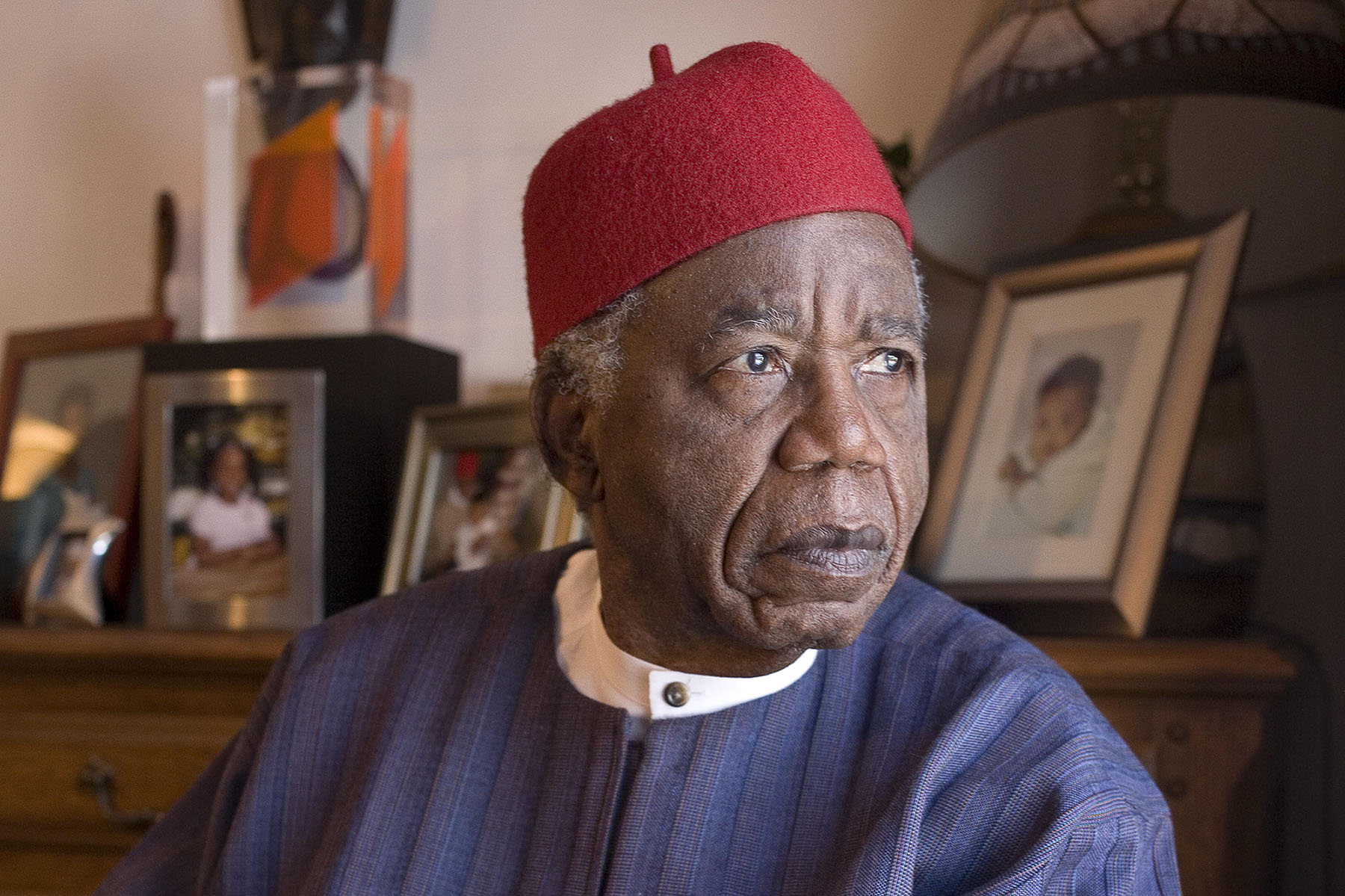
A Scrutiny of a Legend: The Life and Enduring Literary Legacy of Chinua Achebe

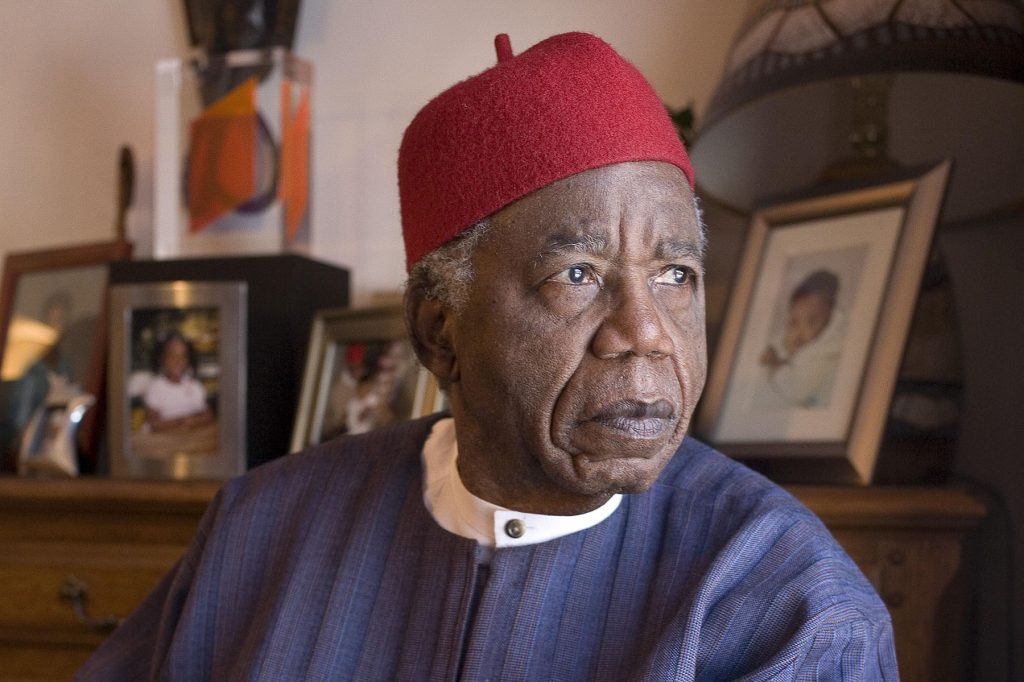
I. Introduction: The Man Who Gave Modern Africa a Voice
The Intellectual and Historical Significance of Chinua Achebe
Chinua Achebe is celebrated as a foundational figure in modern African literature and a global intellectual whose work fundamentally altered the world’s perception of Africa. His novels, essays, and poems provided a powerful and “unsentimental” counter-narrative to the prevailing Eurocentric views of the continent that had dominated literary discourse for centuries. Achebe is often hailed as the “father of modern African writing,” a title that, while he humbly rejected it, reflects his monumental influence on the African literary renaissance that paralleled the decolonization of the continent in the mid-20th century. His particular concern was with “emergent Africa at its moments of crisis”. He meticulously explored the social and psychological disorientation that accompanied the imposition of Western values and customs upon traditional African societies, discussing the destructive and often violent effects of external forces on indigenous peoples. In doing so, he challenged the popular belief of his time that Westernization was a beneficial and essential process for Africa.
Purpose and Scope of the Report
This report aims to move beyond a simple chronological biography to provide a scholarly, integrated analysis of Chinua Achebe’s life and work. It will contextualize his intellectual and artistic evolution within the major political and cultural shifts of the 20th century, particularly the Nigerian Civil War. The analysis will delve into his intellectual formation, the profound context and impact of his seminal works, his political activism, and his enduring global legacy. The report synthesizes information from a wide range of sources to offer a multi-layered understanding of his influence, demonstrating how his personal experiences were inextricably linked to the grand narratives of his nation and continent.
II. The Crucible of Ogidi: Early Life and Intellectual Formation
The Dual Heritage: Navigating Igbo Tradition and Christian Evangelicalism
Born Albert Chinụalụmọgụ Achebe on November 16, 1930, in the village of Ogidi, which was then a part of Colonial Nigeria, Achebe’s life began at a “crossroads of traditional culture and Christian influence”. His parents, Isaiah Okafo Achebe and Janet Anaenechi Iloegbunam, were early converts to the Protestant Church Mission Society (CMS) in Nigeria, with his father working as a teacher and evangelist. This Christian evangelical upbringing provided the young Achebe with an early foundation in English and Western values. However, this Christian influence existed alongside a profound connection to Igbo traditions. His father’s uncle, Chief Udoh Osinyi, was a titled leader in Ogidi who, while tolerant of his nephew’s new faith, staunchly refused to convert. This provided a living example of a respected, traditional Igbo world that coexisted with the new Christian order.
This juxtaposition of cultures was not merely a biographical footnote; it was a formative experience that would become the central creative engine for his life’s work. The internal conflict between ancestral wisdom and colonial religion, between the oral traditions of his mother and sister and the prose of Bunyan and Shakespeare, provided a deep well of inspiration. This firsthand experience of clashing worldviews allowed Achebe to portray the pre-colonial Igbo world with genuine sympathy and to explore with profound nuance the psychological and social breakdown that occurred when these two forces collided. He did not have to imagine the divide; he lived it, observing the conflicts between his father and great-uncle and pondering “the essence, the meaning, the worldview of both religions”. This unique vantage point would enable him to create narratives that were not just chronicles of history, but deeply human accounts of cultural schism.
Education and the “Aha!” Moment: From Medicine to Literary Studies
Achebe was a brilliant student from an early age. He excelled in his primary education at St. Philips’ Central School, where he was quickly moved to a higher class after the school’s chaplain recognized his intelligence. At age 14, he was one of the few boys selected to attend the prestigious Government College at Umuahia, an elite institution that produced many of Nigeria’s most influential writers. His education continued in 1948 when he enrolled at University College, Ibadan, a new school associated with the University of London. He initially pursued a degree in medicine, but after a year, he made a pivotal decision to switch to English literary studies.
It was at the University College that he experienced a profound intellectual awakening. He read canonical Western literature by authors like Shakespeare, Conrad, and Dickens, but he was particularly struck by how Western writers depicted Africa. Works such as Joyce Cary’s
Mister Johnson and Joseph Conrad’s Heart of Darkness were standard reading, but Achebe and his classmates found them to be “insulting and racist”. They were repulsed by the portrayal of Africa as a “wild, ‘dark,’ and uncivilized continent” and its people as “savages”. Achebe later reflected that it was not immediately clear to him that he was one of those “savages,” but the realization eventually solidified his conviction. Achebe’s education, initially a tool of the colonial “civilizing mission,” thus became the very mechanism he would use to subvert the colonial narrative. He chose to pivot from medicine to literature, not to heal the body, but to mend the collective historical consciousness of his people.
A New Mission: The Imperative to Tell the African Story from Within
This “aha” moment led to the core conviction that would define his life’s work: “the story we [Africans] had to tell could not be told for us by anyone else, no matter how gifted or well-intentioned”. Recognizing the deep misrepresentation of his culture in Western literature, Achebe made it his life’s mission to “effectively and realistically” communicate the stories of the African people, particularly the Igbo civilization. His purpose was to portray the richness and complexity of his native culture accurately and to challenge the dehumanizing narratives that had long been perpetuated by colonial writers. This marked a foundational moment in modern African literature, as he dedicated himself to the monumental task of reclaiming and rewriting a history that had been taken from his people.
III. The Narrative of Restitution: The Triumph of Things Fall Apart
Contextualizing the Novel: A Response to European Caricature
Achebe’s debut novel, Things Fall Apart, published in 1958, was a direct and powerful response to the prevailing literary tradition that portrayed Africa as a “savage place devoid of culture before the arrival of the white man”. For decades, the narrative of the “dark continent” was crafted almost exclusively by European authors, with works like Joseph Conrad’s
Heart of Darkness and Joyce Cary’s Mister Johnson setting the standard. Achebe felt that these novels, despite their critical acclaim in the West, reinforced racist stereotypes and were a profound misrepresentation of African societies and their people.
Things Fall Apart was conceived as an intentional effort to “break apart this dominant model” and present the colonial experience from the perspective of the colonized.
An Unprecedented Portrayal: The Richness and Complexity of Pre-Colonial Igbo Society
Achebe’s novel succeeded in this mission by presenting a detailed and sympathetic account of pre-colonial Igbo society. Through the story of Okonkwo and his village, Achebe provides a nuanced and humanized portrayal of a fully functioning civilization with its own complex social structures, judicial systems, and religious beliefs, long before the arrival of Europeans. This work functions as an “act of restitution,” defending the prior existence of an autonomous and sophisticated African culture that evolved in response to its own internal dynamics, not merely in reaction to colonialism. The novel also avoids a one-dimensional romanticism of the past by showcasing the imperfections of Igbo society, such as rigid gender roles and the harshness of certain traditions, thus providing a truthful, multi-faceted depiction of the world that was on the brink of change.
The Craft of the Master Storyteller: An Analysis of Achebe’s Literary Style and his Strategic Use of Proverbs and Oral Tradition
A central element of Achebe’s genius was his unique literary style, which effectively bridged the gap between African oral traditions and Western literary forms. He wrote in English, the language of the colonizer, but strategically infused his prose with the rhythms and linguistic features of the Igbo language. This was not a concession to Western audiences; rather, it was a profound act of literary decolonization. By bending the English language to serve the narratives of the colonized, Achebe proved that the colonizer’s language could be re-appropriated and transformed into a powerful tool for cultural assertion and identity.
Achebe’s use of proverbs is the most prominent example of this strategy. As he famously declared in the novel, “the art of conversation is regarded very highly, and proverbs are the palm oil with which words are eaten”. This powerful analogy highlights that proverbs are not mere decorative phrases; they are the very essence of Igbo communication, acting as repositories of wisdom and philosophical thought. They give depth to his characters, clarify complex issues, and immerse the reader in the intellectual world of the Igbo. This linguistic dexterity simultaneously gave voice to the experiences of colonized peoples and challenged the prevailing literary hierarchies that had previously marginalized or silenced them.
Critical Reception and Global Impact
Upon its publication, Things Fall Apart received “powerful international critical acclaim”. It became a global phenomenon, selling nearly 11 million copies and being translated into over 50 languages. The novel is now a staple on syllabi in high schools and universities around the world, from literature to history and African studies courses. It is widely considered the “archetypal modern African novel” and a cornerstone of African literature, inspiring a new generation of writers, including Helon Habila, Tsitsi Dangarembga, and Chimamanda Ngozi Adichie. In Nigeria, its inclusion in the educational system served to foster a sense of “national pride through the study of Nigerian heritage”. The novel’s enduring popularity and critical recognition demonstrate a profound cultural shift in which the African narrative, once relegated to the periphery, has been rightfully placed at the center of global literary discourse.
IV. A Trilogy of Transition: The Journey from Tradition to Modernity
Thematic Progression in the “African Trilogy” and Beyond
Achebe’s literary output continued to evolve, charting a thematic progression that mirrored the historical trajectory of his nation. While Things Fall Apart examined the cataclysmic first contact with colonialism, his subsequent novels explored the complex realities of life in a modernizing, post-colonial society. His 1960 novel,
No Longer at Ease, follows the story of Okonkwo’s grandson, Obi Okonkwo, as he grapples with the moral and social complexities of urban life in newly independent Nigeria, addressing themes of corruption and cultural identity.
Arrow of God (1964) returns to a rural setting, delving into the erosion of traditional authority and the deep psychological impact of colonialism in the 1920s. Through these works, Achebe continued to demonstrate his concern with the “social and psychological disorientation” that arose from the imposition of Western customs.
Political Satire and Prophecy: The Critique of Corruption in A Man of the People
In 1966, Achebe’s work took a significant turn toward political satire with the publication of A Man of the People. This novel offers a scathing critique of the corruption, moral decay, and political patronage that plagued post-independence African states. The novel gained an eerie, prophetic quality when a military coup occurred in Nigeria just months after its publication, seemingly mirroring the plot. This event underscored Achebe’s profound understanding of the deep-seated issues facing his country. His work in this period reflected a crucial shift in the African writer’s role. While his earlier novels sought to correct the historical record and reclaim the past from colonial misrepresentation, his later works grappled with a more painful reality: the new nation-state’s problems were not solely a legacy of colonialism but were also a result of internal flaws and a “confusion of values” among its new leaders. In this way, Achebe moved from being a chronicler of external imposition to a courageous internal critic, using his pen to hold his own people accountable in the pursuit of a just and moral society.
V. A Writer in a Time of War: The Biafran Conflict and its Aftermath
Political Engagement: Achebe’s Role as a Biafran Diplomat and Intellectual
Achebe’s prophetic warnings in A Man of the People became a tragic reality with the outbreak of the Nigerian Civil War (1967-1970). The conflict was rooted in ethno-religious tensions, a series of coups, and the attempted secession of the Igbo-dominated eastern region to form the Republic of Biafra. Achebe, a native Igbo, was a staunch supporter of Biafran independence and became an active participant in the struggle. He served as a diplomatic envoy for the new republic, traveling to Europe and North America to appeal for international aid on behalf of the people ravaged by the war.
His decision to engage politically was the logical culmination of his intellectual mission. He had spent his career writing about the clashing of cultures and the need for African self-representation; when this clash erupted into violent reality, he put his life and influence on the line to support the cause he had championed in his art. The war, in his view, was the ultimate manifestation of the “confusion of values” he had warned about in his essays, where the newly independent nation-state had inherited the corrupt practices of colonialism.
The Literary Witness: “Civil Peace” and Other Works
The civil war had a profound impact on Achebe’s writing. During the 30-month conflict, he retreated from long-form fiction, instead focusing on poetry and short stories. His short story “Civil Peace” (1971) is a poignant reflection on the human experience in post-war Nigeria, offering a “wry” and sober depiction of a society where peace is not an absence of conflict but a mirror image of the war itself, with the same human frailties continuing to drive behavior. The story captures the immense trauma and resilience of the Igbo people, exemplified by the optimistic protagonist, Jonathan Iwegbu, who finds “five inestimable blessings” after the war.
A Personal History: The Enduring Questions in There Was a Country
Decades later, in his 2012 memoir, There Was a Country: A Personal History of Biafra, Achebe broke a 40-year silence to offer his personal account of the war. The book provides a deeply human perspective that stands in stark contrast to the sanitized, “televised history” of starving children that dominated international media. Achebe was unsparing in his critique, challenging the popular perception that the post-war policy of “No Victor, No Vanquished” led to a successful reconciliation. He highlighted how government policies had, in fact, “wiped out the savings of every Biafran” and that a continued “anti-meritocratic suppression of the Igbo people” continued to haunt Nigeria. The memoir served not just as a historical document but as a final, urgent call for Nigeria to confront the “insalubrious aspects of its history” in order to heal.
VI. Scholar, Mentor, and Global Elder: The Lasting Legacy
Life and Work in America: His Academic Career and Continued Activism
Following the civil war, Achebe embarked on a distinguished academic career, teaching at universities in Nigeria and the United States. He spent periods as a professor at the University of Massachusetts at Amherst and the University of Connecticut, before a permanent return to the United States. In 1990, a car accident in Lagos, Nigeria, left him partially paralyzed from the waist down. Despite this immense personal tragedy, Achebe continued his work tirelessly for over two decades from his wheelchair, lecturing, writing, and teaching. He became the Charles P. Stevenson Jr. Professor Emeritus of Languages and Literature at Bard College, a position he held for 19 years, and later joined the faculty at Brown University in 2009.
The Honor Roll: A Detailed Accounting of Major Awards and Distinctions
The sheer volume and international scope of the awards and honorary degrees Achebe received throughout his life are not just a measure of his personal success but a powerful indication of the global recognition and formal integration of African literature into the global canon. He was awarded over 40 honorary degrees from universities in Africa, Europe, and North America, including Harvard and Brown. His literary accolades were equally impressive, encompassing prizes from diverse fields that demonstrate the breadth of his influence. The following table provides a selection of his most prominent honors.
| Year | Award/Honor Name | Type of Award | Significance |
| 1972 | Commonwealth Poetry Prize | Literary | Awarded for his collection, Beware, Soul-Brother |
| 1979 | Nigerian National Order of Merit | National | Nigeria’s highest honor for academic work |
| 1992 | Alfred A. Knopf Everyman’s Library inclusion | Literary | First living author to be included |
| 2002 | Peace Prize of the German Book Trade | Humanitarian/Literary | An international prize promoting tolerance and understanding |
| 2007 | Man Booker International Prize | Literary | For his lifetime body of work |
| 2010 | Dorothy and Lillian Gish Prize | Arts/Humanitarian | For contributions to humanity’s experience of life |
This list of honors is more than just a roll call of achievements. The awards are a testament to the cultural shift that Achebe himself initiated and nurtured. He worked tirelessly to ensure that the African story was told, and the culmination of his efforts is reflected in the increasing global acceptance and celebration of his work, culminating in the 2007 Man Booker International Prize for his entire body of work.
Challenging the Canon: An Analysis of “An Image of Africa”
Achebe’s legacy extends beyond his novels to his profound and enduring literary criticism. His 1975 lecture, “An Image of Africa: Racism in Conrad’s Heart of Darkness,” remains a foundational text in post-colonial literary studies. In this essay, Achebe famously accused Joseph Conrad of being a “thoroughgoing racist,” arguing that even a celebrated writer could “reduce a foreign civilization to barbarism and menace”. This critique forced the academy to re-evaluate the very foundation of the Western literary canon and to confront the ingrained biases that had long been overlooked in classics of world literature.
The Father of a Continent’s Literature: Achebe’s Influence on Subsequent Generations of Writers
Though he rejected the title, Achebe is widely regarded as the “father of African literature”. He was not content to be a lone voice but actively worked to create a chorus of African storytellers. As the founding editor of the Heinemann African Writers Series from 1962 to 1972, he was instrumental in publishing and nurturing the works of other seminal African authors, thus cementing the foundation for a burgeoning literary movement. His work continues to serve as a beacon and a model for writers who seek to explore cultural identity, challenge stereotypes, and reflect the nuanced realities of their communities. His enduring legacy is preserved not only in the pages of his novels but in the flourishing body of African literature he helped bring to the world stage.
VII. Conclusion: Beyond the Novel
Chinua Achebe’s life was an intricate tapestry woven from the threads of personal experience, national history, and global literary and political movements. He was a man who lived at the intersection of cultures and who, through an act of profound intellectual bravery, turned this dual heritage into the very foundation of his creative mission. His story is a microcosm of Nigeria’s journey from colonization to independence, civil war, and the ongoing struggle for a national identity. He was not merely a chronicler of these events but an active participant and a prophet whose political satire, in a tragic turn of events, became reality.
The enduring relevance of Achebe’s work lies in its timeless insights into cultural identity, the dynamics of power, political corruption, and the human condition. His writings continue to inspire thinkers and writers grappling with these same issues today. He did not just publish novels; he initiated a dialogue, reclaimed a narrative, and built a foundation upon which generations of storytellers could stand. Achebe’s life’s work remains essential for understanding post-colonial literature and for engaging in the broader, ongoing global conversation about the decolonization of storytelling. Sources used in the report










Related Posts

Stay Informed With the Latest & Most Important News
Previous Post
Next Post

Advertisement