Now Reading: Femi Osofisan: Nigeria’s Revolutionary Playwright
-
01
Femi Osofisan: Nigeria’s Revolutionary Playwright
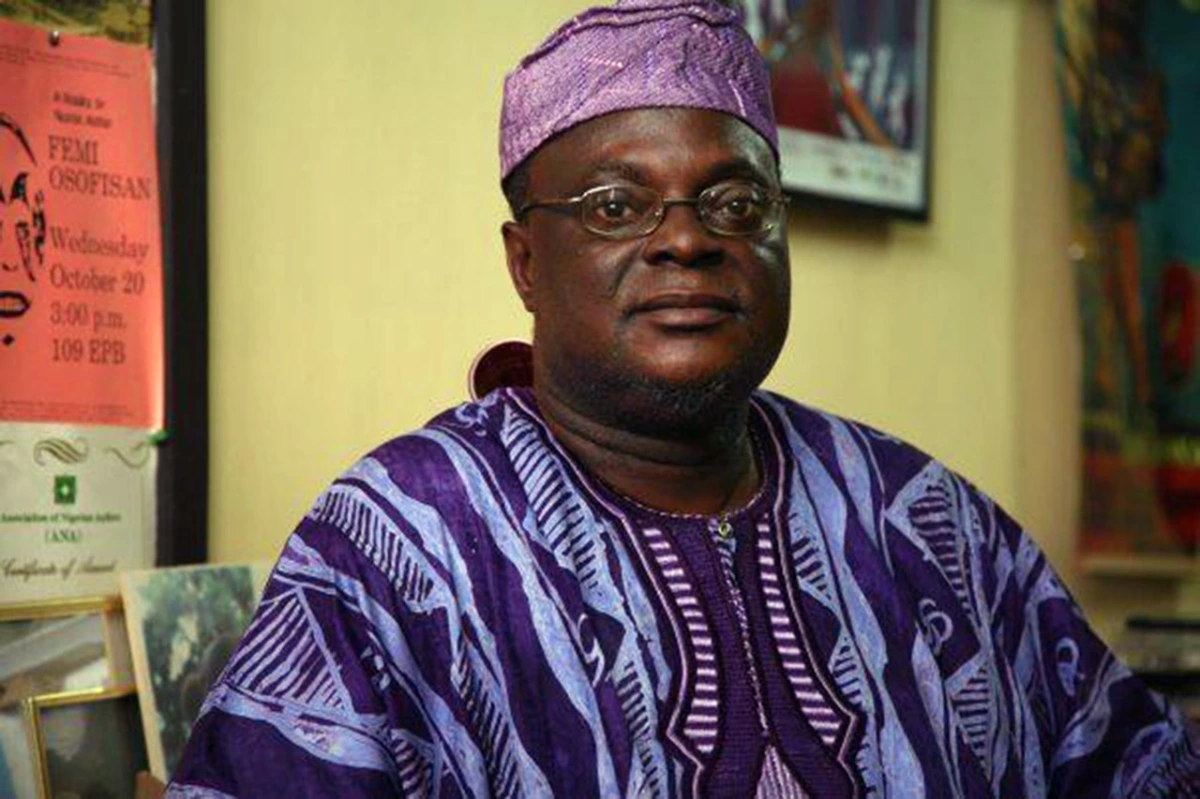

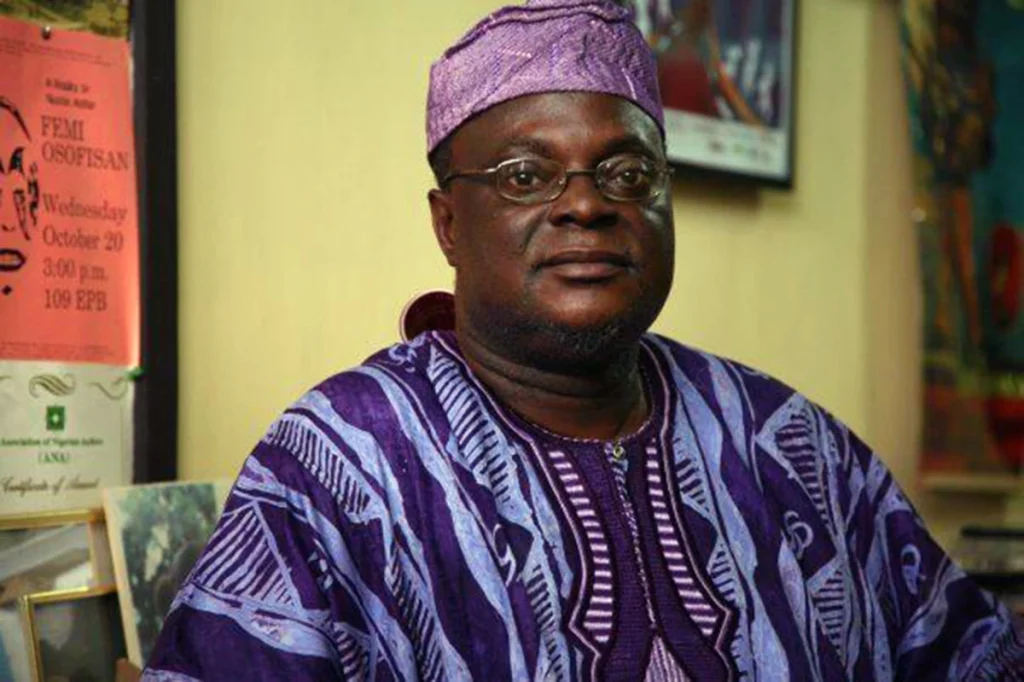
Early Life and Background
Femi Osofisan was born on 16 June 1946 in Erunwon, Ogun State, Nigeria.
He attended University of Ibadan, where he studied French, and later studied at the University of Dakar (Senegal) and the Sorbonne, Paris (Université de Paris III), obtaining advanced degrees in literature and drama.
His multicultural education and upbringing exposed him to Yoruba oral traditions as well as Western classics, both of which profoundly shaped his writing.
Literary Career
Playwriting and Theatre
Osofisan is best known as a playwright, poet, novelist, and critic, with more than 60 plays to his name.
His first major play, A Restless Run of Locusts (1975), established him as a bold new voice in Nigerian drama. Over the decades, his works have been staged across Africa, Europe, and the U.S.
Adaptations and Revolutionary Style
Osofisan is famous for his adaptations of classical and colonial texts into African contexts, using drama to challenge oppression and colonial legacies. For example:
- Women of Owu (2006): A retelling of Euripides’ The Trojan Women, set in Yoruba land after the Owu War.
- Tegonni: An African Antigone (1999): A Nigerian re-imagining of Sophocles’ Antigone.
Themes
Osofisan’s theatre is deeply political, exploring:
- Corruption and power struggles,
- Class inequality,
- Colonial and postcolonial oppression,
- The role of women in society,
- Advocacy for revolutionary change.
He often employs elements of Yoruba festivals, music, and dance in his plays, blending traditional African performance with radical political theatre.
Academic and Professional Career
- Taught at the University of Ibadan, eventually becoming a Professor of Drama.
- Served as General Manager of the National Theatre, Lagos (2000–2003).
- Recognized as one of Africa’s foremost scholars of theatre.
Major Works
Selected Plays
- Morountodun (1982) – about peasant revolt and justice.
- Red is the Freedom Road (1973)
- The Chattering and the Song (1976)
- Esu and the Vagabond Minstrels (1991)
- Tegonni: An African Antigone (1999)
- Women of Owu (2006)
- Ajayi Crowther (2015)
Prose and Poetry
- Kolera Kolej (1975) – a satirical novel.
- Ma’ami (2012) – novella adapted into a film.
- Poetry collections, essays, and numerous critical works on African literature.
Style and Influence
- Uses Brechtian techniques (theatre of social consciousness) but adapted with Yoruba performance traditions.
- Strongly influenced by Wole Soyinka, but more radical in pushing socialist and revolutionary ideals.
- Seen as the “people’s playwright”, giving voice to marginalized groups.
Awards and Recognition
- Fonlon-Nichols Award (2006) – for excellence in African literature.
- Nigerian National Order of Merit (NNOM, 2004) – Nigeria’s highest academic honor.
- Numerous international fellowships and residencies.
Conclusion
Femi Osofisan is more than a playwright — he is a revolutionary dramatist, critic, and teacher, whose works blend Yoruba tradition, classical adaptations, and sharp political critique. With plays like Women of Owu and Tegonni, he has cemented his place as one of Nigeria’s most important literary figures, a voice of justice, and a champion of the oppressed.










Related Posts


Stay Informed With the Latest & Most Important News
Previous Post
Next Post

Advertisement