Now Reading: Lamidi Fakeye: Nigeria’s Master Sculptor of Yoruba Tradition
-
01
Lamidi Fakeye: Nigeria’s Master Sculptor of Yoruba Tradition


Early Life and Background
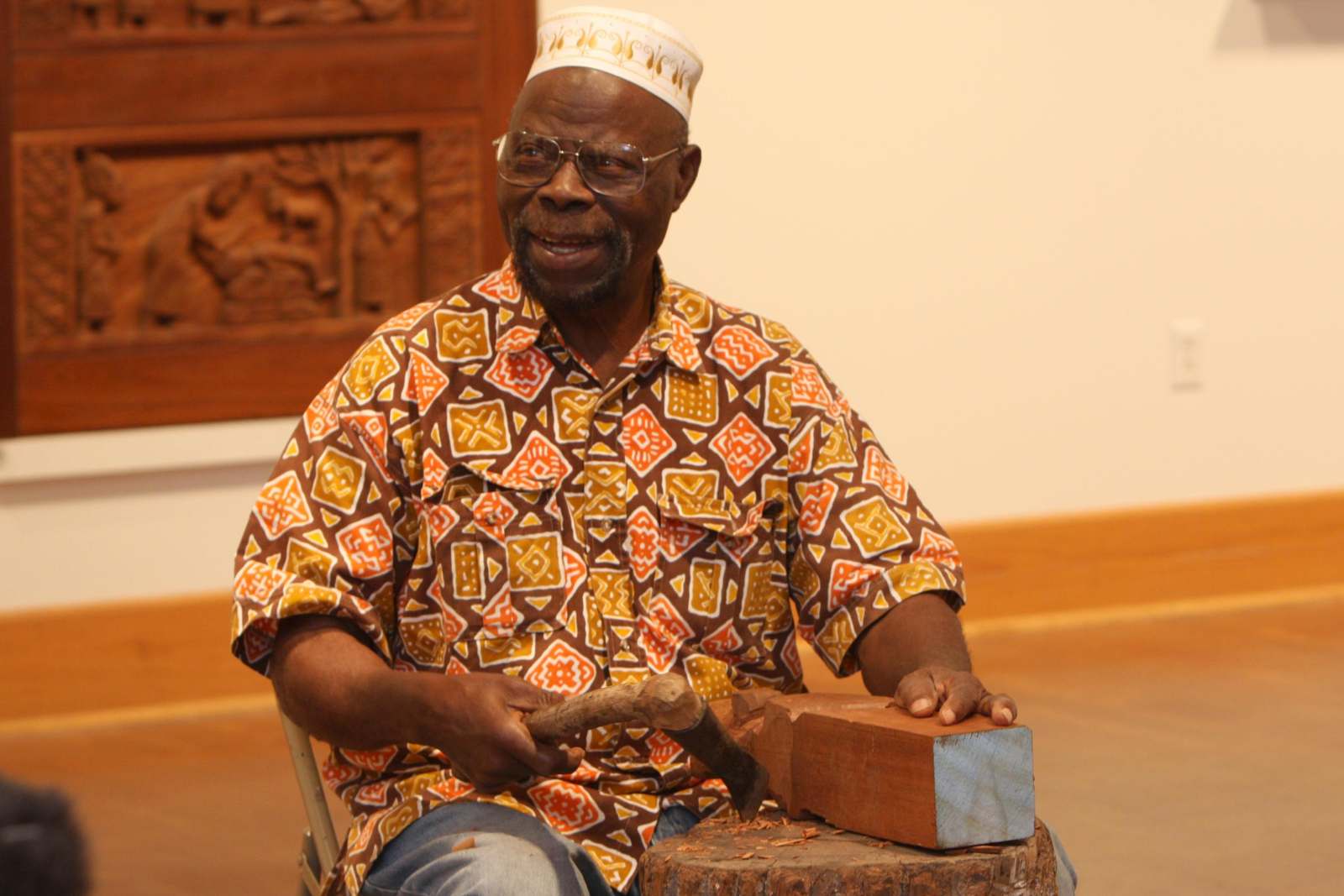
Lamidi Olonade Fakeye was born in 1928 in Ila Orangun, Osun State, Nigeria, into a long lineage of Yoruba woodcarvers dating back five generations.
He began learning woodcarving as a child, apprenticing under his father and other local masters. In his teens, he trained formally under George Bamidele Arowoogun, a renowned master carver.
By the early 1950s, Fakeye’s skill had already set him apart as a custodian of Yoruba carving traditions, while also adapting his style to modern contexts.
Artistic Career
Traditional and Modern Influence
Fakeye was one of the last great traditional Yoruba wood sculptors, but he also studied at the Nigerian College of Arts, Science and Technology, Zaria, where he encountered modernist Nigerian artists like Uche Okeke, Bruce Onobrakpeya, and Yusuf Grillo.
This gave his art a unique duality: rooted in Yoruba oriki, myths, and rituals, yet capable of addressing contemporary themes and serving modern institutions.
Themes and Style
- Rooted in Yoruba religious and cultural traditions: orishas, ancestral figures, and ritual objects.
- Carvings often depict human figures, deities, and community life.
- Known for his elongated forms, rhythmic patterns, and symbolic details.
- Worked mostly in wood, but also created pieces in bronze and other media.
Major Works
- Traditional Yoruba shrine figures and masks used in religious and cultural contexts.
- Commissioned works for churches, universities, and museums in Nigeria and abroad.
- UNESCO commissions that highlighted African cultural heritage.
- Exhibitions across Africa, Europe, and the United States.
Teaching and Mentorship
Lamidi Fakeye also worked as a teacher and mentor. He was Artist-in-Residence at Western Michigan University (1960s), where he taught woodcarving and Yoruba art traditions, helping to globalize Nigerian artistic heritage.
He trained many apprentices in Nigeria, ensuring continuity of Yoruba carving traditions into the 21st century.
Recognition and Awards
- Celebrated worldwide as the greatest Yoruba wood sculptor of his generation.
- Exhibited in the U.S., U.K., France, and across Africa.
- Honored by UNESCO for his role in preserving African cultural traditions.
- Received Nigeria’s National Order of Merit for the Arts.
Death
Lamidi Fakeye passed away on 25 December 2009 at the age of 81, leaving behind both a body of work and a lineage of apprentices to continue the Yoruba carving tradition.
Legacy
- Regarded as the last of the great Yoruba master carvers of the 20th century.
- Preserved Yoruba carving traditions during a time of modernization and Western influence.
- Inspired both traditional artists and contemporary sculptors.
- His works remain in major museums and collections worldwide, from Lagos to Washington D.C.
Conclusion
Lamidi Fakeye was more than an artist — he was a guardian of Yoruba cultural memory, a sculptor whose hands preserved centuries of tradition while engaging with the modern world. His legacy endures in wood, in spirit, and in the many artists he trained, ensuring that the Yoruba carving tradition remains alive today.










Related Posts

Stay Informed With the Latest & Most Important News
Previous Post
Next Post


Advertisement