
Now Reading: Lamido of Adamawa: Custodian of the Fombina Emirate
1
-
01
Lamido of Adamawa: Custodian of the Fombina Emirate
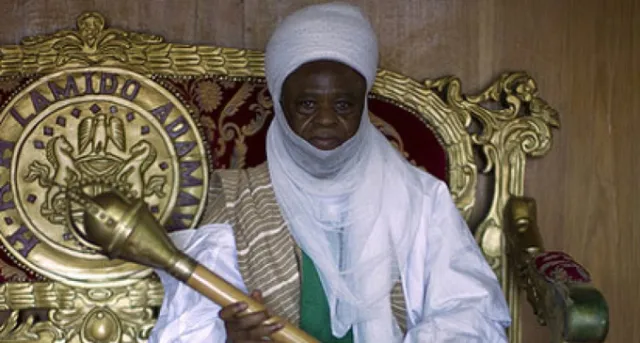

Historical Background
The Lamido of Adamawa is the supreme monarch of the Adamawa Emirate, headquartered in Yola, Adamawa State, Nigeria.
- The emirate was founded in 1809 during the Sokoto Jihad of Shehu Usman dan Fodio.
- It was established by Modibbo Adama (Lamido Fombina), a Fulani scholar and commander, who led the jihad in the region.
- The name Adamawa comes from him, making the emirate one of the most historic Fulani institutions in Nigeria.
- At its height, the Adamawa Emirate covered territories that now lie in Nigeria, Cameroon, Chad, and the Central African Republic.
Meaning of the Title
- The title Lamido means “Leader” or “King” in Fulfulde (the Fulani language).
- The Lamido is also called the Lamido Fombina, meaning “Leader of the South,” as the emirate represented the southern frontier of the Sokoto Caliphate.
Role and Authority
- Spiritual Leader: Custodian of Islamic values and teachings in Adamawa.
- Cultural Custodian: Preserves Fulani traditions and Adamawa heritage.
- Political Mediator: Plays a role in conflict resolution across Adamawa and the wider northeast.
- National Statesman: Respected voice in the National Council of Traditional Rulers of Nigeria.
The Palace
- The Lamido resides in the Lamido’s Palace, Yola, a historic seat of authority and Islamic scholarship in northeastern Nigeria.
Notable Lamidos
Modibbo Adama (1809–1847)
- Founder of the Adamawa Emirate, appointed by Usman dan Fodio’s son, Muhammed Bello.
- Expanded Islam across northeastern Nigeria and into Central Africa.
Aliyu Mustafa (1953–2010)
- Reigned for 57 years, one of the longest-serving emirs in Nigeria.
- Highly respected for his wisdom, diplomacy, and stability.
Current Lamido: Muhammadu Barkindo Aliyu Mustafa (2010–present)
- Alhaji Muhammadu Barkindo Aliyu Mustafa became the 12th Lamido of Adamawa on 18 March 2010, succeeding his father, Aliyu Mustafa.
- Born in 1944, he was educated in Nigeria and the UK.
- Worked as a civil servant and businessman before ascending the throne.
Reign and Leadership
- Custodian of Tradition: Upholds the legacy of Modibbo Adama and the Fulani emirate system.
- Peace Advocate: Promotes unity in Adamawa, which has experienced insurgency and communal clashes.
- Education and Development: Supports education, especially Islamic and Western schooling, as tools for progress.
- National Role: Serves as a senior northern monarch, respected in traditional and political councils.
Cultural Significance
- Presides over major Islamic festivals (Eid al-Fitr, Eid al-Adha) and the annual Durbar Festival, where horsemen parade in honor of the Lamido.
- Maintains ties with Fulani communities across West and Central Africa.
Legacy and Significance
- The Lamido throne is a pillar of the Sokoto Caliphate heritage, representing Fulani expansion into Central Africa.
- Today, the Lamido remains a symbol of authority, culture, and resilience in northeastern Nigeria.
- Under Muhammadu Barkindo, the emirate is a voice of peace, cultural pride, and modern development.
Conclusion
The Lamido of Adamawa is more than a monarch — he is the guardian of Fulani-Islamic tradition, custodian of history, and father of Adamawa people. From Modibbo Adama’s founding leadership in 1809 to Muhammadu Barkindo Aliyu Mustafa’s reign today, the throne stands as a beacon of unity, cultural strength, and resilience in Nigeria and beyond.










Related Posts



Stay Informed With the Latest & Most Important News
Previous Post
Next Post

Advertisement

Donations








Loading Next Post...


