Now Reading: Teju Cole: Nigeria’s Global Voice of Memory and Identity
-
01
Teju Cole: Nigeria’s Global Voice of Memory and Identity


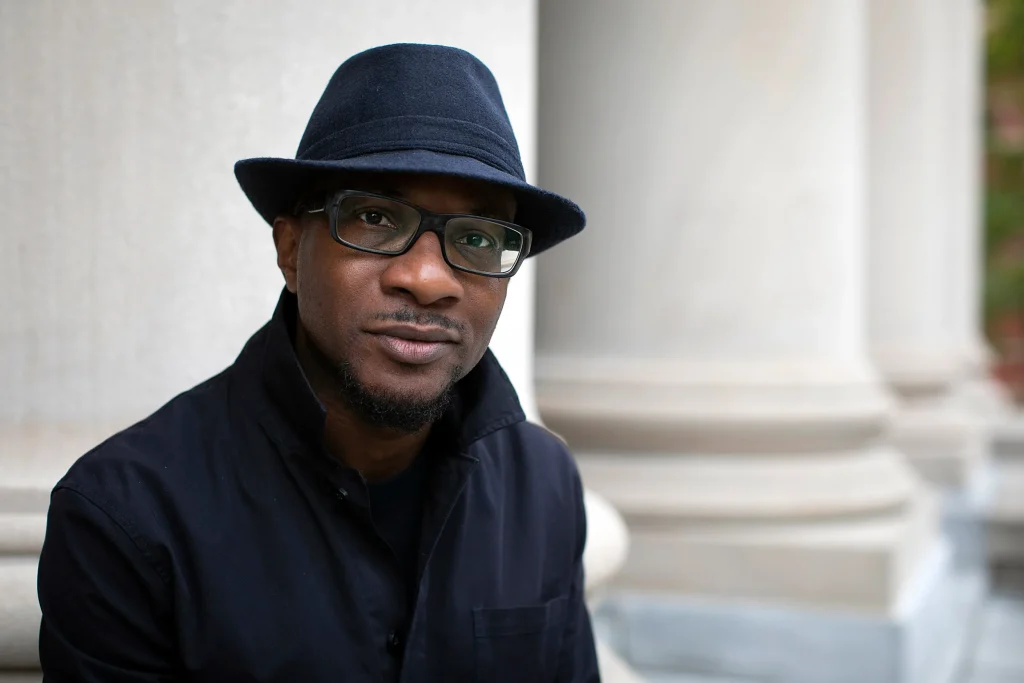
Early Life and Background
Teju Cole was born on 27 June 1975 in Kalamazoo, Michigan, USA, to Nigerian parents from Yoruba heritage. When he was less than a year old, his family moved back to Lagos, Nigeria, where he grew up.
In 1992, at the age of 17, Cole returned to the United States to pursue higher education. He studied Art and Art History at Kalamazoo College, pursued graduate studies in African Art History at SOAS (School of Oriental and African Studies), London, and later earned an MPhil in Art History from Columbia University.
His dual background in Nigeria and the U.S. — as well as his training in art, photography, and history — deeply shapes his literary and visual style.
Literary Career
Early Works
- Every Day is for the Thief (2007, revised 2014): A novella about a Nigerian returning to Lagos after living abroad. The narrative reflects on corruption, memory, and dislocation.
Breakthrough Novel
- Open City (2011): His acclaimed debut novel, following Julius, a Nigerian-German psychiatrist in New York, as he wanders the city reflecting on migration, history, race, and memory. The book won widespread praise for its lyrical style and meditative tone.
- Awards: PEN/Hemingway Award (2012), shortlisted for the National Book Critics Circle Award.
Essays and Non-Fiction
- Known and Strange Things (2016): An essay collection on literature, politics, photography, travel, and identity.
- Blind Spot (2017): A unique combination of photographs and short prose, reflecting Cole’s dual artistry as a writer and photographer.
- Human Archipelago (2019): A collaboration with photographer Fazal Sheikh on displacement, migration, and humanity.
Journalism and Criticism
Cole has written for major outlets like The New Yorker, The New York Times, The Guardian, and The Atlantic, contributing essays on politics, photography, and global culture.
Style and Themes
Teju Cole’s writing is known for:
- Meditative, essayistic style, blending fiction with memoir and observation,
- Exploration of identity, migration, and belonging,
- Reflections on cities (Lagos, New York, global capitals) as sites of memory and dislocation,
- Intersections of art, photography, history, and literature,
- A global, cosmopolitan sensibility rooted in Nigerian experience.
He is often compared to writers like W.G. Sebald for his reflective prose.
Awards and Recognition
- PEN/Hemingway Award for First Fiction (2012) – Open City.
- Internationaler Literaturpreis, Berlin (2015) – Every Day is for the Thief.
- Windham-Campbell Literature Prize for Non-Fiction (2015).
- Named among Foreign Policy’s 100 Leading Global Thinkers (2013).
- Fellowships at Harvard, Bard College, and Yale.
Academic and Artistic Work
Teju Cole is also a photographer and art historian. His photography and text-based works have been exhibited internationally.
He served as Photography Critic for The New York Times Magazine (2015–2019) and has lectured widely on literature and art. Currently, he teaches at Harvard University as the Gore Vidal Professor of the Practice of Creative Writing.
Conclusion
Teju Cole is one of Nigeria’s most cosmopolitan literary voices, blending fiction, essays, and photography into a unique style. From Open City to Blind Spot, his works reflect on identity, displacement, and the art of observation. His influence extends beyond literature into journalism, photography, and cultural criticism, making him a true global thinker rooted in Nigerian heritage.










Related Posts

Stay Informed With the Latest & Most Important News
Previous Post
Next Post
Previous Post
Next Post
Advertisement