Now Reading: The Constitution of Nigeria: A Comprehensive Analysis of Its History, Structure, and Enduring Challenges
-
01
The Constitution of Nigeria: A Comprehensive Analysis of Its History, Structure, and Enduring Challenges
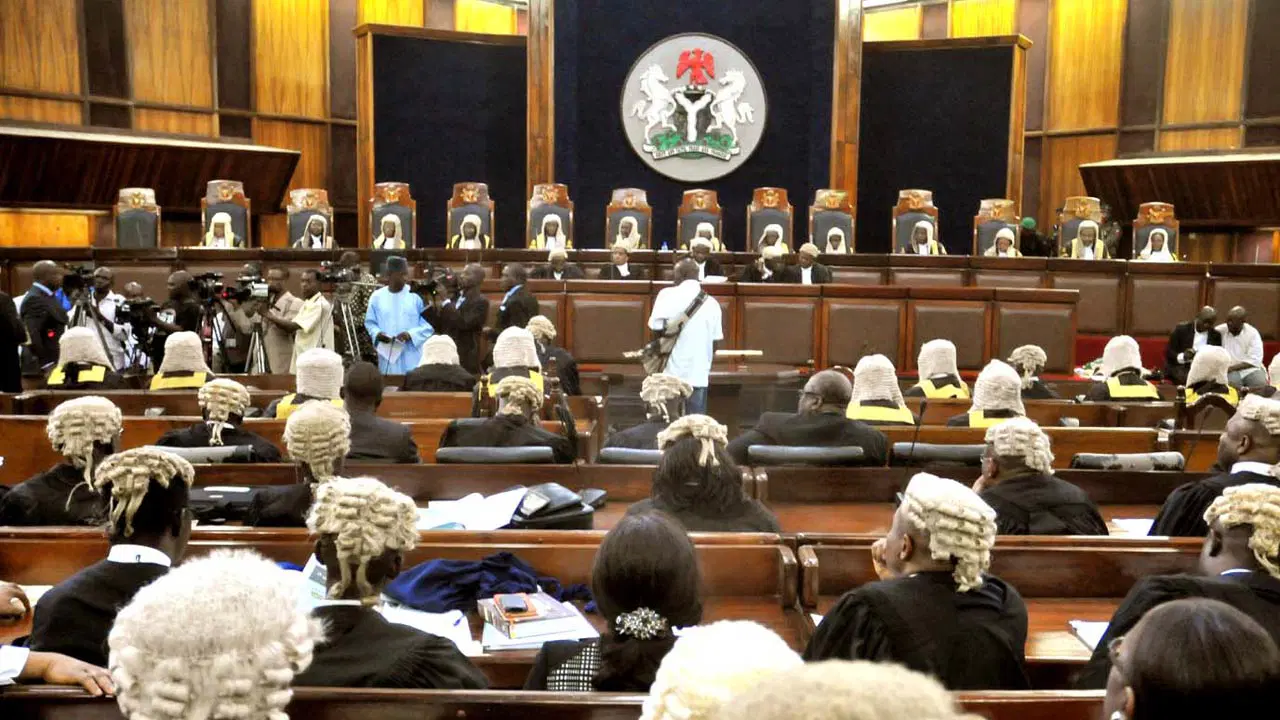
The Constitution of Nigeria: A Comprehensive Analysis of Its History, Structure, and Enduring Challenges


The Constitution of the Federal Republic of Nigeria stands as the nation’s supreme legal instrument, designed to provide a framework for a federal and presidential republic. Its current iteration, enacted on May 29, 1999, marked the dawn of the Fourth Nigerian Republic. However, a detailed examination reveals that this document is a product of a complex and often contradictory history. Nigeria’s constitutional evolution, from its colonial origins to the present day, has been a persistent, and largely unfulfilled, quest for a legitimate legal foundation capable of uniting a profoundly diverse and multi-ethnic nation.
The 1999 Constitution, in particular, is a source of continuous controversy. Its foundational flaw lies in the paradoxical nature of its promulgation: a document meant to establish democratic rule was, in fact, imposed by a military decree without genuine public participation. This has fueled a deep-seated crisis of legitimacy, leading to its outright rejection by various socio-cultural and ethnic groups. Structurally, the constitution has been criticized for establishing a highly centralized “federal” system that concentrates excessive power and fiscal resources at the center, a direct consequence of Nigeria’s top-down, military-imposed governance. This centralized model has perpetuated regional tensions, particularly in the contentious areas of resource control and the demand for fiscal autonomy.
The report also examines the constitution’s two-tiered system of rights, which protects civil and political liberties while rendering socio-economic rights non-justiciable. This arrangement institutionalizes a government that is legally accountable for protecting individual freedoms but not for ensuring the welfare of its citizens. The ongoing constitutional review process, while a response to public demands for reform, is often perceived as an institutional mechanism to manage discontent rather than enact substantive change, as key proposals for restructuring and decentralization repeatedly fail to garner political support.
This report provides a comprehensive analysis of these issues, comparing Nigeria’s constitutional experience with those of other federations like the United States, Canada, and India. It concludes that a new, genuinely people-driven constitutional process is essential to address the deep-seated structural contradictions that continue to undermine the rule of law and political stability in Nigeria.
1. Introduction
1.1 Preamble and Purpose
The Constitution of Nigeria is the written, supreme law of the Federal Republic of Nigeria. Its current form, the 1999 Constitution, came into force on May 29, 1999, marking the transition from decades of military rule to the Fourth Nigerian Republic. As the foundational legal document, it defines the nation as a federal and presidential republic and establishes a system of representative democracy. A primary function of this legal framework is to delineate the powers of the three distinct arms of the federal government—the executive, the legislative, and the judicial—and to provide for a system of separation and balance of powers. This design was intended to prevent the recurrence of the systemic political instability and governmental failures that characterized earlier republics. The constitution, therefore, is not merely a legal text but a social contract designed to govern the country and its people.
1.2 The Crisis of Legitimacy: A Foundational Flaw
Despite its stated purpose of fostering a democratic and stable polity, the 1999 Constitution has been fraught with a fundamental crisis of legitimacy from its inception. The document’s preamble opens with the declaration, “We the people of the Federal Republic of Nigeria…do hereby make and give to ourselves the following Constitution”. However, this claim of popular sovereignty is directly contradicted by the historical facts of its creation. Research material indicates that the constitution was not the result of a constituent assembly or a broad public referendum. Instead, it was “midwife[d] by an illegal and unconstitutional military government”. The final document was promulgated by Decree No. 24 of 1999, a unilateral act by the military regime led by General Abdulsalami Abubakar.
This process involved a Constitutional Debate Co-ordinating Committee that received memoranda and held public hearings, but the final report was approved with “such amendments as are deemed necessary in the public interest” by the military’s Provisional Ruling Council. The process for drafting the document lacked credibility, as voting for the constituent assembly was marred by boycotts and cynicism, with only 400,000 voters participating. This stark contrast between the constitution’s claim of being a people-driven document and its actual origins as a military decree has created an irreconcilable paradox. The document that is meant to serve as the bedrock of Nigeria’s democracy is a product of the very military dictatorship it was designed to replace.
This foundational contradiction has had profound and far-reaching consequences. It provides a constant legal and moral justification for various socio-cultural and ethnic groups to challenge the constitution’s authority and question its binding nature. Because the constitution is widely perceived as an illegitimate, “foisted” instrument, it can be seen as an ongoing impediment to the rule of law. The persistent public demand for a complete constitutional overhaul, rather than mere amendments, stems from the conviction that the current framework is structurally unsound and cannot be repaired. As a result, the national conversation is perpetually dominated by demands for a new constitutional moment that corrects this original flaw, seeking to create a truly autochthonous legal instrument that genuinely reflects the will of the people it governs.
2. A Chronicle of Constitutional Evolution: From Colonial Rule to the Fourth Republic
The constitutional history of Nigeria is a narrative of attempts to create a viable legal framework for a nation forged from diverse and previously independent polities. This journey from colonial administration to independence and through multiple republics provides essential context for understanding the challenges that persist today.
2.1 The Colonial Constitutions (1922-1954)
The initial constitutions of Nigeria were not organic documents arising from the populace, but rather instruments of British colonial administration. The British gradually amalgamated hundreds of individual political units into a single entity, a process finalized by Sir Frederick Lord Lugard’s act in 1914. Early constitutional arrangements, such as the Clifford Constitution of 1922, the Richards Constitution of 1946, the Macpherson Constitution of 1951, and the Lyttleton Constitution of 1954, were enacted by a British Order-in-Council.
These constitutions laid the formal groundwork for a federal structure but, in doing so, amplified existing regional and ethnic tensions. For example, the Richards Constitution, while introducing the federal principle with three regional Houses of Assembly, was criticized for “intensified regionalism instead of encouraging political unification”. Similarly, the Macpherson Constitution provided for regional autonomy and a federal union but significantly “boosted regionalism” because it granted broad legislative powers to regional governments that could not be overridden by the federal legislature. The Lyttleton Constitution of 1954 solidified Nigeria as a federation, a move that paved the way for independence, but it too promoted regional sentiments. The British “divide and rule” policy and the creation of administrative divisions based on arbitrary lines disregarded pre-existing linguistic and ethnic communities, thereby exacerbating internal conflicts. The outcome was a society with “overlapping cleavages” where ethnic, religious, and linguistic differences coincided with geographic boundaries, a pattern that would compromise Nigeria’s political stability for decades to come.
2.2 The Post-Independence Era (1960-1993)
After achieving independence, Nigeria’s constitutional path continued to be defined by this inherent tension between central authority and regional identity. The 1960 Independence Constitution, enacted by a British Order-in-Council, retained Queen Elizabeth II as the titular head of state. This was superseded by the 1963 Constitution, which abolished the monarchy and established the First Nigerian Republic, adopting a Westminster-style parliamentary system. This system was short-lived, as a military coup in 1966 overthrew Nigeria’s democratic institutions, plunging the nation into a period of prolonged military rule.
During this time, the military seized the function of law-making and governed by decree. The return to civilian rule in 1979 under the Second Republic was marked by a new constitution that abandoned the Westminster system in favor of a United States-style presidential model. This constitution sought to mitigate the pitfalls of the First Republic by introducing the “federal character” principle, which mandated that political parties and the federal cabinet reflect the diversity of the nation by ensuring representation from each state. A third attempt at civilian rule was made in 1993 with a new constitution, but it was never fully implemented, and military control persisted until 1999.
The continuous failure of these successive constitutional frameworks can be traced back to the deeply embedded divisions inherited from the colonial era. The initial imposition of a centralizing authority on disparate polities, which had minimal political interactions before amalgamation, created a foundational instability. The repeated constitutional crises and subsequent military interventions were not random events but were a direct manifestation of this structural fragility. The ongoing demands for state creation and the debates over resource control are a direct result of these historical fault lines, demonstrating a persistent failure to forge a cohesive national identity from the mosaic of forcibly merged communities.
The following table provides a chronological overview of Nigeria’s constitutional history, highlighting the constant flux and persistent search for a stable framework.
| Name of Constitution | Year | System of Government | Outcome |
| Amalgamation Constitution | 1914 | Unitary Colonial Rule | Failed due to lack of directive principles and political will |
| Clifford Constitution | 1922 | Crown Colony | Replaced the 1862 Legislative Council |
| Richards Constitution | 1946 | Colonial, Introduces Federal Principle | Intensified regionalism instead of encouraging unity |
| Macpherson Constitution | 1951 | Colonial, Federal Union | Significantly boosted regionalism |
| Lyttleton Constitution | 1954 | Colonial, Federation | Paved the way for independence; promoted regional sentiments |
| 1960 Independence Constitution | 1960 | Sovereign State, Retains Monarchy | Queen Elizabeth II as titular head; replaced in 1963 |
| 1963 Constitution | 1963 | First Nigerian Republic, Westminster System | Overthrown by military coup in 1966 |
| 1979 Constitution | 1979 | Second Nigerian Republic, Presidential System | Abandoned Westminster; introduced “federal character” |
| 1993 Constitution | 1993 | Third Nigerian Republic (Planned) | Never fully implemented; military rule persisted |
| 1999 Constitution | 1999 | Fourth Nigerian Republic, Presidential System | Current supreme law |
3. The 1999 Constitution: A Detailed Jurisprudential Analysis
The 1999 Constitution is the most recent attempt to provide a comprehensive legal framework for the Nigerian state. It establishes a federal system with a central government and 36 constituent states, along with a Federal Capital Territory and 774 local government areas. It is a lengthy and detailed document that defines the structure and functions of government.
3.1 The Federal Framework and Division of Powers
The constitution organizes the Nigerian government into a federal structure with three distinct tiers: the federal government, state governments, and local governments. Power is distributed between the federal and state governments through three legislative lists. The Exclusive Legislative List contains 68 items on which only the federal government can legislate, including defense, currency, and immigration. The Concurrent Legislative List outlines matters where both the federal and state governments can make laws, such as education and health. All other unlisted matters fall under the residual authority of the states. This constitutional arrangement aims to ensure that powers are shared and that each tier of government works cooperatively.
3.2 Separation of Powers and Checks & Balances
The 1999 Constitution is explicitly designed to prevent the concentration of power by establishing three independent arms of government.
- The Executive Branch: All executive powers of the federation are vested in the President, who functions as both head of state and head of government. The President can exercise these powers either directly or through the Vice-President or cabinet members. Presidential appointments, including ministers from each of Nigeria’s 36 states, are subject to confirmation by the Senate. This system provides a clear check on the executive’s authority.
- The Legislative Branch: The National Assembly (NASS) is Nigeria’s bicameral legislature, composed of the Senate and the House of Representatives. Its primary function is to make laws for the “peace, order and good government of the Federation”. Beyond lawmaking, the legislature possesses extensive powers, including investigatory, financial, confirmation, and impeachment powers. The constitution empowers the legislature to approve the federal budget, ratify treaties, and sanction the declaration of a state of war. It is a crucial feature of this system that the National Assembly’s legislative powers are subject to the jurisdiction of the courts, preventing the legislature from enacting any law that would oust a court’s authority.
- The Judicial Branch: Judicial powers are vested in a hierarchical court system, from the Supreme Court down to the Court of Appeal, Federal High Courts, and state-level Shariah and Customary Courts. The judiciary serves as the ultimate interpreter of the constitution and is empowered to review the actions of the other two branches to ensure they comply with the law.
The following table provides a structured overview of the division of powers under the 1999 Constitution.
| Branch | Constitutional Basis | Primary Functions | Key Checks and Balances |
| Executive | Section 5(1)(b), Section 130 | Executes laws, serves as Commander-in-Chief of the armed forces, appoints ministers and other officials | Subject to Senate confirmation of appointments, can be impeached by the legislature, its actions are subject to judicial review |
| Legislative | Sections 4(1) and 4(2), Sections 47-49 | Makes laws for “peace, order and good governance,” controls public funds, ratifies treaties, confirms appointments, and has investigatory and impeachment powers | Bills require presidential assent, its powers are subject to court jurisdiction |
| Judicial | Section 6(5) | Interprets the constitution and laws, settles disputes, exercises appellate and original jurisdiction | Justices are appointed by the President and confirmed by the Senate |
3.3 Fundamental Rights and State Policy
The constitution addresses the rights of citizens through two distinct classes of provisions. Chapter IV enumerates a range of justiciable fundamental rights, meaning they are legally enforceable and citizens can seek redress in a high court for their violation. These rights include the right to life, dignity of the human person, personal liberty, fair hearing, private and family life, and freedom from discrimination, thought, expression, and association.
In contrast, Chapter II outlines the Fundamental Objectives and Directive Principles of State Policy. These provisions, which address issues such as economic and social welfare, are non-justiciable. While the constitution obligates the state to “harness the resources of the nation” and “promote national prosperity,” a citizen cannot sue the government for a failure to achieve these objectives. This creates a two-tiered system of rights. While a Nigerian citizen can challenge a violation of their civil and political liberties, they have no legal recourse if the state fails to provide essential socio-economic services like education, healthcare, or employment. This is a crucial distinction from the constitutions of other nations, such as South Africa, where social and economic rights are justiciable. The legal framework, therefore, effectively absolves the state of legal accountability for the welfare of its citizens, a point of continuous frustration that connects to broader critiques of the constitution’s failure to address poverty and social inequality.
4. The Enduring Critiques and Legal Challenges to the 1999 Constitution
Despite its role in ushering in a new era of democracy, the 1999 Constitution has faced continuous and trenchant criticism, stemming from its origins and its substantive provisions.
4.1 The Crisis of Legitimacy (Revisited)
As previously discussed, the core critique of the 1999 Constitution is its lack of legitimacy as a truly autochthonous document. Its promulgation by a military decree, rather than through a consensus-driven process involving broad public participation, has led to its open rejection by numerous ethnic nationalities and socio-cultural groups. Critics argue that the document was “foisted” upon the people and fails to represent the country’s diverse interests. This lack of popular consent is a central reason for the persistent political instability and the enduring calls for a new, “autochthonous” constitution.
4.2 Fault Lines of Federalism: Resource Control and Fiscal Disparity
A central point of contention is the constitutional arrangement of federalism, which is described as being “federal in name but unitary in practice”. The constitution concentrates immense power and resources at the federal level. For instance, the Exclusive Legislative List contains 68 items, while the Concurrent List, which is shared with states, holds only 30 items that are described as “inconsequential”.
A particularly contentious issue is the federal government’s ownership and control of natural resources, a provision enshrined in Section 44(3) and Item 39 of the Exclusive Legislative List. This has generated significant conflict, as oil-producing communities in the Niger Delta suffer from environmental degradation and poverty while the wealth from their resources is controlled by the central government. This debate over “resource control” is not merely a fiscal issue but is a core demand for federal restructuring. Historically, the principle of derivation—whereby a percentage of mineral wealth is returned to the state of origin—has been drastically reduced from 100% in 1960 to a mere 13% in the 1999 Constitution, which has left littoral states in a precarious financial position. This top-down distribution of resources and power, where states owe their existence and survival to the federal government that created them, is a fundamental point of difference from other federations like Canada, where provinces predated the central government and retained ownership of their natural resources. This structural contradiction is a primary driver of the persistent calls for restructuring and decentralization.
4.3 The Challenge to Democratic Governance
The constitution has also been challenged for its failure to fully entrench democratic principles and the rule of law. A significant critique revolves around the distinction between “indigeneship” and “citizenship”. The constitution grants privileges and rights to those considered “original natives” of a given area, which leads to political, economic, and social discrimination against citizens who may have lived in a state for generations but do not share a common ancestry with its indigenous population.
Furthermore, the principle of equality before the law is undermined by certain constitutional provisions. The constitution grants certain high-ranking officials, such as the President, Vice-President, governors, and deputy governors, immunity from legal liability while in office. This creates a dual system of justice and promotes executive indiscipline, which critics argue is a major deficit to the rule of law in Nigeria. The Nigerian judiciary, despite its constitutional role as a check on power, faces significant challenges in implementing the rule of law due to executive interference and budgetary uncertainty.
5. The Unfinished Business of Constitutional Reform
In response to these persistent critiques and challenges, Nigeria’s National Assembly has embarked on a continuous process of constitutional review. This process is seen by many as a necessary mechanism to address the deep-seated structural infirmities of the state’s arrangement.
5.1 Major Debates and Proposed Amendments
The constitutional review process is characterized by several key debates, with calls for fundamental changes to the nation’s governance structure.
- Federal Restructuring: A primary demand from various ethnic and socio-cultural groups is for a genuine devolution of powers to subnational entities. These groups, including the Afenifere and Ohaneze Ndigbo, argue that the concentration of power at the center “is suffocating subnational entities” and advocate for greater fiscal autonomy and resource control.
- State Police: Amid persistent insecurity, there is a strong push to amend the constitution to allow for the establishment of state-level police forces. Proponents argue that localized security structures would be more effective in addressing issues like banditry and civil conflicts, while critics express fears of potential abuse and politicization by state governors.
- Local Government Autonomy: There are calls for a constitutional amendment to grant local governments direct access to their funds from the national account, bypassing state governors who have historically appropriated these funds. The goal is to strengthen democracy at the grassroots level and improve the delivery of public services.
- Judicial and Electoral Reform: Proposed amendments seek to bolster the financial autonomy of the judiciary to enhance its institutional independence from the executive. Similarly, proposals aim to expand the autonomy of the Independent National Electoral Commission (INEC) to address long-standing issues of electoral credibility and manipulation.
5.2 The Federal Character Principle
The “federal character” principle, enshrined in Section 14(3) of the constitution, is a constitutional policy designed to manage ethnic diversity by ensuring fair representation of every section of the country in government appointments and public service. However, the Federal Character Commission, which is tasked with enforcing this principle, is a federal executive body controlled by the central government. This arrangement renders the commission “impotent” to oversee the federal government itself, which is often cited as a major violator of the principle. Furthermore, since the principle is contained in a non-justiciable chapter of the constitution, citizens cannot seek legal redress in court to compel compliance, thereby undermining the effectiveness of the policy.
The continuous cycle of constitutional review without substantive change highlights a significant institutional failure. Despite repeated public hearings and proposals, key reforms have failed in past amendment cycles due to political resistance from those who benefit from the centralized system. This suggests that the process is not always a genuine effort to address fundamental flaws but a mechanism to manage and diffuse public discontent. This institutional paralysis is a defining feature of the Fourth Republic and a key reason why the constitution has yet to evolve into a widely accepted and effective legal framework.
6. Comparative Constitutionalism: Nigeria in a Global Context
A comparative analysis of Nigeria’s constitutional framework with those of other nations reveals both the influences of Western models and the unique challenges of Nigeria’s socio-political context.
6.1 Nigerian and U.S. Constitutionalism: Similarities and Departures
The 1979 Constitution, and subsequently the 1999 Constitution, adopted a U.S.-style presidential system, a clear departure from the previous Westminster model. This included a directly elected president with executive power and a bicameral legislature. While there are many similarities in the division of powers, there are also significant differences. The Nigerian constitution is notably longer and more detailed than its American counterpart. For example, it is more explicit in enumerating fundamental rights and the legislative powers of the federal government. The U.S. Constitution relies on broad judicial interpretation of clauses like the “commerce power” to expand federal authority, whereas the Nigerian constitution explicitly grants the federal government exclusive authority over a detailed list of commercial matters. A further distinction is that the Nigerian constitution is a single legal instrument that governs the entire federal apparatus and also prescribes a uniform constitutional structure for each of the 36 states, whereas the U.S. operates with separate constitutions for each state.
6.2 Lessons from Other Federations
Comparing Nigeria to other federations, particularly those with a history of British colonialism, provides valuable insight into the unique challenges it faces.
- Canada: Both Nigeria and Canada are large, multi-cultural, and multi-ethnic societies that have attempted to build national unity on the basis of a federal constitution. However, their constitutional origins differ fundamentally. Canada’s federalism is described as “aggregative,” as its provinces predated the central government and willingly agreed to federate. This allowed Canadian provinces to retain ownership of their natural resources, a key point of stability that is absent in Nigeria. In contrast, Nigeria’s federalism is “disaggregative,” where the central government created the states, a process that gave the central authority overwhelming power and control over resources. This top-down model is directly responsible for the contentious resource control debate and the financial subjugation of states.
- India: India and Nigeria both have exceptionally diverse populations and inherited a British colonial legacy of “divide-and-rule” tactics. However, their post-independence trajectories have diverged. India has achieved political stability, which is attributed to “cross-cutting cleavages,” where linguistic, religious, and caste differences do not neatly align with geographic boundaries. This helps to prevent serious secessionist threats. Conversely, Nigeria’s “overlapping cleavages”—where these differences coincide with regional and ethnic boundaries—have consistently undermined its political stability and fueled conflicts.
- South Africa: The South African Constitution serves as a powerful contrast to Nigeria’s on the matter of human rights. While Nigeria’s constitution separates fundamental rights into justiciable (Chapter IV) and non-justiciable (Chapter II) categories, the South African constitution makes a wide range of rights justiciable, including socio-economic rights such as the right to housing, water, food, and healthcare. This constitutional distinction highlights a different approach to the social contract, where the state is legally bound to progressively realize the welfare of its citizens.
These comparisons suggest that Nigeria’s repeated adoption of Western constitutional models—first the Westminster and then the U.S. presidential system—without adequately adapting them to its unique socio-political realities has been a central reason for its constitutional failures. The success of a constitution is not determined by the model itself, but by its ability to genuinely reflect and manage the specific realities and enduring fault lines of its society.
7. Conclusion and Recommendations
The Constitution of the Federal Republic of Nigeria is a complex and contradictory document that embodies the nation’s ongoing struggle to reconcile its colonial past with its democratic aspirations. The analysis presented here demonstrates that Nigeria’s constitutional challenges are not merely a result of poor implementation but are deeply rooted in fundamental structural contradictions.
The 1999 Constitution, despite its democratic veneer, remains a paradoxical instrument: a blueprint for civilian rule imposed by a military decree, a federal framework that functions as a unitary state, and a social contract that protects civil rights but provides no legal recourse for socio-economic justice. This foundational crisis of legitimacy, coupled with the systemic centralization of power and resources, has perpetuated ethnic tensions, economic inequality, and political instability. The repeated failures of constitutional review processes to enact substantive reforms suggest an institutional paralysis where the political will to address these fundamental flaws is consistently lacking.
Based on this analysis, it is clear that a piecemeal approach to constitutional reform is insufficient to resolve Nigeria’s deep-seated issues. A more transformative approach is required.
Recommendations:
- Initiate a New Constitutional Process: The Nigerian National Assembly, civil society, and other stakeholders should embark on a genuinely new, people-driven process to create an autochthonous constitution. This process must be transparent, inclusive, and culminate in a national referendum to secure popular consent and correct the legitimacy deficit that plagues the current document.
- Foster True Federalism: The new constitution should address the over-concentration of power at the center by devolving significant legislative and fiscal authority to the states. This must include a comprehensive review of the Exclusive and Concurrent Legislative Lists and a new, more equitable revenue allocation formula that honors the principle of derivation.
- Address the Issue of Resource Control: The constitutional ownership of natural resources should be renegotiated to ensure that host communities and states receive a greater share of the wealth generated from their land. Lessons can be drawn from other federations, such as Canada, which have successfully decentralized the ownership and control of resources to subnational units.
- Strengthen the Rule of Law: Constitutional provisions that grant immunity to public officials should be revisited to ensure that all citizens are truly equal before the law. Additionally, the new legal framework should strengthen the financial and institutional independence of the judiciary to enable it to effectively act as a check on the other arms of government.
- Expand the Scope of Rights: Consideration should be given to transferring the Fundamental Objectives and Directive Principles of State Policy (Chapter II) into the chapter on fundamental rights (Chapter IV) to make socio-economic rights justiciable. This would hold the government legally accountable for the welfare of its citizens and more closely align the constitutional framework with the lived realities and aspirations of the Nigerian populace.
Ultimately, Nigeria’s quest for a stable constitutional order is a search for a more perfect union. It is a journey that will only reach its destination when the legal instrument of the state is a true reflection of the will and consensus of all its diverse peoples.










Related Posts


Stay Informed With the Latest & Most Important News
Previous Post
Next Post


Advertisement