Now Reading: The History of the Yoruba Kingdoms: From Mythological Origins to Modern Legacy
-
01
The History of the Yoruba Kingdoms: From Mythological Origins to Modern Legacy

1. The Spiritual and Mythological Foundations of Yorubaland
The historical narrative of the Yoruba people is fundamentally rooted in a rich and intricate cosmology that establishes the very principles of their social and political organization. This worldview, transmitted through oral traditions and codified in their religious practices, posits a tri-partite universe governed by a hierarchy of divine beings. The primordial state of the universe consisted of a vast expanse of the heavens above and a watery, formless wasteland below, a realm ruled over by the supreme deity Olodumare, also known as Olorun. As the ultimate source of all power, life, and existence, Olodumare is revered as an omnipotent and benevolent creator. However, this deity is often perceived as distant and too elevated to directly concern itself with the daily affairs of the earthly realm, a characteristic that makes this spiritual system particularly adaptable and portable.
The Yoruba creation narrative, central to their identity, details the formation of the solid earth and the emergence of humanity. According to the mythology, Olodumare assigned the task of creation to his second-in-command, Obatala, whose name means “The King of the White Cloth”. Obatala descended from the heavens on a golden chain, scattering a handful of earth upon the primordial waters. A hen and a pigeon then scratched at the earth, causing solid land to form wherever it fell. This act is said to have taken four days, with the fifth day dedicated to the rest and worship of the deities. The creation of humanity is centered on Ile-Ife, a city considered to be the sacred site of creation. Obatala is traditionally credited with molding human beings from clay. A key mythological account, however, introduces a crucial complexity: Obatala became drunk on palm wine during his work, which led him to create misshapen individuals. These people with disabilities are considered sacred to Obatala as a result. His wife, Oduduwa, ultimately took over and completed the sculpting, earning her the title of “mother of the Yoruba people”. This foundational narrative establishes a nuanced duality, where the origin of humanity is rooted in both the purity of Obatala’s divine act and the practical, earthly completion by Oduduwa. This mythological tension between two powerful figures and their associated lineages foreshadows the later historical rivalry between the spiritual authority of Ile-Ife and the political power of subsequent kingdoms.
1.2. The Orisha Pantheon: An Intermediary System of Divine Expression
The Orishas constitute a vast pantheon of secondary deities who serve as crucial intermediaries between the distant supreme being, Olodumare, and humanity. They are not seen as remote, abstract entities but as accessible, relatable beings who embody human emotions, strengths, and weaknesses. Each Orisha represents a manifestation of Olodumare’s
ase, or vital life force, and governs a specific natural element, human endeavor, or aspect of life. The number of Orishas is vast, with some accounts suggesting there are hundreds of them. The system is not dogmatic; rather, it is a flexible and narrative-based framework where the dynamic relationships between the deities reflect the complexity of life itself.
A closer look at the key figures in the pantheon reveals a clear division of labor and power, a structure that would later be mirrored in the political organization of the Yoruba kingdoms.
Table: Major Orishas, Their Domains, and Significance
| Orisha | Domains | Significance |
| Olodumare | The heavens, existence, all life | The Supreme Being; remote, ultimate source of power, not directly worshipped |
| Obatala | Purity, wisdom, peacefulness | Creator deity responsible for molding human bodies |
| Oduduwa | Earthly rule, the first kingdom | Regarded as the mother of the Yoruba people and founder of Ile-Ife |
| Eshu | Communication, chance, fortune | Divine messenger who conveys the will of the gods to humans and vice versa |
| Ogun | Iron, technology, warfare | God of blacksmiths, hunters, and warriors; clears paths of obstacles |
| Shango | Thunder, lightning, fire, justice | King of Oyo and god of judgment, known for passion and power |
| Osun | Rivers, love, beauty, fertility | Patroness of prosperity and femininity; heals with water |
| Yemoja | Oceans, motherhood, fertility | Mother of all Orishas and humanity; nurturing, protective force of water |
| Orunmila | Wisdom, divination, fate | Custodian of the Ifa oracle, a spiritual search engine for knowledge |
The presence of a distant supreme being who delegates functional responsibilities to a pantheon of active intermediaries is a central principle of the Yoruba worldview. This cosmological structure has significant implications for the enduring nature of their faith. The distant nature of Olodumare meant he could be worshipped anywhere his children, the Orishas, were, making the religion highly portable and adaptable. This flexibility would prove critical for the survival of Yoruba faith during the transatlantic slave trade. The decentralization of divine function is a key theme that is mirrored in the political structures of the Oyo Empire, where power was distributed to prevent tyranny.
2. The Cradle of Civilization: The Ile-Ife Kingdom
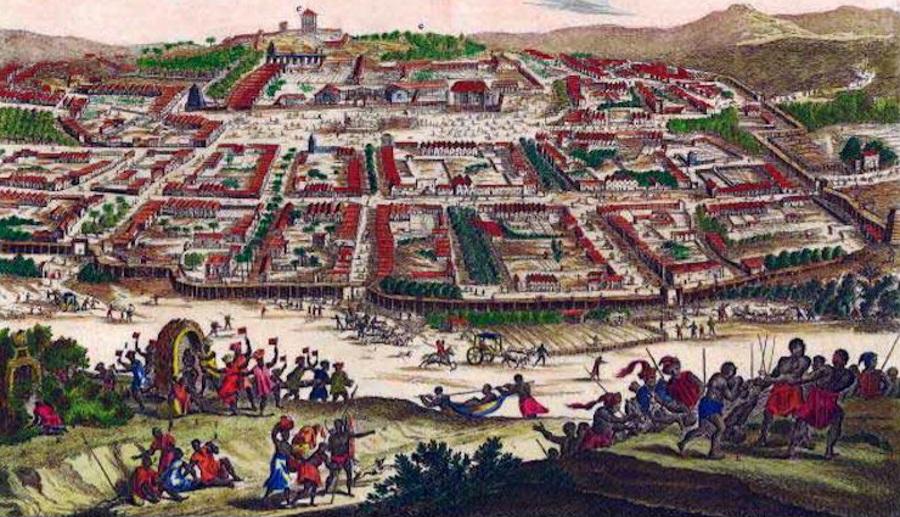
Moving from the realm of myth to the historical record, a rich body of archaeological evidence corroborates the foundational importance of Ile-Ife. Far from being a mere mythical homeland, Ile-Ife was an early and powerful urban center in Africa. Archaeological findings indicate that settlements in the area date back as early as the 10th to 6th century BCE, with a transition to a more urban center occurring between the 4th and 7th centuries CE. By the 8th century, a powerful city-state had already formed. This archaeological record, which points to an indigenous development of the Yoruba people
in situ from earlier Volta-Niger populations, provides a more accurate, scientifically grounded narrative than oral traditions that sometimes suggest a Middle Eastern or North African origin.
The period from approximately 1200 to 1420 CE is widely considered the “golden age” of Ile-Ife, a time marked by exceptional artistic production, economic prosperity, and sophisticated urban development. The city’s artisans were renowned for their refined and naturalistic sculptures crafted from bronze, terracotta, and stone, which were likely imbued with deep religious significance. The economic foundation for this cultural efflorescence was a vibrant and extensive trade network. Archaeological excavations have revealed evidence of a thriving local glass bead industry, including the production of iridescent dichroic beads. The discovery of these beads as far away as the Sahel region demonstrates Ile-Ife’s far-reaching commercial connections and its role as a major hub in West African trade.
The wealth generated through commerce did not merely accumulate; it was reinvested into a flourishing urban landscape that speaks to a complex and highly organized society. Archaeological evidence indicates the existence of a well-planned city with impressive infrastructure, including paved roads and sophisticated drainage systems. A distinctive feature of Ile-Ife urban planning was the use of potsherd pavements, functional and aesthetically pleasing mosaics created from fragments of broken pottery. The existence of these specialized craftsmen and advanced infrastructure is a clear hallmark of a stratified society where an agricultural surplus and robust trade revenues directly fueled a complex urban culture and political centralization. The symbiotic relationship between a strong economy, artistic mastery, and urban development is a recurring pattern in the history of great civilizations, and Ile-Ife stands as a prime example.
3. The Imperial Zenith: The Oyo Empire
The historical narrative of the Yoruba people undergoes a significant transformation with the rise of the Oyo Empire. While Ile-Ife retained its status as the spiritual homeland and a place of divine creation, its military and political dominance was surpassed by Oyo, which became a powerful force in the 17th century. The empire’s founder, Oranmiyan, was the son of Oduduwa, a direct genealogical link that provided the Oyo kingdom with political legitimacy tied to the sacred origins of the Yoruba people. The Oyo Empire’s rise was built on its formidable military strength, particularly its highly trained cavalry. The empire leveraged its wealth from trade to build this army, which it used to subjugate neighboring kingdoms like Dahomey.
The governance system of the Oyo Empire was a sophisticated model of a constitutional monarchy, designed with a complex system of checks and balances to prevent the concentration of power and mitigate the potential for tyranny. At the apex of this system was the Alaafin, the empire’s supreme ruler. However, the Alaafin’s power was not absolute; it was effectively checked by the Oyo Mesi, a council of seven aristocratic leaders who served as kingmakers and had the extraordinary authority to call for the Alaafin’s suicide if they found his performance lacking. The power of the Oyo Mesi was, in turn, balanced by the Ogboni Fraternity, a revered religious and political body. The Ogboni, often referred to as “The Mouthpiece of the Gods,” served as the judicial arm of the government, with the authority to review the decisions of the Oyo Mesi, including the appointment of the Alaafin. The political structure of the Oyo Empire exhibits a striking parallel to the tri-tiered structure of the Yoruba cosmos. The Alaafin, much like the distant Olodumare, holds ultimate authority but delegates most day-to-day functions. The Oyo Mesi, like the active and accessible Orishas, act as intermediaries, holding significant executive and legislative power. The Ogboni, as the spiritual and judicial body, provide a sacred check on political power, much like the Orishas act to channel divine will. This parallel suggests that the Yoruba worldview, which favors the distribution of power and a system of checks and balances, was a deeply ingrained cultural principle that manifested in both their spiritual and political systems.
The Oyo Empire’s power was sustained by a robust economy fueled by trade and tribute. The empire’s political leader, the Alaafin, benefited from the wealth generated through trade with European merchants. By the end of the 18th century, Oyo’s focus shifted away from military conquest toward acting as a middleman in both the trans-Saharan and transatlantic slave trades. This change in economic policy, which involved selling war captives and criminals as slaves to the Dutch and Portuguese, would have tragic and far-reaching consequences, as this lucrative but destabilizing commerce would become a major cause of internal conflict and eventual collapse.
4. The 19th-Century Turmoil: War, Trade, and Transformation
The 19th century stands as a period of profound turbulence and revolutionary change in the history of Yorubaland, marked by the collapse of the Oyo Empire and a century-long series of civil wars. The decline of Oyo was a multi-causal process, stemming from internal political and constitutional disruptions, conflict over the empire’s increasing wealth, and the weakening of its central administration after 1800. External pressures also contributed to the collapse, most notably the expansion of the Sokoto Jihad from the north, which threatened the region and aimed to prevent the enslavement of Muslims. A bitter conflict between the Alaafin and the military leader Afonja, the Are-Ona Kakanfo, led to political instability and a series of bloody attacks in the northern part of the empire. Afonja’s ill-fated alliance with the Islamic Fulani ultimately led to his betrayal and death, and the eventual razing of the old Oyo Empire in 1896.
With the collapse of Oyo, a power vacuum emerged, and the Yoruba civil wars began in earnest as various states vied for control. This period from 1813 to 1837 marked the first stage of the conflict and the outbreak of the Owu war, which was one of the first civil wars. A significant driver of the conflict was the nexus of war and commerce. The decline of Oyo meant that the supply of slaves from Central Sudan diminished, forcing warlords to seek new sources of captives from within Yorubaland itself. European demand for slaves, particularly in Cuba and Brazil, created a tragic economic feedback loop. Yoruba war captives and refugees were sold for European goods, especially guns and gunpowder. The value of these weapons was immense; in the Ijaye War of 1862, a ransom of guns and gunpowder was demanded for the freedom of a European captive, underscoring their military and economic significance. The availability of these weapons fueled and intensified the civil wars, creating a vicious cycle of violence and the commodification of human beings.
The civil wars were defined by evolving military strategies and the introduction of increasingly deadly weaponry. The wars are often divided into three main stages: the collapse of Oyo (1813-1837), the struggle for a new hegemony between Ibadan and Abeokuta/Ijaye (1837-1878), and the rise of coalitions against Ibadan (the Ekitiparapo, Ijebu, and Ilorin) in the final phase. The use of modern weapons, particularly Snider-Enfield rifles, gave certain groups a significant advantage, as evidenced by the Ekiti Parapo/Kiriji War (1876-1893). The use of these superior weapons introduced new forms of warfare, such as trench warfare, which led to significant casualties and prompted the construction of stronger mud walls to replace weaker bamboo fortifications. The conflict and subsequent population displacement caused immense social and economic devastation, leading to the rise of professional soldiers and warlordism. This tragic feedback loop reveals how internal strife, exacerbated by external economic forces, transformed the region and tragically altered the fate of hundreds of thousands of Yoruba people.
5. The Yoruba Diaspora and Transatlantic Legacy
The 19th-century turmoil in Yorubaland led to a massive and forced migration of its people during the transatlantic slave trade. While Yoruba people had been present in the slave trade since the 16th century, their numbers increased dramatically from the late 18th century onward. The collapse of the Oyo Empire between 1817 and 1836 and the subsequent Yoruba civil wars were the primary drivers of this influx, making Yoruba people a principal ethnic group exported as slaves. The primary destinations for these captives were the plantations of Cuba and Brazil, where the Yoruba constituted the single largest proportion of imported slaves in Cuba during the 19th century.
Despite the horrors of the journey and the brutal conditions of slavery, Yoruba culture and religion demonstrated a remarkable ability to persist and adapt. The Yoruba religion was uniquely “transportable” due to its highly organized and urbanized socio-religious structure, which made it easier to reconstruct in the New World compared to the more localized religious practices of other African groups. The faith’s intrinsic flexibility, where Orishas could be worshipped through new offerings or at new access points, such as a small brook instead of a specific river, allowed the religion to survive and flourish in the diaspora. This process, known as “transculturation,” involved a “clash, overlapping, contamination, fusion and/or syncretism” with other cultures, including Catholicism.
The enduring legacy of Yoruba culture is most evident in the religious traditions of the Americas. In Cuba, Yoruba faith fused with Catholicism to create Santería, also known as lucumí. Similarly, in Brazil, Yoruba religion was a profound influence on the development of Candomblé. These religions, along with others, were preserved through institutions created by the enslaved Yoruba themselves, such as mutual aid societies (
cabildos) and house temples. Oral tradition, acting as a “living source of learning,” was critical in preserving knowledge, dances, ceremonies, and languages. The Yoruba influence also extends beyond religion to music and cuisine. Yoruba musical traditions left an indelible mark on genres like Samba and Afoxé in Brazil and Rumba and Afro-Cuban jazz in Cuba. In cuisine, the Brazilian dish
acarajé is a direct descendant of the Yoruba dish akara. The preservation of this culture is a testament to its dynamic nature and the collective agency of the enslaved population to maintain their identity and traditions in the face of immense pressure.
6. The British Colonial Era and its Lasting Impact
The 19th-century Yoruba civil wars were a key catalyst for British colonial intervention. The British initially presented their involvement as a humanitarian effort to abolish the slave trade, which they had outlawed in 1807. However, the primary motivation was economic. The ongoing wars were disrupting trade routes and hindering the flow of goods like palm oil, which the British now sought as a replacement for the slave trade. British merchants in Lagos called for their government to intervene to protect their commercial interests and secure access to the lucrative Yoruba hinterland. This economic threat provided the primary justification for a series of military campaigns and political annexations.
The British established their rule in Yorubaland through a combination of “treaty-making and military conquest”. They first shelled Lagos in 1851 and then formally annexed it in 1861, ostensibly to restore a more compliant king to the throne. This gave them a crucial coastal base. From Lagos, they gradually extended their jurisdiction over the hinterland, using military force to compel submission. The British expedition against the Ijebu in 1892 was particularly decisive; their military conquest of the Ijebu compelled other groups like the Egba and Oyo to sign treaties of free trade and submit to British authority to avoid a similar fate. The economic self-interest of British merchants, combined with a growing fear of French expansion, were the primary drivers of colonization, which was often masked by a humanitarian facade.
The imposition of British colonial rule fundamentally altered traditional Yoruba political and economic structures. The British established a Protectorate and introduced a new administrative model, which included a council system that systematically reduced the powers of traditional rulers and chiefs. The land was divided into new districts for administrative convenience, and the Obas’ authority was subverted, with their roles now subject to the oversight of British Commissioners. The economic landscape was also transformed. British rule introduced new forms of money, transportation (roads), and communication, and shifted the economy toward the export of cash crops like cocoa and palm oil. This disrupted the traditional agrarian and craft-based economy, causing a decline in rural farming and a migration of labor to urban centers.
7. The Enduring Legacy of Yoruba Culture and Governance
The history of the Yoruba kingdoms is not a linear narrative of rise and fall but a complex tapestry of creation, transformation, and resilience. From the mythical origins in Ile-Ife and the political zenith of Oyo to the turbulence of the 19th-century wars and the forced migration of the diaspora, the Yoruba people have demonstrated a remarkable ability to adapt their political, social, and cultural structures in the face of immense pressure.
The legacy of this history is still visible in modern Nigeria. The role of the Oba, a position fundamentally altered by British colonial rule, now serves as a bridge between traditional and modern political systems. Despite having limited powers and being subject to state government control, the Oba remains a central figure, consulted by politicians for endorsement and embodying a fusion of governance, spiritual leadership, and cultural heritage.
Yoruba culture itself is a testament to its own dynamism and adaptability. While facing the challenges of foreign influences, it continues to evolve while preserving its core elements. The ancient traditions of craftsmanship endure in modern art forms like
Adire and Aso Oke textiles, and the Yoruba are still widely regarded as prolific sculptors. Traditional cuisine, such as
iyan (pounded yam) and soups like efo riro, remain staples of the modern diet, and Yoruba music has evolved into popular genres like Juju and Fuji that have gained international acclaim. The global footprint of Yoruba culture is a living testament to its dynamism, from the Santería and Candomblé religions in the Americas to the widespread use of the Yoruba language. The historical record, supported by both oral tradition and archaeological evidence, reveals a people who were, at their core, builders of sophisticated urban centers, a culture that values spiritual intermediaries and political checks and balances, and a legacy that transcends geographical and temporal boundaries.










Related Posts


Stay Informed With the Latest & Most Important News
Previous Post
Next Post

Advertisement