Now Reading: The Nigerian Armed Forces
-
01
The Nigerian Armed Forces


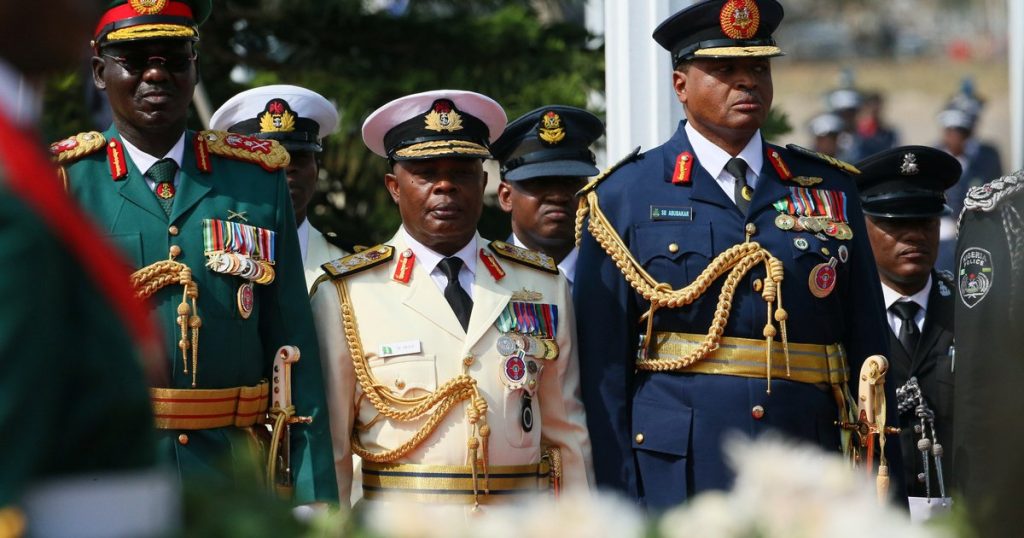
The Nigerian Armed Forces (NAF) represent a potent and historically significant military entity in Africa. Established in 1960, the NAF, consisting of the Army, Navy, and Air Force, operates under a constitutional mandate to defend Nigeria’s sovereignty and territorial integrity while also acting in aid of civil authorities to suppress insurrection. Despite being ranked as the most powerful military in sub-Saharan Africa, the NAF faces a complex array of challenges that threaten its strategic effectiveness and internal stability. Its history, defined by the Nigerian Civil War, has shaped it into an institution predominantly engaged in internal security operations, which creates a strategic paradox for a military designed for conventional warfare. Pervasive issues of corruption and credible allegations of human rights abuses have further compounded these challenges, eroding public trust and complicating relationships with international partners. The government’s push for modernization and indigenous manufacturing is a crucial step toward enhancing national security, yet the long-term success of these initiatives hinges on addressing the systemic issues of accountability and transparency. This report provides a detailed analysis of the NAF’s structure, capabilities, operational roles, and key challenges, concluding with recommendations to foster a more professional and effective force.
1. Introduction
The Nigerian Armed Forces (NAF) serve as the military forces of the Federal Republic of Nigeria. They are comprised of three principal service branches: the Nigerian Army (NA), the Nigerian Navy (NN), and the Nigerian Air Force (NAF). The constitutional foundation for their existence and roles is laid out in Nigeria’s 1999 Constitution, which mandates that the NAF must defend the country from external aggression, maintain territorial integrity, secure its borders on land, sea, and air, and, when called upon by the President, suppress insurrection and restore order in aid of civil authorities. This constitutional framework establishes a dual role for the military: as a guardian against foreign threats and as an instrument of domestic security.
The President of Nigeria holds the ultimate authority as the Commander-in-Chief (C-in-C) of the armed forces. This power is exercised through the Ministry of Defence, which oversees the management of the military and its personnel. The operational leadership is vested in the Chief of Defence Staff (CDS), who is subordinate to the Defence Minister. The current CDS is General Christopher Gwabin Musa, who has held the position since June 23, 2023.
On a strategic level, the NAF stands as a formidable force in the region. With more than 230,000 active personnel, it is one of the largest and most well-equipped military services in Africa. Global Firepower ranks the NAF as the most powerful military in sub-Saharan Africa and places it 31st internationally. This standing is supported by a significant financial commitment from the government. The proposed 2025 budget allocates a substantial ₦4.91 trillion, or approximately $3.1 billion, to defense and security, representing a notable 41.9% increase from the previous year. This substantial investment underscores the government’s recognition of the severe security challenges facing the nation.
The NAF’s operational reality, however, presents a significant contradiction. While it is constitutionally designed for external defense and widely recognized as a regional power, its resources and manpower are predominantly consumed by a multitude of protracted internal security operations. This creates a fundamental strategic dilemma. A military structured and trained for conventional external threats is constantly engaged in asymmetric conflicts against non-state actors like Boko Haram, ISWAP, and armed bandit groups. This pervasive internal engagement can overstretch the force and potentially erode its readiness and professional focus for its primary constitutional mandate. The persistent deployment of the NAF in two-thirds of the country’s states highlights a critical mismatch between its strategic purpose and its operational function.
Below is a table providing a concise overview of the Nigerian Armed Forces’ key statistics.
Table 1: The Nigerian Armed Forces: Key Statistics (2025)
| Category | Data | Source |
| Active Personnel | 230,000 | |
| Reserve Personnel | 0 | |
| 2025 Defense Budget | ₦4.91 trillion / ~$3.1 billion | |
| Global Firepower Rank | 31st globally, 1st in Sub-Saharan Africa |
2. Historical Evolution and Strategic Context
The Nigerian Armed Forces did not emerge suddenly at independence but evolved from colonial-era security units. The military’s origins can be traced to 1863 with the formation of a local force known as the “Glover Hausas”. This small unit, organized by Lieutenant Glover of the Royal Navy, was initially used for punitive expeditions and protecting British trade routes around Lagos. Over the years, it evolved through various names, including the “Hausa Constabulary,” the “Lagos Constabulary,” and, ultimately, was absorbed into the Royal West African Frontier Force (RWAFF) in 1901. This force was a multi-battalion field force of the British Empire, and its Nigerian combat units were the direct predecessors of the modern NAF. In 1956, the Nigerian Regiment of the RWAFF was renamed the Nigerian Military Forces, and by April 1958, the colonial government had taken control from the British War Office. On October 1, 1960, upon Nigeria’s independence, the Nigerian Military Forces were officially established as the successor to the RWAFF combat units.
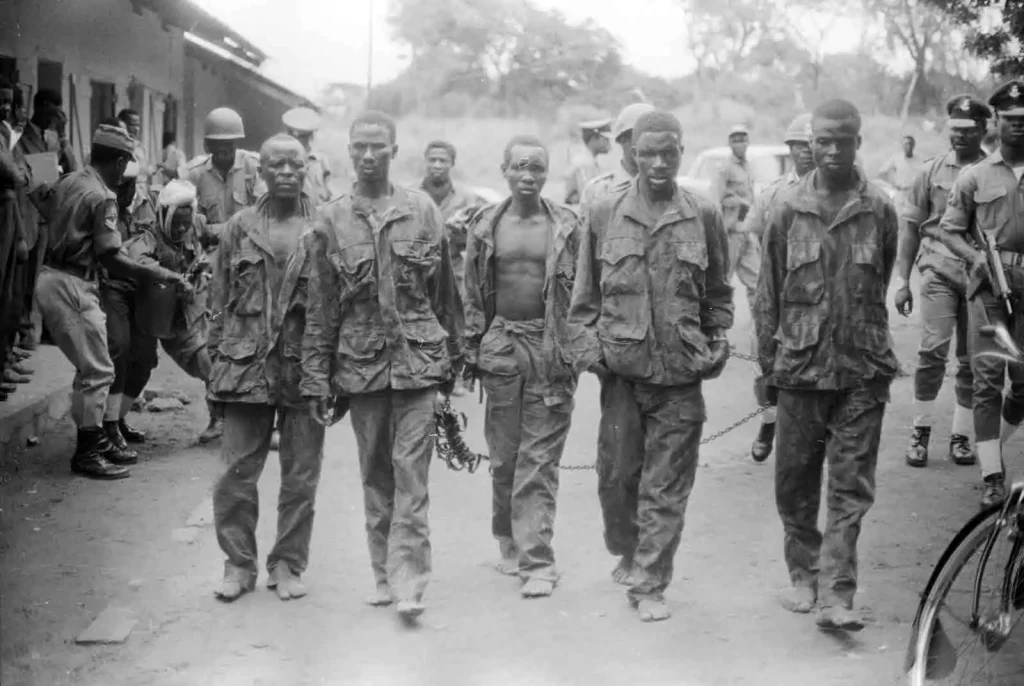
The most defining and transformative event in the NAF’s history was the Nigerian Civil War, also known as the Biafra War, which lasted from 1967 to 1970. This political-ethnic conflict was triggered by the attempted secession of the Eastern Region, populated primarily by the Igbo people, who declared themselves the Republic of Biafra. The federal government, under the leadership of Lieutenant Colonel Yakubu Gowon, was determined to prevent the dismantling of the Nigerian state and launched a military campaign against the Biafran army.
The war became a crucible for the military, which ballooned dramatically in size. From an initial strength of 85,000 personnel in 1967, the force expanded to more than 250,000 troops by the time the war ended. This massive expansion cemented the military’s role as a dominant institution in Nigerian society, a status it had been building since the first military regime. The federal government’s victory in the war, culminating in the surrender of Biafran forces in January 1970, preserved national unity but paradoxically undermined the nascent civilian government.
Following the war, the military was halved in size to approximately 125,000 men. Despite this reduction, the conflict had already entrenched the military’s “first-among-equals” status. This newfound power allowed it to repeatedly seize control of the government through a series of military coups in 1975, 1983, 1985, 1993, and 1996, before democracy was finally re-established in 1999. The post-war era was also marked by a lamentable decline in military professionalism and proficiency, a point of concern noted by former President Olusegun Obasanjo. The legacy of the civil war continues to influence the complex relationship between the NAF and the Nigerian state, as well as the public perception of the armed forces.
3. Command, Control, and Organization
The command and control structure of the Nigerian Armed Forces is meticulously defined to ensure civilian oversight while leveraging military expertise. At the apex of this hierarchy is the President of Nigeria, who holds the title of Commander-in-Chief of the armed forces. This constitutional authority is delegated through the Ministry of Defence, which oversees the military’s overall management and its personnel.
The operational head of the NAF is the Chief of Defence Staff (CDS), who reports directly to the Nigerian Defence Minister. The current CDS, General Christopher Gwabin Musa, took office on June 23, 2023. A crucial advisory body is the National Defence Council (NDC), which has been in place since 1979. Chaired by the President, the NDC’s members include the Vice President, the National Security Adviser, the Minister of Defence and Minister of State for Defence, the CDS, and the Chiefs of Army, Naval, and Air Staff. The composition of the NDC indicates a deliberate effort to balance civilian and military power. The formal integration of the military high command into the highest level of national security policy-making shows that the government acknowledges the military’s institutional weight and seeks to collaborate rather than merely dictate to it. This structure is a practical response to the political reality of a democracy that emerged from prolonged military rule.
Each of the three service branches operates with its own headquarters and is led by its respective chief. The Nigerian Army is currently headed by Lieutenant General Olufemi Oluyede. The Nigerian Navy’s command structure includes Naval Headquarters in Abuja and three operational commands located in Lagos, Calabar, and Bayelsa. The Nigerian Air Force is led by Air Marshal Hassan Bala Abubakar. This decentralized structure allows for specialized command and control for each service while ensuring they operate in a coordinated manner under the ultimate authority of the CDS and the C-in-C.
The President’s direct involvement in military affairs, such as attending ground-breaking ceremonies for new military complexes and promising to support the welfare of officers and men, reinforces the close relationship between the civilian government and the armed forces. This hands-on approach is a key part of maintaining loyalty and ensuring the military remains a pillar of the democratic state, rather than a disruptive political force.
4. Service Branches: Structure, Personnel, and Assets
The Nigerian Armed Forces are composed of three distinct and highly specialized service branches, each with a unique role in safeguarding the nation. The capabilities and assets of these branches reflect both a policy of international procurement diversification and a growing commitment to indigenous manufacturing.
4.1 The Nigerian Army (NA)
As the land branch, the Nigerian Army is the largest of the three services and serves as the backbone of the nation’s defense. Its major formations include the 1st, 2nd, and 3rd Armoured Divisions, as well as the 6th, 7th, 8th, 81st, and 82nd Divisions. The army’s equipment inventory is a blend of foreign imports and domestically produced hardware. For infantry, it utilizes assault rifles such as the Polish Beryl M762, which is produced locally under license by the Defence Industries Corporation of Nigeria (DICON). The indigenous OBJ-006, a licensed copy of the AK-47, is also a standard-issue rifle.
The army’s armored fleet is crucial for both conventional and counterinsurgency operations. Its inventory includes a range of armored vehicles from various global sources, such as the FV101 Scorpion reconnaissance vehicles from the United Kingdom, EE-9 Cascavel armored cars from Brazil, and Type 89 Armoured Personnel Carriers (APCs) from China. The army has also bolstered its domestic capabilities with the introduction of locally produced Mine-Resistant Ambush Protected (MRAP) vehicles like the Ezugwu MRAP, developed in collaboration with DICON and the Nigerian Army Command Engineering Depot. Recently, new combat vehicles and motorcycles were deployed to troops in the North Central region to enhance mobility and combat effectiveness against banditry.
4.2 The Nigerian Navy (NN)
The Nigerian Navy is the maritime branch of the armed forces, responsible for securing Nigeria’s extensive coastline and territorial waters. Its command structure includes Naval Headquarters and three operational commands based in Lagos, Calabar, and Bayelsa. The NN’s fleet is a mix of frigates, patrol vessels, and minor surface vessels. The flagship of the fleet is the MEKO 360 Type H1 frigate, NNS Aradu, which is undergoing refurbishment in Turkey. The navy’s patrol vessel inventory includes vessels from various countries, such as the Tuzla class from Turkey and the Sagbama class from China. A notable achievement is the domestic production of patrol boats, such as the Andoni class, which were designed and built by the Naval Dockyard Limited in Nigeria. The NN plays a critical role in an ongoing anti-piracy campaign in the Niger Delta, which is essential for protecting the nation’s vital petroleum industry.
4.3 The Nigerian Air Force (NAF)
The NAF is the youngest service branch, established in January 1964 with technical assistance from West Germany. It is organized into several commands, including Tactical Air, Mobility, Training, Logistics, and Special Operations. The NAF’s air fleet is a diverse array of aircraft from a variety of foreign suppliers, including fighter jets like the JF-17 and Chengdu J-7, attack helicopters such as the T129 Atak and AH-1Z, and transport aircraft like the Lockheed C-130 Hercules.
The NAF is currently undergoing a significant modernization program. The Chief of Air Staff, Air Marshal Hasan Abubakar, has announced plans to acquire 49 new aircraft by the end of 2026, including three CASA 295 transport aircraft, 10 AW-109 Trekker Type B helicopters, 12 AH-1Z attack helicopters, and 24 M-346 fighter aircraft. This planned acquisition builds on the delivery of 15 new aircraft in the last two years, which included T-129 ATAK helicopters and Beechcraft King Air aircraft.
The NAF’s equipment inventory, along with that of the other service branches, reveals a conscious strategic policy of diversification. By sourcing military hardware from countries such as the United Kingdom, United States, Turkey, India, and China, Nigeria avoids over-reliance on a single supplier or geopolitical bloc. This approach is a pragmatic response to geopolitical realities and the need for self-sufficiency in the face of potential foreign sanctions. Furthermore, the growing emphasis on indigenous manufacturing, as evidenced by the work of DICON and private firms like Proforce, is a core national security imperative. The President’s explicit directive to prioritize local production of military hardware is aimed at building institutional resilience and ensuring operational continuity independent of external political pressures.
Table 2: Key Equipment Inventory by Service Branch
| Service Branch | Equipment Type | Examples | Origin |
| Nigerian Army | Assault Rifles | Beryl M762, OBJ-006 (AK-47 variant) | Poland, Nigeria, Soviet Union |
| Reconnaissance Vehicles | FV101 Scorpion, Panhard AML | UK, France | |
| Armoured Personnel Carriers (APC) | Type 89, BTR-3, Mowag Piranha | China, Ukraine, Switzerland | |
| Mine-Resistant Ambush Protected (MRAP) | Ezugwu MRAP, PF Hulk | Nigeria | |
| Nigerian Navy | Frigate | NNS Aradu | Germany |
| Patrol Vessels | Andoni Class, Tuzla Class, Sagbama Class | Nigeria, Turkey, China | |
| Fast Interceptor Craft | C-Falcon Class, Aresa 1800 Fighter II | France, Spain | |
| Nigerian Air Force | Fighter Aircraft | JF-17, Chengdu J-7 | China |
| Attack Helicopters | T129 Atak, AH-1Z | Turkey, United States | |
| Transport Aircraft | Lockheed C-130 Hercules, CASA 295 | United States, Spain |
5. Military Training and Professional Development
The professional development of Nigeria’s military personnel follows a structured and multi-tiered approach, combining a legacy of British military tradition with modern academic and strategic training. The foundational institution for officer training is the Nigerian Defence Academy (NDA) in Kaduna. The NDA, established in 1964 as a reformation of the British-run Royal Military Forces Training College, trains officer cadets for commissioning into all three service branches. The flagship program, the “Regular Combatant Course,” is a five-year intensive program that includes four years of academic study leading to a bachelor’s degree and one year of dedicated military training. The academic rigor of the NDA is comparable to that of conventional universities, offering degrees in fields ranging from engineering and computer science to history and international studies.
For individuals who already hold a degree, the Direct Short Service Commission (DSSC) provides an alternative pathway to becoming an officer. This program is a six-month intensive military training course for professionals in specialized fields, such as medicine and law, and upon successful completion, candidates are commissioned into the rank of Flying Officer in the Air Force or its equivalent in the other services. For enlisted personnel, the Basic Military Training Course (BMTC) offers a short-term training program, not exceeding six months, for those with a secondary school or trade certificate.
Beyond initial training, the NAF has a robust system for continuing education and professional development. The Armed Forces Command and Staff College (AFCSC), a joint service institution founded in 1976 with assistance from the British Army Advisory Team, is designed to produce operational-level officers of the highest professional standard. It conducts one-year senior courses for majors and their equivalents and two 20-week junior courses for captains, focusing on staff duties and professional knowledge. The Training and Doctrine Command (TRADOC) also plays a crucial role in the Nigerian Army, supervising all army training schools and acting as a central think-tank for doctrinal and combat development.
The Nigerian military’s training philosophy represents a hybrid model that blends a strong foundation in the British colonial tradition with a modern, academic approach. The origins of institutions like the NDA and AFCSC from British models show a clear legacy of the Commonwealth military model, which emphasizes discipline and staff duties. However, the inclusion of comprehensive academic programs at the NDA and the existence of a think-tank like TRADOC demonstrate a move toward a more intellectually robust and self-reliant military. The DSSC for professionals is a clear indication that the military recognizes the need to integrate specialized skills, which are critical for addressing the multifaceted security challenges it faces, from counter-insurgency to complex international peacekeeping operations.
6. Operational Roles and Engagements
The Nigerian Armed Forces’ operational profile is characterized by a significant and ongoing shift from its traditional role of external defense to an overwhelming focus on internal security. While its constitutional mandate prioritizes the defense of Nigeria from external aggression, the military is predominantly engaged in protracted domestic conflicts against non-state actors.
6.1 Internal Security Operations
The NAF is constitutionally authorized to “suppress insurrection and act in aid of civil authorities”. This provision has made the military a primary instrument for managing Nigeria’s escalating internal security challenges. The most prominent of these is the counter-insurgency campaign against the Boko Haram and ISWAP groups, which began their armed rebellion in 2009. This conflict has resulted in the deaths of tens of thousands of people and the displacement of over 2 million civilians. Despite a 2015 offensive by a Nigeria-led coalition that forced Boko Haram to retreat into the Sambisa Forest, the groups have adapted, with ISWAP emerging as a major splinter faction. The military is described as being “overstretched” by these persistent and multi-front deployments.
In addition to the insurgency in the northeast, the military is deployed to combat other significant internal threats. These include armed banditry and communal violence in the north-central and north-western regions, which involve mass kidnappings and raids on villages. The Nigerian Navy is also heavily involved in an anti-piracy campaign in the Niger Delta, which is vital for protecting the petroleum industry, the source of 90% of Nigeria’s exports and 35% of its government revenue.
The NAF’s operational history is a classic case of role-reversal, where a military designed for conventional external defense has become a primary instrument of internal security. This shift, driven by escalating domestic instability, has created a strategic dilemma where regional power projection is secondary to an exhausting internal “war.” The military’s challenge is further compounded by the fact that it is not primarily trained for such operations, which can lead to a more “militaristic approach” and allegations of “high-handedness and insensitivity” toward civilians. This has, in turn, led to a decline in public trust and cooperation, making the management of internal security threats even more difficult.
6.2 International Peacekeeping and Regional Leadership
In contrast to its internal struggles, the NAF has a long and celebrated history of international peacekeeping. Since achieving independence in 1960, Nigeria has been a staunch advocate for global peace and has been a prolific contributor to Peace Support Operations (PSOs). The earliest test of the NAF’s international role came just months after its formation, when it contributed forces and police to the UN mission in the Congo (ONUC) from 1960 to 1964.
Since then, Nigeria has participated in a wide array of missions under the mandates of the United Nations (UN), the Organization of African Unity (OAU) and its successor, the African Union (AU), and the Economic Community of West African States (ECOWAS). Notable UN missions include UNIFIL in Lebanon, UNPROFOR in former Yugoslavia, and MONUC in the Democratic Republic of the Congo. Nigeria has also been a key regional leader, notably as the backbone of the ECOWAS Cease-fire Monitoring Group (ECOMOG) in Liberia and Sierra Leone. This regional leadership, however, has come at a significant financial and human cost to the nation. The NAF’s consistent and extensive participation in these missions has earned its contingents citations and medals for leadership, bravery, and professionalism.
7. Strategic Challenges and Modernization
Despite its regional prominence, the Nigerian Armed Forces face several deep-seated challenges that undermine its operational effectiveness and public standing. These issues, particularly corruption and human rights violations, are interconnected and form a critical feedback loop that hinders progress.
7.1 Systemic Corruption and its Impact
Corruption is a pervasive problem that has historically weakened the NAF’s capacity to confront security threats. Pervasive graft in the defense sector, especially in procurement practices and the abuse of opaque “security votes,” has resulted in the waste of billions of dollars. This has directly impacted the military’s ability to acquire the necessary equipment and training to combat sophisticated militant groups. Transparency International has reported that corrupt officials have created fake defense contracts and laundered the proceeds abroad, leaving the military with inadequate resources. In a bid to counter such allegations, the Nigerian Defence Headquarters has claimed to have reformed its procurement system by dealing directly with sovereign states, rather than private vendors or contractors.
7.2 Human Rights and Accountability
The NAF is facing persistent and severe allegations of human rights violations. Credible reports from both the US State Department and Amnesty International document unlawful killings, torture, forced disappearances, and the use of excessive force by security personnel. A particularly grave allegation, detailed in a Reuters investigation, suggests that the military ran a secret, illegal abortion program from 2013 to 2022 that terminated at least 10,000 pregnancies among women and girls who had been kidnapped and raped by Boko Haram fighters. The military has vehemently denied these claims, but the International Criminal Court (ICC) has found reasonable grounds to believe that both Boko Haram and Nigerian security forces have committed war crimes and crimes against humanity. While some authorities have investigated these claims, impunity remains a persistent issue, with the results of disciplinary proceedings not always made public.
There exists a critical and dangerous feedback loop between corruption, operational failure, and human rights abuses. Corruption in procurement leads to an under-equipped military, which, combined with a lack of appropriate training for internal security, can result in operational failures and the use of excessive force against civilians. These human rights violations create a credibility crisis, alienating the public and civil society groups and complicating the counter-insurgency effort. International partners may cite these abuses as grounds to restrict or delay arms sales, further exacerbating the equipment deficit. A general lack of transparent accountability mechanisms reinforces this cycle of impunity, making it a central policy challenge for the government.
7.3 Modernization and Indigenous Production
In response to the challenges of equipment deficits and a desire for greater self-reliance, the Nigerian government is committed to modernizing the armed forces and developing indigenous defense capabilities. The NAF has acquired 15 new aircraft in the last two years and plans to acquire an additional 49 by the end of 2026, including M-346 fighter jets and AH-1Z attack helicopters. The government has also made significant payments totaling over ₦33 billion for the procurement of “critical and urgent operational equipment” for the military.
On the local front, the Defence Industries Corporation of Nigeria (DICON), a state-run enterprise, manufactures small arms and armored vehicles under license. DICON produces licensed copies of the Beretta BM59, FN FAL, and the AK-47 assault rifle, which it calls the OBJ-006. It also produces the Ezugwu MRAP in collaboration with the Nigerian Army Command Engineering Depot. President Bola Tinubu has lauded these efforts, citing locally produced MRAPs and APCs as evidence of the nation’s growing defense capabilities. This push for local manufacturing is a logical step to counter foreign pressure and build strategic independence, though its ultimate success depends on addressing the underlying issues of corruption and accountability.
Table 3: Recent and Planned Military Procurement (2024-2026)
| Service Branch | Platform | Type | Origin | Status |
| Nigerian Army | Troop-carrying vehicles, gun trucks, motorcycles | Ground vehicles | N/A | Deployed to North Central region |
| PF Hulk, PF Fury | Armored vehicles | Nigeria (Proforce) | Recently introduced | |
| Nigerian Navy | Tuzla class patrol boat | Patrol boat | Turkey | Under construction |
| Nigerian Air Force | AH-1Z attack helicopters | Helicopter | United States | Planned (12 by 2026) |
| M-346 fighter aircraft | Fighter jet | Italy | Planned (24 by 2026) | |
| CASA 295 transport aircraft | Transport aircraft | Spain | Planned (3 by 2026) | |
| T-129 ATAK helicopters | Helicopter | Turkey | Delivered (6 in last two years) |
8. Strategic Outlook and Recommendations
The Nigerian Armed Forces stand at a critical juncture. They are a capable regional power with a proud history of international peacekeeping and a clear constitutional mandate to protect the nation. However, the military is facing an existential threat from within, struggling with a complex array of internal security challenges. The core issues of systemic corruption, a lack of accountability for human rights abuses, and an overstretched operational capacity have eroded its effectiveness and public trust. The government’s push for modernization and indigenous manufacturing is a positive step toward enhancing national security, but its success is contingent on addressing the underlying institutional challenges.
Based on the analysis, the following recommendations are provided to foster a more professional, effective, and accountable military force:
Recommendation 1: Professionalization for Unconventional Warfare. The military’s primary engagement in internal security operations requires a fundamental shift in its training and doctrine. The NAF is not primarily trained for this role, which can lead to the use of excessive force and a decline in public trust. It is recommended that the government invest in specialized training programs and develop a dedicated doctrine for counter-insurgency and internal security operations. This should focus on intelligence-led operations, negotiation and mediation skills, and minimizing civilian harm to improve operational effectiveness and build public cooperation.
Recommendation 2: Enhance Transparency and Accountability. The endemic corruption in the defense sector, particularly in procurement, must be addressed with robust civilian oversight mechanisms. It is recommended that the government implement a transparent system for defense budgeting and expenditure, with public access to information regarding contracts and procurements. This would reduce the waste of public funds and ensure that resources are effectively utilized to equip the armed forces.
Recommendation 3: Strengthen Civil-Military Relations. The persistent allegations of human rights abuses have created a credibility crisis for the military. To rebuild public trust and ensure long-term stability, it is recommended that a clear, public, and independent mechanism be established to investigate and prosecute human rights abuses by security forces. This body should have the authority to hold personnel accountable and ensure that justice is served, thereby addressing the issue of impunity and fostering a culture of integrity within the ranks.
Recommendation 4: Strategic Reorientation. The military’s over-reliance on internal deployments has diverted it from its primary constitutional mandate of external defense. It is recommended that the government develop a long-term strategy to gradually shift the burden of internal security to more appropriately trained civil law enforcement agencies, such as the Nigerian Police Force. This would allow the NAF to refocus on its core mission of external defense, securing Nigeria’s borders, and maintaining its readiness as a regional power, while also ensuring that internal conflicts are managed in a way that respects civilian rights and promotes stability.










Related Posts

Stay Informed With the Latest & Most Important News
Previous Post
Next Post


Advertisement