Now Reading: The Propaganda War: Radio Biafra vs. Federal Nigeria
-
01
The Propaganda War: Radio Biafra vs. Federal Nigeria
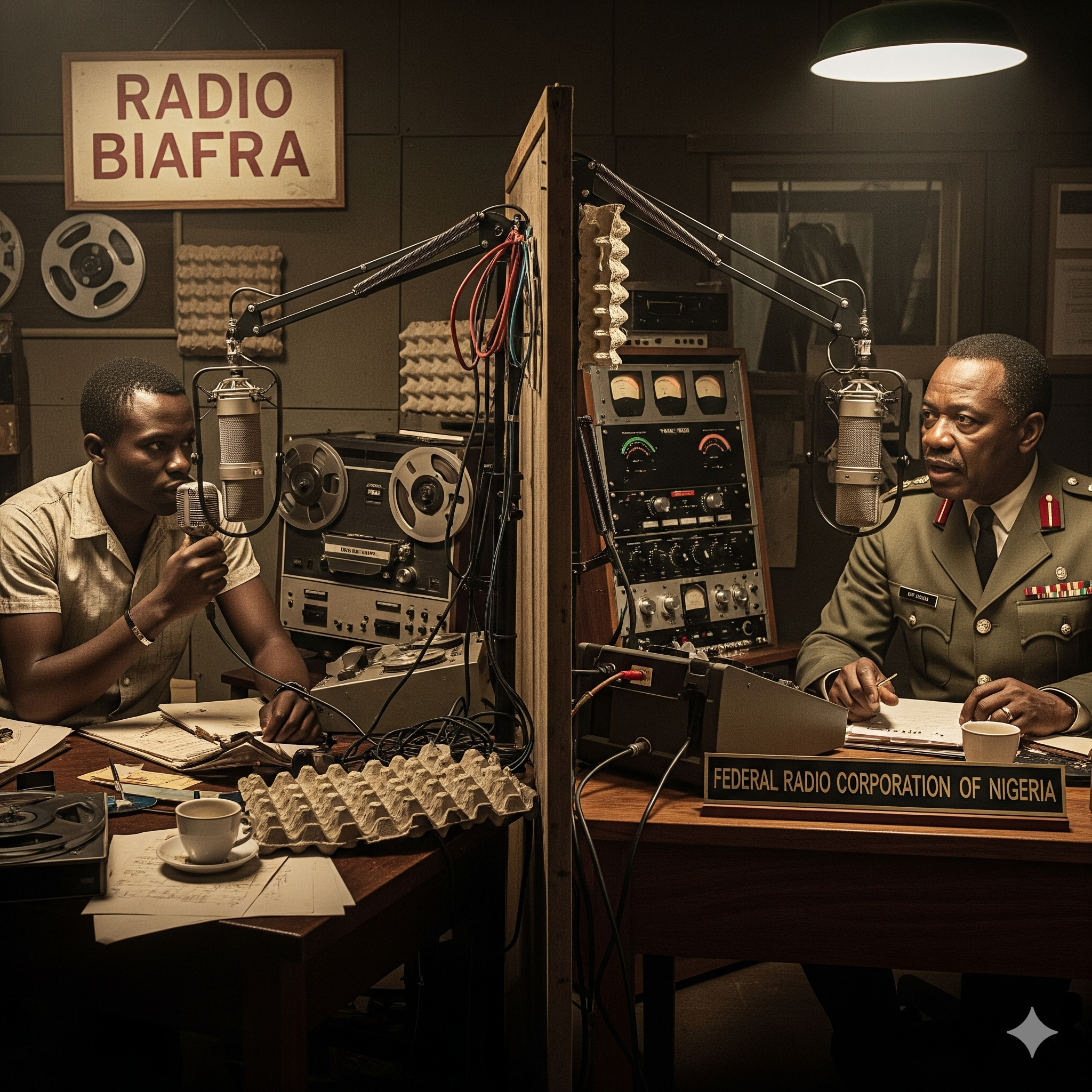

(Part of the Nigeria234.com Civil War Series (1966–1970))

📝 Introduction
In the Nigerian Civil War (1967–1970), the battle was not only fought with guns and bombs. It was also a war of words, images, and ideas. Both the Federal Government and the secessionist Republic of Biafra launched propaganda campaigns to win the loyalty of Nigerians, secure international support, and demoralize the enemy.
The conflict between Radio Biafra and Federal Nigeria’s media remains one of the most fascinating chapters of wartime communication.
📡 Radio Biafra – The Voice of Resistance
- Biafra operated a clandestine station, known popularly as Radio Biafra, broadcasting from Enugu and later from hidden locations.
- It aired speeches by Ojukwu, projecting him as the defender of Eastern Nigeria.
- Broadcasts emphasized:
- The genocide narrative: that Igbos were victims of systematic extermination.
- Appeals for international sympathy, highlighting images of starving children.
- Messages of Biafran pride and resilience, urging citizens to endure hardship.
- Radio Biafra became a powerful psychological tool, though Federal Nigeria sought to jam its signals.
📻 Federal Nigeria’s Media – The Voice of Unity
- The Federal Government used Radio Nigeria, the Daily Times, and other state outlets.
- Its messaging focused on:
- Preserving Nigeria’s territorial unity.
- Portraying Biafra as a rebellion fueled by Ojukwu’s ambition.
- Minimizing or dismissing international reports of starvation, calling them Biafran propaganda.
- Boosting morale among Federal troops and civilians.
📰 The Battle of Images
- Biafra’s greatest propaganda weapon was photographs of starving children circulated globally.
- Western media — BBC, Reuters, and international newspapers — picked up these images, sparking outrage.
- For many outside Nigeria, the Civil War was remembered not for its battles, but for the humanitarian catastrophe broadcast into living rooms.
- Federal Nigeria countered by insisting aid flights were being used to smuggle weapons and prolong the war.
🌍 International Impact
- Biafra’s propaganda machine won global sympathy, especially among church groups, student activists, and humanitarian organizations.
- Federal Nigeria, however, had the diplomatic advantage: recognition by Britain, the USSR, and most of the world’s governments.
- The propaganda war thus split public opinion (largely pro-Biafra) from state policy (largely pro-Federal Nigeria).
⚡ Effectiveness of Propaganda
- For Biafra: propaganda prolonged the struggle by ensuring international aid and moral support.
- For Federal Nigeria: control of the official narrative ensured legitimacy and eventual victory.
- For the world: the war helped redefine media’s role in humanitarian crises, laying groundwork for modern global activism.
💬 Reflection
“In Biafra, the gun fought for survival. On the airwaves, the voice fought for recognition.”
🌟 Conclusion
The Nigerian Civil War showed that wars are fought not only on battlefields but also on airwaves and newspaper pages. While Federal Nigeria won militarily, Biafra won the war of images — leaving a global memory of famine and suffering that still echoes today.










Related Posts
Stay Informed With the Latest & Most Important News
Previous Post
Next Post
Advertisement