Now Reading: The Cycles of Transition: An Expert Analysis of Nigeria’s Democratic Journey
-
01
The Cycles of Transition: An Expert Analysis of Nigeria’s Democratic Journey
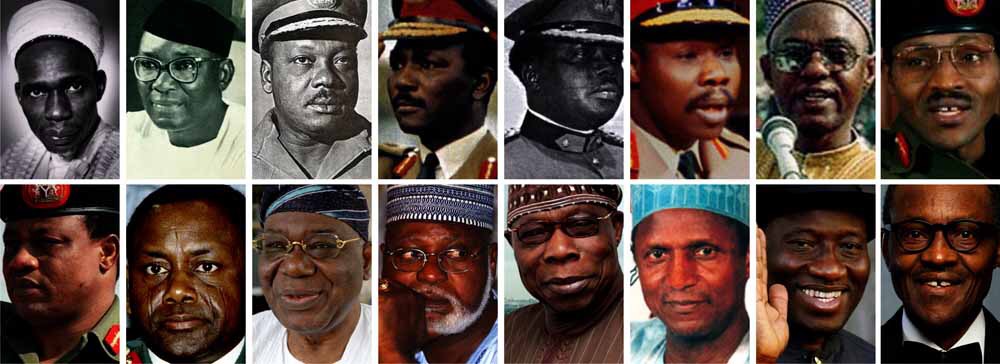

Nigeria’s democratic journey is a cyclical narrative marked by repeated transitions between civilian and military rule. This report argues that the nation’s political fragility is not incidental but is deeply rooted in its colonial foundations, which institutionalized ethno-regional cleavages, and has been exacerbated by persistent issues of corruption, insecurity, and institutional weakness. While the Fourth Republic (1999–present) represents the longest period of uninterrupted civilian rule, it continues to grapple with these foundational challenges, demonstrating that democratic consolidation is an ongoing, complex process. The report provides a multi-period analysis, tracing the causal links from pre-independence constitutional failures to the contemporary crises that threaten the democratic project.
1. Introduction: Unpacking Nigeria’s Democratic Trajectory
1.1. Scope and Objective
This report provides a comprehensive, multi-layered analysis of Nigeria’s democratic journey, from its colonial origins to the present day. It aims to transcend a simple chronological account by identifying the recurring themes and causal relationships that have defined the country’s political evolution. The objective is to offer an expert-level understanding of the challenges to democratic consolidation, grounding the analysis in historical context and contemporary realities.
1.2. Methodological Approach
The report utilizes a synthesis of historical analysis, political science frameworks, and contemporary data. It draws upon a curated collection of research materials, including academic papers, news reports, and institutional documents, to present a holistic narrative. Each section integrates factual data points with interpretive commentary to illuminate the underlying causes of key political events.
1.3. A Historical Perspective on Democratic Fragility
The report’s central premise is that Nigeria’s democratic fragility is a direct legacy of its colonial past. The British administrative structure, which united its geographically dispersed territories into a single state in 1914 while creating distinct, competing regions in 1922, set the stage for a “winner-take-all” political culture and deep-seated ethno-regional mistrust. The British, in their constitutional design, attempted to manage a diverse population. However, by establishing a three-region structure and granting them significant autonomy, they inadvertently created powerful, ethnically homogenous political blocs. This foundational division has been a persistent theme, influencing the character of political parties, the conduct of elections, and the justifications for military interventions. It meant that winning power was not just about policy but about securing regional and ethnic dominance.
2. Foundations of a Divided Nation: The First Republic and Colonial Legacy (1914–1966)
2.1. Constitutional Engineering and Colonial Rule
This section examines how Britain’s constitutional policies, from the amalgamation of 1914 to the Lyttleton Constitution of 1954, inadvertently fostered regionalism over national unity. The process of constitutional decolonization adopted by Britain in Nigeria informed its approach to other territories. Early landmarks in this process include the 1914 amalgamation and the 1922 Clifford Constitution, which structured Nigeria into three distinct regions: north, east, and west.
The Macpherson Constitution of 1951, which followed the Richards Constitution of 1946, began the formal constitution-making process for independence. While it increased the number of elected members to regional legislatures, it failed to resolve the fundamental question of a centralized versus a federal government, instead maintaining the status quo and entrenching the three-region structure. This constitutional framework directly led to the formation of political parties—the Northern People’s Congress (NPC), the National Council of Nigeria and the Cameroons (NCNC), and the Action Group (AG)—whose support was based on tribal or linguistic affiliations, with no party achieving a truly national character. The dominant party was different in each region, and the main opposition came principally from a party in power elsewhere, demonstrating the inter-regional, zero-sum nature of Nigerian politics. The Lyttleton Constitution of 1954 further cemented this federal principle, promoting regional sentiments and paving the way for independence with a politically polarized landscape.
| Name of Constitution | Year | Key Features | Impact on Nigeria’s Political Evolution |
| Clifford Constitution | 1922 | Structured Nigeria into three regions. | Reinforced regional identity over national unity. |
| Richards Constitution | 1946 | Introduced the federal principle with regional authority. | Intensified regionalism instead of encouraging political unification. |
| Macpherson Constitution | 1951 | Increased elected representation; maintained the three-region structure. | Led to the formation of political parties based on ethnic and linguistic affiliations; no truly national party emerged. |
| Lyttleton Constitution | 1954 | Established the Federation of Nigeria; promoted regional autonomy. | Further cemented a politically polarized landscape and paved the way for independence with a fragile federal structure. |
2.2. The First Republic: A Brief and Turbulent Experiment
This subsection details the structure and early political life of the First Republic. Nigeria became independent on October 1, 1960, and was a sovereign state under the 1960 Independence Constitution, which retained Queen Elizabeth II as titular head of state. The country officially became a republic on October 1, 1963, with the 1963 Constitution, which abolished the monarchy and established the First Nigerian Republic on a Westminster parliamentary system. The government was led by a coalition of the NPC and NCNC, with Abubakar Tafawa Balewa (NPC) as Prime Minister and Nnamdi Azikiwe (NCNC) as President. The Action Group (AG), led by Obafemi Awolowo, became the official opposition.
This period, though democratic on the surface, was defined by intense ethnic and regional competition. The major political parties had emerged in the late 1940s and early 1950s as regional entities aimed at controlling power within their respective regions. The struggle for state power was further complicated by an “affirmative action” program that favored the appointment of less-qualified northerners to federal public service positions, often replacing more qualified southerners and thereby alienating the NCNC from its coalition partner.
2.3. The Crises of the First Republic
This section provides a deep dive into the specific events that demonstrated the republic’s instability and led to its collapse. The constitutional frameworks imposed by the British did not merely reflect Nigeria’s regional diversity; they actively intensified it. The shift from a centralized state to a federal one with strong regional powers directly fostered ethnic-based political parties, making inter-party competition a zero-sum, inter-ethnic conflict.
The political disorder and turmoil during the First Republic were a direct result of ethnic division and competition. The failure of the 1962 census and the violence of the 1964 and 1965 elections were not just isolated events but logical outcomes of a political system designed to pit regional, ethnic parties against each other for control of state resources and power. The absence of a unifying national party meant that any political disagreement could quickly devolve into an existential, ethno-regional crisis.
The 1964 general election, the first to be conducted solely by Nigerians, was marked by widespread intimidation and unfair practices. When the main opposition alliance, the United Progressive Grand Alliance (UPGA), boycotted the election due to a lack of neutrality from the Federal Electoral Commission, the country’s politics became deeply polarized. The election was a constitutional attempt to establish democracy in Nigeria, and its failure made a coup “obvious”. When President Azikiwe refused to invite the winners, the Nigerian National Alliance (NNA), to form a government, a constitutional stalemate was created, which further fueled the crisis. The widespread violence and destruction, particularly in the Western Region, were immediate precursors to the military takeover.
The Western Region Crisis of 1965, which followed a split in the leadership of the Action Group, was a pivotal moment. The federal government declared a state of emergency, which it used to directly administer the region and remove the AG from power. Its leader, Awolowo, was convicted of treasonable felony. This regional crisis, which became a “theater of war,” was the final breakdown of law and order that led to the military seizing power on January 15, 1966, marking the collapse of the First Republic.
3. The Era of the Barracks: Military Rule and the Trauma of Civil War (1966–1999)
3.1. The Cycle of Military Interventions
The era of military rule institutionalized corruption and a “winner-take-all” mentality that has proven difficult to dislodge in the democratic era. The military did not just suspend democracy; it actively eroded the democratic culture and norms of accountability. The First Republic’s failure was rooted in a political structure prone to crisis. The military, seeing itself as a corrective force, intervened but failed to provide a viable alternative. Instead, its long rule, fueled by immense oil revenues, normalized state capture and corruption.
The First Republic was toppled by a coup on January 15, 1966, led by “junior officers,” including Major Chukwuma Kaduna Nzeogwu and Major Emmanuel Ifeajuna. This coup, seen as a response to widespread corruption and election violence, resulted in the killing of Prime Minister Abubakar Tafawa Balewa and the premiers of the Northern and Western regions. Major General Johnson Aguyi-Ironsi, an Igbo, took control and suspended the constitution. However, his plan to abolish the regions and impose a unitary government was perceived as an attempt at Igbo domination, leading to anti-Igbo riots in the north and a counter-coup on July 29, 1966. The counter-coup, led by northern officers like Lt. Colonel Murtala Muhammed, resulted in Aguyi-Ironsi’s assassination and the installation of Yakubu Gowon, also a northerner, which split the army along ethnic lines.
The period was defined by a series of power grabs, including the 1975 coup that brought Murtala Mohammed to power and the 1983 coup by Muhammadu Buhari, followed by Ibrahim Babangida’s coup in 1985. These coups suspended democratic institutions and entrenched a culture of authoritarianism, creating a revolving door of military leaders and demonstrating the profound disruption to democratic progress.
| Date of Coup | Key Figures | Preceding Head of State | Immediate Aftermath/Outcome |
| January 15, 1966 | Major Chukwuma Nzeogwu, Major Emmanuel Ifeajuna | Prime Minister Abubakar Tafawa Balewa | First Republic overthrown; General Johnson Aguyi-Ironsi takes control of the government, which is widely seen as an Igbo-led administration. |
| July 29, 1966 | Lt. Colonel Murtala Muhammed | Major General Johnson Aguyi-Ironsi | Aguyi-Ironsi deposed and killed; Colonel Yakubu Gowon, a northerner, is sworn in as head of the federal military government. |
| July 29, 1975 | General Murtala Mohammed | Lt. Colonel Yakubu Gowon | Gowon deposed; General Mohammed takes power. |
| December 31, 1983 | Major General Muhammadu Buhari | President Alhaji Shehu Shagari | Second Republic overthrown; General Buhari takes control, leading the Supreme Military Council. |
| August 27, 1985 | Major General Ibrahim Babangida | Major General Muhammadu Buhari | Buhari deposed; General Babangida takes control, leading the Armed Forces Ruling Council. |
3.2. The Nigerian Civil War (1967–1970): A Nation’s Defining Conflict
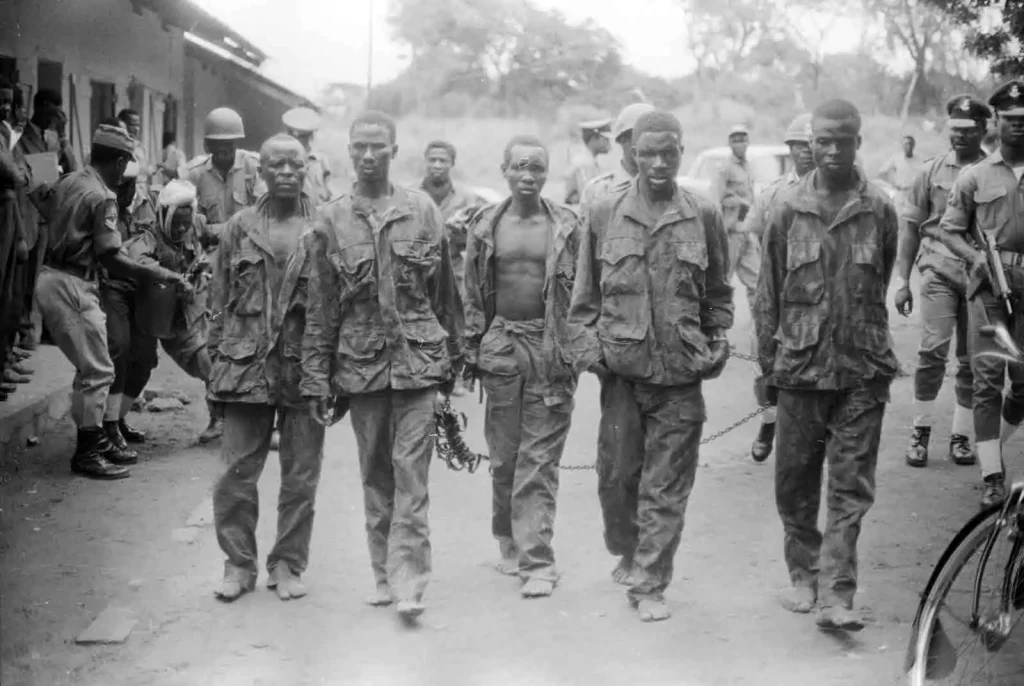
The civil war was a direct consequence of the 1966 coups and the subsequent anti-Igbo pogroms in the north. In response to the massacres and a perceived threat of northern dominance, Lt. Colonel Odumegwu Ojukwu, the military governor of the Eastern Region, declared the independence of the Republic of Biafra on May 30, 1967. This act was interpreted by the federal government as a rebellion.
The conflict was characterized by a military stalemate and heavy civilian casualties, with an estimated 500,000 to 3,000,000 people killed, mostly from starvation and disease. International involvement was significant; the UK and the Soviet Union supported the federal government with arms, while France supplied weapons to Biafra, although the French government denied it. The war ended on January 15, 1970, with Biafra’s surrender. The civil war left a deep scar on the national psyche, leading to the alienation of many Igbos, a legacy of “winner-take-all” politics, and the entrenchment of a highly corrupt, rent-seeking military elite, which was financed by oil wealth.
3.3. The Failed Third Republic and Path to a New Dawn
The military’s long rule, which normalized state capture and the accumulation of wealth through state power, set the stage for a post-1999 political system defined by patronage. The military transition programs, particularly under General Ibrahim Babangida, were widely seen as a sham, culminating in the annulment of the 1993 presidential election results, widely believed to have been won by Moshood K.O. Abiola. General Sani Abacha’s subsequent rule was marked by extreme repression and human rights abuses, including the murder of Kudirat Abiola.
The unexpected death of General Abacha in June 1998 created a political vacuum that forced the military, under General Abdulsalami Abubakar, to oversee a rapid, albeit flawed, transition to civilian rule. This event, rather than a sustained democratic struggle, was the proximate cause of the Fourth Republic’s establishment. The new civilian government inherited a deeply flawed system, a legacy of corruption, and a military elite that remained politically influential. The annulment of the 1993 election results and Abacha’s subsequent rule demonstrated that democratic progress could be easily halted and subverted by military power.
4. The Fourth Republic: A New Democratic Experience (1999–Present)
4.1. The 1999 Transition: Hopes and Flaws
The transition from military to civilian rule in 1999 was widely celebrated by Nigerians, who looked forward to a new era of stability and peace. However, the process was marred by significant flaws. The 1999 Constitution was promulgated by General Abubakar’s military council without meaningful public consultation, leading to questions about its legitimacy and democratic foundations from civil society groups. The elections themselves, from the local to the presidential levels, were noted by international and domestic observers for their serious flaws, including inflated voter turnout, ballot stuffing, and intimidation of officials and voters.
Olusegun Obasanjo, a former military head of state who had voluntarily handed over power in 1979, was elected president, securing 63 percent of the vote. His victory, over a Second Republic vice-president, was viewed as a pragmatic choice to secure a peaceful transition, although it highlighted the lingering influence of the military elite. The fact that the transition was initiated not by a popular uprising but by the death of a dictator meant that the new civilian government inherited a deeply flawed system and a legacy of corruption.
4.2. Electoral Landscape and Party Politics (1999–2023)
The political landscape of the Fourth Republic was initially dominated by the People’s Democratic Party (PDP), which won every presidential election from 1999 to 2011. However, these elections, particularly the 2007 polls, were widely criticized by international observers for being “flawed” and “not credible”. A significant turning point occurred in 2015 with the merger of opposition parties, including the ANPP and CPC, to form the All Progressives Congress (APC). This historic election, won by Muhammadu Buhari of the APC, marked the first time an incumbent president lost and conceded power peacefully. The 2023 election saw the continued dominance of the APC and PDP but also the emergence of a “third force,” the Labour Party, which secured a notable number of seats in the National Assembly, suggesting a potential shift in voter behavior and party competition. The Fourth Republic’s democratic institutions, while more resilient than their predecessors, are still burdened by the legacy of military rule and a lack of genuine ideological competition.
| Election Year | Major Parties | Presidential Candidates | Outcome |
| 1999 | PDP, APP, AD | Olusegun Obasanjo (PDP) vs. Olu Falae (APP/AD) | Olusegun Obasanjo (PDP) wins |
| 2003 | PDP, ANPP, AD | Olusegun Obasanjo (PDP) vs. Muhammadu Buhari (ANPP) | Olusegun Obasanjo (PDP) wins |
| 2007 | PDP, ANPP, AC | Umaru Yar’Adua (PDP) vs. Muhammadu Buhari (ANPP) | Umaru Yar’Adua (PDP) wins; election widely criticized as “flawed” |
| 2011 | PDP, CPC, ACN, ANPP | Goodluck Jonathan (PDP) vs. Muhammadu Buhari (CPC) | Goodluck Jonathan (PDP) wins; election seen as an improvement over 2007 |
| 2015 | PDP, APC | Goodluck Jonathan (PDP) vs. Muhammadu Buhari (APC) | Muhammadu Buhari (APC) wins, marking the first time an incumbent president lost and conceded |
| 2019 | APC, PDP | Muhammadu Buhari (APC) vs. Atiku Abubakar (PDP) | Muhammadu Buhari (APC) wins re-election |
| 2023 | APC, PDP, Labour Party | Bola Tinubu (APC) vs. Atiku Abubakar (PDP) vs. Peter Obi (LP) | Bola Tinubu (APC) wins, with the Labour Party emerging as a third force |
4.3. The Constitution of the Fourth Republic
The 1999 Constitution established a United States-style presidential system, abandoning the Westminster system of the First and Second Republics. It mandated that political parties and the cabinet must have a “federal character” to avoid the regionalism of the First Republic. The constitution guarantees a broad range of fundamental human rights, including the right to life, dignity, personal liberty, and freedom of expression. It also includes provisions for social and economic rights like the right to work, health care, and adequate means of livelihood, and outlines national ethics of discipline, integrity, and social justice. The government under Obasanjo also established the Human Rights Violations Investigation Commission, similar to South Africa’s Truth and Reconciliation Commission, to investigate past abuses.
5. The Enduring Fault Lines: Critical Challenges to Democratic Consolidation
5.1. Systemic Corruption: The Bane of Nigerian Governance
Corruption is a deep-seated issue, with Nigeria having lost over $400 billion to it since independence. It is a long-standing issue that permeates every level of government, from considerable contract fraud at the top to petty bribery and embezzlement. The military’s 16-year rule, which normalized corruption and the accumulation of wealth through state power, set the stage for a post-1999 political system defined by patronage. With political parties “no longer being driven by ideology” and politicians frequently switching allegiances, the primary motivation becomes the pursuit of electoral gain and the sharing of the country’s wealth among the political elite. This “politics of the belly” or “stomach infrastructure” is a rational response for a populace facing high poverty and unemployment.
The persistence of corruption is attributed to structural weaknesses like limited checks and balances, poorly enforced laws, a weak judiciary, and an entrenched culture of patronage and nepotism. The public has an ambivalent relationship with corruption; while they recognize it as a severe problem, many feel resigned, viewing it as a necessary evil to “get things done”. This resignation and skepticism hinder anti-corruption efforts and make people doubt the sincerity of government reforms.
5.2. The Crisis of Insecurity: From Insurgency to Banditry
Nigeria faces a multi-faceted security crisis, including Boko Haram insurgency in the north, farmer-herder clashes, and widespread kidnapping for ransom. The insecurity is often linked to failures in governance, systemic corruption, socio-economic inequalities, and the manipulation of ethno-religious identity politics. This insecurity has a devastating economic impact, deterring both domestic and foreign investment, forcing businesses to close or relocate, and disrupting critical sectors like agriculture. The government is forced to divert funds from developmental projects and poverty alleviation to security operations.
The contemporary challenges of corruption, insecurity, and ethno-religious conflict are not isolated problems but are deeply interconnected and mutually reinforcing. They represent the modern-day manifestations of Nigeria’s historical fault lines. The political instability of the First Republic and the military era was often driven by the struggle for control of the state, which was the primary source of wealth and power. This historical struggle has evolved into the modern-day phenomenon of systemic corruption, where state institutions are used for personal enrichment. This corruption, in turn, fuels insecurity by weakening security forces and diverting funds that could be used for development, which could address underlying issues of poverty and unemployment.
5.3. Ethno-Religious Tensions and National Unity
Colonial-era policies that institutionalized ethnic and religious divisions continue to manifest in contemporary political and social life. Issues like resource allocation and control of state power are often violently contested along ethnic and religious lines. Farmer-herder clashes, for example, have a complex interplay of environmental factors like desertification and climate change, but they are exacerbated by political, religious, and ethnic undertones. The lack of strong political will and disjointed policies contribute to the unabated conflict. This creates a breeding ground for ethno-religious tensions and conflict, demonstrating that tackling one issue in isolation without addressing the others is an exercise in futility.
6. The Pillars of Democracy: Institutions and Civil Society
6.1. The Independent National Electoral Commission (INEC)
The Independent National Electoral Commission (INEC) is tasked with organizing and supervising all elections, registering political parties, monitoring their finances, and conducting voter and civic education. Its mandate requires it to act with autonomy, impartiality, and transparency, ensuring a level playing field for all political actors. However, INEC has faced numerous challenges, including technical shortcomings, intimidation, and vote buying. The 2007 elections, in particular, were heavily criticized by international observers for falling “far short” of basic international standards and not being “credible”. The INEC Chairman has acknowledged that the “quality of an election is a reflection of the quality of the politics of a nation,” pointing to political violence and a lack of trust as major obstacles.
6.2. The Judiciary and Electoral Justice
The judiciary is a crucial arbiter in electoral disputes, acting as a final check on the executive and legislative branches. Its role is to prevent anarchy by providing a legal avenue for the resolution of grievances. However, the historical record shows that the judiciary’s impartiality has been questioned, especially during the First Republic, when judges’ actions were perceived as extra-judicial and driven by ethnic loyalties, undermining confidence in the courts. This has led to a general disinclination to trust the courts in political matters, reinforcing the idea that a decision in favor of the government is a foregone conclusion.
6.3. The Role of Civil Society and Media
Civil society organizations (CSOs) are defined as voluntary, non-state actors that promote good governance and accountability. They have played a vital role in Nigerian democracy by opposing authoritarian principles, advocating for human rights and legal reforms, and conducting voter education and mobilization. They are considered crucial for holding rulers accountable and establishing the foundations for durable democratic government. The media is seen as the “fourth pillar of government,” responsible for informing the public and holding leaders accountable. However, it is susceptible to manipulation and the phenomenon of “paid news,” which can skew public opinion and undermine credible elections. These formal and informal checks operate within a political culture that often subverts their intended functions, limiting their effectiveness.
7. Conclusion: Lessons Learned and a Forward Path
7.1. Synopsis of the Journey
Nigeria’s democratic journey is a testament to the resilience of its people but also a stark illustration of the deep-seated challenges that persist. The report has demonstrated a clear cause-and-effect chain: colonial constitutional structures -> ethno-regional parties -> First Republic’s collapse -> military intervention and a civil war -> institutionalized corruption and a “winner-take-all” political culture -> a fragile Fourth Republic grappling with insecurity, corruption, and lingering divisions. The Fourth Republic, while representing a historic period of uninterrupted civilian rule, is not a final destination but a work in progress. It is still burdened by the legacy of military rule and a political culture that values power and patronage over policy and accountability.
7.2. Recommendations for Democratic Consolidation
The path forward requires a multi-pronged, systemic approach that goes beyond superficial reforms.
- Institutional Strengthening: This includes genuine constitutional reform through public consultation to address the flaws of the 1999 Constitution. It also necessitates empowering institutions like INEC and the Judiciary by ensuring their financial and operational independence and holding corrupt officials accountable through special courts.
- Tackling Corruption and Insecurity: Anti-corruption efforts must move beyond isolated campaigns to a networked, participatory strategy that changes underlying social norms. Similarly, addressing insecurity requires not just a military response but a focus on the root causes: good governance, equitable resource distribution, and addressing socio-economic inequalities that create the conditions for violence and crime.
- Fostering National Unity: Promoting interfaith and inter-ethnic dialogue, decentralizing governance, and establishing a national reconciliation commission are crucial steps to heal historical wounds and build a more inclusive society. Only by addressing these foundational issues can Nigeria hope to consolidate its democratic gains and build a more stable and prosperous future.










Related Posts

Stay Informed With the Latest & Most Important News
Previous Post
Next Post

Advertisement