Now Reading: The Igbo Experience: A Comprehensive History from Pre-Colonial Origins to Modern Global Identity
-
01
The Igbo Experience: A Comprehensive History from Pre-Colonial Origins to Modern Global Identity
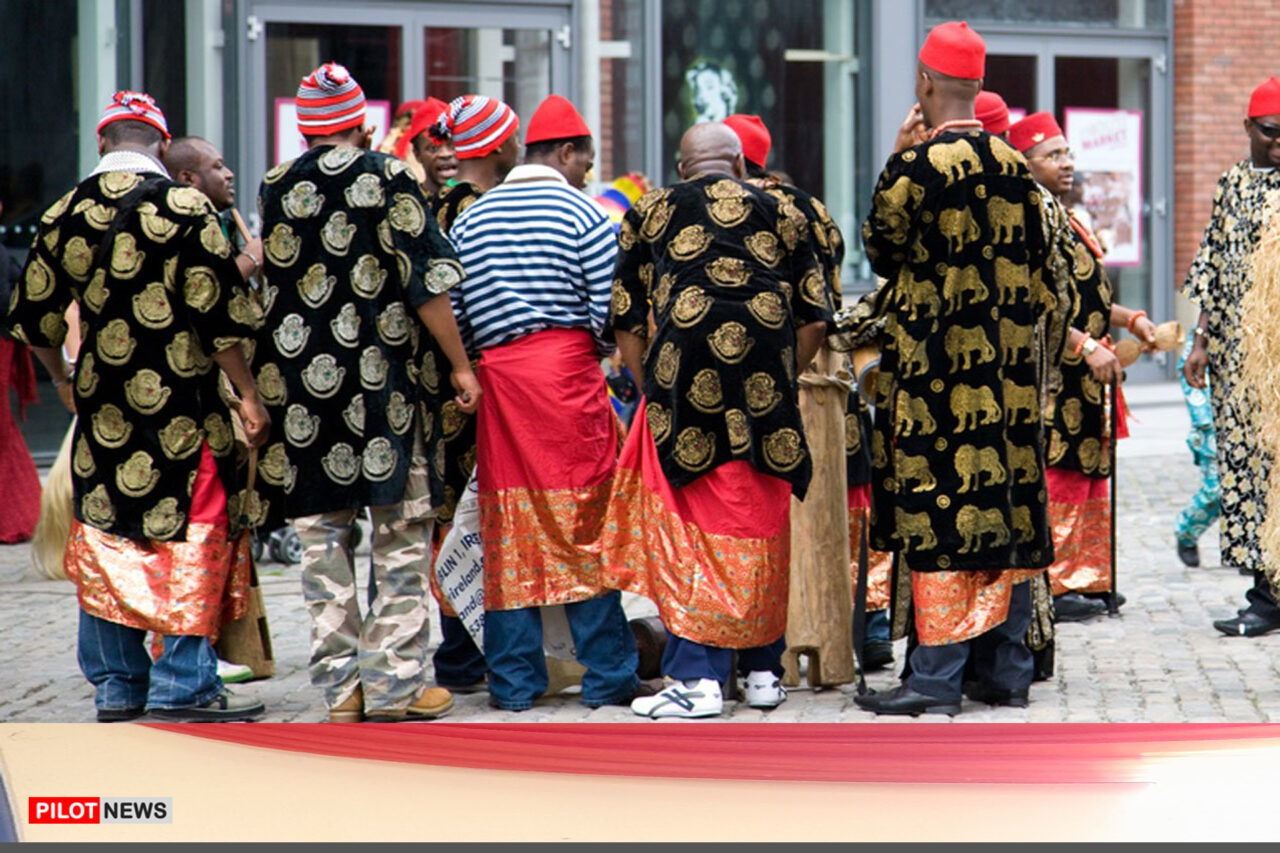
The Igbo Experience: A Comprehensive History from Pre-Colonial Origins to Modern Global Identity

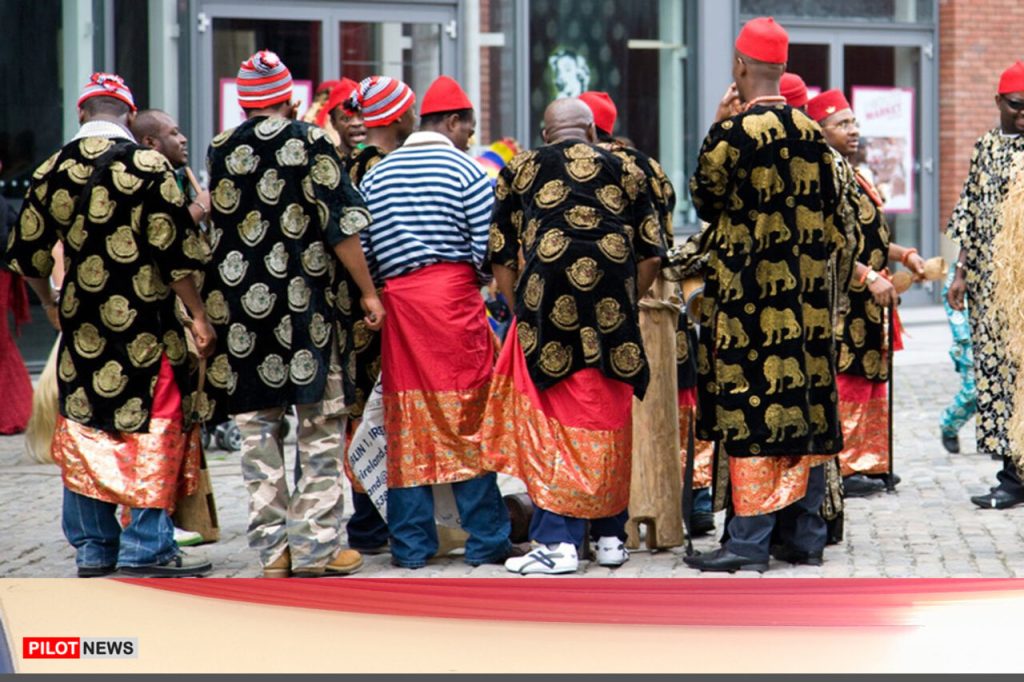
This report provides a comprehensive analysis of the history of the Igbo people, demonstrating the resilience of a decentralized, meritocratic society in the face of profound external pressures. From their pre-colonial origins as a collection of autonomous village republics to their rapid adaptation to colonialism, the catastrophe of the Nigerian Civil War, and their remarkable post-conflict resurgence, the Igbo experience serves as a powerful case study in cultural tenacity. The report will argue that the unique features of pre-colonial Igbo society—decentralized governance, an emphasis on meritocracy, and a strong entrepreneurial spirit—were not only key to their survival but also provided the cultural and institutional framework for their remarkable recovery and global success in the modern era.
1. The Foundation of Igboland: A Study in Pre-Colonial Society
This section establishes the historical and cultural baseline of the Igbo people, exploring the debates surrounding their origins and delving into the intricacies of their unique political and social organization. It sets the stage for understanding the fundamental clashes that would define their history under colonial rule and beyond.
1.1. Origins and Early History: Debates and Evidence
The historical origin of the Igbo people remains a subject of some debate. Some theories posit that they have always been indigenous to the area known as Igboland, with their habitation dating back to the Paleolithic period from 500,000 to 9000 BCE. This view is supported by archaeological findings, such as man-made tools like axes, pottery, and carved stones unearthed in present-day Enugu and Ebonyi states. These discoveries lend credibility to the notion of a long-term habitation, with traditions of Igbo origin favoring a genesis within Igboland itself. This theory also suggests that the Isu and Awka/Nri axes of Igboland represent an early cultural heartland from which the population expanded to other regions due to demographic pressures.
Another perspective, though met with skepticism, suggests that Igbo ancestors may have migrated from the Middle East or areas to the north and west of Igboland sometime in the fourteenth or fifteenth centuries. While historical interactions with Portuguese explorers from the mid-1400s confirm the presence of the Igbo in Nigeria by this time, a shared oral or written tradition explaining their definitive origin is largely absent. Instead, ancestral folklore often consists of stories explaining a vast array of occurrences, from natural phenomena to the interactions between ancestors and the living. The existence of ancient, sophisticated polities, such as the Kingdom of Nri, provides further evidence of a well-established and influential cultural heartland that flourished long before European contact.
1.2. The Stateless Republic: A Unique Political Model
A defining characteristic of pre-colonial Igbo society was its decentralized political structure, often described as a “stateless society” or a collection of “village republics”. This system was fundamentally different from the centralized kingdoms and empires found elsewhere in Nigeria, such as the Hausa-Fulani Caliphate in the North or the Yoruba kingdoms in the West. In Igboland, governance was organized at the village level, with a strong emphasis on collective decision-making and communal participation. Power was distributed among various groups, including councils of elders, age grades, title holders, and secret societies, which created a system of checks and balances that prevented the concentration of authority in the hands of a few.
To fully appreciate this unique political model, it is essential to compare it with the systems of other major ethnic groups in pre-colonial Nigeria.
| Ethnic Group | Political Structure | Key Governance Institutions | Source of Authority | Social Organization |
| Igbo | Decentralized Republics (Acephalous) | Council of Elders (Amala), Title Societies (Ozo), Age Grades, Umuada (Daughters of the Clan) | Meritocratic, Consensus-driven, Communal | Segmented, Distributed Power |
| Hausa-Fulani | Highly Centralized Caliphate/Emirate | Sultan of Sokoto, Emirs, Council of Advisers | Hereditary, Theocratic (Islamic Rule) | Monarchical, Hierarchical |
| Yoruba | Centralized Kingdoms/Empires | Alaafin (King), Oyomesi (Council of Chiefs) | Hereditary, Divine right | Hierarchical, Urbanized |
Export to Sheets
This comparative analysis highlights the fundamental difference between the Igbo system and the centralized monarchies of their neighbors. While the Hausa-Fulani system was highly centralized under an Emir who acted as a political and religious leader, the Igbo model was republican in nature, with no single individual holding absolute power. Similarly, the Yoruba kingdoms, such as the Oyo Empire, were also hierarchical with a divine ruler (
Alaafin) and a powerful council of chiefs, which differed greatly from the consensus-driven Igbo village assemblies. This distributed and consensus-driven approach to governance ensured that the needs and voices of every community member were considered, fostering a strong sense of collective identity and shared responsibility.
1.3. Pillars of Governance and Social Structure
The governance of these village republics was a complex and layered affair. The primary political unit was the village, which was seen as a group of related families. At the helm of village affairs was the Council of Elders, known as the
Amala or Ndichie, who were composed of respected individuals—primarily older men, but sometimes women—who had demonstrated wisdom, integrity, and a deep understanding of communal traditions. Family heads, each holding the sacred
Ofo title, formed the core of this council, with the most senior among them recognized as the Okpara. This collective leadership ensured that power was not concentrated and that decisions were made through dialogue and consensus.
Beyond the formal councils, other institutions played crucial roles. The age-grade system, composed of people of the same age group, performed essential public duties such as clearing paths, constructing roads, and resolving minor disputes. This system served as a powerful model for civic engagement and social responsibility. Title societies, such as the
Ozo and Nze, admitted highly accomplished men and women, affording them significant social recognition and the right to preside over community meetings. Perhaps most notably, women, particularly the
Umuada (daughters of the clan), occupied a uniquely powerful place in society. They could return from their places of marriage to exercise a decisive “breaking vote” in matters of grave consequence, demonstrating the influential role of women in the political and judicial life of the community.
1.4. The Spiritual and Economic Worldview
The traditional Igbo religion, known as Odinani, was a complex and deeply integrated part of daily life and governance. At the apex of the pantheon was a single supreme being, Chukwu or Chineke, who was the creator of the universe. The Igbo believed this supreme deity was distant and was therefore approached through a hierarchy of powerful deities, spirits, and ancestors who served as intermediaries. These deities, such as
Ala (the earth goddess) and Amadioha (the god of lightning and war), were seen as personifications of natural forces and were responsible for various aspects of human life and morality.
A central tenet of Igbo belief was the concept of Chi, a personal spiritual assistant or guardian principle unique to each individual. An individual’s fate and destiny were believed to be determined by their
chi, which reinforced the cultural emphasis on personal effort and the belief that no two people, even siblings, have the same destiny. This worldview was rooted in a belief in hard work as the key to prosperity, a principle personified by the personal god
Ikenga (literally, “right hand”), which symbolized the strength and fortitude of a man’s arm.
The agrarian nature of pre-colonial Igbo society meant that the yam was of paramount cultural and economic importance. The god of agriculture,
Ahiajoku or Ifejioku, was highly revered, and the annual New Yam Festival (Iri Ji) was a major celebration held to honor the harvest and ensure a good yield for the coming year.
1.5. Archaeological Insights and Ancient Polities
Archaeological evidence and ancient polities provide a deeper understanding of the complexity of pre-colonial Igbo society. The Kingdom of Nri, which emerged around the 10th century CE, stands as the oldest existing monarchy in Nigeria and is credited with shaping much of Igboland’s culture, customs, and religious practices. This kingdom expanded its influence not through military conquest but through ritual allegiance, serving as a haven for the rejected and a place where slaves could be freed. The Nri culture’s emphasis on pacifism and the avoidance of violence as a spiritual abomination allowed trade to flourish and its religious authority to be maintained for centuries.
The Igbo-Ukwu archaeological site, dating to the 9th and 10th centuries AD, provides a glimpse into the wealth and sophistication of this early period. Discoveries at the site, including intricate bronze artifacts created using the lost wax technique, over 165,000 glass and carnelian beads, and imported copper and silver objects, point to the existence of a wealthy elite and extensive pre-colonial trade networks that reached as far as North Africa and the Near East.
A unique architectural testament to this period was the Nsude pyramids, structures built of clay and mud that once served as temples for the god Ala. While these structures have since degraded, they stand as evidence of the ingenuity and sophisticated ceremonial practices of the pre-colonial Igbo, raising compelling questions about their possible historical connections to similar structures in other parts of Africa.
The decentralized and meritocratic nature of pre-colonial Igbo society, which was often viewed by outsiders as “primitive” or “backward,” was, in fact, a highly resilient and adaptable system that would prove to be both its greatest strength and its greatest vulnerability in subsequent historical periods. The British, when they arrived, saw the lack of a single ruler as an absence of a system. This was a profound misinterpretation. The Igbo system was not an absence of governance but a distribution of power, vesting authority in councils, age grades, and title holders. This distributed authority prevented tyranny and fostered grassroots participation. However, it also left the Igbo vulnerable to a centralized power. When the British imposed “Warrant Chiefs,” they were not co-opting an existing structure but creating a new, illegitimate one. This clash of political philosophies led directly to resistance movements and the failure of indirect rule, demonstrating that the success of a colonial policy was not based on its inherent merit but its compatibility with the pre-existing, and often misunderstood, indigenous power structures.
2. Colonial Disruption and the Forge of a New Identity
This section analyzes the period of British colonial rule, focusing on its transformative and often violent impact on Igbo society and the subsequent emergence of a unified ethnic identity.
2.1. The Failure of Indirect Rule
The British colonial government’s attempt to impose its system of “indirect rule” on Igboland proved to be a profound and catastrophic failure. The system, which relied on the use of existing traditional rulers to govern on behalf of the British, was designed for centralized societies like the Hausa-Fulani and Yoruba kingdoms. In the acephalous Igbo context, where no single individual held absolute power, the British made the mistake of appointing “Warrant Chiefs” to serve as local administrators.
These Warrant Chiefs, appointed without consideration for their family background or character, were illegitimate in the eyes of the people. They quickly became oppressive and corrupt, seizing property and imposing draconian regulations, which stood in stark contrast to the consensus-driven governance of the pre-colonial era. This imposition of a new, centralized, and autocratic system led to widespread confusion, disorder, and deep-seated anger among the Igbo people, who refused to obey these new, externally-imposed authorities.
2.2. The Vanguard of Resistance
The Igbo people met the imposition of colonial rule with fierce resistance. The Ekumeku Movement (1883-1914) consisted of a series of uprisings by the Anioma Igbo people against the Royal Niger Company. While ultimately resulting in a British victory and the establishment of the Southern Nigeria Protectorate, this protracted conflict demonstrated the determination of the Igbo to protect their autonomy.
However, the most seminal act of resistance was the Aba Women’s War of 1929. Triggered by a rumor of a planned tax on women and fueled by deep-seated resentment against the oppressive Warrant Chiefs, this revolt became a historic example of feminist and anti-colonial protest. Thousands of women from various ethnic groups, including the Igbo, organized a massive revolt that employed traditional protest tactics, such as “sitting on a man,” an all-night ritual of song and dance ridicule. The women’s protests escalated to attacking European-owned stores, banks, and native courts, demonstrating the breadth of their anger. The scale and intensity of the protests, involving an estimated 25,000 women, forced the British to suspend their taxation plans and curb the powers of the Warrant Chiefs, making it the first major challenge to British authority in Nigeria.
2.3. Christianity, Education, and the New Igbo Man
A profound and unexpected paradox of the colonial era was the Igbo’s enthusiastic embrace of Western education and Christianity. While they violently resisted British political rule, they were quick to adopt the new tools that the colonialists introduced. This was not a submissive act but a strategic, pragmatic choice rooted in their pre-colonial, meritocratic worldview. Pre-colonial Igbo society valued personal achievement and merit, as evidenced by the prestige associated with the
Ozo title and the cultural reverence for hard work.
The British colonial system, with its civil service and new economic opportunities, created a new form of meritocracy that was deeply compatible with these pre-existing Igbo cultural values. Christian missionaries, who worked hand-in-hand with the colonial government, served as the primary conduits for this change, providing Western education, healthcare, and opportunities for social mobility. This strategic adoption of education allowed the Igbo to disproportionately succeed in the new colonial hierarchy, earning them a reputation as “the most ambitious and hard-working ethnic group in Nigeria”. This created a new, pan-Igbo identity that transcended the old village-republic divisions, unifying a people who had previously been fragmented. However, this very success sowed the seeds of future conflict. Their rapid ascent in the civil service and economy, particularly in the northern and western regions, was seen as a threat by other Nigerian groups, which would later fuel the political tensions of the First Republic.
3. The Path to Civil War: From National Integration to Secession
This section unpacks the complex political and social dynamics of post-independence Nigeria that led to the Biafran War, providing a nuanced perspective on the conflict’s origins.
3.1. Igbo Leadership in the Independence Movement
Following their rapid adaptation to the colonial system, Igbo intellectuals and politicians emerged as the leading force in Nigeria’s independence movement. Benjamin Nnamdi Azikiwe, a pre-eminent Igbo nationalist, co-founded the National Council of Nigeria and the Cameroons (NCNC) and became the first national secretary of what would become a key political party. Azikiwe’s political mantra was built on the belief in a united Nigeria, and he famously proclaimed that “the God of Africa has specially created the Igbo nation to lead the children of Africa from the bondage of the ages”.
Driven by their entrepreneurial spirit and a high level of educational attainment, the Igbo migrated in large numbers to cities across Nigeria, where they dominated commerce, education, and the civil service. Their presence provided essential services and was instrumental in the development of Nigeria’s private sector. However, this economic success, combined with their prominence in nationalist movements, earned them the “wrath and resentment of other Nigerians” who felt they were being forced to compete for federal jobs in their own homes.
3.2. Political and Ethnic Tensions in the First Republic
Nigeria’s First Republic, which lasted from 1960 to 1966, was a deeply flawed union marked by political instability and intense ethnic rivalries. The 1914 amalgamation of disparate ethnic groups, particularly the powerful Hausa-Fulani, Yoruba, and Igbo, created a fragile federation prone to political and economic conflict. The imposition of a parliamentary system and a highly controversial national census in 1963 exacerbated these divisions, as each region accused the others of inflating their figures to gain more seats in parliament and a larger share of national resources. This fueled a fierce power struggle, with the Southern regions resenting the perceived political domination of the North.
3.3. The 1966 Coups and the Anti-Igbo Pogroms
The political crisis came to a head on January 15, 1966, when a group of military officers, mostly of Igbo descent, overthrew Nigeria’s democratic government. While their grievances were rooted in alleged corruption and economic inequality, the outcome of the coup—the assassination of top northern and western politicians and the absence of Igbo casualties—was interpreted as an “Igbo conspiracy” to seize control.
This perception was the catalyst for a profound psychological shift in the Nigerian political landscape, where the perception of an “Igbo problem” became a pretext for state-sanctioned violence. The coup, which may have been a political act, was reinterpreted along ethnic lines. This reinterpretation was not an accident; it was a powerful narrative tool used to justify the subsequent violence. In July 1966, a group of northern officers staged a bloodier counter-coup, assassinating high-ranking Igbo officers, including the Head of State, General Johnson Aguyi-Ironsi. This was followed by a series of widespread and organized anti-Igbo pogroms in Northern Nigeria that peaked on September 29, 1966. Up to 30,000 Igbo and other Easterners were massacred, prompting the mass flight of over two million Igbo civilians back to the Eastern Region, and laying the psychological and political groundwork for secession. The pogroms were a targeted, “premeditated plan” of “ethnic cleansing” and not spontaneous outbursts of rage. This psychological shift transformed the political landscape, and the secession of Biafra was not just a political act; it was a desperate act of self-preservation in the face of what was widely perceived as an existential threat.
4. The Biafran War: Conflict, Catastrophe, and the Genesis of the Diaspora
This section chronicles the Nigerian Civil War, exploring the military campaign, the humanitarian crisis, and the profound legacy of the conflict.
4.1. The Secession of Biafra and the Outbreak of War
In May 1967, in response to the widespread violence and massacres against the Igbo people, Colonel Odumegwu Ojukwu, the military governor of the Eastern Region, declared the independence of the Republic of Biafra. This declaration was an act of self-defense, aimed at protecting the lives and interests of the Igbo and other Easterners who had been targeted by the pogroms. The declaration of secession led to a full-scale military conflict between the Federal Republic of Nigeria and its breakaway eastern province, a war that would last from 1967 to 1970.
4.2. A War of Attrition and Starvation
The Nigerian Civil War quickly devolved into a war of attrition. The Nigerian military imposed a strategic naval and land blockade on the Biafran enclave, cutting off the fledgling republic from external supplies and military equipment. This military strategy had a devastating humanitarian cost. The Nigerian government’s use of a blockade, coupled with the bombing of Biafran farms and agricultural supplies, led to mass starvation among the civilian population. Estimates of the civilian death toll range from 500,000 to three million, with a significant number of the victims being women and children who succumbed to famine. The terrain of the Oru-Igbo area, with its numerous water bodies and unique topography, provided a fortress and a haven for internally displaced persons throughout the war, as its difficult nature made it hard for federal troops to invade.
4.3. The Genocide Debate: Historical and Political Contention
The events of the Nigerian Civil War have led to a contentious debate over whether the term “genocide” should be applied to the conflict. Proponents of the term cite compelling evidence, including speeches from Northern leaders calling for the “ethnic cleansing” of the Igbo and a 1968 Investigator Report that found a “premeditated plan” for mass killings aimed at exterminating the Igbo people. The report detailed a “seven-point program” that included plans to kill high-ranking Igbo military officers, purge the army of Igbos, and destroy key Igbo cities and institutions.
However, some scholars are cautious about using the term “genocide,” arguing that a legalistic application of the term is necessary and that a “wholesale slaughter” of the Igbo did not occur in the war’s aftermath. Nevertheless, the events reveal a totalizing assault on Igbo physical, economic, and psychological existence that continues to shape contemporary Igbo identity. The official post-war narrative of “no victor, no vanquish” and “Reconciliation, Rehabilitation and Reconstruction” is contradicted by the lived experience of the Igbo people, who faced a strategic military campaign that used starvation as a primary weapon. The deliberate destruction of life and property, coupled with the absence of justice or accountability for those crimes, created a deep-seated and enduring sense of marginalization and victimization.
5. The Igbo Resurgence: Post-War Recovery and Contemporary Identity
This final section focuses on the remarkable economic and social recovery of the Igbo people, their enduring entrepreneurial spirit, and their place in modern Nigeria and the global community.
5.1. The Aftermath and the 20-Pound Policy
The war left Igboland thoroughly devastated, with hospitals, schools, and homes destroyed and a population that was “psychologically disoriented, materially impoverished and politically marooned”. The official reconciliation policy of the Nigerian government was followed by punitive economic measures that deepened the hardship. The most notable of these was the
20-pound flat refund policy, which limited every Igbo adult to a mere 20 pounds, regardless of the amount of money they had in their bank accounts. This policy effectively stripped millions of Igbo people of their life savings and served as a major impediment to economic recovery, compounded by systematic exclusion from civil service jobs.
5.2. The Igbo Apprenticeship System (Igba-boi): A Case Study in Resilience
Faced with this economic devastation, the Igbo people turned to their traditional institutions to rebuild. The Igbo Apprenticeship System, known as
Igba-boi or Imu-ahia, gained significant prominence as a primary engine for post-war economic reconstruction. This informal, culturally-embedded economic model was a direct response to the lack of formal opportunities and capital after the war.
The system operates as an intricate, multi-stage model of vocational training and wealth creation. A young apprentice, or Nwa-boi, is taken in by an established entrepreneur, or Oga, to learn a trade or business. The apprenticeship period typically lasts from 4 to 7 years, during which the apprentice gains hands-on experience and learns a wide range of technical, managerial, and interpersonal skills, from bookkeeping to supply-chain management. Upon completion, the
Oga performs a “settlement,” providing the apprentice with start-up capital, goods, or even a new shop to begin their own business. This model creates a virtuous cycle of wealth circulation, and its success is rooted in the pre-colonial Igbo principle of shared prosperity, encapsulated in the adage: “Umunna nwezu aku ilo anaa” (when wealth is evenly spread in a community, envy is eliminated). The system has been recognized by scholars as a unique form of “stakeholder capitalism” that rebuilt economic hubs like Onitsha and Aba and produced many of Nigeria’s leading business tycoons.
5.3. The Global Igbo: The Transatlantic and Modern Diaspora
The Igbo diaspora has a long and complex history, with roots in the transatlantic slave trade. A significant number of enslaved people in colonial Virginia and Maryland in the 18th century were of Igbo origin, a fact that has led some historians to refer to the region as “Igbo land”. The modern diaspora, however, began in the late 20th century, with waves of migration spurred by the Nigerian Civil War and the search for economic opportunities.
Today, the Igbo diaspora is a global community with a significant presence in cities across the United States, Canada, and the United Kingdom. Igbo entrepreneurs and professionals have made significant contributions in various sectors, from business and technology to the arts and academia. Diaspora organizations, such as the World Igbo Congress (WIC) and Umu Igbo Unite (UIU), play a crucial role in promoting cultural preservation and advocating for the interests of the Igbo both abroad and at home. These groups leverage the social capital of the diaspora to foster development partnerships, bridge cultural gaps, and drive economic transformation in Igboland. The contributions of Nigerians in the diaspora are immense, with official remittances reaching billions of dollars annually.
5.4. The Unfinished Project: Post-War Grievances and Political Future
Despite their remarkable post-war resurgence, many Igbo people continue to feel marginalized and victimized within the Nigerian federation. They claim systematic exclusion from government appointments, a lack of quality infrastructure in their region, and a sense that they have not been fully integrated into Nigerian society. These grievances, stemming from the unresolved trauma of the civil war and the subsequent punitive policies, fuel a persistent demand for a referendum and a comprehensive review of the Nigerian constitution. The legacy of the civil war is not just a historical memory; it is an active political force that continues to shape the Igbo struggle for a truly inclusive and just political structure in Nigeria.
Conclusion: Resilience, Adaptation, and an Enduring Spirit
The history of the Igbo people is a powerful narrative of a society defined by a unique, decentralized ethos. Their remarkable resilience in the face of violent disruption and systemic oppression is a testament to the strength of their indigenous cultural values. Their emphasis on meritocracy, communal support, and a formidable entrepreneurial spirit, which found its most potent expression in the Igba-boi apprenticeship system, provided the framework for their recovery from the economic and psychological devastation of the civil war. The Igbo experience offers a critical lens through which to understand the complex history of modern Nigeria and the enduring legacy of a people who have continuously demonstrated a profound capacity to adapt, rebuild, and thrive on a global scale.










Related Posts
Stay Informed With the Latest & Most Important News
Previous Post
Next Post
Advertisement