Now Reading: Nigeria’s Population Projections to 2050: A Nation of 400 Million
-
01
Nigeria’s Population Projections to 2050: A Nation of 400 Million
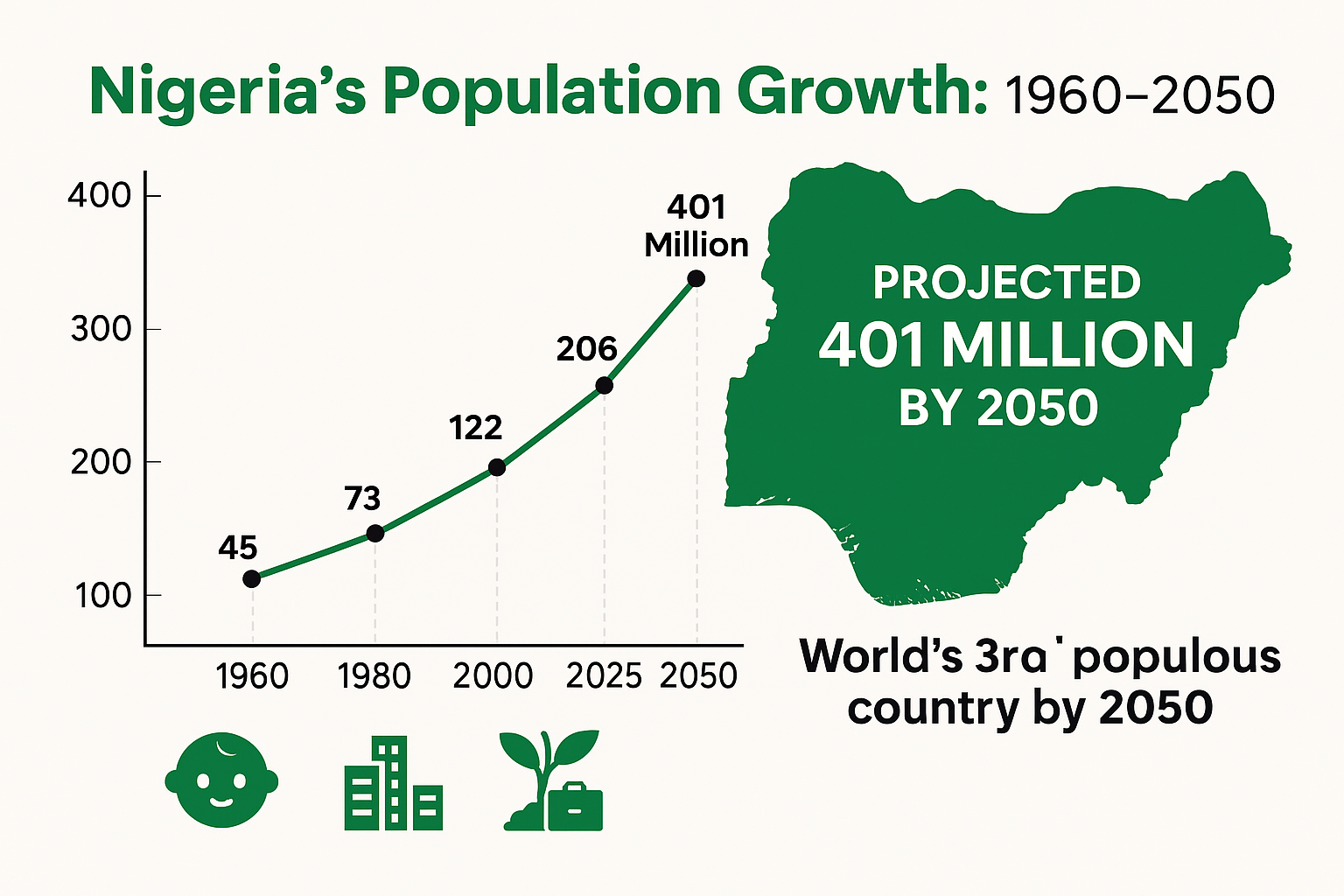

Nigeria, already Africa’s most populous country, is on track to become one of the world’s top three most populous nations by 2050. According to United Nations data, the country’s population, which was about 45 million at independence in 1960, is projected to rise to over 400 million by 2050. This rapid growth brings both opportunities and challenges for Nigeria’s future.
📈 Nigeria’s Population Growth Journey
- 1960 (Independence): ~45 million
- 1980: ~73 million
- 2000: ~122 million
- 2020: ~206 million
- 2025 (estimate): ~224 million
- 2030 (projection): ~252 million
- 2040 (projection): ~330 million
- 2050 (projection): ~401 million
This represents a nine-fold increase in just 90 years. By 2050, Nigeria will account for nearly one out of every 20 people on Earth.
🌍 Nigeria vs. the World by 2050
- Nigeria will rank 3rd most populous globally, after India and China.
- It is expected to overtake the United States around 2045.
- Africa as a whole will host more than 25% of the world’s population, with Nigeria as its largest contributor.
🏙️ Implications for Nigeria
1. Urbanization & Megacities
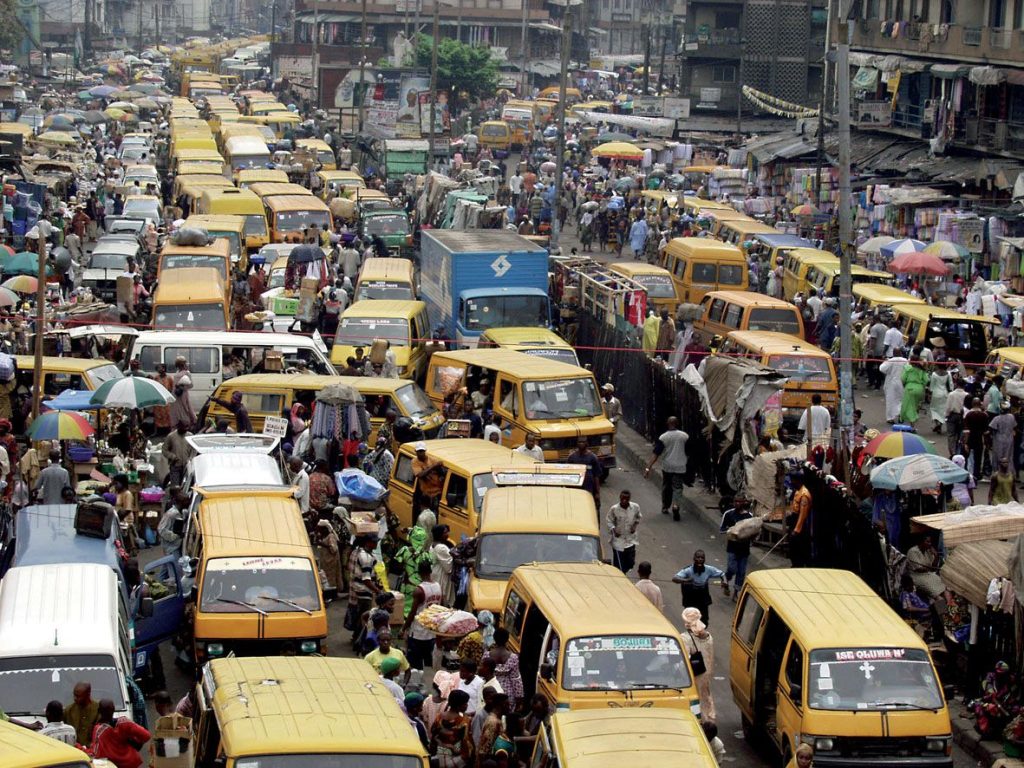
- Lagos could exceed 30 million residents, making it one of the world’s largest cities.
- Abuja, Kano, Ibadan, and Port Harcourt will also see explosive growth.
- Challenge: Housing, transport, and waste management.
2. Youth Power
- Over 60% of the population will be under 25.
- This “youth bulge” can be an engine for innovation and labor — if jobs and skills training keep pace.
3. Economy & Employment
- A population of 400 million means a huge consumer market.
- But Nigeria must create millions of jobs annually to avoid unemployment crises.
- Key sectors: agriculture, technology, energy, and manufacturing.
4. Education & Healthcare
- Nigeria will need to double its schools, universities, and hospitals within the next 25 years.
- Quality education and healthcare access will define whether population growth is a blessing or burden.
5. Environment & Sustainability
- Rising demand for land, water, and energy will pressure ecosystems.
- Climate change — desertification in the north, flooding in the south — will worsen unless mitigated.
- Sustainable policies in energy, farming, and urban planning will be vital.
✅ Conclusion
Nigeria’s journey to 400 million people by 2050 is a defining global demographic story. This growth presents an enormous opportunity: a massive labor force, large consumer base, and cultural powerhouse. But without deliberate investments in education, jobs, infrastructure, and environmental sustainability, rapid growth could deepen poverty and inequality.
✨ The future of Nigeria — and Africa — will be shaped by how the country manages the power of its people.










Related Posts


Stay Informed With the Latest & Most Important News
Previous Post
Next Post


Advertisement