Now Reading: Nigeria’s Population Growth: From Independence to 2025
-
01
Nigeria’s Population Growth: From Independence to 2025


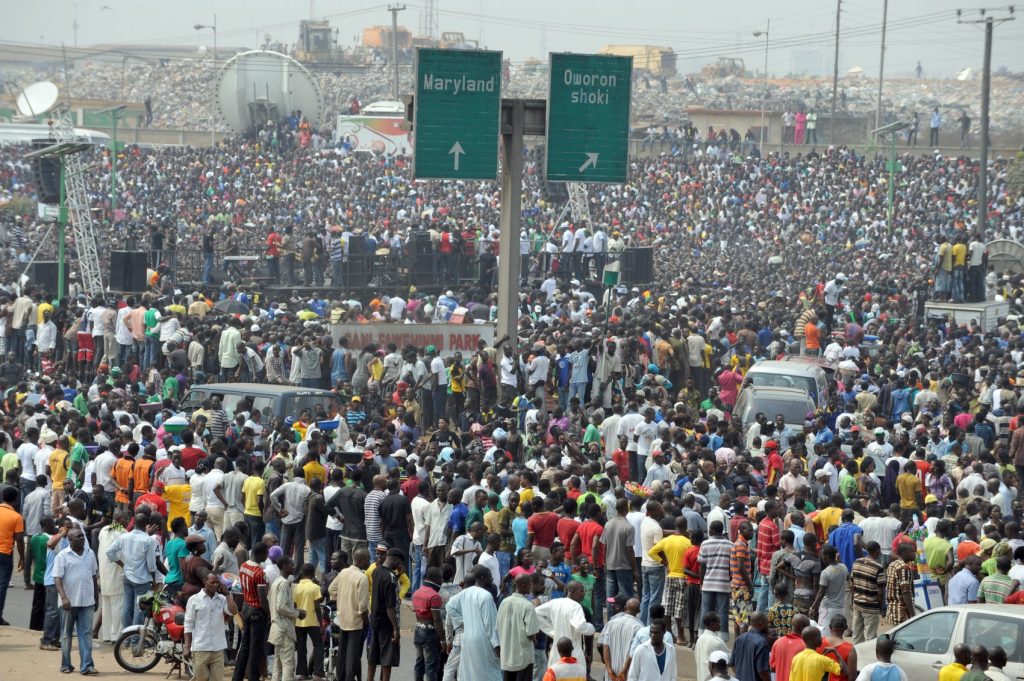
Nigeria, Africa’s most populous country, has witnessed an extraordinary population surge over the last six decades. From about 45 million people at independence in 1960, the nation has grown to an estimated 224 million in 2025, making it the sixth most populous country in the world.
📈 Historical Growth
🔹 1960 – Independence Era
At independence, Nigeria’s population was around 45 million, largely rural and agrarian, with most citizens engaged in farming and small-scale trade.
🔹 1980 – Oil Boom Years
By 1980, the population had reached 73 million, fueled by improvements in healthcare and urban migration linked to the oil economy.
🔹 2000 – Turn of the Millennium
Nigeria entered the 21st century with 122 million people. Cities like Lagos, Kano, and Port Harcourt expanded rapidly, creating pressure on housing and infrastructure.
🔹 2010 – Emerging Giant
With about 158 million people, Nigeria’s population boom positioned it as Africa’s economic powerhouse, but also highlighted challenges in education, jobs, and security.
🔹 2020 – Global Spotlight
Nigeria crossed 200 million, cementing its place as the most populous African nation and a key player in global demographics.
🔹 2025 – Present Estimate
Today, with ~224 million people, Nigeria’s population is five times larger than at independence, accounting for nearly 15% of Africa’s total population.
🌍 Implications of Population Growth
🏙️ Urbanization
- Lagos, once a modest coastal town, is now a megacity of over 20 million residents.
- Other cities like Abuja, Kano, and Ibadan continue to expand rapidly.
🎓 Education & Youth
- Over 60% of Nigerians are under 25 years old.
- This “youth bulge” offers opportunities for innovation but also challenges in job creation.
💼 Economy
- A large population creates a massive consumer market, attracting investors.
- But it also strains infrastructure, healthcare, and food supply chains.
🌱 Sustainability
- Rising demand for farmland, water, and energy increases environmental pressure.
- Climate change impacts — desertification in the north and flooding in the south — intensify these concerns.
📊 Nigeria vs. the World
- Nigeria is currently the 6th most populous country globally.
- By 2050, projections suggest the population will exceed 400 million, possibly surpassing the United States to become the 3rd most populous country in the world (after India and China).
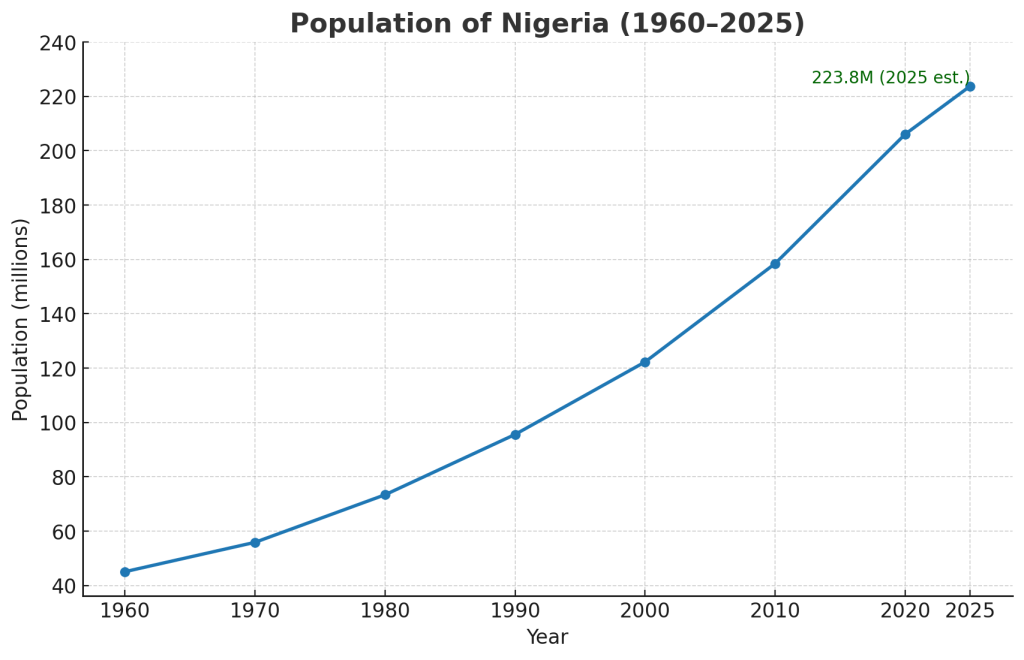
Here’s a historical population chart of Nigeria (1960–2025) 📊🇳🇬:
- 1960 (Independence): ~45 million
- 1980: ~73 million
- 2000: ~122 million
- 2010: ~158 million
- 2020: ~206 million
- 2025 (estimate): ~224 million
✨ Nigeria’s population has grown almost five-fold in 65 years, making it the most populous country in Africa and among the top 6 in the world.
✅ Conclusion
Nigeria’s population growth is both a blessing and a challenge. With a young and vibrant demographic, the nation has the potential to drive innovation, cultural influence, and economic power across Africa and beyond. However, without strategic planning in education, job creation, infrastructure, and environmental management, rapid growth could also deepen social and economic inequalities.
✨ The story of Nigeria’s future lies in how it manages the power of its people.










Related Posts


Stay Informed With the Latest & Most Important News
Previous Post
Next Post


Advertisement