Now Reading: El Anatsui: Master of Transformation in African Contemporary Art
-
01
El Anatsui: Master of Transformation in African Contemporary Art

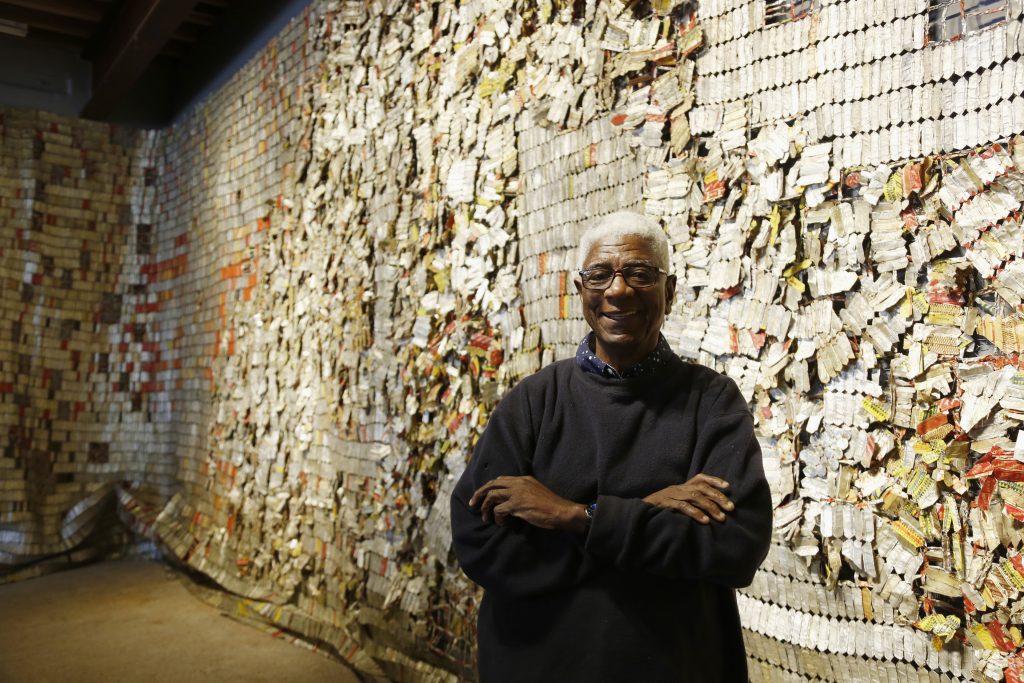
Early Life and Background
El Anatsui was born on 4 February 1944 in Anyako, Ghana. He grew up in a traditional Ewe community, where storytelling, weaving, and craft were integral to daily life.
He studied Sculpture at Kwame Nkrumah University of Science and Technology, Kumasi (1965–1969), graduating with distinction.
In 1975, he moved to Nigeria to teach at the University of Nigeria, Nsukka, where he became part of the Nsukka School, alongside Uche Okeke and Obiora Udechukwu. This move marked the beginning of his lifelong contribution to Nigerian and African art.
Artistic Career
Early Work
Anatsui began by experimenting with wooden sculptures engraved with African motifs, as well as ceramic pieces that combined Ghanaian and Nigerian cultural symbols.
Breakthrough and Signature Style
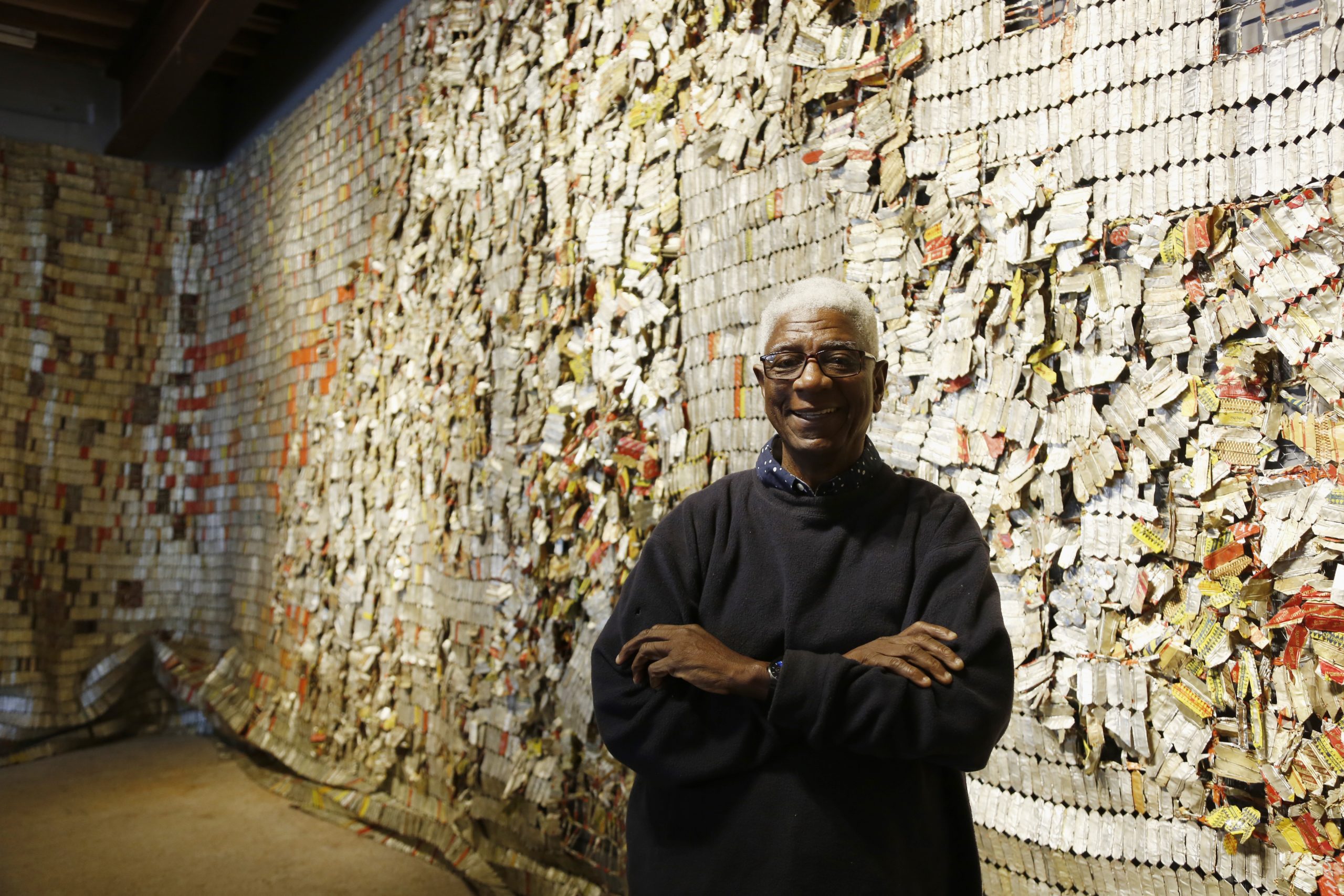
In the late 1990s and early 2000s, Anatsui developed his signature medium:
- Large-scale installations made from discarded liquor bottle caps, aluminum seals, and copper wire.
- These shimmering, tapestry-like works blur the line between sculpture, painting, and textile.
Themes
His works explore:
- Recycling and transformation – turning discarded materials into monumental beauty.
- Colonial and postcolonial history – liquor bottle tops as symbols of trade, slavery, and globalization.
- Cultural identity – linking African weaving traditions with modern abstraction.
- Impermanence and fluidity – his installations can be reshaped each time they are displayed, reflecting Africa’s adaptability.
Major Exhibitions and Works
- Venice Biennale (2007, 2015): His monumental bottle-cap hangings gained global acclaim.
- Exhibitions at Metropolitan Museum of Art (New York), Tate Modern (London), Centre Pompidou (Paris), and the Smithsonian (Washington D.C.).
- “Dusasa” series (2007): Large metallic cloths of bottle caps.
- “In the World But Don’t Know the World” (2019): Massive installation in Ghana.
Style and Process
- Uses discarded bottle caps, tin, copper wire, weaving them into vast sheets.
- Works resemble textiles, mosaics, or metal tapestries, yet retain a sculptural quality.
- Emphasizes hand labor, community, and transformation.
Awards and Recognition
- Golden Lion for Lifetime Achievement (2015) – Venice Biennale, one of the highest honors in global art.
- Japan’s Praemium Imperiale Award for Sculpture (2017) – considered the “Nobel Prize of the Arts.”
- Honorary doctorates from universities worldwide.
- Works held in top collections across the globe.
Teaching and Influence
- Taught at the University of Nigeria, Nsukka, for over 30 years, mentoring generations of Nigerian artists.
- Central figure in making Nsukka a hub of African modern and contemporary art.
Legacy
El Anatsui is celebrated as one of the world’s greatest contemporary artists. By transforming discarded materials into monumental art, he has given new meaning to recycling, memory, and cultural resilience.
He represents the fusion of African tradition and global modernism, showing that African art is both deeply local and universally resonant.
Conclusion
El Anatsui is not just a sculptor — he is a philosopher of materials, a transformer of waste into wonder. His glittering bottle-cap installations have placed Nigerian and African contemporary art at the very center of the global stage. With each exhibition, he reshapes how the world sees Africa: inventive, resilient, and endlessly creative.










Related Posts

Stay Informed With the Latest & Most Important News
Previous Post
Next Post


Advertisement