

Fela Kuti
The Pioneer of Afrobeat · Political Activist · Musical Icon
Discover the life and legacy of Olufela Olusegun Oludotun Ransome-Kuti, the unapologetic creator of Afrobeat who used his saxophone and voice as weapons against political oppression in Nigeria.

Music is the
Weapon
Born into a prominent family of activists—his mother was the pioneering feminist Funmilayo Ransome-Kuti—Fela Kuti was seemingly destined to challenge the status quo. He revolutionized African music in the 1970s by fusing American funk and jazz with traditional Yoruba rhythms and West African highlife, creating the hypnotic, polyrhythmic genre globally known today as Afrobeat.
Through his sprawling, intricately composed 15-minute tracks, sung primarily in Nigerian Pidgin to reach the masses, Fela fearlessly criticized military dictatorships, government corruption, and colonial mentalities. His legendary band, Africa '70 (and later Egypt '80), laid down relentlessly driving grooves that became the soundtrack of resistance.
His defiance came at a massive personal cost. The declaration of his communal compound as the independent Kalakuta Republic led to brutal raids by the military junta, yet Fela refused to be silenced. Today, his enduring legacy lives on through his global musical influence, the thriving New Afrika Shrine in Lagos, and the annual 'Felabration' festival.
- Polyrhythm: A complex, interlocking web of percussion, driving basslines, and scratching rhythm guitars.
- The Horn Section: Blaring, jazzy brass arrangements led by Fela's own saxophone.
- Call and Response: Traditional African vocal patterns featuring Fela and his chorus of Queens.
- Pidgin English: The lyrical choice to ensure the political message resonated across ethnic and social divides.
The Legend in Data
Quantifying the impact of a musical giant
Explore the Legacy
The many faces of Fela Anikulapo Kuti
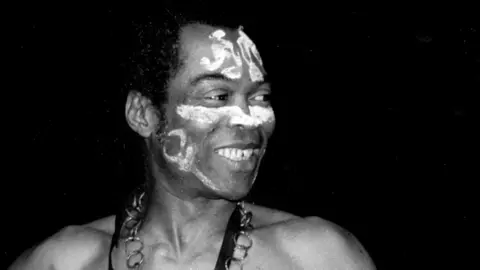
Fela Kuti pouring his soul into the saxophone, leading the legendary Africa '70 band through a hypnotic, marathon Afrobeat session.
| Zombie (1976) | A blistering attack on the Nigerian military's mindlessness, leading to the devastating 1977 raid on his compound. |
|---|---|
| Gentleman (1973) | A critique of colonial mentality, mocking Africans who dress in European suits in the sweltering heat. |
| Water No Get Enemy (1975) | A philosophical groove highlighting the indispensable nature of water and harmony. |
| Expensive Shit (1975) | A satirical recount of his arrest and the police waiting to examine his feces for smuggled marijuana. |
| Teacher Don't Teach Me Nonsense (1986) | A later masterpiece dissecting the failures of Western democracy and education in Africa. |
Life, Politics & Resistance
The stories behind the saxophone
Fela declared his communal compound in Lagos the independent "Kalakuta Republic." Following the release of the album Zombie, 1,000 soldiers raided the compound in 1977. The military burned it to the ground, destroyed his studio, and threw his mother from a second-story window, leading to her eventual death. Fela famously responded by delivering her coffin to the Dodan Barracks.
The Afrika Shrine was Fela's performance venue and a sanctuary for political dissent, Yoruba traditional religion, and communal gathering. After the original was destroyed, his family built the New Afrika Shrine in Ikeja, Lagos. Today, it remains an iconic venue, hosting global leaders, tourists, and the annual Felabration festival.
In 1978, Fela made global headlines by simultaneously marrying 27 women. Known as "The Queens," these women were his dancers, backing vocalists, and core collaborators. They formed the essential call-and-response vocal wall that gave Afrobeat its distinctive, communal sound, enduring immense police brutality alongside Fela.
Fela's political awakening was profoundly shaped by a 1969 trip to Los Angeles, where he interacted with the Black Panther Party. Decades later, his life was immortalized in the Tony Award-winning Broadway production Fela!. His sonic blueprint directly laid the foundation for the modern, globally dominant "Afrobeats" movement.
Historical Timeline
The life and times of the Black President
| Year | Event | Significance |
|---|---|---|
| 1938 | Birth in Abeokuta | Born to a Protestant minister and a prominent feminist activist. |
| 1958 | Moves to London | Studies classical music at Trinity College; forms the band Koola Lobitos. |
| 1969 | US Tour / LA | Discovers the Black Power movement, radically changing his music and politics. |
| 1977 | Kalakuta Raid | The devastating attack by 1,000 soldiers following the release of Zombie. |
| 1997 | Death in Lagos | Over 1 million people attended his funeral, mourning the loss of the national icon. |
| Name | Relation | Musical Contribution |
|---|---|---|
| Femi Kuti | Eldest Son | Multiple Grammy-nominee, leader of the Positive Force band. |
| Seun Kuti | Youngest Son | Current leader of Fela's original band, Egypt '80; vocal activist. |
| Made Kuti | Grandson | Multi-instrumentalist blending modern jazz with classic Afrobeat. |
| Yeni Kuti | Eldest Daughter | Founder of Felabration, the massive annual festival honoring his legacy. |


