
Now Reading: Ibrahim Babangida
1
-
01
Ibrahim Babangida
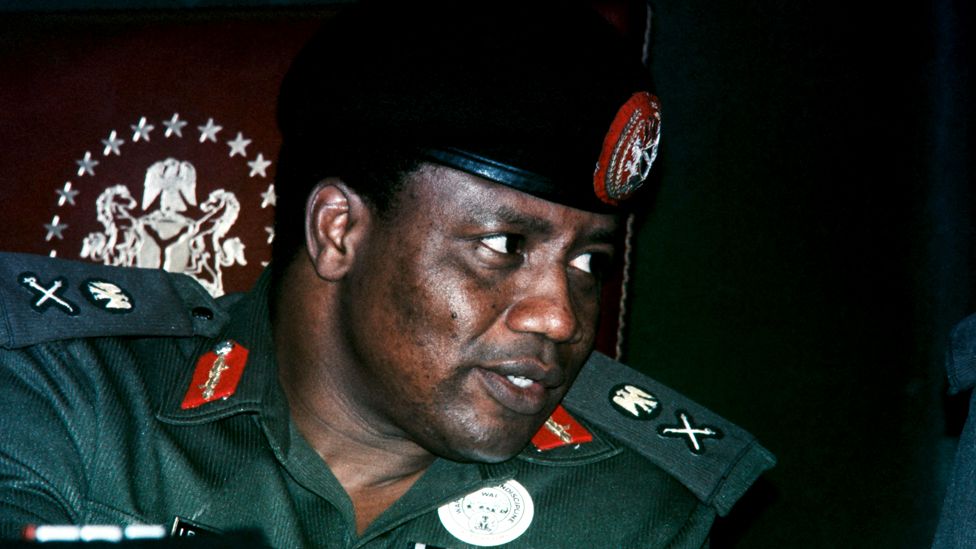

📍 Quick Facts
- Full Name: Ibrahim Badamasi Babangida
- Born: August 17, 1941 (Minna, Niger State, Nigeria)
- Profession: Soldier, Military Leader, Politician
- Famous For: Military ruler of Nigeria (1985–1993), annulment of the June 12, 1993 election.
- Nickname: “Maradona” ⚽ (for his tactical political maneuvers).
🌱 Early Life & Education
- Born into a Muslim family in Minna, Niger State.
- Attended Government College, Bida, before joining the Nigerian Army in 1962.
- Trained at Indian Military Academy and other international military institutions, excelling in strategy and command.
- Married Maryam Babangida (1948–2009), Nigeria’s much-loved First Lady, known for her “Better Life for Rural Women” program.
🎖️ Military Career
- Played key roles in several Nigerian military coups during the 1970s and 1980s.
- Rose to prominence as a skilled strategist and influential officer.
- Became Chief of Army Staff before seizing power in August 1985, overthrowing General Muhammadu Buhari.
👑 Head of State (1985–1993)
🌍 Achievements
- Introduced the Structural Adjustment Program (SAP) to reform Nigeria’s economy.
- Established new institutions, including the Federal Road Safety Corps (FRSC) and the Nigerian Deposit Insurance Corporation (NDIC).
- Moved Nigeria’s capital from Lagos to Abuja, officially commissioning Abuja as the new capital in 1991.
- Promoted Nigeria’s role in African diplomacy and peacekeeping.
⚠️ Controversies
- His government faced accusations of corruption, human rights abuses, and heavy-handed military rule.
- The 1986 Dele Giwa assassination (via a parcel bomb) remains one of Nigeria’s darkest press freedom violations, widely linked to his regime.
- Oversaw the annulment of the June 12, 1993 election, widely believed to have been won by MKO Abiola — sparking national unrest.
⚔️ June 12 & Resignation
- The annulment of the 1993 election is seen as the biggest stain on Babangida’s legacy.
- Facing intense protests and pressure, he was forced to step aside on August 27, 1993, handing over to an interim government led by Ernest Shonekan.
🏡 Later Life
- Retired to his hilltop mansion in Minna, Niger State.
- Remains influential in Nigerian politics, often consulted by politicians as a kingmaker.
- Known for his charm, wit, and survival skills in Nigeria’s turbulent political landscape.
🏆 Legacy & Reputation
- Mixed legacy: admired by some for his modernization policies, but criticized by many for corruption and political manipulation.
- Remembered as the “Maradona of Nigerian politics”, skilled in strategy but leaving behind deep divisions.
💬 Famous Quotes
“I did not annul June 12 out of malice; I acted in the best interest of Nigeria.”
“History will be kind to me, for I will write it myself.”
✅ Conclusion
General Ibrahim Babangida remains one of the most complex figures in Nigerian history — a man of brilliance and controversy, whose actions shaped Nigeria’s political and economic trajectory. His role in June 12, 1993 ensures that his name will forever spark debate in Nigeria’s journey to democracy.










Related Posts

Stay Informed With the Latest & Most Important News
Previous Post
Next Post

Advertisement

Donations






Loading Next Post...


