Nigeria, We Hail Thee
Heritage · Unity · Sovereignty · Identity
Explore the history, lyrics, and significance of Nigeria's national anthem, reflecting the nation's journey from independence to modern statehood.
A song of
sovereignty
The national anthem is a profound symbol of the Federal Republic of Nigeria, embodying the aspirations, unity, and shared destiny of its diverse peoples. In May 2024, Nigeria made a historic legislative return to its original post-independence anthem, "Nigeria, We Hail Thee", signed into law by President Bola Tinubu.
Originally adopted on October 1, 1960, when Nigeria gained independence from British rule, the anthem's lyrics were penned by Lillian Jean Williams, a British expatriate, with music composed by Frances Benda. It served the young nation through its formative years until it was replaced in 1978.
For 46 years (1978–2024), Nigerians sang "Arise, O Compatriots", an anthem created by a national committee to reflect indigenous authorship following the Nigerian Civil War. The recent readoption of the 1960 anthem marks a nostalgic return to the foundational promises of brotherhood and a sovereign motherland, regardless of differing "tribes and tongues."
- Unity in Diversity: Acknowledging different tribes while standing in brotherhood.
- Service & Pride: A call to serve the sovereign motherland.
- Justice & Peace: Passing a banner without stain to future generations.
- Divine Guidance: A prayer to the God of creation to guide the nation's leaders.
Anthem Timeline
The chronological journey of Nigeria's national song
Words of the Nation
Understanding the anthems and oaths of Nigeria
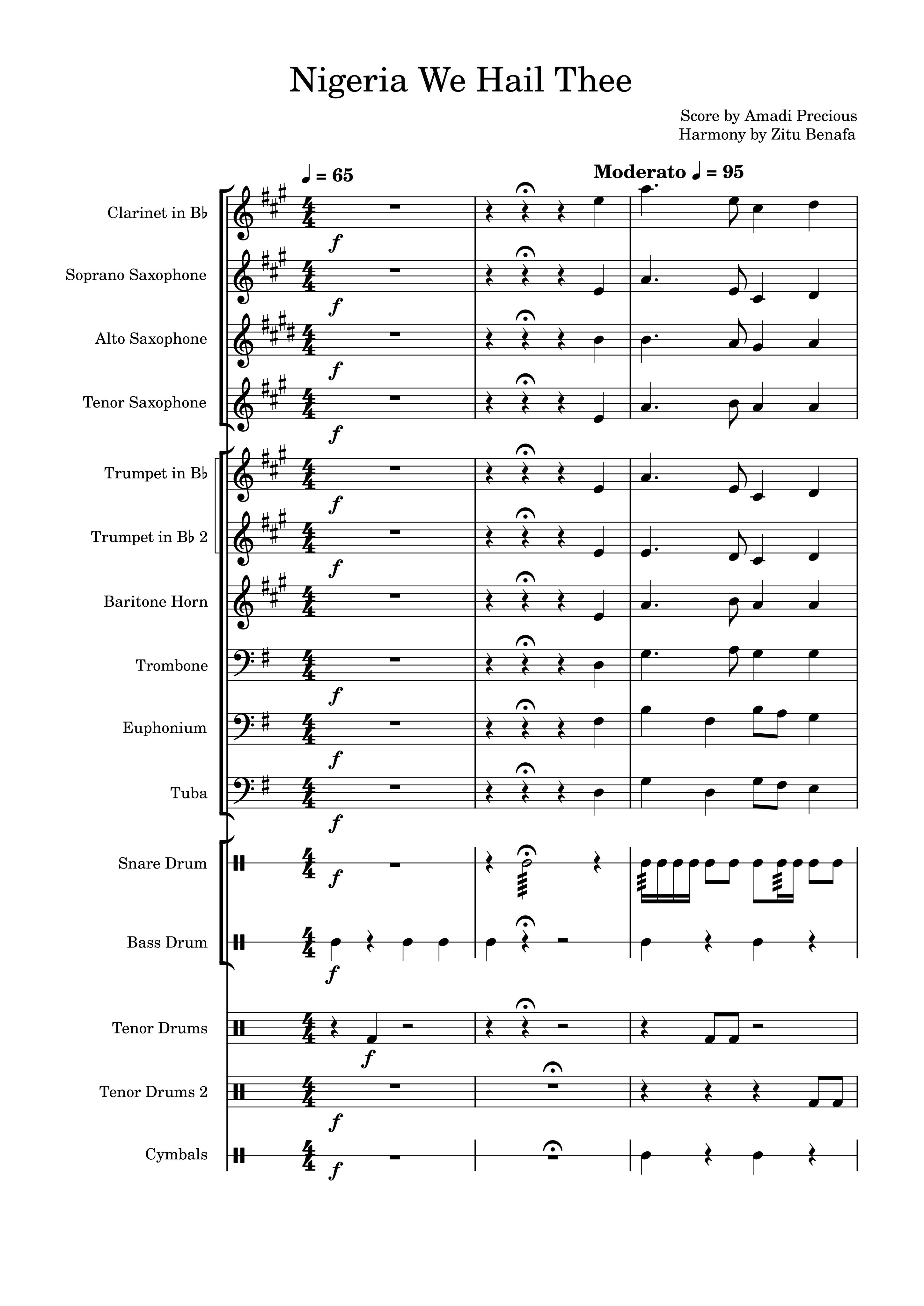
The musical notation and melody for "Nigeria, We Hail Thee", composed by Frances Benda.
|
"I pledge to Nigeria my country. To be faithful, loyal and honest. To serve Nigeria with all my strength. To defend her unity, and uphold her honour and glory. So help me God." |
Historical Context
The stories behind the songs
"Nigeria, We Hail Thee" was introduced on October 1, 1960, replacing "God Save the Queen." It was written through a national competition, won by British expatriates Lillian Jean Williams and Frances Benda. The anthem captured the optimism of the newly independent state, promising that despite differing "tribes and tongues," the nation would stand in brotherhood.
In 1978, during the military regime of Olusegun Obasanjo, the anthem was changed to "Arise, O Compatriots." This was driven by a desire for a fully indigenous anthem written and composed by Nigerians. The lyrics were merged from the top five entries of a national contest, with music by the Nigerian Police Band.
On May 29, 2024, to mark his first year in office, President Bola Ahmed Tinubu signed the National Anthem Bill into law, reverting to "Nigeria, We Hail Thee." Proponents of the change argued that the original lyrics more deeply resonated with the nation's foundational ideals and the urgent need for true brotherhood and unity.
Drafted by Prof. Felicia Adeyoyin in 1976 and officially decreed by Gen. Olusegun Obasanjo, the National Pledge is an oath of allegiance to the Federal Republic. It is mandated to be recited daily by students in primary and secondary schools, and frequently follows the playing of the national anthem at state events.
The Official Lyrics
Nigeria, We Hail Thee (Current Anthem)
|
Stanza 1 Nigeria, we hail thee, Our own dear native land, Though tribe and tongue may differ, In brotherhood we stand, Nigerians all, and proud to serve Our sovereign Motherland. Stanza 2 Our flag shall be a symbol That truth and justice reign, In peace or battle honour'd, And this we count as gain, To hand on to our children A banner without stain. |
|
Stanza 3 O God of all creation, Grant this our one request, Help us to build a nation Where no man is oppressed, And so with peace and plenty Nigeria may be blessed. |
Historical Data
See also & internal links
Go deeper