Now Reading: Nigeria’s Festivals: A Cultural and Economic Tapestry
-
01
Nigeria’s Festivals: A Cultural and Economic Tapestry
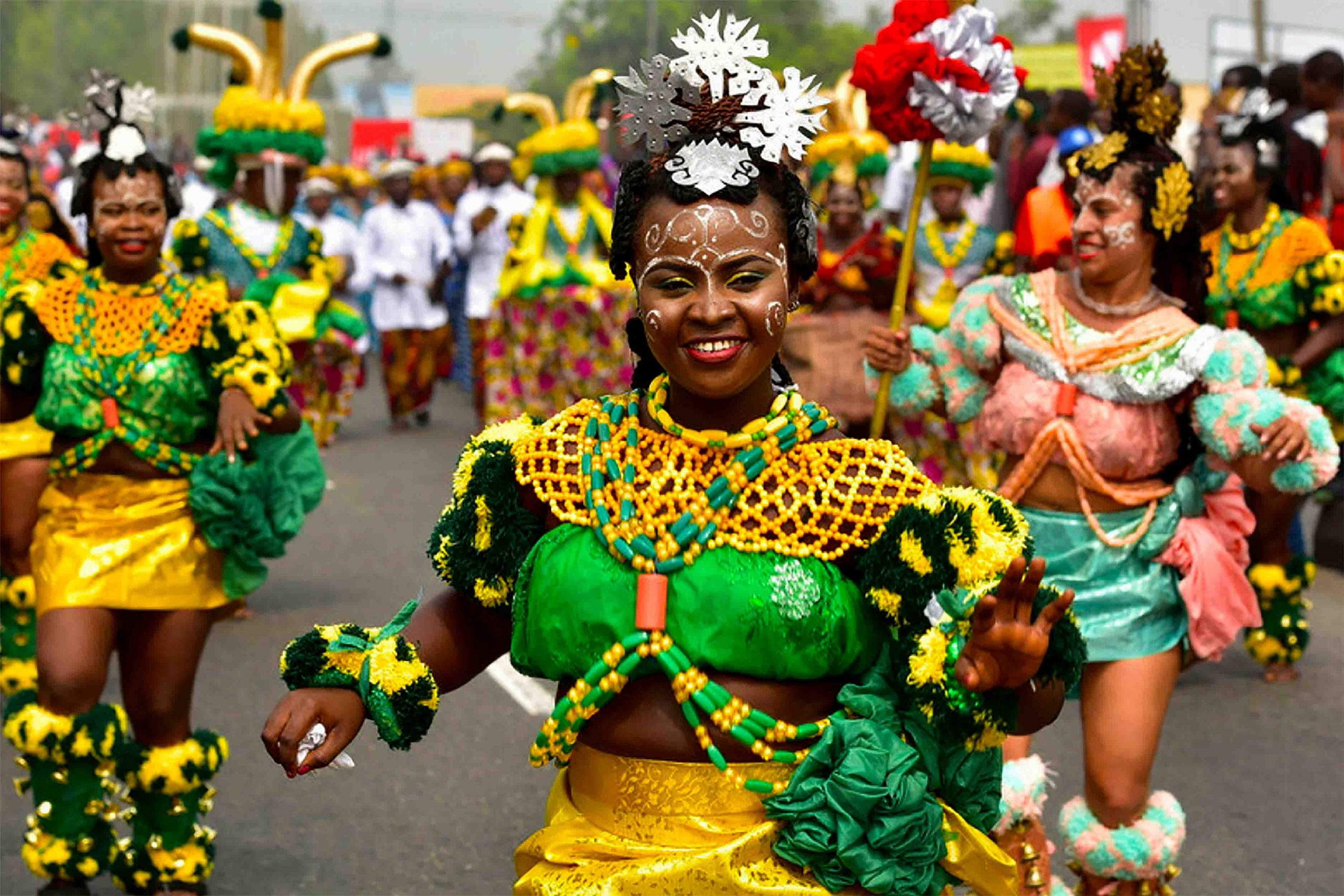

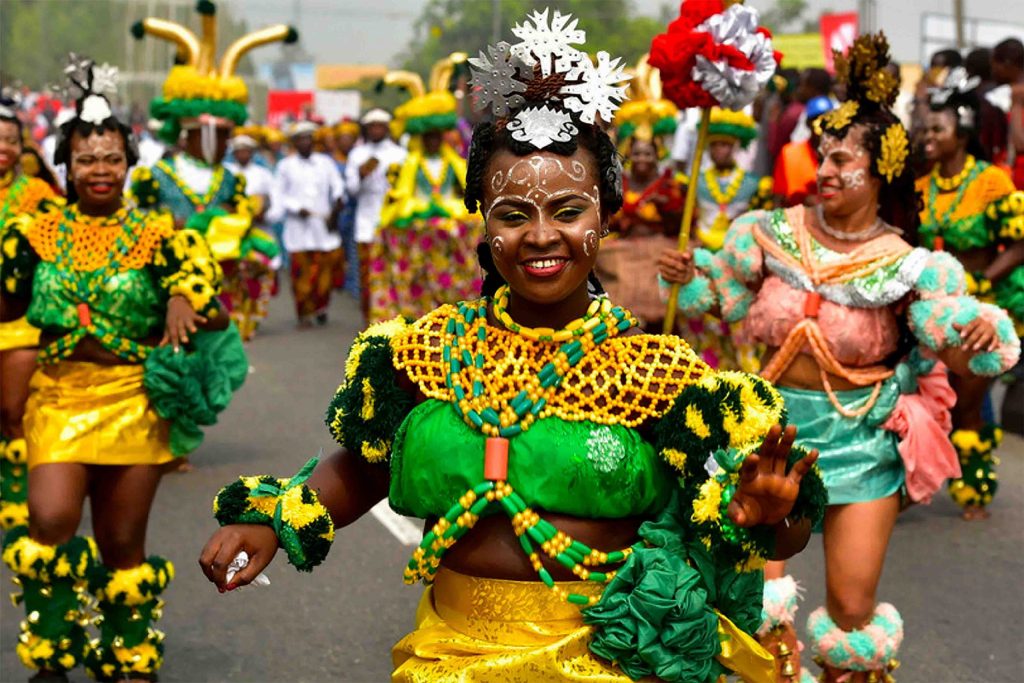
Nigerian festivals represent a dynamic spectrum, from ancient, spiritually-rooted traditions to modern, purpose-built cultural events. This report categorizes these celebrations into two primary archetypes—traditional and modern—while analyzing their shared functions. They serve as living repositories of history, faith, and identity, acting as crucial institutions for the preservation of intangible heritage and the strengthening of community bonds. Simultaneously, these events are powerful engines of socio-economic development, generating significant economic activity, creating jobs, and attracting investment. However, their future is not without challenges, as issues of commodification, cultural erosion, and systemic vulnerabilities like insecurity must be navigated. The report concludes that strategic investments in infrastructure, security, and digital documentation are essential to ensure the long-term sustainability and global relevance of these vital cultural assets.
1. Introduction: A Nation’s Rhythms and the Living Repository of Its Heritage
1.1 The Cultural Mosaic of Nigeria
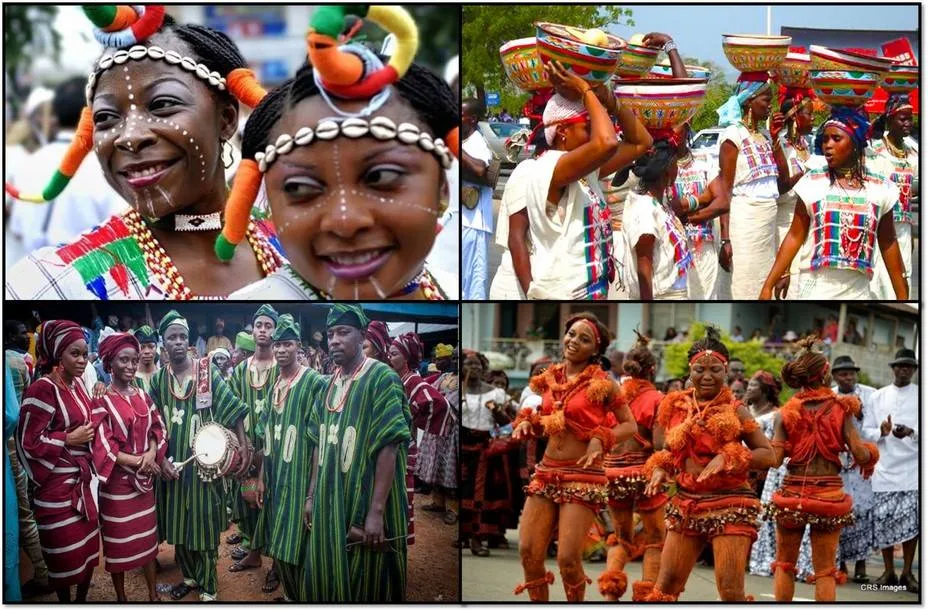
With over 250 ethnic groups, each possessing unique customs, languages, and traditions, Nigeria is a nation of profound cultural diversity. Within this intricate mosaic, festivals emerge as a primary and powerful expression of a people’s unique identity. These celebrations are not merely fleeting moments of entertainment; they are deeply embedded in the social and spiritual fabric of Nigerian communities. They reflect the foundational beliefs, historical narratives, and collective values that define the country’s diverse ethnic groups. From the intricate rituals of the Yoruba to the agricultural celebrations of the Igbo and the equestrian spectacles of the Hausa-Fulani, festivals act as a crucial medium for cultural self-expression and preservation.
1.2 Scope and Analytical Framework
This report moves beyond a simple catalog of festivals to provide a nuanced analysis of their multifaceted functions. It examines their roles from historical, social, spiritual, and economic perspectives. The analytical framework distinguishes between two primary archetypes: traditional festivals and modern festivals. Traditional festivals are those that have evolved organically over centuries, often with deep spiritual or ancestral roots. Modern festivals, by contrast, are more recent creations, conceived with explicit economic, social, or political objectives. Despite their different origins, both types of festivals serve to celebrate and promote Nigerian culture, providing significant value to their communities. The analysis will explore the complex interplay between these two forms, highlighting their distinct characteristics while also identifying their shared contributions to national life.
1.3 The Inseparable Link Between Culture and Identity
Nigerian festivals are integral to the cycle of life for a traditional African man or woman. They are regarded as living repositories of identity, history, faith, and resistance, echoing through time with chants, processions, and drumming. These celebrations are far from simple performances; they are sacred or profane periods of observance, forging a connection between the physical and spiritual realms. Through coordinated events, festivals bring together people united by a common history, culture, and aspirations. They strengthen a sense of belonging and affiliation, allowing individuals to reunite with their gods, community, and ancestors. The intensity of their symbolism leaves an indelible mark on both the participants and the host communities, cementing their role as fundamental pillars of cultural identity and communal well-being.
2. The Tapestry of Tradition: Major Ethnic and Ancestral Festivals
This section explores some of Nigeria’s oldest and most culturally significant festivals, examining their origins, rituals, and enduring relevance in contemporary society.
2.1 Yoruba Festivals: Commemorating Royalty, Ancestors, and Deities
2.1.1 The Eyo Festival: A Sacred Procession in the Urban Heart of Lagos
The Eyo Festival, also known as the Adamu Orisha play, originated in the 19th century, with the first recorded ceremony held on February 20, 1854. Its primary purpose was to “escort the soul of a departed Lagos King or Chief and to usher in a new king”. The central figures of the festival are the white-clad Eyo masquerades, referred to as “agogoro Eyo” or tall masquerades, who are believed to be spiritual representatives of the dead.
This festival is not a fixed annual event but is held on special, occasional dates, as determined by tradition and specific circumstances. This non-fixed, sporadic nature of the Eyo festival, alongside its strict prohibitions (such as bans on smoking and headties for women), highlights a deliberate effort to preserve its sacredness and prevent its full-scale commercialization. The occasional observance serves as a form of cultural gatekeeping, ensuring that the festival’s solemn and ritualistic purpose—the mourning and welcoming of royalty—is not overshadowed by its modern appeal as a tourist attraction. This careful balance between spiritual duty and public spectacle is a defining characteristic of the festival’s existence in a modern metropolis like Lagos.
2.1.2 The Ojude Oba Festival: A Royal Allegiance
The Ojude Oba festival is an annual tradition in Ijebuland, celebrated on the third day of the Muslim holiday, Eid-al-Kabir. Its central purpose is for the sons and daughters of Ijebuland, both at home and abroad, to pay “homage and respect to the king: Awujale of Ìjẹ̀bú land”. The festival is a vibrant spectacle featuring a parade of over 70 different groups known as
rẹ́gbẹ́rẹ́gbẹ́, displays of horse riding skills by war chiefs (Balogun), and exhibitions of local crafts and traditional music.
The festival’s timing and rituals, which fuse a major Islamic celebration with a grand royal procession, exemplify the seamless integration of religious practice and monarchical allegiance. This synthesis transforms the festival into a powerful public display of collective pride and socio-political harmony. It demonstrates how ancient traditions can be successfully revitalized to strengthen community identity and social cohesion, creating a spectacular and widely-attended event that reaffirms the bond between the people and their ruler.
2.2 Igbo Festivals: Rites of Harvest and Community
2.2.1 The New Yam Festival (Iri ji)
The New Yam Festival is a cornerstone of Igbo life, widely celebrated in the southeastern parts of Nigeria. It symbolizes the “conclusion of a harvest cycle and the beginning of new farm work” and is a celebration of life, community accomplishments, and well-being. While each Igbo community determines its own specific date, the festival commonly takes place between August and October.
A central ritual of the festival is the ceremonial offering of newly harvested yams to God and ancestors before anyone else can consume them. The ceremony is opened by the traditional ruler, who leads prayers of thanksgiving. The celebration is filled with various cultural performances, including music, dance, and masquerade displays. The widespread celebration of this festival across Igboland and among ethnic groups like the Igede people of Benue State signifies a deeply rooted, shared cultural value system centered on agriculture, community, and reverence for nature. This common practice, despite regional variations, serves as a powerful unifying force, reinforcing a shared identity and collective pride in their heritage.
2.3 Northern Festivals: Allegiance, Endurance, and Reconciliation
2.3.1 The Durbar Festival: A Cavalcade of Power and Pomp
The Durbar Festival is a grand equestrian spectacle with a history dating back over two hundred years to the era of northern warfare. Today, it functions as a celebration of the Muslim holidays of Eid-el-Fitr and Eid-el-Kabir. The festival’s central feature is a rich display of horsemanship, where colorfully dressed cavaliers mounted on horses pay homage to the Emir. The festival has evolved from a martial tradition into a peaceful, ceremonial display of civic and religious allegiance, showcasing how communities can repurpose ancient symbols and rituals to honor their past while reflecting a new reality. The festival, celebrated in cities like Kano, Katsina, and Zaria, is a powerful and vibrant affirmation of Hausa-Fulani culture and tradition.
2.3.2 The Argungu Fishing Festival: A Case Study in Cultural Evolution
The Argungu Fishing Festival holds a complex and layered history. Its origins can be traced to pre-colonial religious rites aimed at venerating the river for its bounty. The festival was formally initiated in 1934 to mark the end of centuries-long hostilities between the Kebbi Kingdom and the Sokoto Caliphate, thereby becoming a symbol of reconciliation and unity.
Today, the festival is a four-day cultural extravaganza recognized on the UNESCO Intangible Heritage List since 2016. It includes water sports, wrestling, and a massive fishing competition in the Matan Fada River. The event attracts thousands of participants and spectators, with a substantial prize for the largest catch. This immense success, however, brings a unique challenge. The festival’s original spiritual purpose of appeasing the river oracle, with its traditional rites, has been largely sidelined in favor of a tourism-friendly competition. The central role of the
Sarkin Ruwa or river custodian represents the last vestige of the festival’s sacred foundation, highlighting the tension between cultural preservation and commercial success. The potential for commodification to dilute the spiritual core of a tradition is a significant concern for the long-term integrity of such events.
3. The Modern Festival: Culture as Commerce and Identity
This section examines festivals that, while often incorporating traditional elements, were created with explicit economic and socio-political objectives.
3.1 The Calabar Carnival: “Africa’s Biggest Street Party”
The Calabar Carnival is not an ancient tradition but a planned cultural product. It was launched in 2004 by then-Governor Donald Duke with the explicit goal of establishing Cross River State as a premier destination for tourism and hospitality in Nigeria and Africa. Often referred to as “Africa’s Biggest Street Party,” the carnival is a month-long event (later reduced to two weeks) held every December.
The carnival is structured around a competition among five major bands—Seagull, Passion 4, Masta Blasta, Bayside, and Freedom—each with a unique identity and flair. These bands interpret annual themes such as “Africanism” and “Climate Change”. These themes act as a form of modern national branding, allowing Nigeria to narrate its story from an authentic African perspective. The Calabar Carnival serves as a prime case study of a top-down model of cultural engineering. It demonstrates how a government can strategically leverage culture as a key economic asset and a tool for regional branding. The festival has a significant economic impact, creating jobs and fostering the emergence of new businesses, particularly in the hospitality and food sectors.
3.2 Felabration: The Legacy of a Cultural Icon
Felabration is an annual music festival conceived in 1998 by Yeni Anikulapo-Kuti to honor her late father, Fela Kuti, the pioneer of the Afrobeat genre. Unlike festivals tied to ancient ethnic identities, Felabration celebrates a modern cultural movement and the legacy of an individual. It is a week-long event held at the New Afrika Shrine, featuring performances by top local and international artists, as well as debates on social and topical issues. The festival also includes art exhibitions and a “Dress Fela” fashion competition, which encourages contemporary interpretations of the icon’s unique style.
Felabration points to a new direction for Nigerian festivals, where they can serve as platforms for contemporary artistic expression and a shared, non-ethnic national identity. The festival’s ability to attract diverse crowds of “Afrobeat enthusiasts, social justice advocates, and most importantly Fela fans” shows how a festival can be built around a specific artistic and political ideology. It is a powerful example of a festival that is not a relic of the past but a living, breathing platform for social commentary and artistic tribute, particularly resonating with the youth.
4. The Broader Significance and Impact: Beyond the Spectacle
4.1 Preserving Intangible Heritage
Festivals in Nigeria serve as living institutions for the transmission of intangible heritage. They are platforms where indigenous arts, crafts, music, dance, and oral traditions are passed from one generation to the next. They stand as a bulwark against the forces of modernization and globalization, which threaten to render traditional practices into “dead memories”. Without active preservation, the deeper meanings embedded in ancestral traditions risk being reduced to a mere spectacle for a global audience.
4.2 The Role in Community and National Identity
Festivals are crucial for strengthening community bonds and creating a sense of “social communion”. They act as a powerful anchor, drawing members of the diaspora back to their ancestral lands to consolidate family ties and community affiliations. On a national level, festivals foster a sense of shared identity and unity in a country of immense diversity. Events like the Argungu Fishing Festival and the Calabar Carnival have been recognized for their unifying power, connecting people from different backgrounds through shared experiences. They serve as a vital tool for nation-building, reinforcing a collective pride in a common heritage.
4.3 Economic Contributions and the Multiplier Effect
Festivals are significant drivers of local and regional economies. Tourist spending at these events creates a powerful economic multiplier effect, generating direct, indirect, and induced economic benefits. Direct effects include increased sales in hotels, restaurants, and stores, while indirect effects are seen in the increased demand for intermediate products from suppliers. Induced effects occur when festival-related businesses and their employees spend their earnings on goods and services in the local area. The following table provides a comparative analysis of this effect across a selection of festivals.
| Festival Name | Location | Tourist Spending (in Naira) | Income Added to Regional Economy (in Naira) | Local Jobs Supported | Multiplier Effect (Earning on each Naira) |
| Igue Cultural Festival | Benin City | ₦100,000 (direct sales) | ₦102,000 | 2 local jobs | ₦0.61 secondary effects |
| Riye Musical Festival | Abeokuta | ₦166,670 (from 909 tourists) | ₦66,000 | 2,700 local jobs | ₦0.61 secondary effects |
| Ofala Cultural Festival | Onitsha | Not specified | Not specified | 400 local jobs | ₦0.61 secondary effects |
| Calabar Carnival | Calabar | Not specified | Not specified | 27,000 local jobs | ₦0.61 secondary effects |
| Argungu Fishing Festival | Argungu | Not specified | Not specified | 21,850 local jobs | ₦0.61 secondary effects |
The data reveals that while large-scale carnivals like the Calabar Carnival attract immense spending and support a vast number of jobs, their economic impact is not necessarily more efficient than that of smaller, traditional festivals. The “earning on each naira” multiplier is consistent across the festivals examined, suggesting that a significant portion of the revenue, even from large events, is captured by the local economy. Festivals have been shown to boost the local economy and lead to the emergence of new businesses, particularly in sectors like hospitality, food, and local crafts. This demonstrates the potential for festival tourism to provide sustainable economic empowerment for entire communities.
5. Challenges and The Future of Festivals: A Path Forward
5.1 Threats to Authenticity and Cultural Integrity
The increasing commercialization of Nigerian festivals poses a risk to their cultural integrity. The pressure to cater to tourists can reduce traditional festivals to a mere spectacle, stripping away their deeper, sacred meanings. The dual nature of technology presents another challenge. While digital platforms offer opportunities for cultural preservation and wider dissemination, they also risk distorting traditional art forms and leading to a loss of authenticity. The hybridity introduced by global influences can dilute the original significance of these cultural expressions.
5.2 The Digital Frontier: Marketing, Preservation, and The Diaspora
Despite the risks, technology presents a vital path forward. Social media, website quality, and online word-of-mouth have a positive and significant impact on tourist satisfaction and their intention to revisit a festival. This creates a positive feedback loop where digital marketing drives positive experiences, which in turn generates more online promotion. Initiatives like ‘Cultural Canvas’ are already leveraging this potential, using technologies such as Virtual Reality (VR) to create immersive experiences that allow global audiences and the diaspora to engage with festivals in a new way. These digital tools can serve as a powerful means of documenting and preserving cultural heritage for future generations, while also expanding a festival’s reach beyond its geographical boundaries.
5.3 External Challenges: Beyond Culture
The growth of festival tourism is significantly hampered by systemic external issues. A lack of investment in critical infrastructure, insufficient branding, and inadequate digital documentation are major obstacles. Most critically, the issue of insecurity remains a primary limiting factor that prevents Nigeria from realizing its projected potential of generating over “$1 billion annually from festival-based tourism”. These challenges must be addressed in a comprehensive and strategic manner to unlock the full economic and cultural potential of the nation’s festivals.
6. Conclusion and Strategic Recommendations
6.1 Summary of Findings
Nigerian festivals are not static relics of the past but living, dynamic expressions of a vibrant culture. The analysis demonstrates a clear distinction between traditional, organically evolved festivals and modern, purpose-built events. Both archetypes, however, serve a dual purpose: they are critical institutions for cultural preservation and social cohesion, while also acting as powerful engines of economic development. From the sacred rituals of the Eyo festival to the choreographed spectacle of the Calabar Carnival, these events anchor communities, strengthen identity, and generate significant economic activity. The success of festival tourism, exemplified by the Argungu Fishing Festival, highlights a critical tension between maintaining cultural authenticity and embracing commercial opportunity.
6.2 Strategic Recommendations
Based on this analysis, the following strategic recommendations are proposed to ensure the long-term sustainability and growth of Nigeria’s festival sector:
- For Government and Policymakers:
- Prioritize investment in infrastructure, particularly in key festival locations, to improve accessibility and enhance the visitor experience.
- Implement and enforce robust security measures at all major festival sites to build trust and increase participation from both domestic and international tourists.
- Create and actively manage official tourism pages and accounts on major social media platforms to engage with the global audience and the diaspora.
- For Cultural Custodians and Festival Organizers:
- Develop deliberate strategies to integrate modern technology and tourism without compromising the sacredness and authenticity of traditions. This could include using digital tools for documentation and education while maintaining the integrity of ritualistic practices.
- Engage with artists, scholars, and technologists to create new, innovative ways to present festival narratives, such as through virtual reality experiences, to reach a wider audience while preserving cultural depth.
- For Investors and Businesses:
- Recognize the significant economic potential of festival tourism beyond direct ticket sales. Opportunities exist across the value chain, particularly in the hospitality, food, transportation, and local crafts sectors.
- Invest in local businesses and talent to ensure that a higher percentage of tourist spending is captured within the local economy, maximizing the economic multiplier effect and fostering sustainable community growth.
These festivals are not merely events to be attended; they are living, breathing expressions of a nation’s soul. By nurturing and strategically positioning them, Nigeria can not only preserve its rich heritage for future generations but also secure its place as a leading cultural and economic force on the global stage.Sources used in the report










Related Posts

Stay Informed With the Latest & Most Important News

Advertisement