
Now Reading: Sani Abacha
1
-
01
Sani Abacha
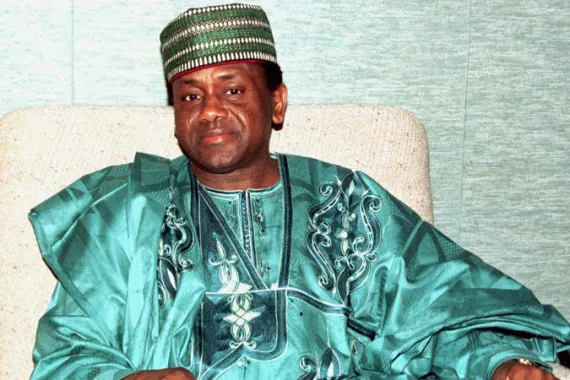

📍 Quick Facts
- Full Name: Sani Abacha
- Date of Birth: September 20, 1943
- Place of Birth: Kano, Nigeria
- Died: June 8, 1998 (Abuja, Nigeria)
- Profession: Military Officer, Head of State
- Known For: Military dictatorship (1993–1998), economic stabilization, corruption scandals
🌱 Early Life & Military Career
- Born in Kano State to Kanuri parents.
- Attended Kano Provincial School and later the Nigerian Military Training College.
- Commissioned as a 2nd Lieutenant in 1963.
- Rose through the ranks as a disciplined officer, participating in key events such as:
- 1966 Nigerian counter-coup
- Nigerian Civil War (1967–1970)
🏛 Rise to Power
- Played a role in several military takeovers, gaining a reputation as a trusted coup strategist.
- Became Minister of Defence in 1990 under General Ibrahim Babangida.
- On November 17, 1993, seized power after the annulment of the June 12, 1993 presidential election, which had been won by Moshood Abiola.
👑 Head of State (1993–1998)
✅ Achievements
- Restored some economic stability by controlling inflation and foreign reserves.
- Created the Petroleum (Special) Trust Fund (PTF) to fund infrastructure and health projects.
- Strengthened Nigeria’s oil-driven economy during a time of global instability.
⚠️ Criticisms
- Ruled as a dictator, dissolving democratic institutions.
- Known for human rights abuses, suppression of the press, and imprisonment of opposition figures, including Olusegun Obasanjo and Moshood Abiola.
- Executed writer and activist Ken Saro-Wiwa in 1995, drawing global condemnation.
💰 Corruption & the “Abacha Loot”
- After his death, investigations revealed that Abacha and his associates looted billions of dollars from Nigeria’s treasury.
- The stolen funds, known as the “Abacha loot,” have been recovered in tranches by Nigeria from banks in Switzerland, the UK, the U.S., and other countries.
- Till today, billions of dollars linked to Abacha continue to be repatriated.
⚰️ Death
- Died suddenly on June 8, 1998, in Abuja, reportedly of a heart attack (though rumors of poisoning still circulate).
- His death paved the way for Nigeria’s return to democracy in 1999 under President Olusegun Obasanjo.
🌍 Legacy
- Remembered as one of Nigeria’s most controversial leaders.
- Supporters credit him with economic discipline and infrastructural investment through the PTF.
- Critics see him as a symbol of corruption, repression, and authoritarian rule.
- His regime remains a cautionary tale of unchecked power in Africa.
💬 Famous Quote
“We must look inwards, harness our resources, and ensure that Nigeria attains greatness.”
✅ Conclusion
General Sani Abacha remains a polarizing figure in Nigerian history. His regime combined economic control and infrastructural projects with severe human rights abuses and unprecedented corruption. More than two decades after his death, the debate continues: Was Abacha a strongman who stabilized Nigeria or a dictator whose greed damaged the nation’s future?










Related Posts

Stay Informed With the Latest & Most Important News
Previous Post
Next Post

Advertisement

Donations






Loading Next Post...


