Now Reading: The Aburi Accord (1967): Nigeria’s Missed Chance for Peace
-
01
The Aburi Accord (1967): Nigeria’s Missed Chance for Peace

(Part of the Nigeria234.com Civil War Series (1966–1970))
📝 Introduction
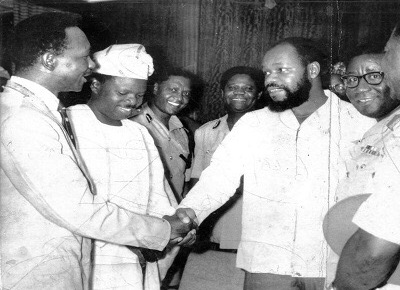
Before the guns of July 1967 roared, Nigeria came close to avoiding war. In January 1967, leaders from both the Federal Government and the Eastern Region met in Aburi, Ghana, to negotiate peace after the coups, counter-coups, and massacres of Igbos that had shaken the young nation.
The meeting produced what is now known as the Aburi Accord — a deal that, if fully honored, might have prevented the Nigerian Civil War. Instead, mistrust and political maneuvering ensured its collapse, pushing Nigeria down the path to secession and bloodshed.
🌍 Background to the Talks
- January 1966 Coup: Overthrew Prime Minister Tafawa Balewa and key Northern leaders.
- July 1966 Counter-Coup: Killed Head of State General Aguiyi-Ironsi, bringing Lt. Col. Yakubu Gowon to power.
- Massacres of Igbos in the North: Triggered a mass return of Easterners to their homeland.
- Nigeria was on the brink of breaking apart.
To prevent disaster, Ghana’s military ruler, General Joseph Ankrah, invited both sides to negotiate.
👥 Who Attended?
- Federal Delegation: Yakubu Gowon (Head of State) and senior military/government officials.
- Eastern Delegation: Chukwuemeka Odumegwu Ojukwu (Military Governor of Eastern Region) and his advisers.
- Mediator: General Joseph Ankrah of Ghana.
📜 The Agreement (Key Points)
The Aburi Accord, signed on January 4–5, 1967, included:
- Decentralization of Power
- Each region would have wide autonomy.
- Federal government powers would be minimal.
- Supreme Military Council Decisions
- All major decisions had to be unanimous, giving regions veto power.
- Return of Refugees
- Measures to protect displaced persons (especially Igbos).
- Reconciliation Measures
- Commitment to restore trust and unity.
Essentially, Aburi proposed a loose confederation, giving Eastern Nigeria near-independence while still remaining part of Nigeria.
⚡ Collapse of the Accord
- When Gowon returned to Lagos, Federal officials argued that Aburi had ceded too much power to the regions.
- A new decree (March 1967) watered down the agreement, angering Ojukwu.
- Ojukwu accused the Federal side of bad faith and insisted on full implementation.
- Trust broke down completely.
By May 1967, Gowon announced the creation of 12 states (including breaking up the Eastern Region), while Ojukwu declared the Republic of Biafra.
🕊️ Why Aburi Failed
- Deep mistrust between East and North.
- Different interpretations of the accord’s wording.
- Federal Government unwilling to concede near-confederation.
- Ojukwu determined to protect his people after the massacres.
🌍 Historical Significance
- Aburi remains one of the greatest missed opportunities in Nigerian history.
- To many Igbos, its failure proved Nigeria could not be trusted to protect them.
- To Federal leaders, Aburi would have weakened Nigeria’s unity beyond repair.
- The collapse of the accord made war almost inevitable.
💬 Reflection
“Aburi was peace, but peace on paper. Back in Nigeria, paper was not enough to heal wounds of blood.”
🌟 Conclusion
The Aburi Accord shows that the Nigerian Civil War was not inevitable — there was a real chance for compromise. But in the end, mistrust, politics, and fear outweighed dialogue. Its failure teaches Nigeria an enduring lesson: without trust, agreements are fragile, and peace slips away.










Related Posts
Stay Informed With the Latest & Most Important News
Previous Post
Next Post


Advertisement