Now Reading: The City of Kano: A Comprehensive Socio-Economic and Historical Analysis
-
01
The City of Kano: A Comprehensive Socio-Economic and Historical Analysis

1.0 Executive Summary
The city of Kano, a historical powerhouse in Northern Nigeria, stands as a testament to centuries of commercial, cultural, and political evolution. It is a major metropolis and the second-largest city in Nigeria, with a burgeoning population that exceeded four million by 2022 and a metro area population of over 4.6 million in 2025. Situated at a strategic crossroads in the savanna, south of the Sahel, Kano has been a foundational hub of the trans-Saharan trade for millennia, an identity that has defined its past and continues to shape its present. This report examines Kano’s multifaceted identity, tracing its foundational history from a pre-Islamic settlement to a modern metropolis. It analyzes the enduring pillars of its economy—trade, industry, and agriculture—and provides a nuanced look at its social fabric, dominated by Islam and the Hausa-Fulani culture. Finally, it addresses the critical challenges facing the city in the 21st century, including environmental degradation and the shifting power dynamics between traditional and state governance, while highlighting the significant infrastructure and development projects aimed at securing its future.
2.0 Introduction: A Portrait of Modern Kano
Kano is the capital of Kano State and holds the distinction of being the second-largest city in Nigeria, surpassed only by Lagos. With an estimated city population of 4.1 million in 2022 and a rapidly expanding metro area population of 4,645,000 as of 2025, Kano’s demographic footprint is substantial. The city encompasses an area of 499 square kilometers and is located at an elevation of 488 meters. Its position in the savanna, strategically placed south of the Sahel, has made it a historical and contemporary nexus for trade and human settlement for thousands of years.
The city’s political landscape is anchored by a dual system of governance. The modern, elected government is led by Governor Abba Kabir Yusuf. Simultaneously, the city is the traditional state of the Dabo dynasty, with the Kano Emirate Council serving as the traditional institution under the authority of the state government. This complex interplay of modern and traditional power structures is a defining characteristic of Kano.
The rapid and consistent population growth, noted at a 3.43% increase from 2024 to 2025 in the metro area, is a central theme in understanding modern Kano. This demographic expansion is not merely an isolated statistic but a powerful, ongoing trend that acts as a primary catalyst for many of the city’s urban and environmental challenges. This rapid increase, driven by a high fertility rate and an influx of migrants from other regions facing insecurity, places immense pressure on the city’s infrastructure and resources. This causal relationship provides the fundamental context for understanding the government’s push for administrative reforms, such as the demand for 26 new local government areas, to better serve its burgeoning populace and manage its vast landmass. The quantitative data below provides a foundational snapshot of Kano’s key metrics.
| Data Point | Value | Source |
| City Population (2022 est.) | 4,103,000 | |
| Metro Population (2025 est.) | 4,645,000 | |
| City Area | 499 km$^2$ (193 sq mi) | |
| Urban Area | 251 km$^2$ (97 sq mi) | |
| Elevation | 488 m (1,601 ft) | |
| GDP (PPP, 2023) | $26.4 billion | |
| Per Capita GDP | $6,100 | |
| Governor | Abba Kabir Yusuf |
3.0 Foundational History and Evolution: From Dala to a Modern Metropolis
The history of Kano is a narrative of resilience and transformation, beginning as a pre-Islamic settlement and evolving into a powerful, cosmopolitan center. The city’s origins can be traced back to the 7th century, centered around Dala Hill, a site of a community engaged in iron-working. Originally known as Dala, after the hill, the area was a center of pagan worship dedicated to the deity Tsumburbura. According to the Kano Chronicle, the Bagauda dynasty, founded by Bagauda, became the first rulers of Kano in 999 CE. His grandson, Gijimasu, established the settlement at the foot of Dala Hill, laying the foundation for what would become the city of Kano.
3.1 The Rise of a Trans-Saharan Emporium
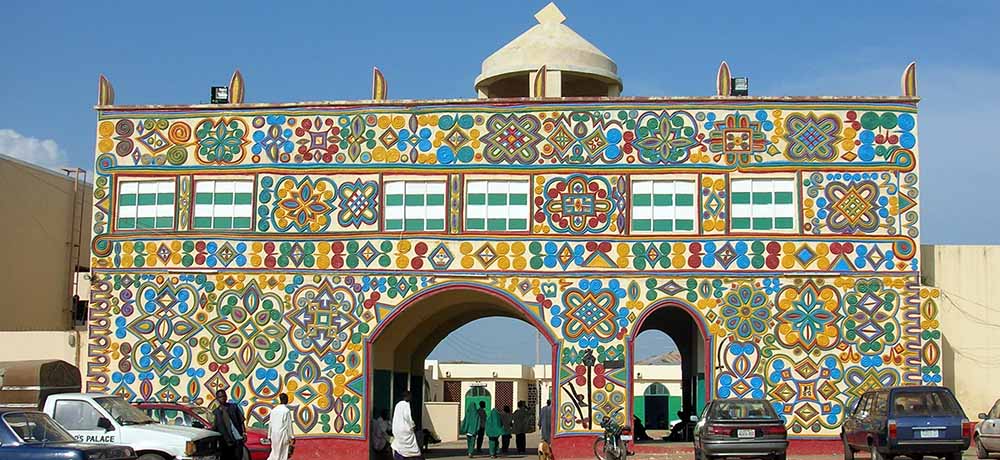
The introduction of Islam, primarily through the trans-Saharan trade routes, marked a turning point for the city in the 11th century. This infusion of new beliefs and commercial connections propelled Kano to become a prominent Islamic and trading hub. The city’s reputation as a commercial nexus reached its pinnacle during the reign of King Muhammad Rumfa in the 15th century. Rumfa is credited with significant urban and architectural developments, including the expansion of the Emir’s Palace and the construction of the iconic city walls and the Kurmi Market.
By the 19th century, Kano was described by the German scholar Heinrich Barth as the “greatest emporium of central Africa”. He noted its immense commercial activity, abundant manufacturing, and a population of 30,000 living within a 10-mile-long clay wall. The city’s economy was robust, with products like weaving, dyeing, and leatherwork being exported as far as Morocco and Europe.
An integral and complex aspect of this pre-colonial economy was the institution of slavery. Barth estimated that at least 50% of the city’s population were slaves. However, slavery in Kano was not a monolithic institution of unmitigated oppression. While many were consigned to rural estates for labor, others had avenues for advancement, rising to important positions in households, merchant firms, and the military. A “mamluk-style” system of royal slavery developed, wherein enslaved individuals were deliberately selected, trained, and promoted to positions of power. This practice was a strategic tool for the emir to consolidate personal control, as these “socially isolated” officials were expected to demonstrate a singular loyalty to the sovereign, thereby bypassing traditional kinship or political allegiances. This institutional complexity reveals a pre-colonial system where slavery served multiple functions—economic, social, and political—and was a crucial, albeit problematic, element of the state’s administrative and social order.
3.2 Fulani Rule and British Colonization
The 19th century witnessed a major political upheaval with the jihad led by Usman dan Fodio. This movement conquered the existing Habe kingdom, and in 1805, Kano was established as a prosperous emirate under the Sokoto Caliphate. A new political order was established, but the city’s commercial vibrancy continued unabated, solidifying its status as the caliphate’s largest and most prosperous province.
The arrival of the British in 1903 marked another pivotal transition. Following the Battle of Kano, the city-state was absorbed into the Northern Nigeria Protectorate. The British implemented a policy of “indirect rule,” which, while initially retaining the traditional structures, gradually eroded the Emir’s formal authority by establishing a new “Native Authority”. This shift was not just political; it had a profound impact on Kano’s economic orientation. The British colonial authorities consciously severed the historic trans-Saharan trade links and redirected commercial activities toward new rail lines connecting Kano with coastal ports in the south. This strategic re-wiring transformed Kano into the “groundnut capital” of Nigeria, with the mass production of the cash crop becoming a major economic driver and stimulating a significant influx of people into the city. This forced diversion illustrates how external powers fundamentally altered Kano’s economic geography, changing the direction and partners of its trade and setting the stage for its modern economic structure.
4.0 The Economic Engine: Trade, Industry, and Agriculture
Kano’s moniker as the “Centre of Commerce” is not merely a slogan but a reflection of its enduring economic identity, which has persisted through centuries of political and social change. This long-standing commercial culture is a testament to the city’s strategic geography and the deep-rooted entrepreneurial spirit of its inhabitants. The pre-colonial economy was a powerful synergy of agriculture and craft production, with goods like woven cloth, dyed textiles, and leatherwork being traded widely across West and North Africa.
4.1 Pillars of the Modern Economy
Kano’s modern economy is diverse and robust, built upon three primary pillars: agriculture, industry, and commerce. An estimated 75% of the state’s populace is directly or indirectly engaged in agriculture. The fertile land around Kano allows for the cultivation of a wide variety of crops, and the state’s annual grain production exceeds four million metric tons. In the post-colonial period, groundnut cultivation became a major revenue source for the country, further cementing Kano’s agricultural significance.
Beyond agriculture, Kano is a major industrial hub, second only to Lagos in Nigeria and the largest in the northern region. The manufacturing sector is highly diversified, producing a wide range of goods including textiles, leather products, plastics, pharmaceuticals, furniture, and agricultural implements.
4.2 Strategic Economic Development
To further bolster its economic standing, Kano has implemented key strategic initiatives, most notably the establishment of the Kano Free Trade Zone (KFTZ) in 2001. Located in the Ungogo Local Government Area, the KFTZ is a key government-owned zone specializing in warehousing, manufacturing, and logistics. The zone provides a competitive environment for businesses by offering significant incentives, including a complete tax holiday, duty-free and tax-free import of specific goods, and permission to sell all products in the domestic market without restriction. These policies, combined with the city’s large consumer market, access to natural resources, and a cost-effective labor force, are designed to attract both foreign and domestic investment, foster employment, and contribute to Nigeria’s GDP.
4.3 Key Market Centers
The city’s commercial landscape is defined by a network of vibrant and specialized markets. The historic Kurmi Market, founded in the 15th century, was the original epicenter of trade, serving as a hub for both regional and trans-Saharan commerce and a major slave market. While it has since lost some of its regional prominence and now caters primarily to local consumer interests, it remains an iconic cultural destination. The commercial ecosystem has evolved to include numerous specialized markets, such as Kantin Kwari for textiles, Yan Kaba for vegetables, and Dawanau for grain. This demonstrates a dynamic and adaptive commercial culture that has diversified its offerings in response to modern economic needs.
5.0 Society, Culture, and Religion: A Cosmopolitan Islamic Hub
Kano’s social fabric is a rich tapestry woven from diverse ethnic, linguistic, and religious threads. The principal inhabitants of the city are the Hausa and Fulani, who form the majority of the population. The Hausa language serves as a lingua franca, spoken by over 70 million people in the broader region. For centuries, Kano has been a “strongly cosmopolitan” city, with settled populations of Arab, Tuareg, and Kanuri people long before British colonization. Today, this diversity is maintained with the presence of Nigerians from other parts of the country, Arab traders, and Europeans.
5.1 Islamic Identity and Governance
Islam is the dominant religion in Kano State, with an overwhelming majority of the population identifying as Muslim. The religion’s arrival in the 11th century, brought by traders and scholars along the trans-Saharan routes, deeply influenced Kano’s governance, culture, and way of life. The Maliki school of Sunni Islam is the most widely practiced denomination. The city is a major center of Islamic scholarship and is home to numerous mosques, including the historically significant Kano Central Mosque.
5.2 The Role of Sharia Law
The formal adoption of Sharia law in Kano State in 2000 aligned its legal system with Islamic principles. The law establishes a parallel system where Sharia courts handle civil matters such as marriage, inheritance, and criminal cases for Muslims, while non-Muslims can opt for the secular legal system. The legal framework is managed by a Hisbah Committee and enforced by Hisbah brigades, which are locally recruited youth.
However, the implementation of Sharia law has been a source of significant controversy and has drawn criticism from advocates for human rights and religious freedom. The discrepancy between the stated policy and the reported application of the law reveals a profound source of political and social tension. While the government presents the system as a parallel and optional one, its application has led to serious human rights concerns. For instance, authorities have arrested, charged, and convicted individuals for blasphemy, with punishments ranging from extended prison sentences to death by hanging or stoning, as seen in the cases of Yahaya Sharif-Aminu and Umar Farouq.
Concerns over due process are also prominent, with reports of defendants lacking legal representation, courts accepting confessions extracted under torture, and judges having inadequate training. The legal framework also criminalizes “sodomy” and is used to restrict religious content on broadcast stations and social media. This gap between the theoretical framework and its practical application points to a broader struggle over legal and religious authority, highlighting that the city’s legal system is a site of ongoing conflict rather than a settled administrative matter.
6.0 Governance and Traditional Authority: A Shifting Power Dynamic
The relationship between the traditional Kano Emirate Council and the modern, elected government is a complex and often contentious dynamic. The Emir of Kano, who is the traditional ruler and leader of the Tijaniyya Sufi order, retains considerable authority and provides leadership on matters of social cohesion and conflict resolution. However, this influence operates within a framework of steadily eroding formal powers, a process that began with British colonization and has been exacerbated by the modern political class. The political elite often perceives traditional institutions as a threat to their authority, leading to continuous clashes over power and jurisdiction.
6.1 The Sanusi II Saga: A Case Study in Conflict
The recent political turmoil surrounding the Kano Emirate serves as a prime example of this ongoing power struggle. The ousting and subsequent reinstatement of Emir Muhammadu Sanusi II illustrate the fraught relationship between traditional authority and state governance.
Sanusi II’s tenure, from 2014 to 2020, was marked by his departure from traditional palace etiquette. He was known for his outspoken criticism of government policies, particularly on issues like financial misappropriation, the opulent lifestyle of political leaders, and the poor state of education in Northern Nigeria. This was perceived as a direct challenge to the authority of the then-governor, Abdullahi Ganduje.
In an effort to “minimize the influence” of the emir, the Ganduje administration split the Kano Emirate into five separate emirates in 2019. The conflict reached its climax in March 2020, when Sanusi was formally dethroned based on accusations of showing “total disrespect” for the local government. He was subsequently replaced by Aminu Ado Bayero.
The saga took a new turn in May 2024 with a change in government. The new governor, Abba Kabir Yusuf, signed a bill into law that dissolved the five emirates and reinstated Sanusi II. However, this action sparked a new series of conflicts, including conflicting court orders that created legal ambiguity and an impasse over the control of the palaces. The state government’s subsequent decision in July 2024 to re-establish three of the emirates—Karaye, Gaya, and Rano—as “second-class” under Kano’s overarching authority further underscores that the relationship between these power centers remains volatile and unresolved.
The table below provides a chronological overview of these complex transitions.
| Date | Key Player | Event | Source |
| June 8, 2014 | Gov. Rabiu Kwankwaso | Appoints Sanusi Lamido Sanusi as Emir of Kano | |
| May 29, 2015 | Abdullahi Ganduje | Sworn in as Governor of Kano State | |
| Dec 2019 | Gov. Abdullahi Ganduje | Splits Kano Emirate into five emirates | |
| Mar 9, 2020 | Gov. Abdullahi Ganduje | Dethrones Emir Sanusi II; replaces him with Aminu Ado Bayero | |
| May 23, 2024 | Gov. Abba Kabir Yusuf | Dissolves five emirates and reinstates Sanusi II as Emir | |
| July 2024 | Gov. Abba Kabir Yusuf | Re-establishes three emirates (Karaye, Gaya, Rano) as second-class under Kano’s authority |
7.0 Urban Dynamics and Contemporary Challenges
Kano is a city facing the consequences of rapid and asymmetrical growth. The challenges are particularly acute in the environmental and infrastructural sectors. The city experiences “perennial ecological degradation” , most notably in the form of widespread flooding during the wet season. This is a consequence of a number of interlocking issues, including an inadequate urban drainage system, an “appalling sanitation culture” where residents dispose of refuse in drains, and aggressive land reclamation that has eliminated natural ponds and green spaces. The loss of these natural flood-mitigation areas has also led to the “near exhaustion of underground water,” a problem compounded by the proliferation of boreholes to meet the city’s growing water demands.
The surge in informal development has placed immense stress on the city’s infrastructure, leading to overpopulation, poor waste disposal, social vices, and a deficit in healthcare facilities.
7.1 Government Initiatives and Projects
The current administration, under Governor Abba Kabir Yusuf, has initiated a series of projects to address these pressing issues. A significant focus is on road infrastructure, with over ₦40.8 billion awarded in contracts for 17 township roads in various local government areas within the Kano metropolis. These projects are intended to improve connectivity, reduce traffic congestion, and facilitate the movement of goods from farms to markets, thereby boosting the local economy.
Beyond roads, the government has approved a total of ₦14.8 billion for strategic development projects, including the renovation of health facilities and the rehabilitation of five mini earth dams to address water scarcity. In an effort to tackle the environmental crisis, the government has appointed a climate change activist as the Commissioner of Environment and has flagged off the distribution of 5.5 million tree seedlings to combat desert encroachment.
Furthermore, Kano is poised to be a major beneficiary of Nigeria’s proposed $60 billion high-speed rail project, which aims to connect it with other key cities like Lagos and Abuja. The table below provides a summary of the most prominent recent infrastructure projects.
| Project Name | Location | Awarded Cost | Purpose/Objective | Source |
| 17 Township Roads | Kano Metropolitan LGAs | ₦40.8 billion | Improve road connectivity, reduce traffic congestion, and boost the local economy. | |
| Rogo-Bari-Falgore-Mahangi roads | Rogo LGA | ₦13.3 billion | Ease movement, facilitate business activities, and improve conveyance of goods. | |
| Panda-Hamdullahi-Albasu-Salkwayan Dutse roads | Albasu LGA | ₦6.9 billion | Improve quality of life and boost socio-economic development. | |
| Road & Hospital Renovations | Multiple LGAs | ₦14.8 billion | Consolidate people-oriented developmental agenda. |
8.0 Conclusion and Future Outlook
The city of Kano is a historical and contemporary paradox. Its identity is deeply rooted in a millennia-old legacy as a commercial and Islamic powerhouse, a heritage that has survived and adapted through multiple political transformations. The city’s strategic location and the deeply ingrained industriousness of its people have ensured its enduring status as a “Centre of Commerce,” even as its trade routes and economic priorities have been fundamentally re-oriented by colonial policies.
However, the city’s future trajectory is confronted by a set of significant, self-reinforcing challenges. The most pressing of these is its rapid demographic expansion, which is overwhelming its urban infrastructure and contributing to a cycle of environmental degradation and resource depletion. The perennial flooding, a symptom of poor planning and sanitation, and the near exhaustion of underground water, underscore the urgent need for a strategic and sustainable approach to urban development.
Kano’s political landscape adds another layer of complexity. The ongoing power struggle between the elected state government and the traditional Emirate Council, vividly illustrated by the saga of Emir Sanusi II, represents a critical area of instability. The resolution of this conflict is vital, as a stable relationship between these two authorities is necessary to ensure consistent and effective governance.
Kano’s path forward lies in its ability to leverage its historical strengths—its robust commercial legacy, its diverse population, and its resilient culture—to overcome these modern challenges. The recent government initiatives, from massive road construction projects to environmental conservation efforts, demonstrate a recognition of these issues and a willingness to invest in a more sustainable future. The success of these projects and the ability of political leaders to navigate the delicate balance of power will determine whether Kano can effectively harness its growth and solidify its position as a leading regional powerhouse for generations to come.










Related Posts


Stay Informed With the Latest & Most Important News
Previous Post
Next Post

Advertisement