Now Reading: The Nigerian Education System: A Comprehensive Analysis of Achievements, Systemic Challenges, and Pathways for Sustainable Reform
-
01
The Nigerian Education System: A Comprehensive Analysis of Achievements, Systemic Challenges, and Pathways for Sustainable Reform
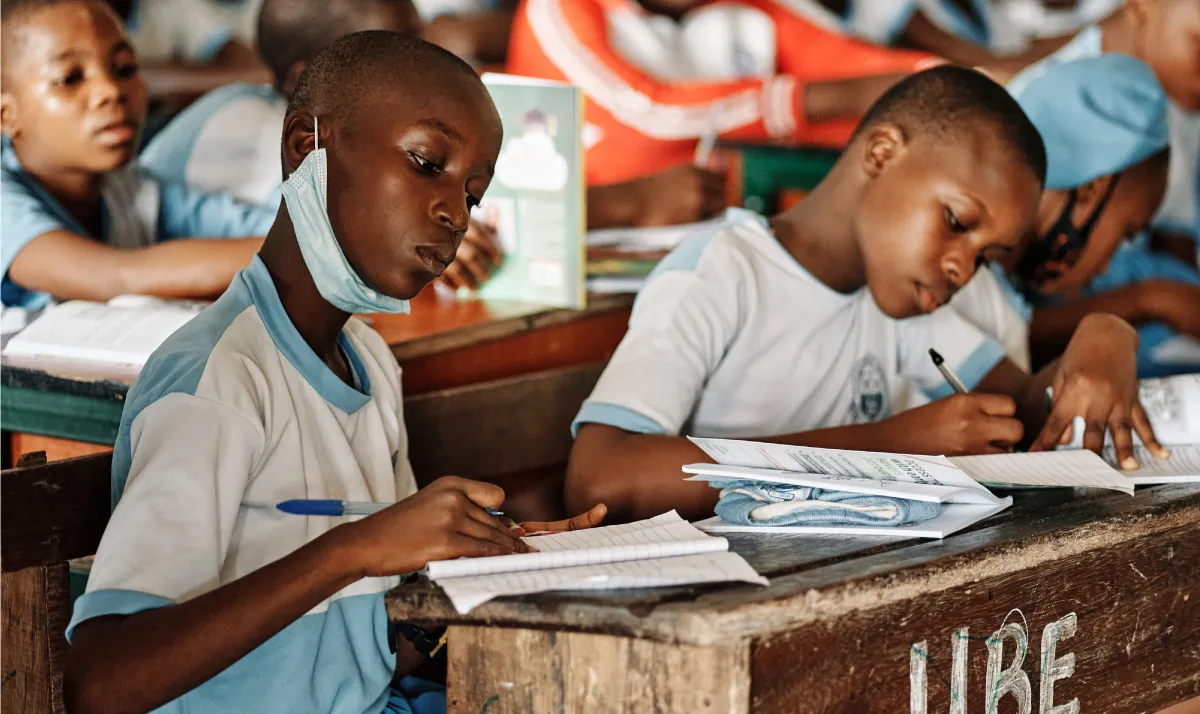
The Nigerian Education System: A Comprehensive Analysis of Achievements, Systemic Challenges, and Pathways for Sustainable Reform


The Nigerian education sector presents a profound paradox, embodying both significant progress and a multi-layered, self-perpetuating crisis. The nation has made noteworthy strides in expanding access to education, with millions more children enrolled in primary and secondary schools than in previous decades. This achievement is complemented by a gradual rise in the national literacy rate and the documented academic excellence of the Nigerian diaspora, which stands as a powerful testament to the inherent potential of the population when provided with a functional educational system.
Despite these achievements, the system is mired in a crisis of quality, equity, and relevance. This report posits that these challenges are not isolated but form a reinforcing cycle of systemic failure. The analysis identifies five core, interconnected challenges: chronic underfunding and pervasive corruption, which cripple the sector’s ability to develop; dilapidated infrastructure and facilities, which create physical barriers to effective learning; a human capital crisis, characterized by a severe shortage of qualified teachers, low morale, and brain drain; a curriculum that is misaligned with the demands of the modern workforce, resulting in widespread graduate unemployment; and a persistent state of insecurity and inequality that exacerbates the out-of-school children crisis.
The central conclusion of this report is that the historical pattern of policy discontinuity and neglect has created a deep-seated institutional decay that cannot be addressed by superficial reforms. The path forward requires a fundamental shift in governance, a long-term commitment to a new financial framework, and a strategic focus on rebuilding the teaching profession and modernizing the curriculum. Recommendations are therefore centered on institutionalizing policy continuity, increasing budgetary allocation with robust accountability, fostering genuine public-private partnerships, and addressing the root causes of insecurity and inequality to secure the future of a system that is currently a bottleneck for national development.
Introduction: Context and Framework
The Role of Education in Nigeria’s National Development
Education is universally recognized as the bedrock of national development, serving as a powerful instrument for social, economic, and cultural transformation. It is widely considered a panacea for a nation’s challenges and a fundamental human right, as recognized by the 1948 Universal Declaration of Human Rights. The correlation between a nation’s level of education and its socioeconomic development is well-established, with studies demonstrating a positive link between girls’ enrollment in primary school and a country’s gross national product and life expectancy. Education represents the largest component of societal investment into human capital and is crucial for empowering individuals with the knowledge and skills necessary for productive employment and social cohesion. For Nigeria, a country with a rapidly expanding population and a mean age of 17.5 years, a functional education system is not merely an option but an existential necessity for fostering economic growth and ensuring social stability.
Aims and Scope of the Report
This report provides a multi-dimensional analysis of the Nigerian education system, moving beyond a simple recitation of statistics to an in-depth exploration of the causal relationships and systemic challenges that have defined its trajectory. It integrates a historical policy overview with current data and socioeconomic context, examining the roles of internal and external stakeholders to provide a comprehensive understanding. The analysis spans from primary to tertiary education, highlighting key achievements and failures while delivering a structured set of recommendations for sustainable reform. The objective is to produce a definitive, authoritative document for senior policy analysts and development professionals seeking a nuanced and actionable perspective on the state of education in Nigeria.
A Historical and Policy Retrospective
From Colonial Legacy to National Policy: Key Milestones
The historical evolution of education in Nigeria reveals a continuous, yet often interrupted, search for a national system that aligns with developmental aspirations. Before 1954, education policy was largely shaped by the British colonial period, with a structure known as the 8-6-2-3 system, which included 8 years of primary education, 6 years of secondary, 2 years of higher school, and 3 years of university education. This was later replaced by the 6-5-2-3 system, and subsequently, in 1969, a National Curriculum Conference was held to align the curriculum with post-independence national goals, emphasizing civic responsibility and a distinct national identity.
The history of tertiary education can be traced to the Elliot Commission of 1943, which culminated in the establishment of University College Ibadan (UCI) in 1948, an affiliate of the University of London. Following Nigeria’s independence in 1960, a push for regional universities led to the establishment of the University of Ife, Ahmadu Bello University, and the University of Lagos in 1962, followed by the University of Benin in 1970. These institutions are now referred to as the “first-generation” universities and were initially celebrated as centers of academic excellence. By the mid-1980s, the number of universities had expanded significantly, with 12 additional institutions established between 1970 and 1985, a period of rapid growth and high competition for admission.
Landmark Reforms and their Outcomes
Two of the most ambitious and defining education reforms in Nigeria’s history were the Universal Primary Education (UPE) program of 1976 and the Universal Basic Education (UBE) program of 1999. The UPE program, launched during a period of abundant oil revenue, was intended to provide free primary education. Despite the nation being “awashed with petro-dollars,” the program was crippled by what has been described as “unprecedented financial imprudence, irrational planning, and large-scale corruption”. The policy was implemented without correct foundational data, and the government’s takeover of all voluntary and mission schools was executed as a “defective educational programme with much noises and fanfare”. The program’s untimely death was a consequence of a preference for ambitious, politically motivated announcements over the foundational planning and consistent political will required for sustainable implementation.
The failure of UPE was a crucial lesson that was not heeded when the UBE was introduced in 1999 to enhance the success of the first nine years of schooling. The UBE, which replaced UPE and introduced a 9-3-4 system, faced the same fundamental problems as its predecessor, including a lack of legal backing until 2004 and the persistence of dilapidated infrastructure. The UBE’s challenges highlight a persistent failure of successive governments to learn from history and ensure policy continuity. The restructuring of school years, from 6-3-3-4 to 9-3-4, was a superficial change that did not address the deeper systemic issues of funding, teacher quality, and governance that had led to the collapse of previous reforms. This consistent pattern of ambitious policy pronouncements followed by poor implementation and political discontinuity has eroded public trust and stalled long-term educational progress.
Achievements: Progress and Promising Indicators
Macro-Level Progress in Access and Enrollment
On a macro level, Nigeria has achieved significant progress in expanding access to education over the past five decades. The primary school enrollment rate reached 86.72% in 2021, a remarkable increase from just 41.94% in 1970. This expansion is mirrored in secondary education, where the total number of pupils enrolled stood at nearly 14 million in 2021, a steady rise from approximately 12.5 million in 2015. This surge in enrollment reflects the government’s efforts to improve access and is a direct consequence of a rapidly growing population. The national literacy rate has also shown a gradual increase, reaching 63.16% in 2021, up from 62.02% in 2018.
However, these enrollment numbers mask a more complex and troubling reality. A paradoxical situation exists where an increasing number of children are in school, but many are not learning. The challenge of “schooling without learning” is evident in international data. For instance, Nigerian students score 309 on a harmonized test score scale where 300 represents minimum attainment. The problem is particularly acute among younger students; only 26% of Nigerian children and adolescents aged 7–14 possess basic reading and math skills necessary for daily tasks. This stark disparity between the celebrated achievement of high enrollment and the devastating reality of low learning outcomes indicates that simply getting children into a classroom is not the same as providing them with a quality education. The lack of a tangible educational benefit has led to a collapse of public trust, with parents citing “poor teaching quality” as the primary reason for withdrawing their children from schools.
Micro-Level Successes and the Nigerian Diaspora
A powerful, if anecdotal, achievement that speaks to the innate potential of the Nigerian population is the exceptional educational attainment of its diaspora. Data shows that 63% of first-generation Nigerian immigrants to the United States are college-educated, a figure significantly higher than the 40.1% of non-Hispanic whites in the same age bracket. This trend is even more pronounced at the graduate level, with 14% of second-generation Nigerian American men obtaining PhD or professional degrees, compared to 7.3% for second-generation Asian men. This phenomenon is a powerful indictment of the domestic system’s shortcomings. The success of these individuals in a more stable, well-resourced educational environment demonstrates that the issue is not a lack of inherent intellect, drive, or cultural value for education; rather, the problem lies with the “enabling environment” and institutional capacity within Nigeria itself. The education system in Nigeria appears to act as a bottleneck for its citizens’ potential, a barrier that, once removed, allows for remarkable success. The diaspora’s achievements are a tangible representation of the human capital being lost and a clear signal that the primary challenge is institutional, not cultural.
Systemic Challenges: A Multi-Layered Crisis
The Funding Paradox: Policy Intent vs. Financial Reality
The most significant and enduring barrier to effective educational policy implementation in Nigeria is chronic underfunding. The Nigerian government has consistently failed to meet the UNESCO-recommended benchmark of allocating between 15% and 26% of its national budget to education. In some years, less than 7% of the budget has been allocated to the sector, and while the 2025 allocation of 7.3% marks an improvement from 2024’s 5.5%, it still falls significantly short. This financial deficit is not a recent phenomenon; education funding has lagged the UNESCO recommendation for at least the last three decades.
This chronic underfunding is not a standalone issue; it creates a self-reinforcing feedback loop that leads to systemic decay. Inadequate funding results in a cascade of downstream problems, including the widespread decay of infrastructure, poor remuneration for teachers, and a general decline in the quality of education. This decay is further exacerbated by pervasive corruption and mismanagement, as a significant portion of the limited funds that are allocated often disappear into “private pockets,” diverting resources meant for schools and teachers. The result is a cycle where low funding leads to a poor system, which in turn justifies further neglect and reinforces the public’s negative perception. The evidence suggests that this underfunding is not merely a failure of economic policy but, at times, a deliberate act of political self-preservation, where a ruling class that sends its own children abroad or to expensive private schools benefits from a majority population that remains poor and uneducated.
| Year | Nigeria Education Spending (% of Total Government Spending) | UNESCO Recommended Benchmark (%) |
| 2025 | 7.3% | 15-26% |
| 2024 | 5.5% | 15-26% |
| 2023 | 4.4% | 15-26% |
| 2022 | 0.35% (of GDP) | 4-6% (of GDP) |
Export to Sheets
Source:
Infrastructure and Facilities: The Physical Barriers to Learning
The state of physical infrastructure is the most visible and tangible symptom of systemic failure in the Nigerian education system. Many schools lack the most basic facilities, including adequate classrooms, libraries, laboratories, and sanitation infrastructure. Students in some areas are forced to sit on bare floors to receive lectures, a stark contrast to the goals of national education policies. A World Bank report on primary schools revealed that even in private schools, which generally have better facilities, only 35% possessed the minimum combination of infrastructure.
The physical decay of educational facilities directly impacts the quality of the learning environment and, consequently, student and teacher morale. The lack of basic resources—from desks and blackboards to scientific equipment and up-to-date textbooks—destroys public trust and sends a powerful signal to parents and communities that the government’s commitment to education is hollow. This visible failure contributes significantly to the out-of-school crisis, as parents rationally choose to invest their limited resources elsewhere when schools are unable to provide a functional and safe learning environment.
Human Capital Crisis: Teachers, Curricula, and Outcomes
The Nigerian education sector is grappling with a severe human capital crisis, affecting teachers, students, and the relevance of the entire system.
- Teacher Shortage, Quality, and Motivation: There is an alarming shortage of qualified teachers, with estimates suggesting that over 270,000 more are needed to meet the demand. Many existing teachers are underpaid and have low morale, which contributes to high attrition rates and a brain drain of experienced academic staff to other countries. The average teacher salary in Nigeria, at an estimated N486,000 annually, is significantly below what is considered adequate compensation.
- Academic Staff Union of Universities (ASUU) Strikes: The tertiary education system is plagued by frequent and debilitating strikes by the Academic Staff Union of Universities (ASUU). The union’s demands are centered on poor remuneration, the government’s failure to honor past agreements, and the need for a comprehensive review of laws to ensure university autonomy. These strikes, a direct result of government neglect, disrupt the academic calendar, devalue the university degree, and accelerate the exodus of skilled academics seeking better working conditions abroad. This creates a self-reinforcing cycle of institutional decline, where government inaction leads to strikes, which in turn fuels the brain drain and further erodes the quality of education.
- Curriculum Relevance and the Employability Gap: The national curriculum is widely criticized as being outdated, overly theoretical, and disconnected from the needs of the 21st-century labor market. Despite numerous reform efforts, the curriculum fails to equip students with the practical and technical skills required for modern careers, leading to widespread youth unemployment. A study found a significant “skill mismatch,” with the extent of the mismatch at 60.6% and major weaknesses identified in areas like communication, critical thinking, and IT skills. The educational system produces a large number of graduates who are essentially “unemployable,” a problem exacerbated by the recent conversion of many polytechnics into universities, which shifts the focus away from hands-on vocational training that industries desperately need. This “degree-without-skills” dilemma underscores the urgent need for a curriculum review that prioritizes practical application and industry collaboration.
The Social and Security Dimensions of Educational Failure
The Out-of-School Children Crisis: Drivers and Demographics
Nigeria is home to the world’s largest population of out-of-school children, with estimates ranging from 10.5 million to 22 million. This crisis is a consequence of a complex interplay of “demand barriers” and “supply barriers” to education. Demand barriers are household-level decisions and include factors such as economic hardship (the need for child labor), early marriage, and socio-cultural norms that discourage formal schooling, particularly for girls. In a 2015 survey, “labour needed” was the top demand barrier for children never attending school, accounting for 21% of responses.
Supply barriers, on the other hand, are related to the schools themselves and include a lack of infrastructure, poor school quality, an absence of qualified teachers, and distance to school. Distance was the main supply barrier for children who never attended school, while poor school quality was the primary reason for children dropping out. These findings underscore how the physical and institutional failings of the system directly contribute to the crisis, making school a non-viable option for many families.
Insecurity and Conflict: The Impact of Boko Haram, Banditry, and Kidnappings
The persistent threat of terrorism and banditry is a central driver of the out-of-school children crisis, particularly in northern Nigeria. What began as an ideologically-driven opposition to Western education, as encapsulated in the name “Boko Haram” (“Western education is forbidden”), has evolved into a lucrative, ransom-seeking criminal enterprise. Since the infamous 2014 abduction of 276 Chibok schoolgirls, over 1,700 children have been seized from their schools by gunmen. This has led to the closure of hundreds of schools and a climate of fear that discourages attendance and undermines any policy effort to improve access. The security crisis has effectively weaponized education, turning schools into battlegrounds and students into targets. The government’s Safe Schools Initiative and its commitment to the Safe Schools Declaration are critical policy responses, but weak implementation and enforcement remain a key challenge.
Socioeconomic and Regional Disparities
The Nigerian education system is characterized by stark regional divides and a persistent problem of inequality. Significant gaps exist between urban and rural areas and between the northern and southern regions, with northern states suffering from lower attendance and literacy rates. The system appears to amplify, rather than correct, existing inequalities. For instance, the Joint Admission and Matriculation Board’s (JAMB) quota system, designed to promote geographic equity, inadvertently entrenches disparities by admitting underprepared students who are set up for failure. Simultaneously, the public system is subject to what economists refer to as “elite capture,” where resources intended for the masses disproportionately benefit the already advantaged, while government officials and elites send their own children to expensive private institutions or abroad. This intentional neglect ensures a continued gap in educational attainment and perpetuates a cycle of poverty and dependence.
| Barrier Category | Top Reasons for Never Attending School (2015) | Top Reasons for Dropping Out (2015) |
| Demand Barriers | Labour Needed (21%) | Monetary Cost (23-49%) |
| Monetary Cost (18%) | Labour Needed (15%) | |
| No Interest (10%) | Engaged, Married, Pregnant (5%) | |
| Supply Barriers | School Too Far (23%) | Poor School Quality (15%) |
| Poor School Quality (14%) | School Too Far (7%) |
Export to Sheets
Source:
The Dual System: Public vs. Private Education
A Comparative Analysis of Student Outcomes and Quality
The proliferation of private schools in Nigeria is a direct consequence of the public system’s failure and the public’s loss of confidence in it. Parents who can afford it are “daily withdrawing” their children from public schools in favor of private institutions, despite the expense. A World Bank report found that private schools consistently outperform their public counterparts across all indicators, from teacher absence rates to the availability of infrastructure. Private school teachers, for example, spend an average of one hour and 10 minutes more per day on instructional activities than public school teachers, translating to 22 additional learning days over a school term. Students in private primary schools have also been shown to perform better academically than their counterparts in public schools, a trend that reinforces parental preference.
While the private sector provides a solution for some, its growth reinforces socioeconomic inequality by creating a two-tiered system where quality education is a commodity accessible only to the privileged. Furthermore, the quality of private schools is not universally high; many operate with substandard infrastructure, unqualified teachers, and poor remuneration practices, which can foster examination malpractice and compromise educational quality.
Disparity in Funding and Resource Allocation
The disparity in quality between public and private schools is intrinsically linked to their funding models. Public schools are almost exclusively reliant on government funding, leaving them vulnerable to the chronic underfunding, mismanagement, and corruption that cripples the sector. Private schools, in contrast, are heavily dependent on tuition fees, a model that allows them to pay better salaries, attract more qualified teachers, and invest in better facilities and resources. This funding structure perpetuates the divide and leaves the public system, which serves the majority of the population, in a state of perpetual decline.
| Metric | Public Schools | Private Schools |
| Teacher Absence Rate | >16% | 6% |
| Teacher Time on Instruction | Less | 1 hour 10 minutes more per day |
| Infrastructure Availability | Less than 35% | 35% |
| Average Teacher Competency | <42% | 42% |
| Primary Funding Source | Government Funding | Tuition Fees |
| Academic Performance | Poorer outcomes | Better outcomes |
Export to Sheets
Source:
Analysis of External Support and Intervention
The Role and Impact of the World Bank and UNICEF
External partners play a vital role in complementing the efforts of the Nigerian government, particularly in addressing critical gaps in access and quality. UNICEF, through its targeted interventions, has achieved notable successes. The Girls’ Education Project Phase 3 (GEP3), for example, provided cash transfers to families and engaged communities, successfully enrolling an additional 1.5 million girls in school and raising literacy levels in northern states. The organization has also worked to strengthen education system governance by supporting the rollout of education management information systems and providing technical assistance to government partners.
The World Bank has also been a key partner, providing substantial financial support and technical guidance. Its new $500 million HOPE-EDU program, for instance, marks a crucial shift in focus from simply increasing access to addressing the core quality crisis by supporting “structured pedagogy approaches to foundational literacy and numeracy”. These interventions are significant and provide a model for what works on the ground.
The Contribution of NGOs and Civil Society
Non-governmental organizations (NGOs) are considered indispensable in Nigeria, as they often compensate for the gaps in governmental functionality, particularly in social welfare and education. NGOs assist in providing essential resources, raising funds, and carrying out advocacy and sensitization activities that help increase children’s access to education. They also play a critical role in promoting teacher capacity development and providing learning materials, especially in underserved rural areas.
The contributions of external partners and NGOs, while vital, are often limited to targeted interventions and cannot, on their own, solve the systemic, top-down issues of governance, corruption, and political will that plague the sector. Their success highlights the government’s failure to provide essential services, but they are not a substitute for a functional public system. The challenge for these organizations is that their efforts, while successful on a smaller scale, cannot be fully sustained or scaled up without a fundamental shift in national policy and financial commitment from the government.
Comprehensive Recommendations for Reform
The preceding analysis demonstrates that Nigeria’s education system is afflicted by a single, interconnected, and self-reinforcing crisis. The path forward requires moving beyond a focus on enrollment statistics to a commitment to genuine, fundamental reforms that address not just the symptoms but the root causes of the crisis.
Policy and Governance
- Institutionalize Policy Continuity: The government must break the cycle of political discontinuity that has historically undermined reforms. Policies should be institutionalized and insulated from political disruptions to ensure long-term planning and sustained progress.
- Strengthen Regulatory Bodies: The roles of regulatory bodies like the National Senior Secondary Education Commission (NSSEC), the National Universities Commission (NUC), and the National Board for Technical Education (NBTE) should be strengthened to ensure accountability and the enforcement of minimum standards across all public and private institutions.
- Enforce the Child Rights Act: The government must domesticate and enforce the Child Rights Act to make primary education truly compulsory and help address the demand-side barriers to the out-of-school children crisis.
Financial Reforms
- Commit to Increased, Transparent Funding: The government must commit to a phased, transparent increase in the education budget to meet the UNESCO benchmark. This increase must be accompanied by the establishment of robust, technology-enabled financial management systems to track and audit the use of funds and prevent corruption.
- Implement Compensatory Funding: A new financial framework should include compensatory funding formulas that direct more resources to underserved regions and disadvantaged communities, helping to close the stark urban-rural and North-South gaps in access and quality.
Teacher Development and Welfare
- Revise Remuneration and Incentives: To attract and retain qualified teachers, a revised and competitive salary structure must be established, along with comprehensive incentive packages that address professional development needs.
- Address Union Disputes: The government must engage in genuine dialogue with academic unions like ASUU, renegotiating the 2009 agreement and settling outstanding payments to end the recurring strikes that disrupt the academic calendar and fuel brain drain.
Curriculum Modernization
- Prioritize Practical Skills: The national curriculum must be comprehensively revised to move away from outdated, theoretical models and prioritize practical skills, critical thinking, technology integration, and vocational subjects that are relevant to the modern labor market.
- Foster Industry-Academia Collaboration: Genuine public-private partnerships must be established to bridge the skill mismatch. This includes creating enhanced apprenticeship and internship programs and involving professional bodies and employers in the curriculum review process to ensure graduates are truly employable.
Security and Social Safeguards
- Fully Implement the Safe Schools Declaration: The government must move beyond ratification of the Safe Schools Declaration and fully fund and enforce its implementation, with a focus on improving school security, emergency preparedness, and psychosocial support for students and teachers.
- Tackle the Root Causes: It is crucial to address the underlying drivers of the out-of-school crisis, recognizing that insecurity and poverty must be tackled alongside educational reforms. This requires a multi-sectoral approach that combines security operations with socioeconomic interventions to build public trust and make education a safe and viable option for all.
Conclusion: A Forward-Looking Perspective
Nigeria’s education system stands at a critical juncture. The analysis presented in this report reveals that its challenges—from chronic underfunding and dilapidated infrastructure to a human capital crisis and pervasive insecurity—are not disparate problems but components of a single, interconnected, and self-reinforcing crisis. The historical pattern of ambitious policies failing due to a lack of planning and continuity has created a cycle of institutional decay that has crippled the system’s ability to serve its citizens.
The path forward is not a simple matter of implementing new policies; it requires a fundamental commitment to governance reform and a long-term vision that transcends political cycles. The success of targeted interventions by external partners and the demonstrated potential of the Nigerian diaspora provide clear evidence that the core issue is not a lack of capacity or will among the Nigerian people but a failure of the institutional framework. By addressing the root causes of underfunding, rebuilding the teaching profession, modernizing the curriculum, and tackling the security challenges that have turned schools into targets, Nigeria can begin to unlock the vast human potential that is currently being bottlenecked by its education system. The future of the nation hinges on its ability to move from a state of crisis to one of sustained, equitable, and quality-driven educational development.










Related Posts



Stay Informed With the Latest & Most Important News
Previous Post
Next Post

Advertisement