Now Reading: The Shifting Contours of Nigerian Diplomacy: Navigating Ambition, Hegemony, and Domestic Constraint
-
01
The Shifting Contours of Nigerian Diplomacy: Navigating Ambition, Hegemony, and Domestic Constraint

The Shifting Contours of Nigerian Diplomacy: Navigating Ambition, Hegemony, and Domestic Constraint

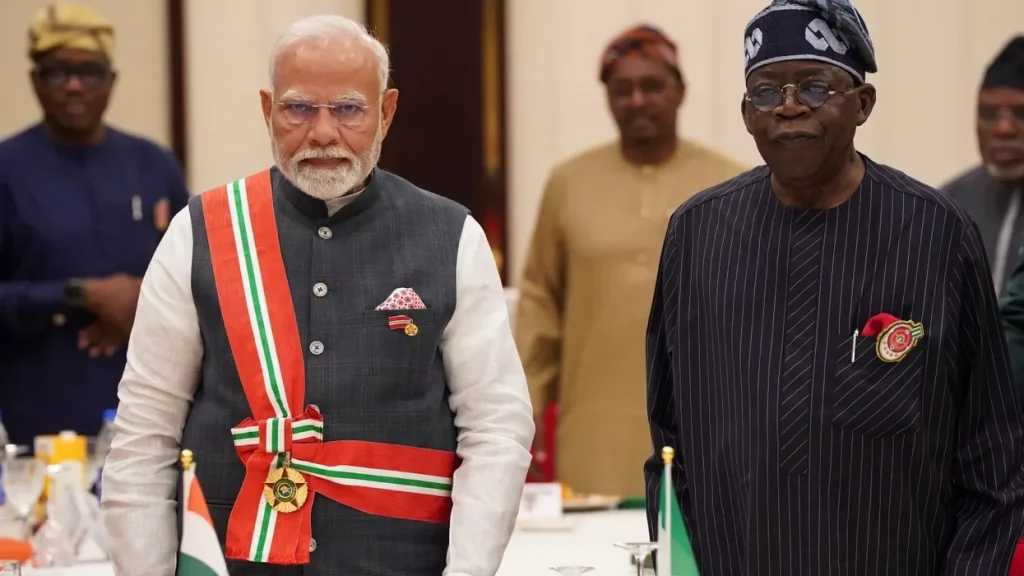
Nigeria’s foreign policy since its independence in 1960 has been defined by a resolute commitment to African leadership, a posture often encapsulated by its “Afrocentric” and “big brother” identity. This report provides a comprehensive analysis of Nigeria’s diplomatic trajectory, examining the foundational principles, key historical actions, and the profound domestic challenges that have increasingly constrained its external ambitions. The central argument is that while Nigeria has historically been a force for decolonization and regional stability, its capacity to project power and maintain its hegemonic status has been significantly eroded by persistent internal vulnerabilities.
The report details how Nigeria, upon gaining independence, anchored its foreign policy on principles of African unity, non-alignment, and the emancipation of the continent. It fulfilled this mandate through costly and decisive actions, including spearheading the anti-apartheid movement and leading peacekeeping interventions in West Africa. However, this external generosity has come at a significant material and human cost, often with little reciprocal appreciation from beneficiary nations. This has created a fundamental paradox: Nigeria’s pursuit of regional prestige has frequently superseded the critical need for internal development.
In the contemporary era, this paradox has reached a critical point. Internal security crises, economic stagnation, and institutional decay have severely limited Nigeria’s diplomatic effectiveness. The military, once the pillar of regional peacekeeping, is now overstretched by domestic insurgencies. Inadequate funding and politicization of the foreign service have rendered diplomatic missions dysfunctional and an international embarrassment. The nation’s quest for a permanent seat on the United Nations Security Council, a key indicator of its global ambition, has stalled, primarily because of a failure to address these core domestic issues.
The analysis concludes that Nigeria’s diplomatic future is inextricably linked to its ability to reform its internal structures. To restore its influence, Nigeria must shift its focus from an external, and often unrewarded, demonstration of power to the cultivation of a stable, prosperous, and secure domestic environment. It must professionalize its diplomatic corps and re-evaluate its foreign policy to ensure that its external engagement directly serves the national interest and the well-being of its citizens. The path to diplomatic credibility abroad begins with effective governance at home.
Part I: Foundational Principles and Historical Evolution (1960-Present)
1.1 The Genesis of “Afrocentrism”
Upon gaining independence in 1960, Nigeria established its foreign policy with a foundational set of principles that would guide its external relations for decades. The framework was articulated by the nation’s first Prime Minister, Alhaji Sir Abubakar Tafawa Balewa, in a seminal address to the United Nations General Assembly in October 1960. The core tenets of this policy were centered on African unity and independence, non-interference in the domestic affairs of other states, and a steadfast commitment to multilateralism and the peaceful settlement of disputes. These principles were not merely ideological; they were deeply rooted in a self-conception that Nigeria, with its immense population, rich resources, and strong military, was destined to lead the African continent. This belief in a “manifest destiny” has been described as a “messianic reference” that has remained ingrained in the conduct of Nigeria’s foreign policy throughout its history.
While “Afrocentrism” has remained the publicly stated centerpiece of its foreign policy, a deeper analysis reveals a more complex reality. The principle of non-alignment, for instance, was proclaimed during the Cold War era as a means of maintaining autonomy from the major power blocs. However, the application of this principle was often inconsistent. The nation’s diplomatic actions on a range of issues, particularly those concerning African liberation and global governance, frequently aligned with the Western-led bloc. This suggests that Nigeria’s foreign policy, rather than being rigidly ideological, has always functioned as a strategic instrument designed to advance perceived national interests. The declared principles serve as a public-facing framework, while the actual diplomatic conduct has been pragmatic, adapting to the demands of a constantly shifting international environment. This dynamic has resulted in a foreign policy that, despite its stated consistency, is often criticized for its inconsistencies and its vulnerability to both internal and external pressures.
1.2 From Anti-Colonialism to African Solidarity
From the outset, Nigeria translated its Afrocentric principles into tangible and often costly actions, establishing itself as a key player in the struggle for African liberation and against racial discrimination. A founding member of the Organisation for African Unity (OAU), which later became the African Union (AU), Nigeria used its diplomatic and economic influence to champion causes across the continent. The nation took a particularly tough line against the apartheid government in South Africa, a stance that included both diplomatic pressure and economic sanctions. For instance, Nigeria nationalized the local operations of Barclays Bank and British Petroleum (BP) for violating the economic embargo against the apartheid regime, demonstrating a willingness to sacrifice economic ties for its moral and political convictions.
Nigeria’s commitment extended beyond symbolic gestures. It mobilized significant diplomatic influence to support the Popular Movement for the Liberation of Angola (MPLA) during the country’s civil war in 1975, helping the group gain recognition from the OAU. The military regime of General Olusegun Obasanjo in 1977 donated $20 million to the Zimbabwean movement against the apartheid government of Rhodesia and also provided military equipment and training to guerrilla forces in Mozambique and Zimbabwe. This proactive and muscular foreign policy earned Nigeria a reputation as a frontline state, despite its geographical distance from the southern African conflicts. The extensive record of Nigeria’s participation in African peacekeeping is considered “unmatched by that of any other country in the continent,” with its armed forces and police contributing to more than 40 UN, OAU/AU, and ECOWAS missions globally.
1.3 The Nexus of Governance and Foreign Policy
The character of Nigeria’s foreign policy has been profoundly shaped by the complex interplay between its domestic environment and external pressures. A nation’s foreign policy, as some scholars have argued, is a direct product of its internal and external circumstances, and in the Nigerian context, this has meant that domestic factors such as its political system, the quality of its leadership, and its ethnic and religious composition have had a great impact on its external relations. For instance, the transition between prolonged periods of military rule and civilian governance has created a dynamic where policy is often in a state of flux. However, the foundational substance of Nigeria’s Afrocentric stance has paradoxically remained a constant theme across successive administrations.
A critical element of this dynamic is the outsized role that individual leadership has played. The provided research suggests that the traits and priorities of a leader, rather than the strength of institutional structures, have been the primary factor shaping Nigeria’s foreign relations. This reliance on the personality of the leader rather than robust, well-funded institutions has resulted in a foreign policy that can be inconsistent and, at times, fail to reflect the broader national interest. The nation’s deep-seated ethnic and religious fragmentation, a legacy of its colonial past, has also posed a significant dilemma, often creating internal divisions that complicate external policy decisions, such as the country’s shifting diplomatic ties with Israel. The pursuit of a coherent national interest is thus complicated when internal groups hold diametrically opposed views on key international issues. The internal divisions directly constrain external actions, making the pursuit of a unified, effective foreign policy a constant challenge.
Part II: Nigeria’s Role in African Diplomacy and Peacekeeping
2.1 The “Arrowhead” of ECOWAS
Nigeria’s commitment to regional integration and stability is perhaps most visibly demonstrated through its indispensable role in the Economic Community of West African States (ECOWAS). As a driving force behind the bloc’s founding in 1975, Nigeria has long been considered the “arrowhead” of ECOWAS. The nation’s dominance in the sub-region is undeniable: it accounts for half of West Africa’s population and 67% of its gross domestic product (GDP). This economic and demographic power is matched by its financial contributions, providing more than 50% of the funding for the ECOWAS Commission, the bloc’s top administrative body.
This leadership role has been most evident in the security sphere. Throughout the 1990s, Nigeria established a reputation as the sub-region’s security guarantor, primarily through its leadership of the ECOWAS Monitoring Group (ECOMOG). This unprecedented regional peacekeeping force intervened to halt deadly conflicts in Liberia and Sierra Leone, earning the country widespread international acclaim. Nigeria has also been a consistent supporter of regional economic integration, including the long-standing effort to establish a single currency (ECO). Its hierarchical foreign policy and diplomatic engagements have been critical to the continued survival and function of ECOWAS, both in spheres of security and economic cooperation. For decades, ECOWAS, with Nigeria at its core, was seen by the African Union and foreign powers as the primary authority for managing crises in the region, a testament to Nigeria’s successful projection of influence.
2.2 The Burdens of Peacekeeping
Nigeria’s active participation in Peace Support Operations (PSOs) has come at a substantial human and material cost, a price that has been widely scrutinized within the country. While its contributions have earned citations and medals for its troops from international bodies, the financial and human sacrifices have been significant. The scale of this investment is staggering: Nigeria reportedly spent an estimated 8 billion US dollars to restore peace in Liberia alone. This extensive investment in regional stability, while a source of national prestige, has placed a heavy burden on the national economy, straining its resources.
The immense expenditure on peacekeeping has led to a major paradox at the heart of Nigeria’s foreign policy. Domestic commentators and scholars have questioned the wisdom of Nigeria’s “Big Brother” role, particularly when the nation is grappling with endemic internal challenges such as poverty, insecurity, and unemployment. The use of substantial national resources for external PSOs, with little or no public consent, has been criticized in a country where a significant portion of the population lives on less than a dollar a day. Furthermore, there is a pervasive sentiment that this external generosity has not been reciprocated. The research notes that Nigeria has often been “paid back with ingratitude by African countries to which it had been a benefactor”. This unrewarded altruism has, in many ways, prioritized national prestige and regional influence over the fundamental economic and social well-being of its own citizens.
The following table highlights the scale and cost of Nigeria’s key peacekeeping contributions, illustrating the tension between its external ambitions and its internal vulnerabilities.
| Mission | Years of Involvement | Financial Cost (Est.) | Human Cost & Consequences |
| Liberia (ECOMOG) | 1990s | $8 billion | Significant human losses, diversion of resources from domestic needs |
| Sierra Leone (ECOMOG) | 1990s | Included in ECOMOG costs | Significant human losses |
| Congo (ONUC) | 1960-1964 | Not specified | Earliest test for the armed forces, established international reputation as a reliable partner |
| Various UN & AU Missions | 1960s-Present | Heavy burden on the economy | Over 40 missions, significant human & material losses, troop withdrawals to address domestic security |
2.3 A Diminished Role in the Sahel Crisis
In recent years, Nigeria’s hegemonic status in West Africa has faced an unprecedented challenge, culminating in a significant erosion of its influence. The turmoil in ECOWAS, particularly the withdrawal of Mali, Burkina Faso, and Niger, is a direct reflection of Nigeria’s “diminished influence”. This decline can be attributed to a number of interconnected factors. The nation’s own domestic security crises—including terrorism, banditry, and separatist movements—have strained its military and economic resources, diverting critical attention and capacity away from regional commitments. The inability to effectively manage its own internal conflicts has called into question its capacity to project decisive leadership in the region.
The withdrawal of the three Sahel states was also a consequence of the strong and, according to some analyses, miscalculated response by ECOWAS under the rotational chairmanship of Nigerian President Bola Tinubu to a coup in Niger. The response was perceived as overly punitive and failed to restore constitutional order. The subsequent formation of the Alliance of Sahel States (AES) and their alignment with Russia and other non-Western powers represents a fundamental shift in the regional geopolitical landscape. This new bloc actively challenges the Nigerian-led, Western-aligned status quo. The crisis reveals that Nigeria’s traditional role as the region’s “de facto police officer” is not just being questioned; it is being actively rejected by smaller states who are now asserting their sovereignty and rejecting intervention. This crisis presents a significant setback for Nigeria’s strategic interests and raises a dilemma for the country’s leadership, which must now find a new approach to regional stability in a post-ECOWAS-split world.
Part III: Nigeria in the Global Arena
3.1 Multilateral Engagement and the United Nations
Since becoming the 99th member of the United Nations just days after its independence in 1960, Nigeria has played a consistently active and prominent role in global governance. This participation is a core component of its foreign policy, allowing it to project influence beyond its regional sphere. The country has been a particularly strong voice within the UN First Committee, which is dedicated to disarmament and international peace and security. For many years, Nigeria has served as the coordinator for the 53-member African Group, a position that underscores its diplomatic stature within the multilateral system.
Nigeria’s commitment to international law and security is well-documented. It was one of the first nations to sign the Nuclear Non-Proliferation Treaty (NPT) in 1968, demonstrating its dedication to a world free of nuclear weapons. Furthermore, it has been a leading promoter of the African Nuclear-Weapon-Free Zone Treaty, known as the Pelindaba Treaty, which entered into force in 2009. Nigeria’s diplomatic efforts have also focused on the conventional weapons front, where it has consistently advocated for a legally binding treaty to control the proliferation of small arms and light weapons (SALWs), which are a significant source of instability in Africa. The nation’s active role in peacekeeping and its principled stance on disarmament have earned it international praise at the highest levels of the UN.
3.2 The Quest for a Permanent UN Security Council Seat
A key symbol of Nigeria’s global ambition is its long-standing quest for a permanent seat on a reformed and expanded United Nations Security Council (UNSC). This ambition is predicated on its historical contributions to African decolonization and peacekeeping, its position as a “regional heavy weight,” and its multiple stints as a non-permanent member of the council. Nigeria has consistently argued that its record of service to the African cause, combined with its demographic and economic size, makes it a logical representative for the continent on the world’s most powerful security body.
However, the pursuit of this ambition has been “narrowed” by a number of significant domestic obstacles. The evidence suggests that Nigeria’s credentials on the international stage, no matter how impressive, are not enough on their own. The success of its bid is contingent upon a robust domestic condition characterized by good governance, respect for human rights, and enduring democratic institutions. Persistent issues such as insecurity, widespread corruption, a failing economy, and a lack of regional influence have all been cited as major constraints on the nation’s credibility. The argument is that a country’s foreign policy is only as strong as its domestic foundations. The inability to provide a stable, secure, and prosperous environment for its own citizens undermines its credibility as a potential global leader. The struggle for a permanent UNSC seat thus exemplifies a critical lesson: a nation must first demonstrate effective governance at home before it can credibly aspire to a leadership role in global governance.
3.3 Economic Diplomacy and Global Blocs
Nigeria’s role in international economic diplomacy is defined largely by its position as a major oil producer and its membership in the Organization of Petroleum Exporting Countries (OPEC). Its membership in OPEC, which it joined in 1971, has enhanced its political status and economic influence on the African continent and beyond. While the petroleum sector accounts for a small portion of Nigeria’s overall GDP, it provides a significant share of the government’s revenues, making the nation’s economy and by extension its diplomatic posture, highly vulnerable to fluctuations in global oil prices.
In its relations with major global powers, Nigeria has pursued a pragmatic, multi-vector foreign policy. The nation aims to remain “non-aligned,” seeking to reap the benefits of strong ties with both the United States and China without aligning with either side in their strategic competition. This approach is driven by a desire to secure foreign investment and address domestic priorities. Nigeria has also maintained its relationship with Russia, despite the latter’s invasion of Ukraine, demonstrating a careful balancing act to preserve its membership in key economic blocs like OPEC+. This diplomatic approach underscores the country’s priority of national economic interests above all else, a shift from the more overtly idealistic, pan-Africanist policies of the past.
Part IV: The Domestic-Foreign Policy Nexus: Internal Challenges as Diplomatic Constraints
4.1 The Security Dilemma
Nigeria’s diplomatic effectiveness and its capacity to project power abroad are profoundly constrained by a persistent and multifaceted domestic security crisis. The country is grappling with a host of internal threats, including the Boko Haram and Islamic State West Africa Province (ISWAP) insurgency in the northeast, widespread banditry and kidnapping in the north-central and northwest, and communal violence across various regions. This security dilemma is not merely an internal problem; it has a direct and cascading effect on Nigeria’s foreign policy.
The Nigerian military and police, once key components of regional peacekeeping forces, are now overstretched and heavily engaged in domestic counter-insurgency and counter-terrorism operations to maintain internal stability. This has diverted resources and personnel that could otherwise be dedicated to ECOWAS peace support operations, severely limiting the nation’s hard power projection. The damaged national image resulting from heightened insecurity has also deterred foreign direct investment and negatively impacted the tourism sector, leading to significant economic losses. This creates a damaging feedback loop: domestic insecurity weakens the military and economy, which in turn diminishes Nigeria’s ability to act decisively abroad, thereby undermining its international credibility and status as a regional leader. The inability to project stability at home undermines its credibility as a promoter of stability abroad. The causal relationship is clear: until Nigeria can resolve its internal security challenges, its foreign policy ambitions will remain fundamentally constrained.
4.2 Governance, Corruption, and Institutional Decay
The challenges to Nigeria’s diplomatic effectiveness are not limited to security; they extend to the core of its governance structures and the functioning of its foreign service. A pervasive lack of adequate funding and a significant delay in budgetary allocations have left Nigeria’s foreign missions in a state of “terrible embarrassment” on the global stage. Reports indicate that foreign service officers have gone without salaries for months, and diplomatic missions have defaulted on rent payments, leading to utility disconnections and a general inability to perform routine duties. This institutional decay directly undermines the country’s national image and diplomatic reputation.
Furthermore, the politicization of the foreign service has eroded its professionalism and competence. The practice of appointing inexperienced political figures to key diplomatic roles, often replacing career diplomats, has weakened the institution. This is compounded by a lack of proper training and a failure to provide regular courses for the development of foreign service staff, leading to a decline in their overall competence. The prolonged absence of heads at many of Nigeria’s diplomatic missions, as seen in the delayed appointment of ambassadors, casts doubt on the government’s commitment to its own foreign policy objectives, particularly its campaign to attract foreign investment. These systemic issues of corruption, mismanagement, and institutional neglect cripple Nigeria’s diplomatic capacity and serve as a significant barrier to achieving its foreign policy goals.
4.3 Economic Vulnerabilities
Despite being Africa’s largest economy and most populous nation, Nigeria’s economic vulnerabilities serve as a significant constraint on its global influence. The economy remains undiversified and heavily dependent on hydrocarbons, making it highly susceptible to external shocks, particularly fluctuations in global oil prices. This reliance has led to a distorted domestic economy and has limited the country’s capacity to participate more vigorously in global affairs.
Internally, Nigeria faces immense development gaps, with a significant portion of its population living in poverty. The country suffers from inadequate infrastructure, including an unreliable power supply that hinders productivity and competitiveness, especially in the manufacturing sector. Weak job creation and a large, low-productivity informal sector stifle the absorption of the 3.5 million Nigerians who enter the labor force each year, leading to high unemployment and a brain drain of skilled workers. These deep-seated economic issues limit Nigeria’s ability to act as a “Giant” on the global stage. Its diplomatic power, which is often tied to economic strength, is thus undermined by its internal economic fragility.
Part V: Comparative Analysis and Future Outlook
5.1 Rivalry and Collaboration: Nigeria vs. South Africa
Nigeria and South Africa represent the continent’s two largest economies and are often described as its “two regional Gullivers”. Their diplomatic relationship has been characterized by a complex mix of both rivalry and collaboration. Historically, their relationship has oscillated between tension and cordiality, with moments of open confrontation. The rivalry for regional leadership and a permanent seat on the UNSC has been a persistent source of friction. For instance, diplomatic relations hit a low in 1995 when then-South African President Nelson Mandela publicly criticized the human rights abuses of Nigeria’s military regime under General Sani Abacha, campaigning for Nigeria’s suspension from the Commonwealth.
However, the return to democratic rule in Nigeria in 1999 ushered in an era of improved relations, notably under Presidents Olusegun Obasanjo and Thabo Mbeki, who shared a common vision for Africa’s development. This period saw the establishment of a Bi-National Commission (BNC) in 1999 to formalize cooperation on political, economic, and cultural issues. The two nations have since collaborated on critical issues such as conflict resolution, the annulment of Africa’s external debt, and the reform of multilateral institutions like the UN and IMF. Despite occasional diplomatic spats, the existence of the BNC demonstrates that both countries recognize the strategic imperative of working together to address Africa’s challenges and that their rivalry is ultimately detrimental to continental progress. The shared acknowledgment of their joint responsibility to “turn around the fortunes of our continent” underscores the necessity for coordinated efforts.
The following table provides a comparative overview of Nigeria and South Africa’s diplomatic profiles, highlighting the similarities and differences that define their relationship.
| Category | Nigeria’s Profile | South Africa’s Profile |
| Economic Influence | Largest economy by GDP, highly dependent on oil, large informal sector | Second-largest economy, more diversified, struggles with racial economic disparities |
| Foreign Policy Philosophy | Afrocentrism, “Big Brother” identity, proactive interventionism | Post-apartheid human rights focus, developmental role in SADC, struggles with legitimacy as a continental leader due to white economic dominance |
| UNSC Bid | Longstanding quest for a permanent seat, bid is constrained by domestic issues like corruption and insecurity | Also a contender for a permanent seat, seen by some as a more likely candidate due to perceived greater clout |
| Diplomatic Approach | Proactive, at times uncoordinated, heavy reliance on the personality of leaders | Legitimized by a liberal constitution that entrenches rights, more systematic approach |
| Domestic Challenges | Pervasive insecurity (Boko Haram, banditry), ethnic and religious conflict, high corruption index | Struggles with social and economic inequality, high youth unemployment, and xenophobic attacks |
5.2 Nigeria vs. Egypt: An Unfulfilled Economic Partnership
In addition to its complex relationship with South Africa, Nigeria’s diplomatic engagement with other key African nations reveals both opportunities and challenges. The relationship with Egypt, for instance, has been described as having evolved from a “diplomatic brotherhood” into a “full-fledged comprehensive partnership” since 1961. Both nations are the only two African members of the Developing-8 (D-8) Organization for Economic Cooperation, a bloc with an ambitious goal of increasing intra-bloc trade to 500 billion US dollars by 2030.
Despite this strong diplomatic bond, the economic partnership remains “shockingly low” and significantly imbalanced. In 2023, the total trade volume between the two countries was a paltry 211.2 million US dollars, with Egypt’s exports to Nigeria ($199 million) far outstripping Nigeria’s exports to Egypt ($12.2 million). This glaring imbalance and underutilization of potential present a major challenge for Nigeria’s economic diplomacy, which has yet to translate excellent political ties into robust business partnerships and mutual economic growth. This suggests that for Nigeria to realize its diplomatic goals, it must move beyond ceremonial gatherings and focus on creating tangible economic linkages and value chains that benefit its own producers and manufacturers.
5.3 Restoring Nigeria’s Influence: A Path Forward
The analysis presented throughout this report leads to a clear and unequivocal conclusion: Nigeria’s diplomatic influence, while historically significant, has waned and will continue to diminish unless it undertakes a fundamental reorientation of its national priorities. The core of this reorientation must be an inward focus on domestic reform, as a vibrant and successful foreign policy is inextricably linked to a stable and prosperous domestic polity.
To restore its leadership role, Nigeria must first and foremost address its internal security challenges. The current state of insecurity—from terrorism to banditry—strains the military and damages the nation’s international image, making it impossible to credibly project power abroad. A resolution to these crises is the foundational prerequisite for any diplomatic resurgence.
Second, Nigeria must undertake a comprehensive reform of its diplomatic institutions. This requires a concerted effort to adequately fund its foreign missions and ensure that its diplomats, who are the nation’s face abroad, are not subjected to the embarrassment of unpaid salaries and deteriorating facilities. Furthermore, the professionalization of the foreign service by prioritizing merit and competence over political appointments is essential to rebuilding diplomatic credibility and effectiveness.
Finally, the nation must critically re-evaluate its “Afrocentric” foreign policy. While the ideals of African unity and solidarity are noble, the historical execution of this policy has often prioritized national prestige over the welfare of its own citizens, as demonstrated by the immense costs of peacekeeping and the lack of reciprocal appreciation. A more pragmatic approach is needed, one that ensures external generosity is more closely aligned with and directly benefits Nigeria’s own national interest and domestic development goals. By prioritizing internal stability and leveraging its external engagements for the prosperity of its people, Nigeria can begin the long process of restoring its standing as the “Giant of Africa,” not just in name, but in action.










Related Posts

Stay Informed With the Latest & Most Important News
Previous Post
Next Post


Advertisement